Cat 239D3 vs Bobcat T650
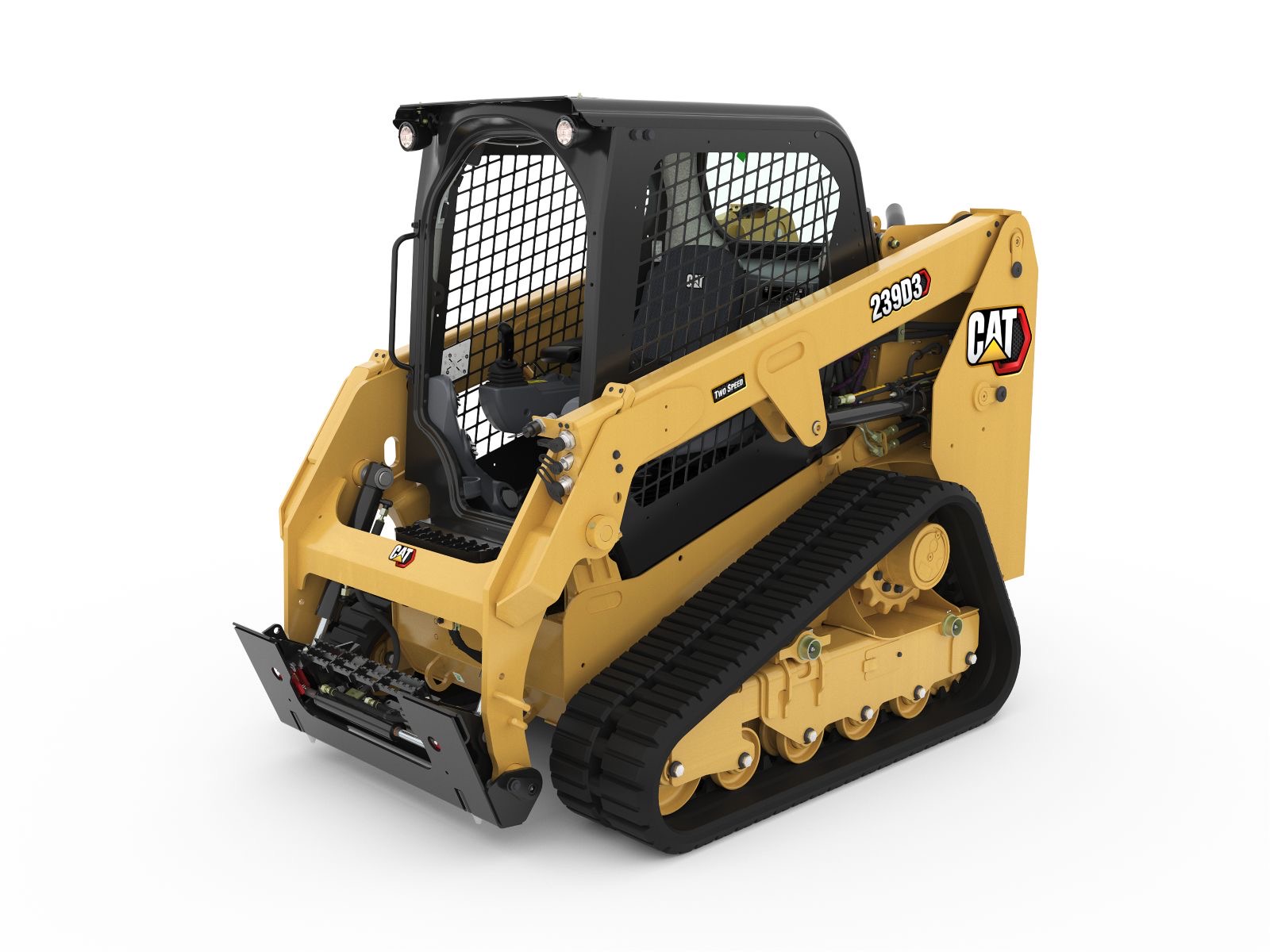
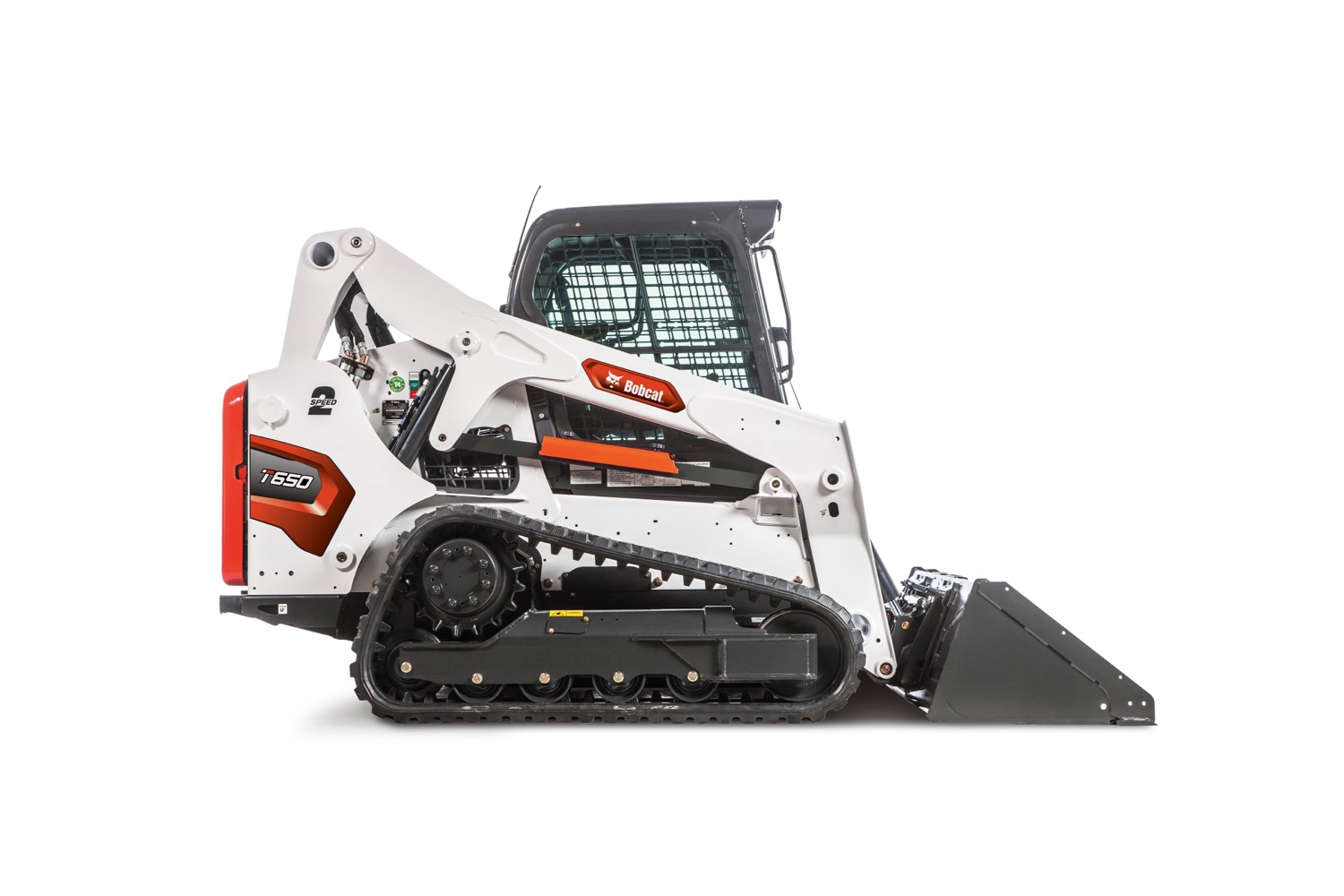
Quick take: The Cat 239D3 costs $4,000 less; the Bobcat T650 has a higher rated operating capacity (2,570 vs 1,530 lbs); the Bobcat T650 has more engine power (74 vs 66 hp).
| Spec | Cat 239D3 | Bobcat T650 |
|---|---|---|
| Price | $58,000 | $62,000 |
| Rating | 4.4★ (360) | 4.6★ (580) |
| Type | Compact Track Loader | Compact Track Loader |
| Lift Path | Radial Lift | Vertical Lift |
| ROC | 1530 lbs | 2570 lbs |
| Engine HP | 66 hp | 74 hp |
| Operating Weight | 8035 lbs | 9113 lbs |
| Tipping Load | 4370 lbs | 7343 lbs |
| Lift Height | 115 in | 124 in |
| Hydraulic Flow | 17.1 GPM | 23 GPM |
| Engine | Cat C2.2T | Bobcat (Doosan) D34 |
| Tracks | Yes | Yes |
| Vertical lift | No | Yes |
| High-flow | No | Yes |
| Enclosed cab | Yes | Yes |
| Two-speed | Yes | Yes |
| Self-leveling | Yes | Yes |
| A/C & heat | Yes | Yes |
| Warranty | 1 yr / 1000 hr | 2 yr / 2000 hr |
Pros & cons
Cat 239D3
- ✓The fully-suspended undercarriage gives a smooth ride and excellent flotation, and owners say it's gentle on lawns for turf and finish work.
- ✓Its small footprint lets it work in tight backyards and through gates that bigger CTLs can't reach, which landscapers specifically buy it for.
- ✓Cat's sealed, pressurized cab keeps dust and noise out better than most competitors, making long days more bearable for operators.
- ✓Radial lift delivers strong breakout and digging force down low, so it excels at trenching, grading, and dozing tasks.
- ✓The rubber-track suspension design is known for low maintenance and long track life when kept off abrasive surfaces, per owner reports.
- ✓Cat's dealer network means fast parts and service, and rental-fleet owners like the strong resale and financing options.
- ✓Two-speed travel comes standard, so ground-to-ground moves are quicker than on the wheeled 226D3, which operators appreciate.
- ✓The intuitive controls and clear display make it approachable for newer operators and rental customers with minimal training.
- ✗At 1,530 lb capacity it's one of the smaller CTLs available, and contractors routinely say they outgrew it and should have bought bigger.
- ✗The low standard hydraulic flow limits attachment options, so mulchers and other hungry tools are essentially off the table.
- ✗Cat parts and undercarriage components are expensive, and track replacement on a Cat runs higher than many rivals.
- ✗Radial lift compromises dump height and reach, making it awkward to load high-sided trucks compared to vertical-lift CTLs.
- ✗The small C2.2T engine feels underpowered when pushing heavy material, and owners note slower cycle times under load.
- ✗Some operators find the suspended undercarriage less stable than a rigid frame when lifting heavy loads at full height.
- ✗New-machine pricing is high for the modest capacity, reflecting the Cat premium more than raw performance.
- ✗The 1-year base warranty is short compared to Bobcat's 2-year coverage, which value-focused buyers notice.
Bobcat T650
- ✓Over a decade of production means every quirk is documented, every mechanic knows it, and owners call it one of the most proven CTL platforms ever built - there are no surprises left in a T650.
- ✓Bobcat's 74 hp Tier 4 engine skips the DPF entirely, so owners never deal with regen cycles or clogged filters that sideline competitor machines mid-job.
- ✓The vertical lift path and 124-inch hinge pin height load tri-axle dump trucks and stack pallets high with ease, which is exactly why grading and material-handling crews standardized on it.
- ✓As a Classic-line machine it undercuts the newer T66 on price by thousands while offering more rated capacity (2,570 vs 2,450 lbs), a trade plenty of buyers happily make.
- ✓The used market is enormous - rental fleets turned over thousands of T650s, so parts, tracks, and complete machines are cheap and everywhere, and resale liquidity is excellent.
- ✓Bobcat's dealer network is the deepest in the industry, and owners report same-day parts availability even in rural areas keeps downtime minimal.
- ✓The optional 30.5 GPM high-flow package runs mulchers, cold planers, and stump grinders, giving it attachment range well beyond its frame size.
- ✓The swing-open tailgate and transversely-mounted engine give easy access to filters and daily checks, and forum mechanics consistently rank it among the easiest CTLs to service.
- ✗The M-Series cab is louder and rides rougher than the newer R-Series T66/T76, and operators who demo both say the refinement gap is obvious on long days.
- ✗The solid-mounted undercarriage has no suspension, so the ride across rough ground is punishing at travel speed compared to torsion-suspended rivals like ASV.
- ✗Standard 23 GPM auxiliary flow is only adequate - flow-hungry attachments really need the high-flow option, which adds meaningful cost.
- ✗Bobcat parts and dealer labor pricing run notoriously high, and owners grumble that filters, tracks, and fittings cost far more than aftermarket equivalents.
- ✗The Bob-Tach attachment system and proprietary controls nudge you toward Bobcat-branded attachments, and some third-party tools need adapters.
- ✗As a Classic (outgoing) model it lacks modern touches like the clear-side cab, improved pressurization, and touch display of current-generation machines.
- ✗Cab dust sealing is a long-running M-Series complaint - owners in dry climates report sweeping out the cab daily despite the pressurization system.
- ✗At 9,113 lbs plus a trailer and attachments you're past what a half-ton truck should tow, so budget for a three-quarter-ton or bigger to move it legally.