Caterpillar
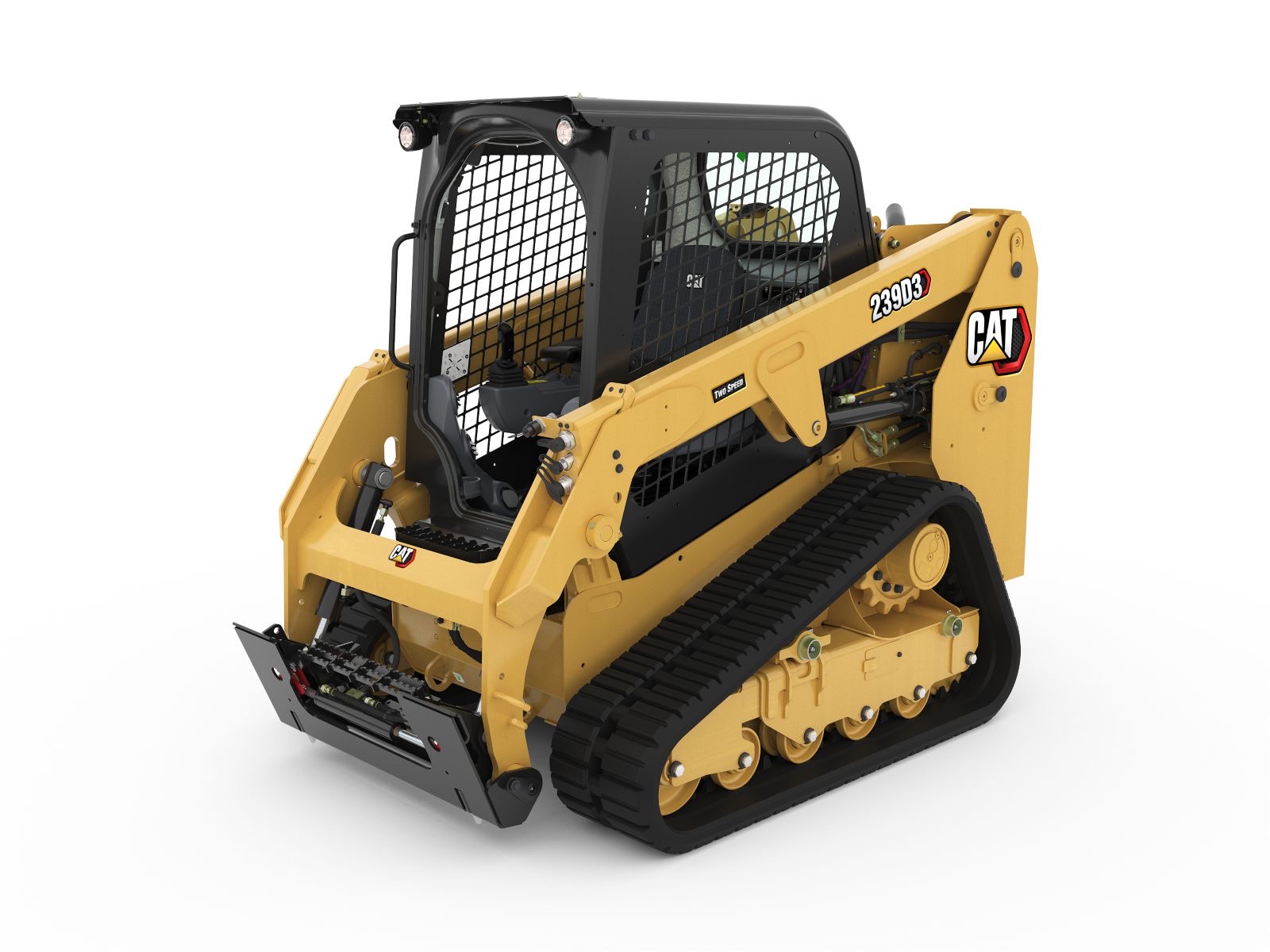
Cat 239D3
The bright segment is what Cat 239D3 is rated to carry; the grey run past it is the rest of its tipping load. Bar length is tipping load drawn to the same scale on every machine on the site, so a short bar is a smaller machine and not a conservative rating.
A fully-suspended undercarriage sits under this small-frame radial-lift compact track loader. The Cat 239D3 is compact and low-ground-pressure, popular with landscapers and rental yards wanting a Cat CTL that fits tight sites.
Suits: Low-ground-pressure Cat track work for landscapers who need a compact machine Its radial lift path reaches furthest at mid-height, for digging, grading and backfilling.
Lifting and reach
- Rated operating capacityTrack loader rating convention
- 1,530 lbs
- Tipping load
- 4,370 lbs
- Lift height to hinge pin
- 115 in
- Lift path
- Radial Lift
- Operating weight
- 7,434 lbs
Power and hydraulics
- Engine power
- 67 hp
- Engine
- Cat C2.2 CRDI
- Auxiliary flowStandard circuit
- 18 GPM
- Flow type
- Standard
- Warranty
- 2 yr / 2,000 hr
Fitted or available
What this machine can be ordered with. Some of these are standard and some cost extra, and which is which moves between trim levels, so check them against the quote rather than against this list.
What owners report
Summarised from the sources listed below. Nothing here was tested by us.
Small, radial and still in production, this is the machine Cat sells to people whose work is defined by what they can fit through rather than what they can lift. At 7,434 lb and narrow enough for backyard gates, it goes where the popular mid-frame track loaders simply cannot, and landscapers buy it for that reason specifically rather than as a compromise. Worth correcting a common assumption: the next-generation Cat loaders did not replace it. The 255 replaced the 259D3 and the 265 replaced the 279D3 and 289D3 — nothing next-generation sits at this size, and Cat still lists it new.
In use it behaves like what it is. Radial geometry gives good force low down for digging and backdragging and gives up reach at the top, two-speed is standard, and the D3 generation's real improvements were the cab and the stability rather than power — joystick pods moved further apart, a wider door, and undercarriage and torsion-axle changes that reduced pitching. Two things to go in with your eyes open about: the sealed pressurized cab is an option rather than standard equipment, and 18 GPM standard flow means the 26 GPM high-flow package is a line item if attachments matter. On the used market, test boom down-pressure, because internal cylinder seal bypass on this family is documented and does not show as an external leak.
Deliberately small, and that is the point — right for landscape and property maintenance work with tight access, wrong for anyone who will be handling pallets of block or wants to mulch. Against the vertical-lift 249D3 a few thousand dollars above it, the question is simply whether more of your work happens below eye level or above it. The unusual sweetener is the commercial picture: owners report Cat discounting these hard against every rival, and resale has held well enough that the total cost of a few years' ownership can undercut a cheaper badge.
What owners like
- Cat has not replaced this machine and still sells it new — the next generation starts above it, so buying one is not buying a run-out model or a machine whose parts support is winding down.
- Radial geometry puts the boom's force low in the arc, which is exactly where trenching, backfilling, dozing and backdragging use it, and at this size most of the work genuinely does happen below eye level.
- Two-speed travel is standard across the D3 track loaders rather than an extra, taking it from 5.0 to 7.6 mph — a real difference when the job is spread over a large residential lot.
- Owners shopping it new report Cat dealers discount the small track loaders unusually hard: one buyer had Cat beat quotes on equivalent machines from Case, Deere, Kubota, Takeuchi and Bobcat, which is not how Cat pricing usually goes.
- Resale on the small Cat track loaders is strong enough to distort the maths — the same owner watched used examples change hands for close to or above what he had paid a year or two earlier.
- There is real high-hour evidence behind it: a mechanically similar 239D passed 2,300 hours on homestead, firewood and snow work without undercarriage or major mechanical complaint, and was still described as presenting well for the hours.
What owners complain about
- At 1,530 lb rated it is one of the smallest track loaders on the market, and the recurring verdict from people who bought one is that they outgrew it — this is a machine to size honestly rather than optimistically.
- Standard auxiliary flow is 18 GPM and the 26 GPM high-flow package costs extra, so a base machine will not run a mulcher and the attachment ambitions have to be budgeted at the order desk.
- Radial lift gives up reach and dump height at the top of the arc, so loading anything with high sides means driving up close to it — if truck loading is the daily job, the vertical-lift 249D3 beside it is the better buy.
- One hydraulic fault is documented well enough to name: loss of boom down-pressure traced to internal cylinder seal bypass, where the boom drifts down after shutdown with no external leak anywhere. Owners note cylinders do leak internally and that a rebuild is usually not an expensive job, but it is worth testing down-pressure on any used example.
- The sealed, pressurized cab is an option on the D3 series rather than standard, and independent owner reporting on the D3 version specifically is thin — most of the usable long-term experience comes from the mechanically similar 239D that preceded it.
Drawn from skidsteerforum.com, firewoodhoardersclub.com, hawthornecat.com, constructionequipmentguide.com, constructionequipment.com, compact.miltoncat.com.
What buyers ask
Has the Cat 239D3 been discontinued or replaced?
Can the 239D3 run a mulcher or a cold planer?
Should I buy the 239D3 or the 249D3?
What should I check on a used 239D3?
How does two-speed travel work on this machine?
Put the Cat 239D3 against
Machines in the same range
The rest of the Caterpillar line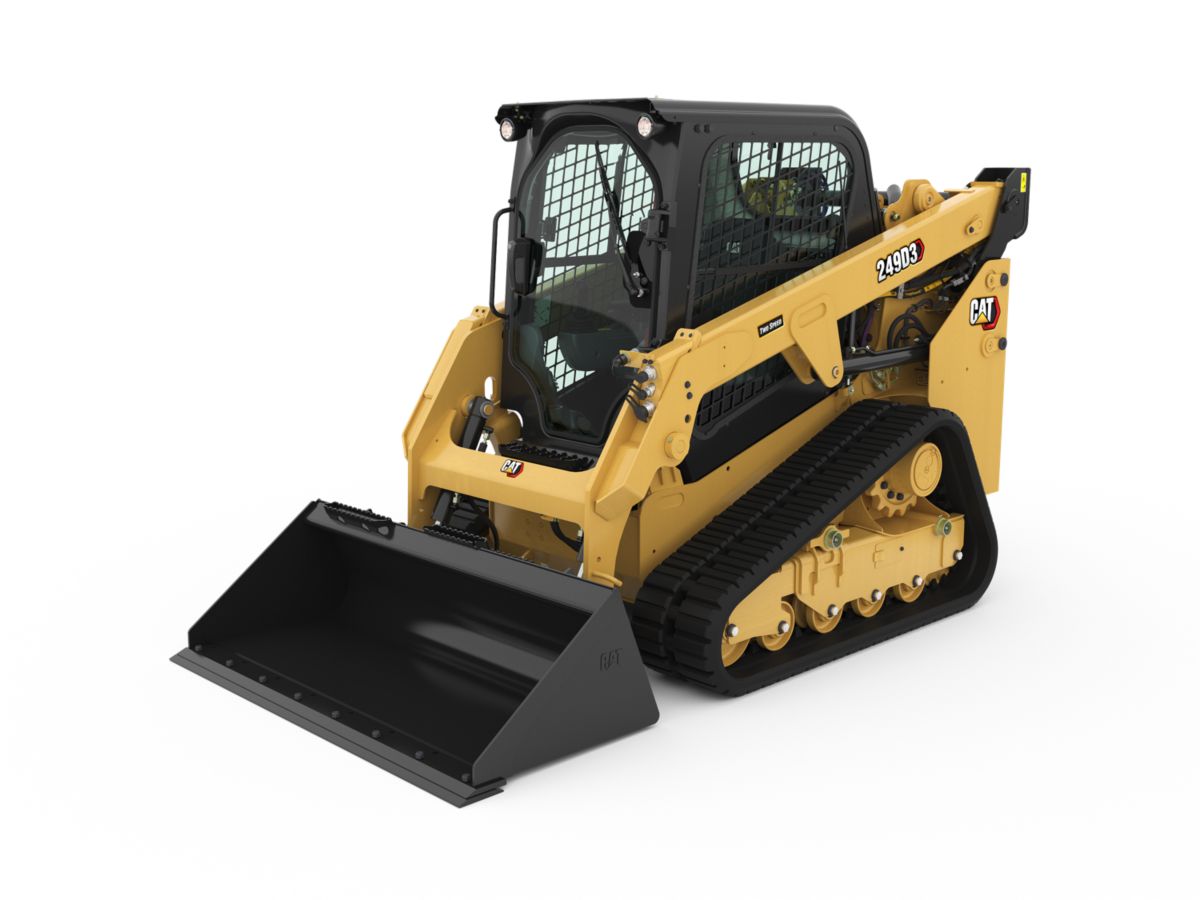
Caterpillar
Cat 249D3
$59,392
- Engine
- 67 hp
- Aux flow
- 18 GPM
- Weight
- 7,831 lbs
Cat's smallest current track loader pairs a 67 hp C2.2 CRDI with a vertical boom on a 7,831 lb frame. Landscapers and hardscape crews buy this size to get onto finished ground and through gates that stop a mid-frame CTL.
Full sheet & owner reports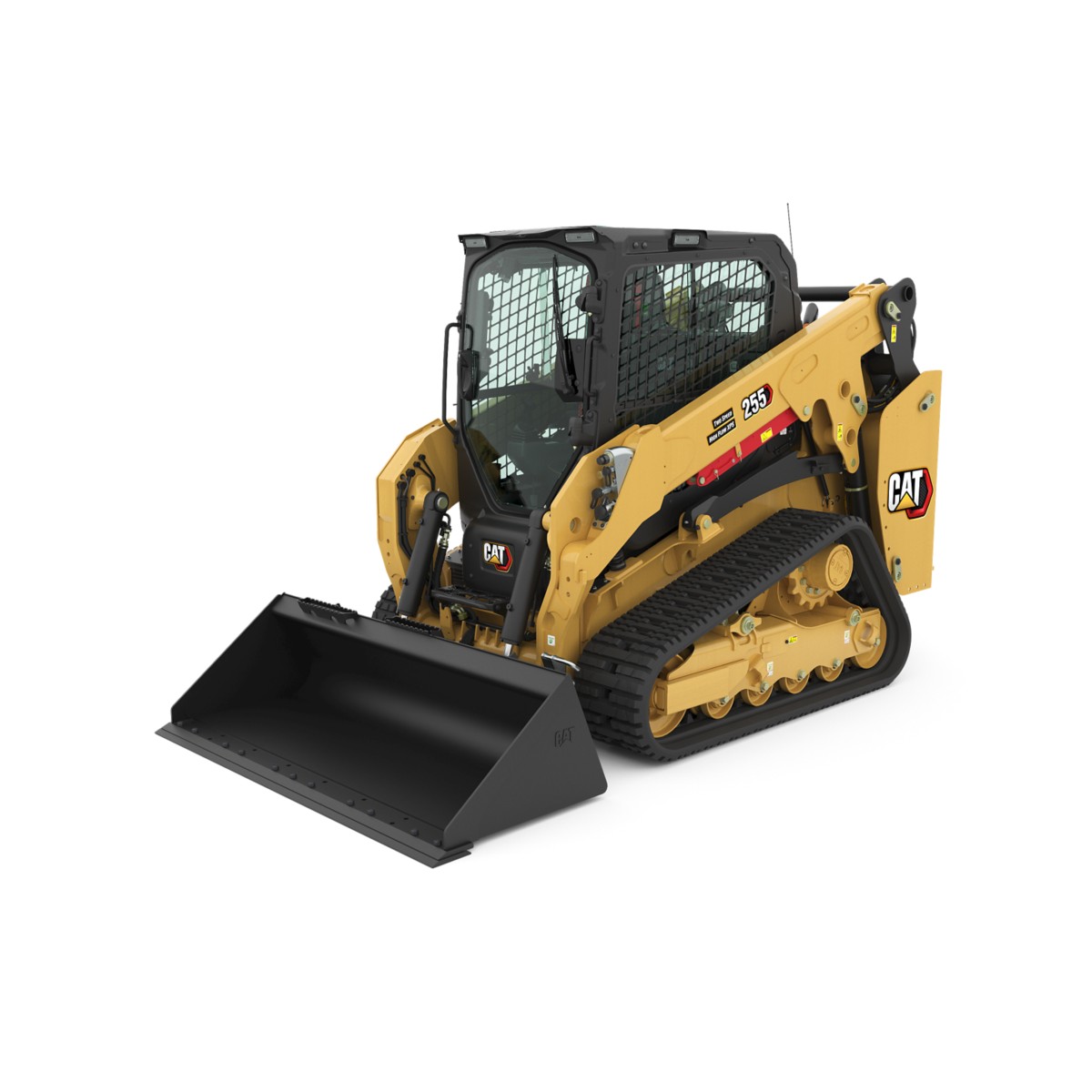
Caterpillar
Cat 255
$75,362
- Engine
- 74 hp
- Aux flow
- 20 GPM
- Weight
- 9,578 lbs
Replacing the hugely popular 259D3, the Cat 255 is the first of Caterpillar's ground-up next-generation compact track loaders. The new C2.8T engine holds peak power across a wider RPM band, and versus the 259D3 it delivers 24% more rated operating capacity, 36% more tilt breakout force, and class-leading lift height in a sealed, pressurized one-piece cab.
Full sheet & owner reports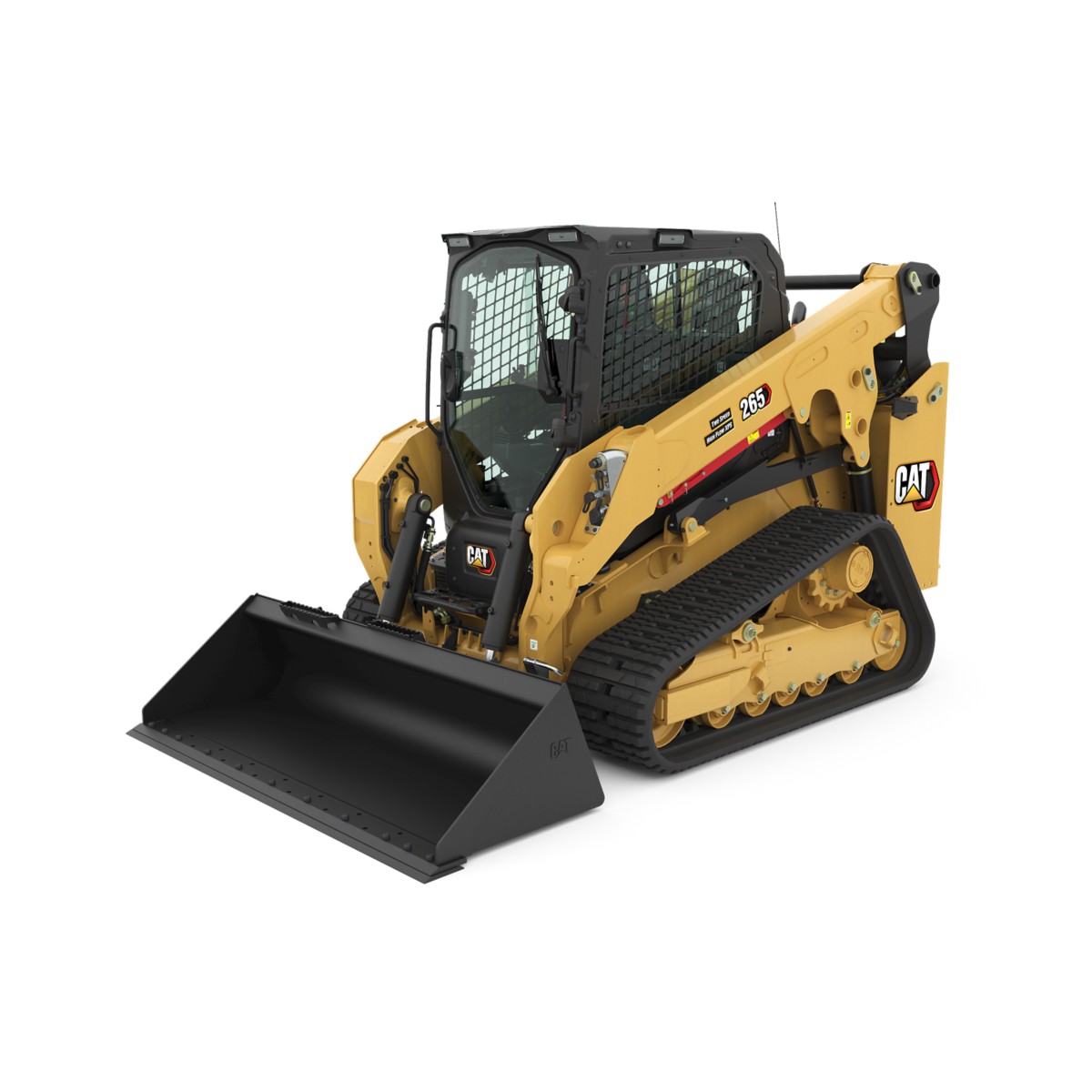
Caterpillar
Cat 265
$95,000
- Engine
- 74 hp
- Aux flow
- 23 GPM
- Weight
- 10,492 lbs
Larger of the first two next-generation Cat compact track loaders, the 265 replaces both the 279D3 and 289D3. Its turbo after-cooled C2.8TA delivers a 43% torque increase over the outgoing models, and the vertical-lift arms reach a 132-inch pin height, with High Flow XPS pushing 34 GPM for demanding attachments.
Full sheet & owner reports