Caterpillar
Cat 255
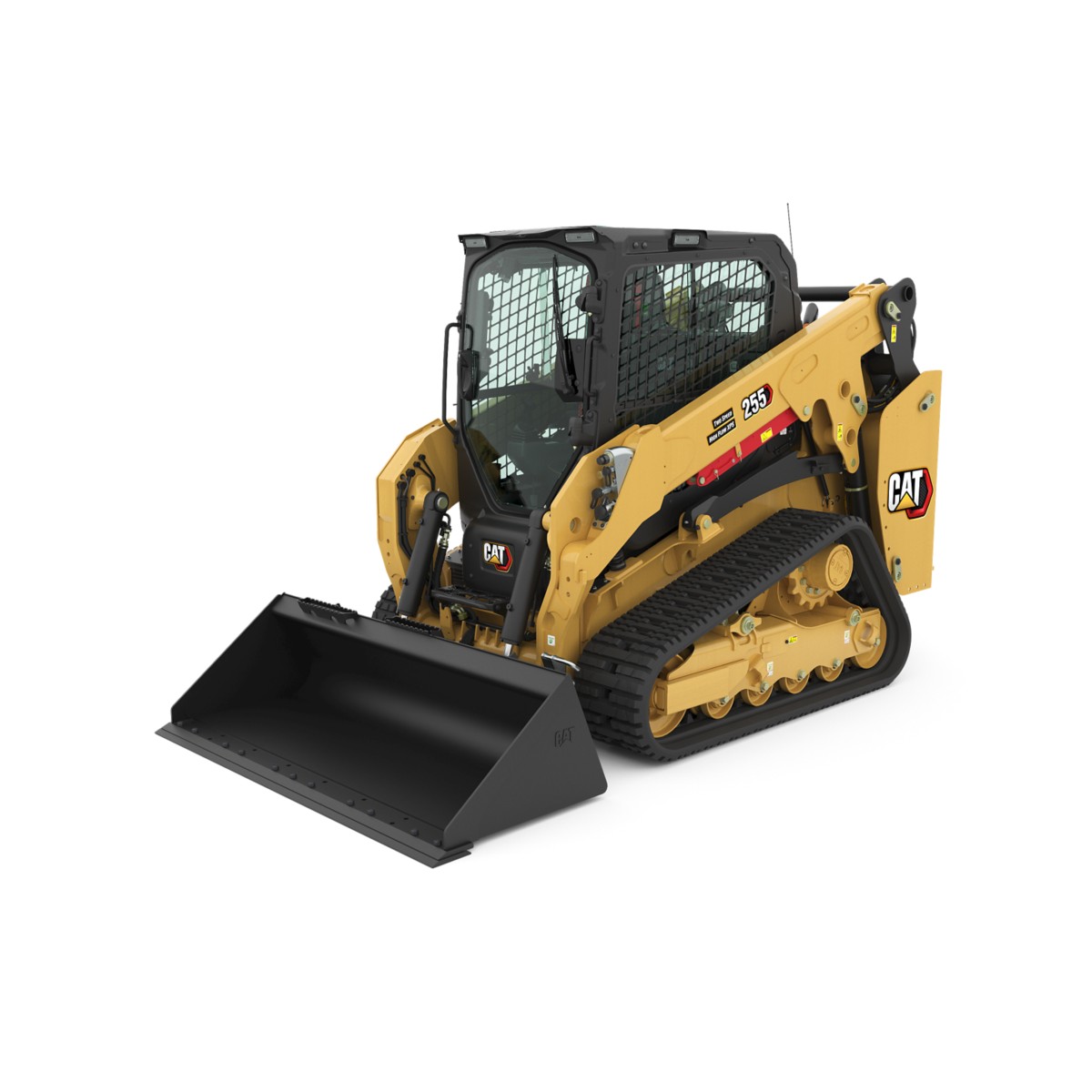
The bright segment is what Cat 255 is rated to carry; the grey run past it is the rest of its tipping load. Bar length is tipping load drawn to the same scale on every machine on the site, so a short bar is a smaller machine and not a conservative rating.
One caveat on this machine: we could not find a published tipping load for it, so the figure above is its advertised capacity divided by the fraction its maker rates at. That makes the grey run arithmetic rather than a measurement, and it is the number worth asking a dealer to confirm.
Replacing the hugely popular 259D3, the Cat 255 is the first of Caterpillar's ground-up next-generation compact track loaders. The new C2.8T engine holds peak power across a wider RPM band, and versus the 259D3 it delivers 24% more rated operating capacity, 36% more tilt breakout force, and class-leading lift height in a sealed, pressurized one-piece cab.
Suits: Modern Cat cab, tech, and stronger breakout in the best-selling mid-size CTL class Its vertical lift path reaches highest at full extension, for loading high-sided trucks and stacking.
Lifting and reach
- Rated operating capacityTrack loader rating convention
- 2,499 lbs
- Tipping loadDerived from the advertised capacity, not published
- 7,140 lbs
- Lift height to hinge pin
- 124 in
- Lift path
- Vertical Lift
- Operating weight
- 9,578 lbs
Power and hydraulics
- Engine power
- 74 hp
- Engine
- Cat C2.8T
- Auxiliary flowStandard circuit
- 20 GPM
- Flow type
- Standard
- Warranty
- 2 yr / 2,000 hr
Fitted or available
What this machine can be ordered with. Some of these are standard and some cost extra, and which is which moves between trim levels, so check them against the quote rather than against this list.
What owners report
Summarised from the sources listed below. Nothing here was tested by us.
Caterpillar's next-generation mid-frame replaced the 259D3 and the changes are the ones operators had been asking for: more capacity, much more breakout force, a taller vertical lift and a cab that is genuinely bigger. Owners describe it as the machine that closed the gap in this size class rather than one that redefined it, and in head-to-head shopping it is most often compared against the Kubota SVL75-3 and the Deere 325G, usually on price and dealer quality rather than capability.
In use, the lift height and the lower centre of gravity are the two things operators mention unprompted, the first for loading trucks and the second for working slopes they previously walked around. The cab and the A/C are a clear step up. Hydraulics are where buyers get tripped: standard flow is 20 GPM, down from the 259D3's 23, and the two upgrade tiers both give 30 GPM with only the XPS tier adding pressure. The saving grace is that High Flow is a dealer software enablement rather than a factory-only option, so the decision is reversible. What is not reversible is the dealer you live with, and complaints about Cat sales and service treatment, and about parts pricing, come up as often as anything mechanical.
Truck loading, slope work and cab time dominating your day - plus a Cat dealer you actually trust - is the case for it. Quotes around $89,000 out the door for a high-flow machine with a bucket, a tooth bucket and forks land within a few thousand of a similarly equipped SVL75-3, so this rarely comes down to price alone. Before signing, take the eight-hour demo, weigh your trailer honestly with the bucket and a second attachment on it, and be clear about whether your attachments need flow or pressure, because the upgrade tiers answer different questions.
What owners like
- High Flow is a software-enabled attachment a dealer can switch on later, even remotely through Product Link Elite, so guessing wrong on hydraulics at order time is recoverable instead of permanent.
- Rated 2,499 lb at 35% of tipping load, a 24% jump over the 259D3, with 36% more tilt breakout and 26% more lift breakout. Operators handling pallets of sod and block say it finally matches what rivals offered in this frame.
- The 124-inch hinge pin height changes the truck-loading job. A contractor who ran one for months said he can now get over the side and empty the bucket instead of shaking material out of it.
- Cat dropped the engine lower and moved the counterweights down, and operators working steep ground specifically credit the lower centre of gravity for working up and down slopes they used to avoid.
- Cab volume is up 22% with 26% more foot space and a much better A/C pack, which is the part that decides the purchase for anyone sitting in it all day rather than reading a spec sheet.
- The 74 hp C2.8T stays under the 75 hp emissions threshold, so there is no DEF tank to fill or forget, and Cat dealers will routinely drop a machine for an eight-hour demo, which settles a brand argument cheaper than any spec comparison.
What owners complain about
- Standard auxiliary flow is 20 GPM where the outgoing 259D3 delivered 23, so attachments that used to run on a base machine now push buyers into the High Flow enablement to get the same work done.
- High Flow XPS buys pressure, not volume. Both High Flow and High Flow XPS deliver 30 GPM; XPS lifts relief from 3,500 to 4,061 psi. Paying for XPS to feed a flow-hungry mulcher gains you nothing.
- The dealer relationship decides this machine more than the iron does. Buyers repeatedly describe preferring the Cat in the yard, being treated as small potatoes by the sales side, and buying a nearer dealer's Deere 325G anyway.
- At 9,578 lb bare it is nearly 600 lb heavier than the 259D3 it replaced, and adding a bucket plus a second attachment puts a lot of existing trailer setups over their rating.
- It is an electronics-dense machine with Cat parts and labour pricing behind it, and buyers who keep loaders past ten years are openly uneasy about how much can only be diagnosed at a dealer.
Drawn from compactequip.com, h-cpc.cat.com, machinerytrader.com.
What buyers ask
What is the difference between High Flow and High Flow XPS?
Can I add high flow after I buy the machine?
Is the 255 actually stronger than the 259D3 it replaced?
Does it need DEF?
How much can it really lift with forks?
Put the Cat 255 against
Machines in the same range
The rest of the Caterpillar line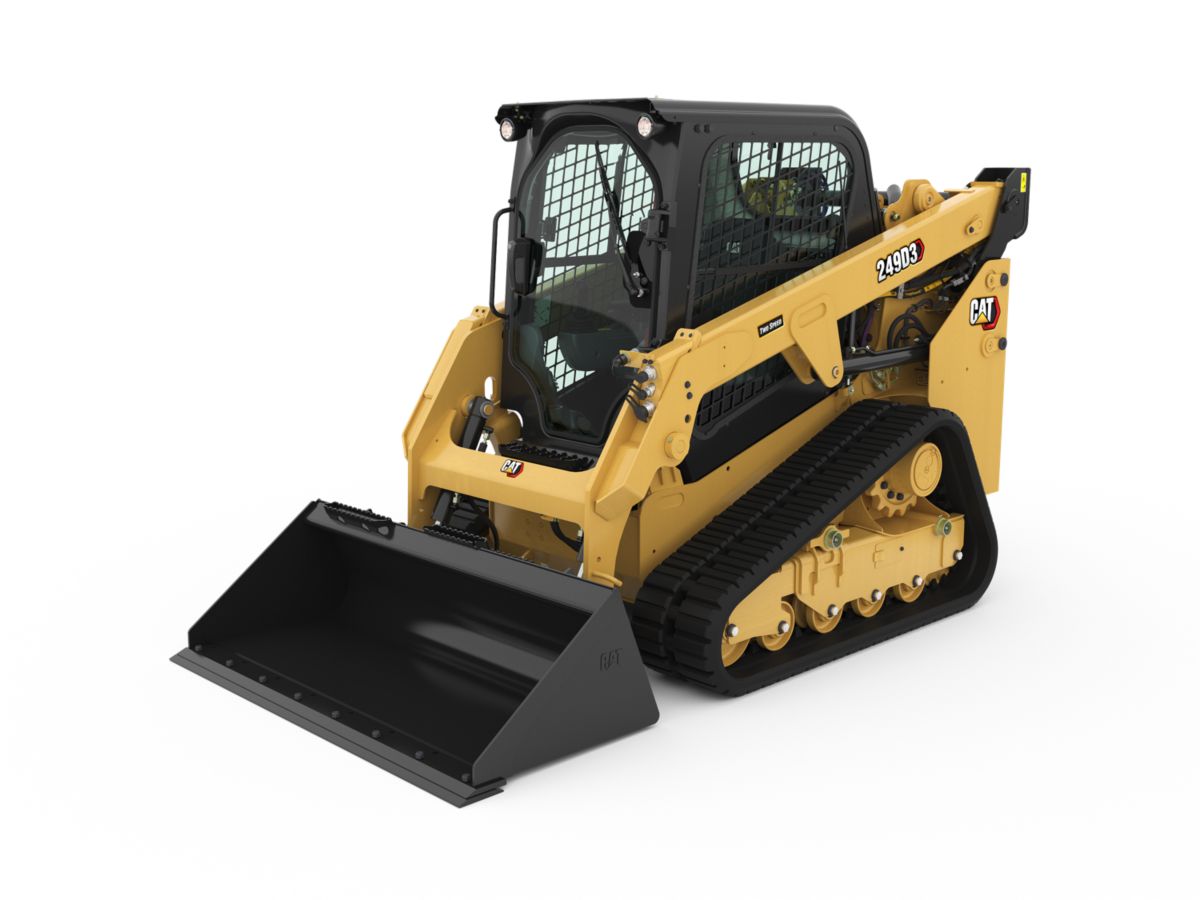
Caterpillar
Cat 249D3
$59,392
- Engine
- 67 hp
- Aux flow
- 18 GPM
- Weight
- 7,831 lbs
Cat's smallest current track loader pairs a 67 hp C2.2 CRDI with a vertical boom on a 7,831 lb frame. Landscapers and hardscape crews buy this size to get onto finished ground and through gates that stop a mid-frame CTL.
Full sheet & owner reports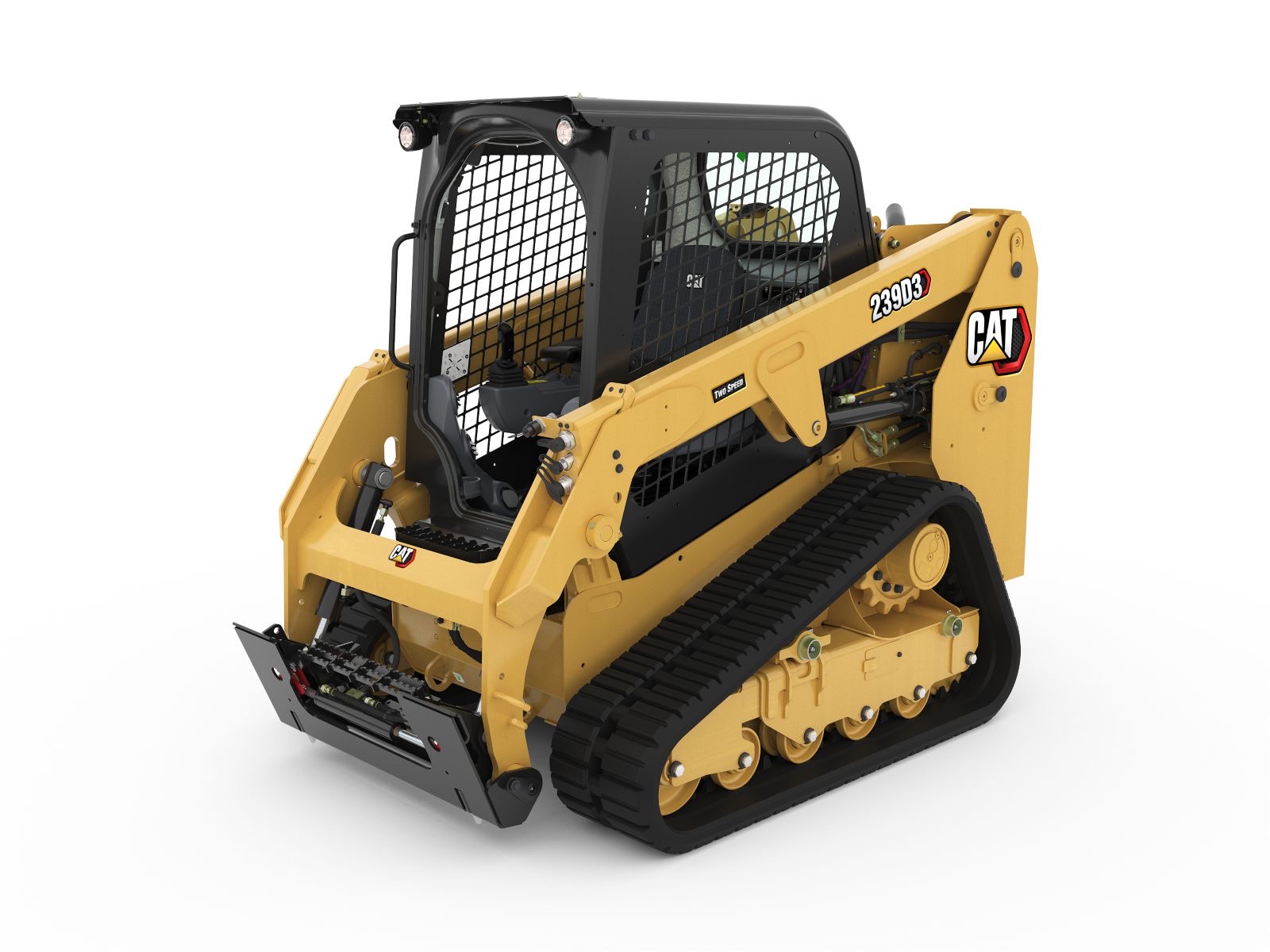
Caterpillar
Cat 239D3
$58,000
- Engine
- 67 hp
- Aux flow
- 18 GPM
- Weight
- 7,434 lbs
A fully-suspended undercarriage sits under this small-frame radial-lift compact track loader. The Cat 239D3 is compact and low-ground-pressure, popular with landscapers and rental yards wanting a Cat CTL that fits tight sites.
Full sheet & owner reports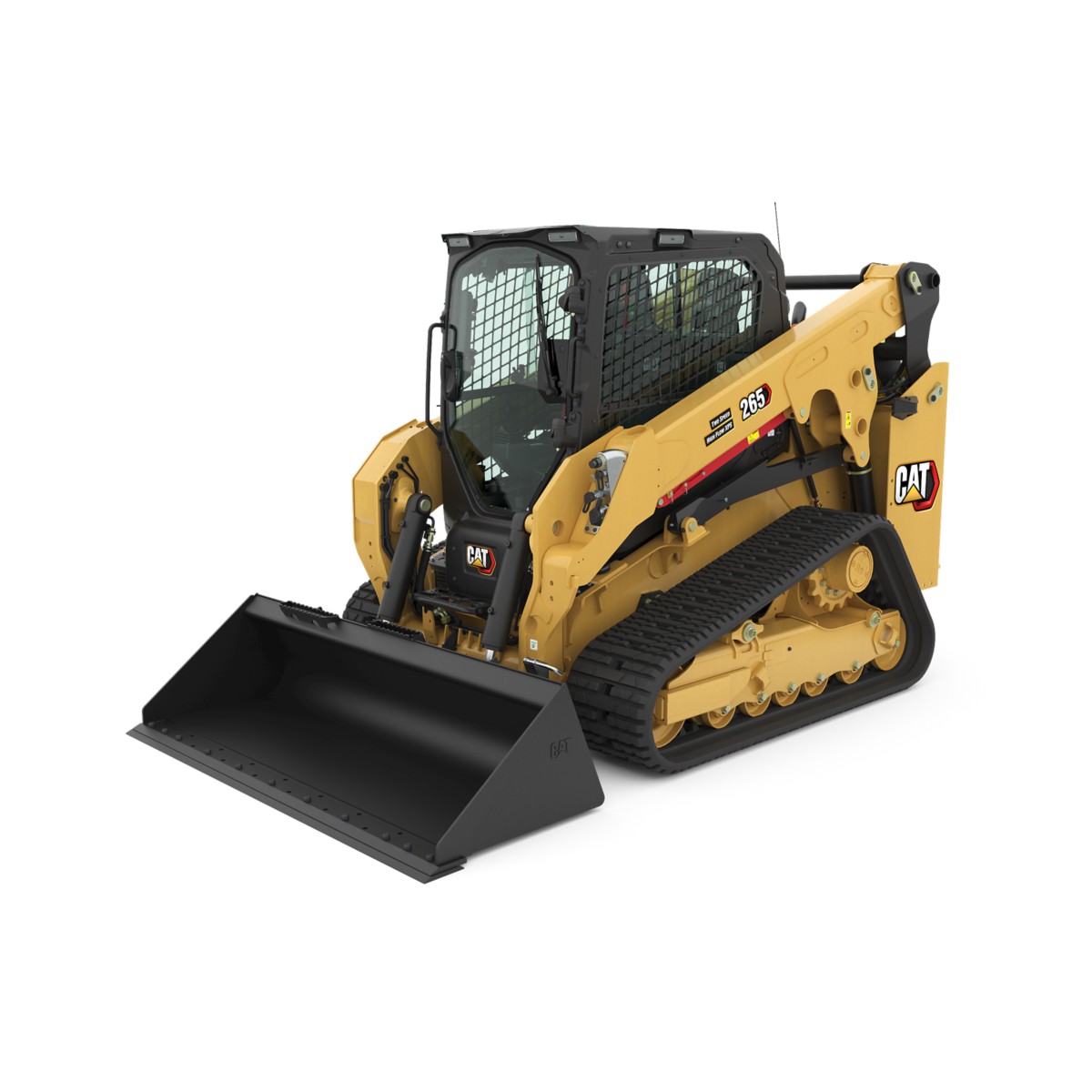
Caterpillar
Cat 265
$95,000
- Engine
- 74 hp
- Aux flow
- 23 GPM
- Weight
- 10,492 lbs
Larger of the first two next-generation Cat compact track loaders, the 265 replaces both the 279D3 and 289D3. Its turbo after-cooled C2.8TA delivers a 43% torque increase over the outgoing models, and the vertical-lift arms reach a 132-inch pin height, with High Flow XPS pushing 34 GPM for demanding attachments.
Full sheet & owner reports