Caterpillar
Cat 249D3
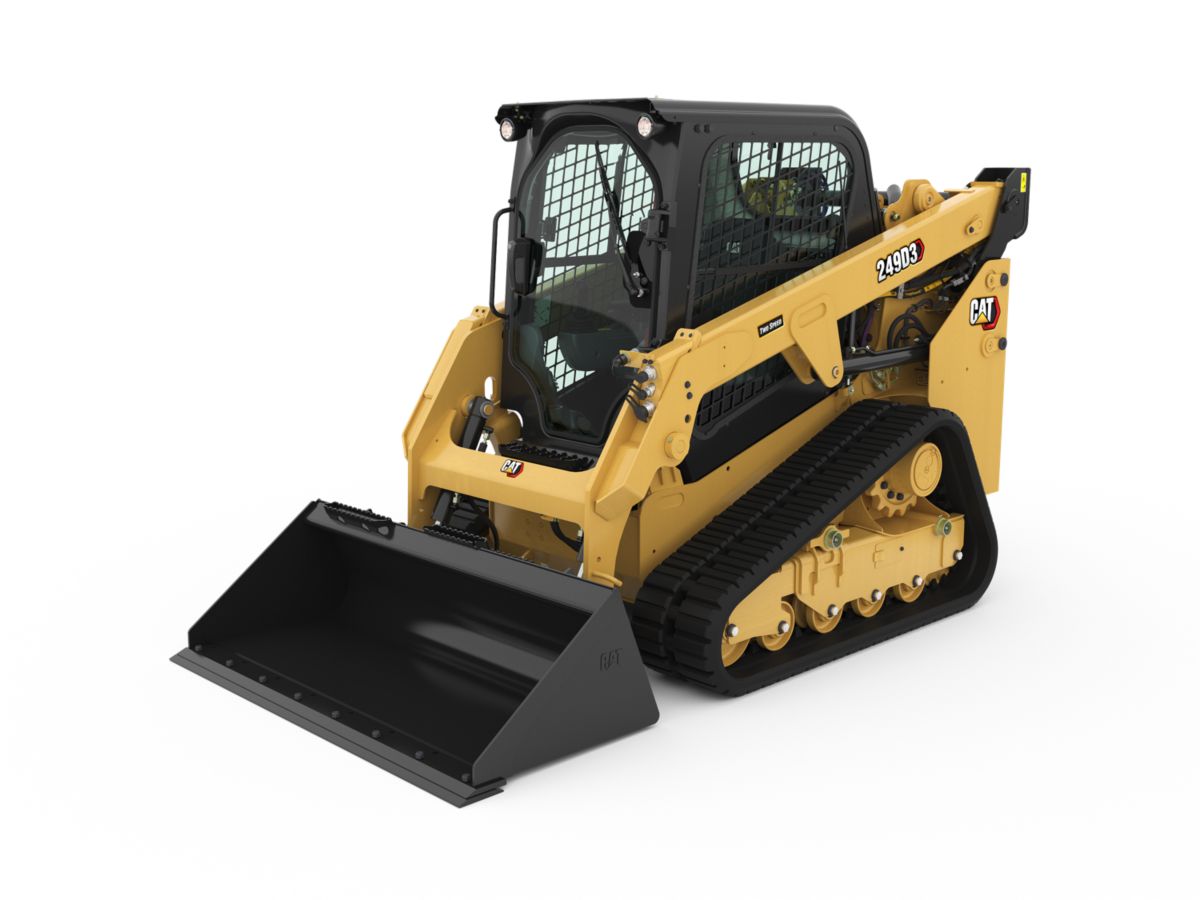
The bright segment is what Cat 249D3 is rated to carry; the grey run past it is the rest of its tipping load. Bar length is tipping load drawn to the same scale on every machine on the site, so a short bar is a smaller machine and not a conservative rating.
Cat's smallest current track loader pairs a 67 hp C2.2 CRDI with a vertical boom on a 7,831 lb frame. Landscapers and hardscape crews buy this size to get onto finished ground and through gates that stop a mid-frame CTL.
Suits: Landscapers and hardscape crews who need a Cat track loader that fits through a gate Its vertical lift path reaches highest at full extension, for loading high-sided trucks and stacking.
Lifting and reach
- Rated operating capacityTrack loader rating convention
- 1,740 lbs
- Tipping load
- 4,970 lbs
- Lift height to hinge pin
- 118.2 in
- Lift path
- Vertical Lift
- Operating weight
- 7,831 lbs
Power and hydraulics
- Engine power
- 67 hp
- Engine
- Cat C2.2 CRDI
- Auxiliary flowStandard circuit
- 18 GPM
- Flow type
- Standard
- Warranty
- 2 yr / 2,000 hr
Fitted or available
What this machine can be ordered with. Some of these are standard and some cost extra, and which is which moves between trim levels, so check them against the quote rather than against this list.
What owners report
Summarised from the sources listed below. Nothing here was tested by us.
Cat's smallest track loader with a vertical boom is a narrower proposition than its spec sheet suggests, and the reason to want it is geometry rather than size. Against the radial 239D3 on the same end of the range, the vertical path is what lets it load a high-sided truck cleanly, and that single difference is usually what decides between the two. It is worth saying plainly that independent owner reporting on this exact model is thin — it sells in volume to rental fleets, small farms and homeowners rather than to the contractors who write up their machines at length, so much of the usable experience comes from the mechanically similar machines around it.
What the build sheet commits you to is clearer than the sentiment. Two-speed and four torsion axles are standard, ride control is optional and worth having, and the sealed pressurized cab is an option rather than something included. Auxiliary flow starts at 18 GPM with a 26 GPM package available. The suspension is a genuine double-edge: it rides well and it makes precise grading harder than a rigid undercarriage does. And the biggest number in the quote is not the machine, it is the cab — roughly $11,000 between a canopy build near $58,400 and an enclosed one near $69,300.
Landscaping, turf and tight access where light weight and a vertical boom both matter is the case, and if you are honest that you are not going to hang a mulcher on it. If you are handling pallets of block, the 255 at about $75,400 is the machine you actually want and the gap will feel smaller in two years than it does at the desk. Worth knowing before you sign: the new 253 arrives in North America in the second half of 2026 at 8,893 lb and 2,023 lb of capacity, landing squarely between this machine and the 255 — so if your timing is flexible, ask what the 253 will price at before taking a D3 discount.
What owners like
- Vertical lift on Cat's smallest track loader frame is the whole reason to pick it over the radial 239D3 sitting beside it — the boom goes up and then out, so a loaded bucket clears the side of a dump truck instead of having to be driven up close to it.
- Two-speed travel and the four-torsion-axle independent suspension are standard on both the canopy and cab builds, and Speed Sensitive Ride Control is the option that actually makes the high range usable with a full bucket rather than a machine that pitches.
- At 7,831 lb it is the lightest track loader Cat sells, which means it goes down the road on a 10,000 lb trailer and crosses established turf without leaving the ruts a 10,000 lb machine leaves.
- The sub-75 hp C2.2 CRDI avoids DEF and SCR entirely — there is still a diesel particulate filter to live with, but no second fluid to buy and no injection hardware to fail.
- It is a genuine rental-fleet machine, stocked by the national chains, which means you can put 20 hours on one before committing and there is a steady flow of used examples with known histories. Published dealer rental runs around $467 a day, $1,359 a week and $2,902 a month.
What owners complain about
- The real price decision is the cab, not the machine: dealer build sheets put a canopy machine around $58,400 and an enclosed Cab Pro around $69,300. That is roughly $11,000, and owners working winters describe the enclosed cab as non-negotiable rather than a luxury.
- The sealed, pressurized cab is an option on the D3 series rather than standard equipment, which is easy to assume into a quote that does not actually contain it.
- 1,740 lb at 35 percent of tipping load is the smallest rated capacity in Cat's track loader line, and buyers who spend their days moving pallets rather than mulch generally conclude they wanted the 255 — a step of roughly $16,000 to about $75,400.
- Standard auxiliary flow is 18 GPM and the 26 GPM high-flow package is extra, so hungry attachments are not a base-machine proposition. On the D3 track loaders, switching high flow on for an attachment that is not wired for it also involves a plug that runs about $200.
- The torsion-axle suspension that gives it a good ride is the same thing that makes fine grading harder than it is on a rigid undercarriage — the machine moves underneath you when you are trying to hold a blade flat.
- Undercarriage is the consumable that sets the running cost, and experienced owners are blunt that it is behaviour-driven: stay off hard abrasive surfaces and make gradual turns instead of zero turns, or you will pay for it a long way before you expected to.
Drawn from quinncompany.com, hawthornecat.com, warrencat.com, constructionequipmentguide.com, compact.miltoncat.com, ivtinternational.com, fortishd.com, cat.com.
What buyers ask
What is the difference between the Cat 249D3 and the 239D3?
Has the 249D3 been replaced by the next-generation Cat loaders?
Should I get the canopy or the enclosed cab?
Can the 249D3 run a mulcher?
How long does the undercarriage last?
What warranty does it come with?
Put the Cat 249D3 against
Machines in the same range
The rest of the Caterpillar line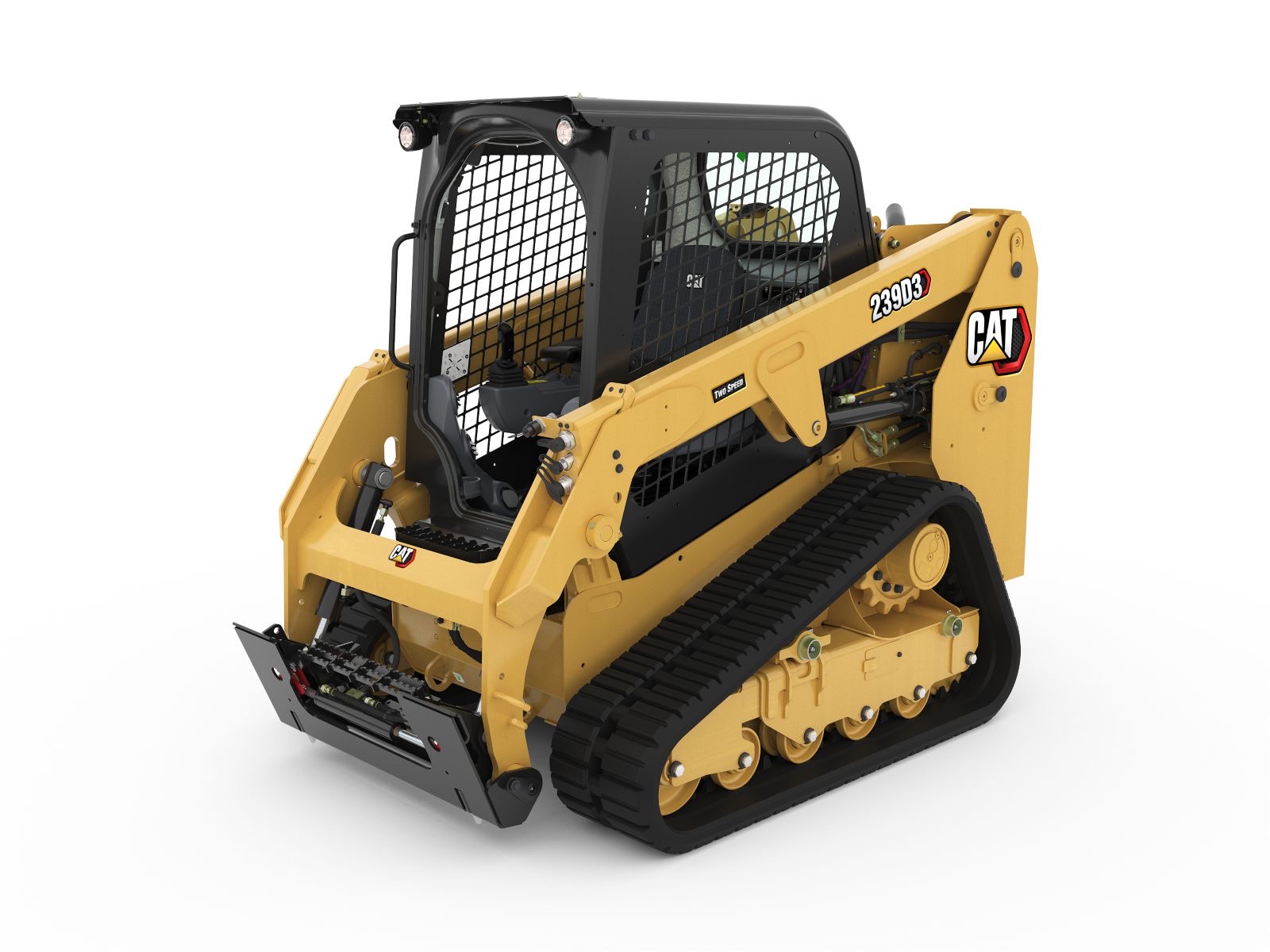
Caterpillar
Cat 239D3
$58,000
- Engine
- 67 hp
- Aux flow
- 18 GPM
- Weight
- 7,434 lbs
A fully-suspended undercarriage sits under this small-frame radial-lift compact track loader. The Cat 239D3 is compact and low-ground-pressure, popular with landscapers and rental yards wanting a Cat CTL that fits tight sites.
Full sheet & owner reports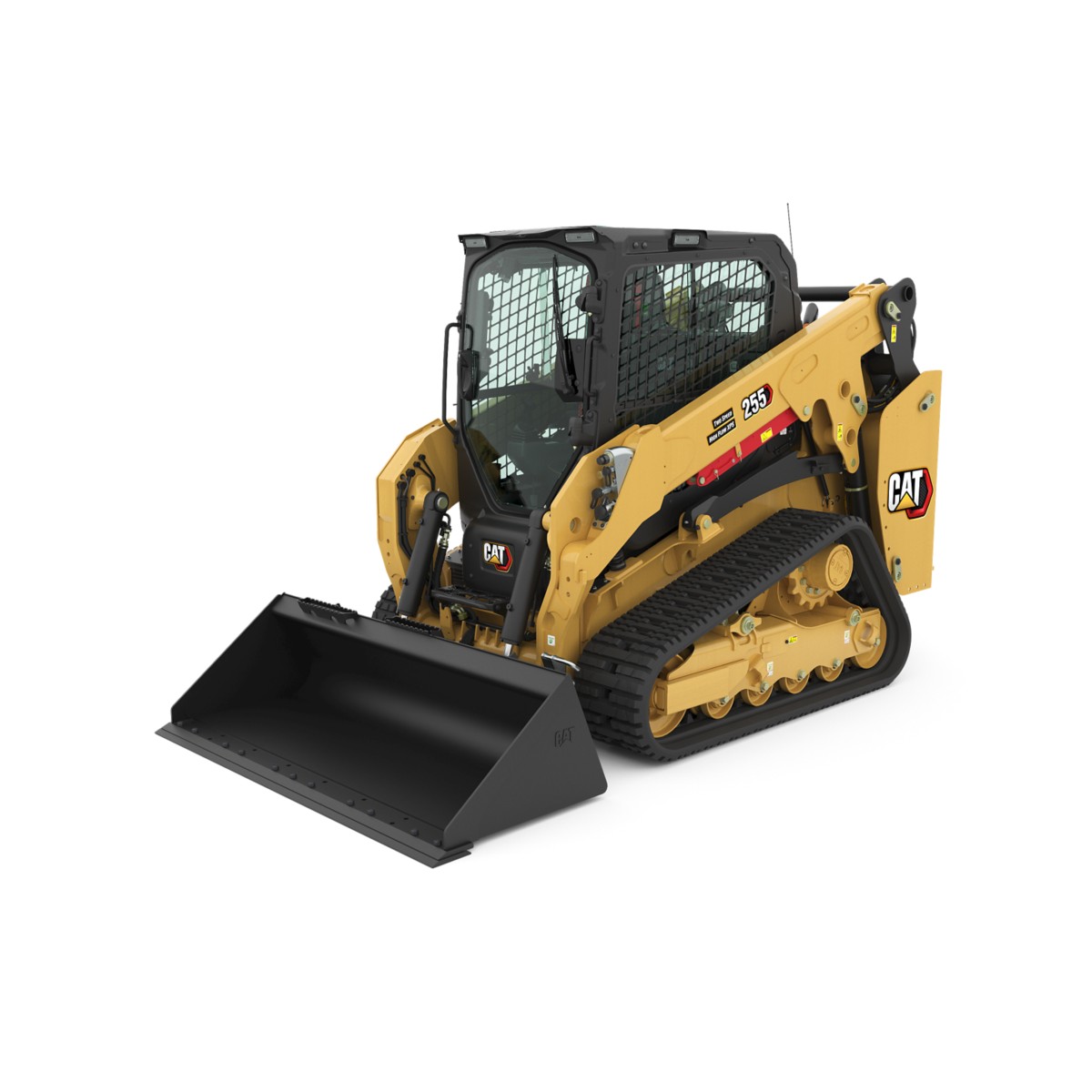
Caterpillar
Cat 255
$75,362
- Engine
- 74 hp
- Aux flow
- 20 GPM
- Weight
- 9,578 lbs
Replacing the hugely popular 259D3, the Cat 255 is the first of Caterpillar's ground-up next-generation compact track loaders. The new C2.8T engine holds peak power across a wider RPM band, and versus the 259D3 it delivers 24% more rated operating capacity, 36% more tilt breakout force, and class-leading lift height in a sealed, pressurized one-piece cab.
Full sheet & owner reports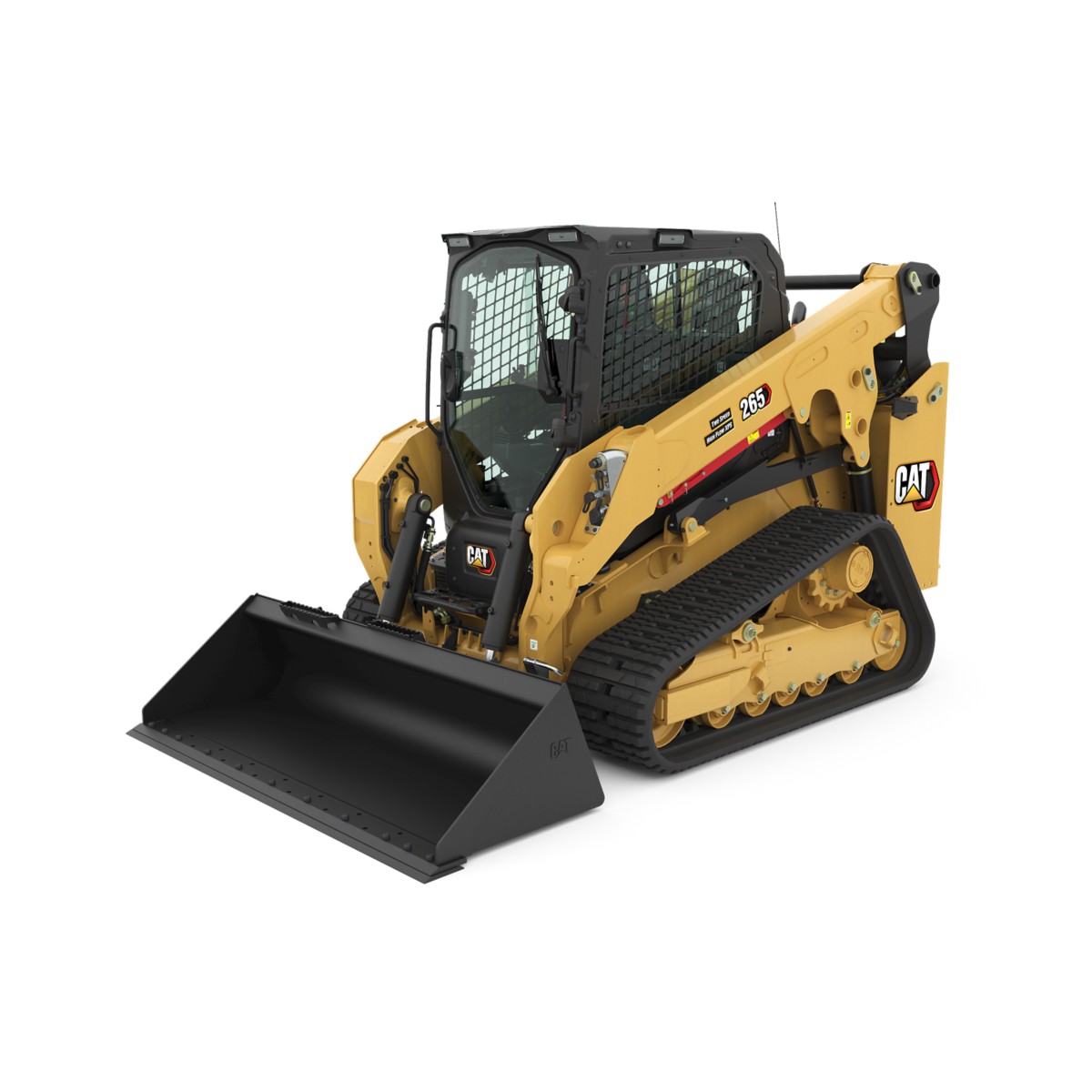
Caterpillar
Cat 265
$95,000
- Engine
- 74 hp
- Aux flow
- 23 GPM
- Weight
- 10,492 lbs
Larger of the first two next-generation Cat compact track loaders, the 265 replaces both the 279D3 and 289D3. Its turbo after-cooled C2.8TA delivers a 43% torque increase over the outgoing models, and the vertical-lift arms reach a 132-inch pin height, with High Flow XPS pushing 34 GPM for demanding attachments.
Full sheet & owner reports