Caterpillar
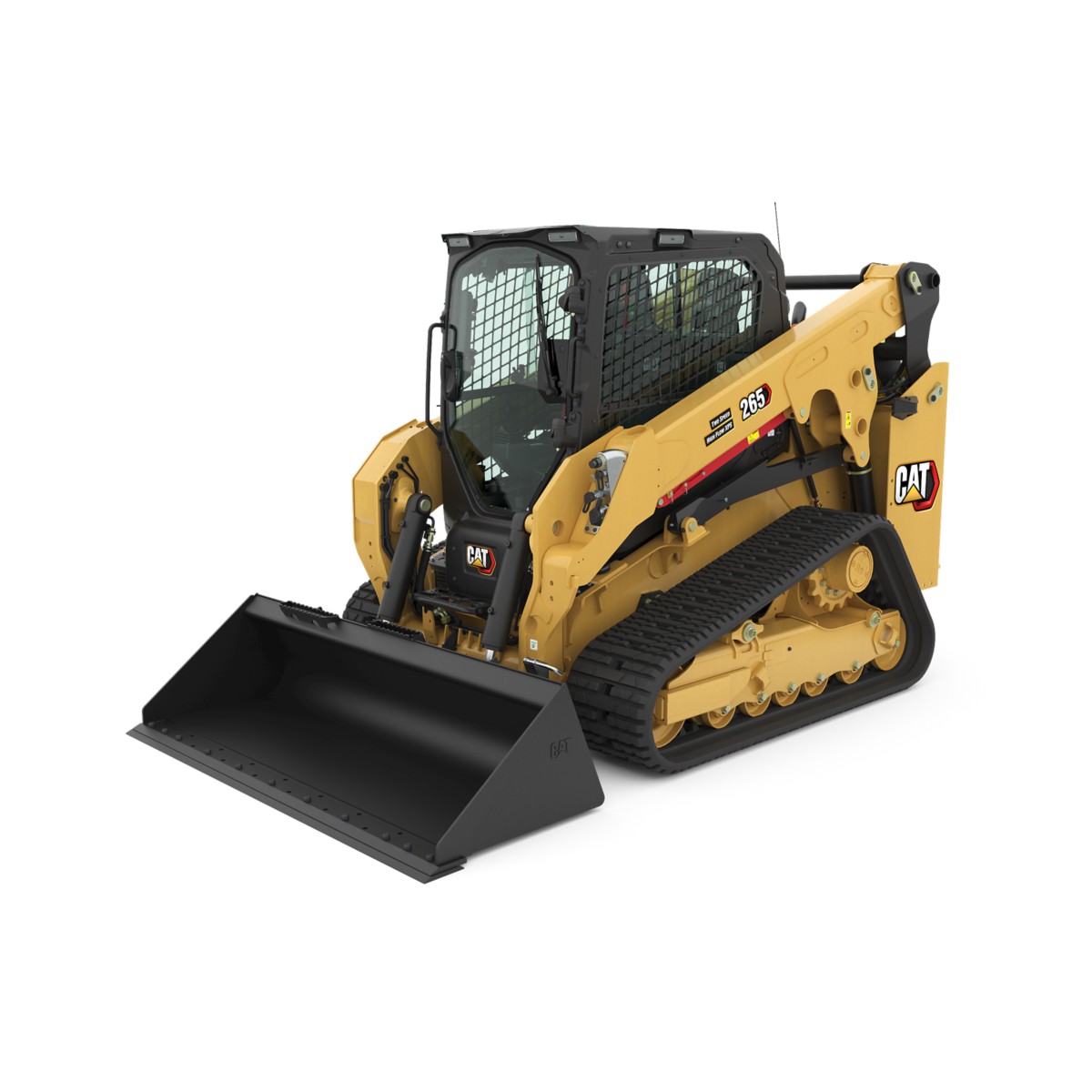
Cat 265
The bright segment is what Cat 265 is rated to carry; the grey run past it is the rest of its tipping load. Bar length is tipping load drawn to the same scale on every machine on the site, so a short bar is a smaller machine and not a conservative rating.
One caveat on this machine: we could not find a published tipping load for it, so the figure above is its advertised capacity divided by the fraction its maker rates at. That makes the grey run arithmetic rather than a measurement, and it is the number worth asking a dealer to confirm.
Larger of the first two next-generation Cat compact track loaders, the 265 replaces both the 279D3 and 289D3. Its turbo after-cooled C2.8TA delivers a 43% torque increase over the outgoing models, and the vertical-lift arms reach a 132-inch pin height, with High Flow XPS pushing 34 GPM for demanding attachments.
Suits: Large-frame lift capacity and attachment power without stepping up to a 100+ hp machine Its vertical lift path reaches highest at full extension, for loading high-sided trucks and stacking.
Lifting and reach
- Rated operating capacityTrack loader rating convention
- 2,823 lbs
- Tipping loadDerived from the advertised capacity, not published
- 8,066 lbs
- Lift height to hinge pin
- 132 in
- Lift path
- Vertical Lift
- Operating weight
- 10,492 lbs
Power and hydraulics
- Engine power
- 74 hp
- Engine
- Cat C2.8TA
- Auxiliary flowStandard circuit
- 23 GPM
- Flow type
- Standard
- Warranty
- 2 yr / 2,000 hr
Fitted or available
What this machine can be ordered with. Some of these are standard and some cost extra, and which is which moves between trim levels, so check them against the quote rather than against this list.
What owners report
Summarised from the sources listed below. Nothing here was tested by us.
Cat's answer to what replaces the 289D3 turned out to be a machine that also replaces the 279D3, and the headline is torque — 43 percent more of it than the 289D3 made, the biggest gain in the next-generation range. What contractors actually talk about, though, is not the engine but the ground: several credit the relocated engine with transforming how it behaves on slopes, one saying flatly that he would not have attempted a turn on a slope in the old machine and now feels planted in this one. Another reports shaving 20 to 30 percent off his hours, mostly because the lift height lets him empty a bucket over a truck instead of shaking material out of it.
Most of the improvement lands in the cab: 22 percent more volume, 26 percent more foot space, and air conditioning that operators in hot climates rate as a genuine productivity item rather than a comfort. The hydraulics deserve care at the order desk. Standard is 23 GPM; a software-enabled setting takes it to 30 GPM at the same 3,500 psi and can be switched on remotely later; only the factory High Flow XPS option reaches 34 GPM at 4,061 psi, and that one cannot be retrofitted. Against all that, two grumbles recur from people who have taken delivery — loader pin play significant enough that one owner wanted shims his dealer could not supply, and a radiator cover with no hinge that has to be lifted clear to clean behind.
It earns its keep when the attachments are demanding enough to need the flow and the ground is difficult enough to want the weight, and when dealer pricing near $99,500 against about $75,400 for the 255 can be justified by the work. If the job is dirt and pallets rather than hydraulic tools, the 255 does it for $24,000 less. Settle the high-flow question before ordering rather than after, check the loader pins for play at handover, and confirm your trailer and tow rating actually cover 10,492 lb before a bucket goes on.
What owners like
- It replaces two D3 machines at once — the 279D3 and the 289D3 — and the C2.8TA carries 43 percent more torque than the 289D3 did, the largest torque gain anywhere in the next-generation range.
- Stability on slopes is the change contractors single out, and they credit the relocated engine. One running it in oilfield work said he would not have dared turn on a slope in the machine it replaced but feels close to the ground in the 265; another described it as not even a comparison against the old machine on steep ground.
- The extra lift height translates into measured time savings rather than just a bigger number: a landscape contractor reported shaving 20 to 30 percent off his hours and finishing in five what used to take a full day, because you can now get on top of a truck and tip the bucket out instead of shaking material loose.
- High flow is a software unlock rather than a hardware kit — 30 GPM at the standard 3,500 psi, switchable at the machine or remotely — so a buyer who does not need a mulcher on day one is not locked out of running one later.
- Ordered with the factory High Flow XPS option it goes to 34 GPM at 4,061 psi, which is more pressure as well as more flow, and that is the configuration for large mulchers and cold planers.
- The next-generation cab is 22 percent larger by volume with 26 percent more foot space, and operators rate the air conditioning and the reduced fatigue over a long shift highly enough that one Utah fleet owner says his crews fight over the machine.
- Staying under 75 hp means no DEF tank and no SCR system, and at 10,492 lb on a long track frame it reaches about 11 feet of lift height while its 2,823 lb capacity is quoted at the conservative 35 percent of tipping load, so it compares like-for-like against Bobcat, Deere and Kubota.
What owners complain about
- Dealer MSRPs land near $99,500, roughly $24,000 above the 255 sitting directly below it, and that gap is the objection that sends buyers to cross-shop the Kubota SVL97-2 on price alone.
- There is a build-quality complaint specific enough to check on delivery: an owner who replaced an older Cat with two 265s reported about half an inch of play in the main loader pins on both machines and that his dealer had no shims for them, judging the arms and pin bushings on his traded-in machine better than on either new one.
- Serviceability took a step back in small ways — the radiator cover has no hinge, so it has to be lifted off entirely to clean the radiator, and the way the radiator mounts makes the top of the engine awkward to reach.
- The 34 GPM XPS package is a factory option, so unlike the 30 GPM software enable it cannot be added after the sale — order it wrong and the fix is a trade rather than an upgrade.
- It keeps the 74 hp rating for emissions reasons, so buyers wanting raw horsepower for high-production mulching still have to step to the 111 hp 275 or 285, and those start above $109,000.
- At 10,492 lb bare it wants a heavy-duty trailer and a properly rated tow vehicle, and owners who sized their rig around a D3-generation machine can be caught out once a bucket and forks ride along.
Drawn from compactequip.com, constructionequipment.com, petersoncat.com, heavyequipmentforums.com, compact.miltoncat.com, cat.com.
What buyers ask
What does the Cat 265 replace?
Do I need the High Flow XPS option, or is the software-enabled high flow enough?
What should I check when taking delivery of one?
Does the 265 need DEF?
How does the 265 compare with the 255 on price and capability?
Is the 2,823 lb rating comparable to a wheeled skid steer's number?
Put the Cat 265 against
Machines in the same range
The rest of the Caterpillar line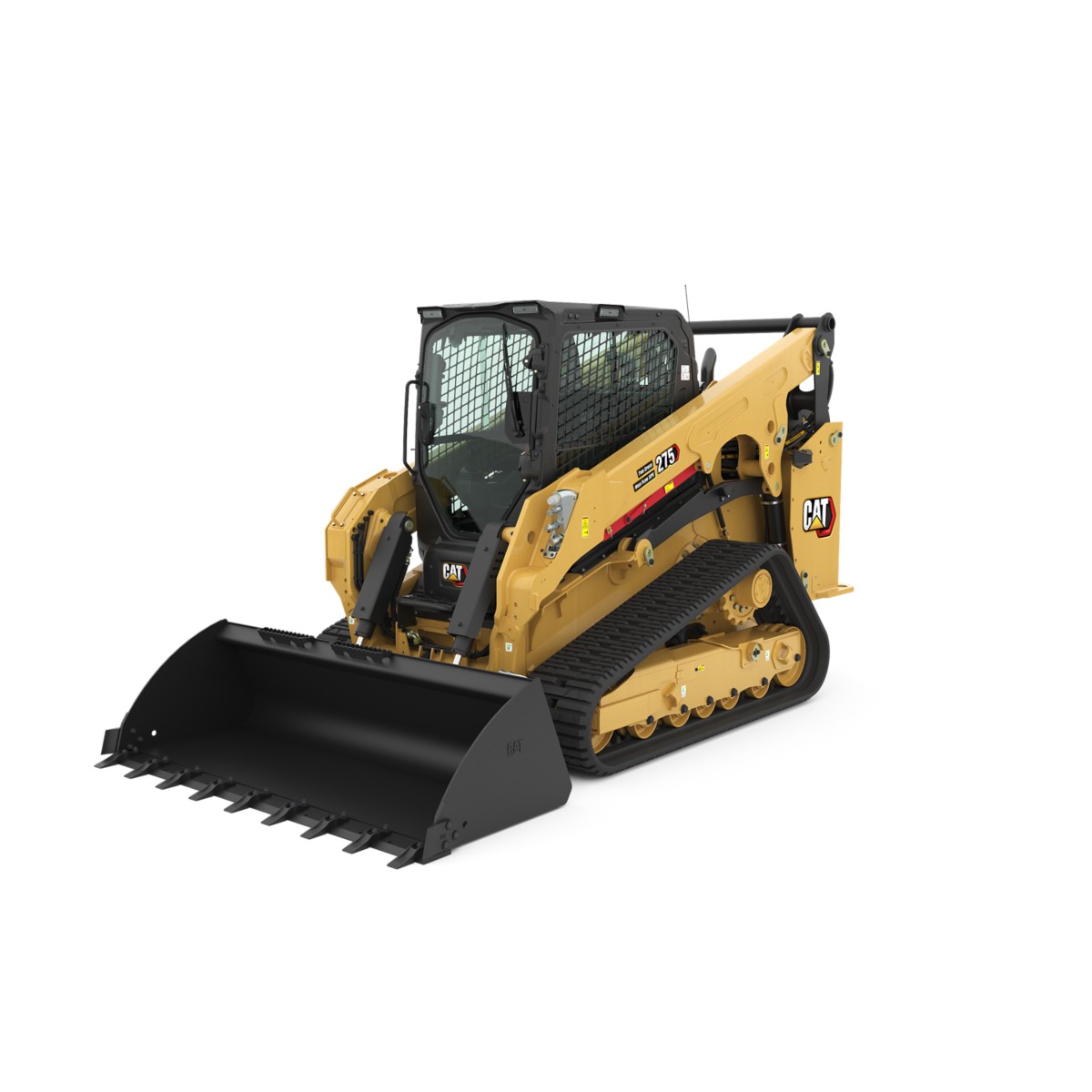
Caterpillar
Cat 275
$112,000
- Engine
- 111 hp
- Aux flow
- 23 GPM
- Weight
- 12,401 lbs
Cat's large-frame CTL class gets the next-generation redesign in the 275, effectively succeeding the 289D3 and 299D3 with a 111 hp C3.6TA engine and a 4,156 lb rated operating capacity. High Flow XPS pushes 34 GPM at up to 4,061 psi, and a higher-powered 275 XE variant sits above it for maximum attachment production.
Full sheet & owner reports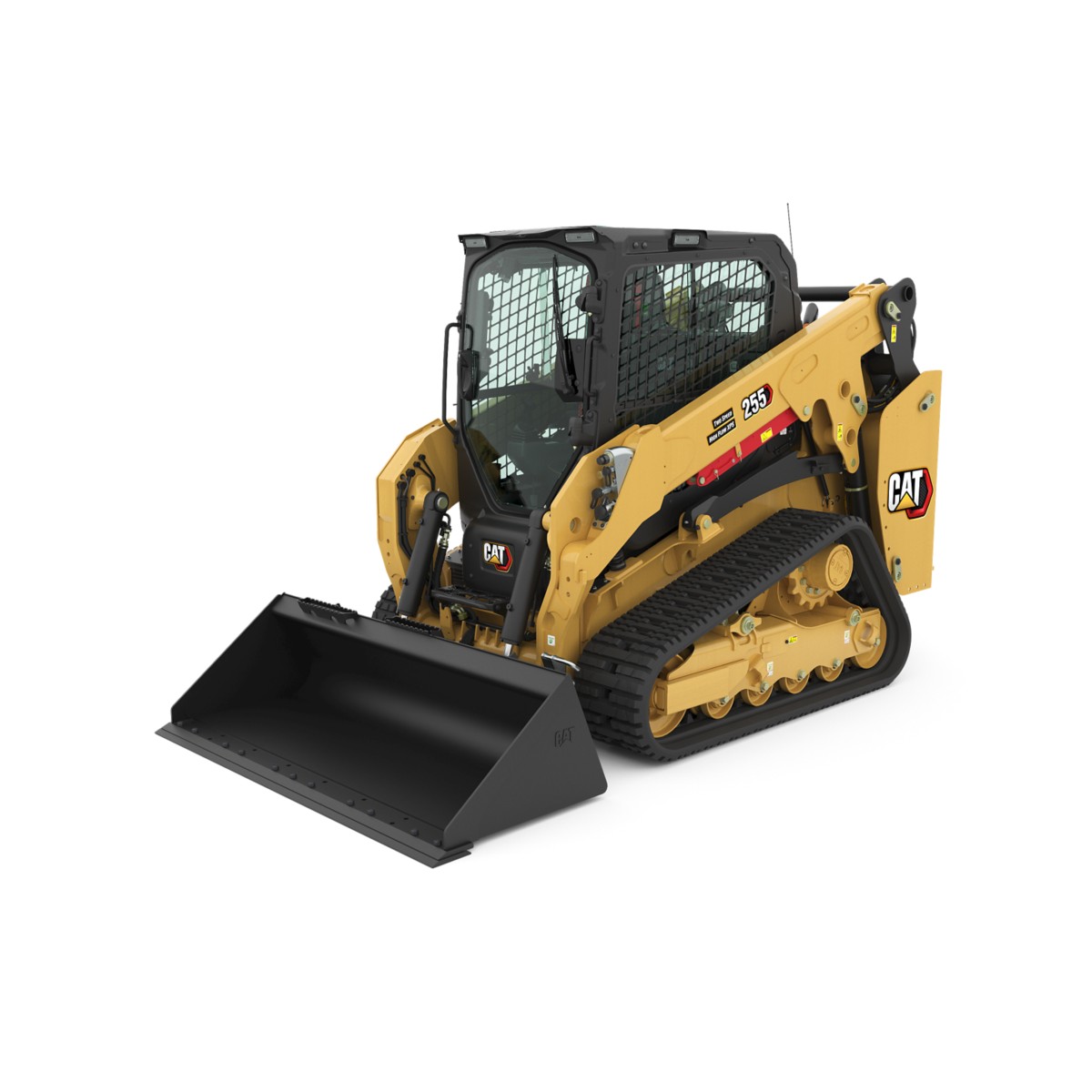
Caterpillar
Cat 255
$75,362
- Engine
- 74 hp
- Aux flow
- 20 GPM
- Weight
- 9,578 lbs
Replacing the hugely popular 259D3, the Cat 255 is the first of Caterpillar's ground-up next-generation compact track loaders. The new C2.8T engine holds peak power across a wider RPM band, and versus the 259D3 it delivers 24% more rated operating capacity, 36% more tilt breakout force, and class-leading lift height in a sealed, pressurized one-piece cab.
Full sheet & owner reports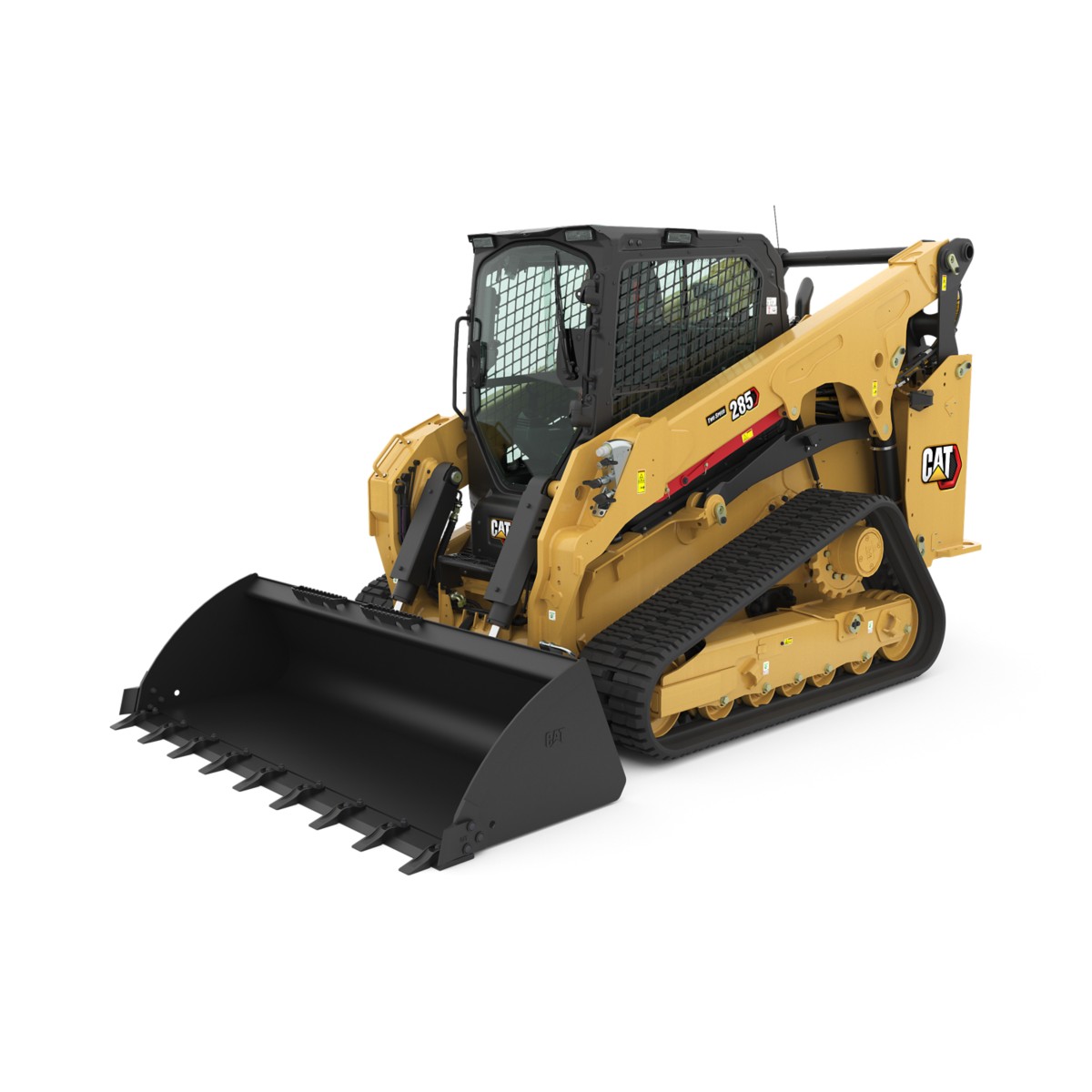
Caterpillar
Cat 285
$122,000
- Engine
- 111 hp
- Aux flow
- 23 GPM
- Weight
- 13,497 lbs
No Caterpillar compact track loader has ever been bigger than the 285, which tops the next-generation lineup above the 275 and competes in a new class size against machines like the Case TV620B. Its 146.6-inch bucket pin height and 4,461 lb rated operating capacity let it load full-size trucks and hoppers that no previous Cat CTL could reach, with a 285 XE variant above it for maximum power.
Full sheet & owner reports