Caterpillar
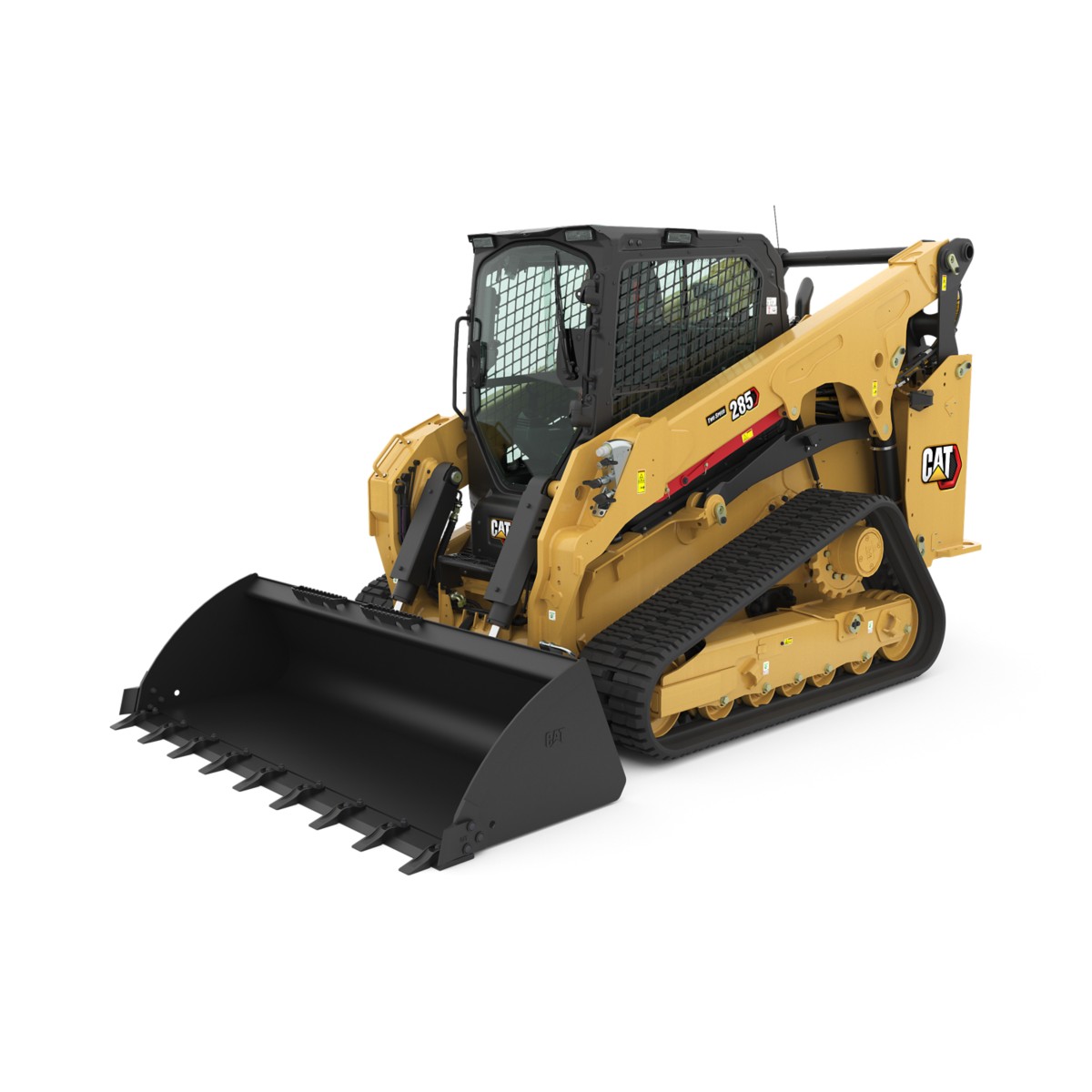
Cat 285
The bright segment is what Cat 285 is rated to carry; the grey run past it is the rest of its tipping load. Bar length is tipping load drawn to the same scale on every machine on the site, so a short bar is a smaller machine and not a conservative rating.
No Caterpillar compact track loader has ever been bigger than the 285, which tops the next-generation lineup above the 275 and competes in a new class size against machines like the Case TV620B. Its 146.6-inch bucket pin height and 4,461 lb rated operating capacity let it load full-size trucks and hoppers that no previous Cat CTL could reach, with a 285 XE variant above it for maximum power.
Suits: Maximum lift height and capacity in a tracked machine, short of a small dozer or wheel loader Its vertical lift path reaches highest at full extension, for loading high-sided trucks and stacking.
Lifting and reach
- Rated operating capacityTrack loader rating convention
- 4,461 lbs
- Tipping load
- 12,745 lbs
- Lift height to hinge pin
- 147 in
- Lift path
- Vertical Lift
- Operating weight
- 13,497 lbs
Power and hydraulics
- Engine power
- 111 hp
- Engine
- Cat C3.6TA
- Auxiliary flowStandard circuit
- 23 GPM
- Flow type
- Standard
- Warranty
- 2 yr / 2,000 hr
Fitted or available
What this machine can be ordered with. Some of these are standard and some cost extra, and which is which moves between trim levels, so check them against the quote rather than against this list.
What owners report
Summarised from the sources listed below. Nothing here was tested by us.
Reach is what this machine is for. At 146 inches of pin height it is the largest compact track loader Caterpillar has built, opening up truck-loading and hopper-charging work that every other CTL has to work around, and it does so with 4,461 lb of rated capacity behind it. That puts it in territory previously handled by a small wheel loader, which is the comparison worth making — not against mid-frame track loaders, which it simply outclasses and outweighs.
The engineering that matters day to day is the undercarriage. The standard E-bar arrangement is a deliberate compromise between a rigid frame, which is what you want when craning a heavy load at full height or grading to a line, and an oscillating one, which is what you want crossing ruts and obstacles. The cab is the other substantive change: 22% more volume, 26% more foot room and a much larger rear window, in a sealed pressurised enclosure with vents placed for real airflow. Hydraulics top out at High Flow XPS, 34 GPM at 4,061 psi, which is enough for most large attachments even though it is not the 40 GPM circuit the XE models offer. The unavoidable cost of all this is weight and complexity: past a 14,000 lb trailer, and running the full Tier 4 Final aftertreatment with DEF.
As a dedicated production machine it makes sense, with consistent heavy work in front of it — land clearing, bulk material handling, loading trucks all day — and it makes no sense for residential work, backyard access or interior demolition, where its size is purely a liability. Against the Case TV620B, the machine Cat positioned it near, read the capacity ratings carefully: Case quotes at 50% of tipping load and Cat at 35%, so the Cat's slightly higher number understates a much larger gap in real reserve. Before signing, price a 275 alongside it and work out how many times a year you genuinely need the extra twelve inches of lift, confirm your trailer and truck are legal for the combined weight, and get the dealer's service response commitment in writing — on a platform this new, that support is the part of the purchase you cannot verify from a spec sheet.
What owners like
- 146 inches of bucket pin height is the tallest reach in the compact track loader class — enough to clear a tandem dump with sideboards that forces every other CTL to pile material at the tailgate or build a ramp.
- 4,461 lb of rated capacity is quoted at the conservative 35% of a 12,745 lb tipping load. Set beside the Case TV620B's 4,340 lb quoted at 50%, the Cat is holding far more reserve than the two headline numbers suggest.
- The E-bar equalizer-bar undercarriage is standard rather than an option, and it is a real hybrid: rigid-style stability when lifting heavy or grading, oscillating behaviour when it meets rough ground and obstacles. Cat's own product manager frames the goal as maximised performance without giving up the comfort of oscillation.
- Cab volume is up 22% with 26% more foot room and a 59% larger rear window, for roughly 15% better all-round visibility. On a machine meant to run ten-hour production days that is not trim, it is the difference in what the day costs the operator.
- High Flow XPS at 34 GPM and 4,061 psi is available, and at 13,497 lb the frame is heavy enough to carry a large mulching head without the machine walking around underneath it.
- Standard coverage is two years or 2,000 hours. Comparisons that still describe a one-year Cat warranty are out of date — Cat moved to 24 months and 2,000 hours back in 2018.
What owners complain about
- Around $122,000 buys a used wheel loader or a small dozer, and the 275 one size down does most of the same work for roughly $10,000 less. Being honest about whether you need 146 inches of lift is the whole purchase decision.
- 13,497 lb plus a bucket or a mulching head is past a 14,000 lb trailer. Budget for a 20,000 lb-class trailer and a truck to pull it before you budget for attachments — this is a real cost, not a footnote.
- The 111 hp C3.6TA carries the full Tier 4 Final package including a DEF tank. Cat's sub-75 hp compacts run a diesel oxidation catalyst with no fluid to buy and no tank to fill, and that simplicity is gone at this size.
- Tracks do not make this weight gentle. On finished turf and soft ground a machine this heavy still leaves marks a mid-frame machine would not, so it is the wrong tool for landscape finishing work.
- There is no owner service record to lean on yet. Cat only revealed the 285 in late 2024, so nothing has been published on undercarriage life, final drive wear or software maturity at 3,000 hours. That is a reason to press the dealer on loaner policy and response time rather than a reason to avoid the machine, but it is a genuine unknown at this price.
Drawn from cat.com, constructionequipmentguide.com, constructionequipment.com, equipmentworld.com, compactequip.com, foleyinc.com.
What buyers ask
What can the 285 load that a smaller track loader cannot?
How does its capacity really compare to the Case TV620B?
What trailer and truck do I need?
Does it need DEF and run regens?
Is it too big for residential work?
Should I buy the 285 or the 275?
Put the Cat 285 against
Machines in the same range
The rest of the Caterpillar line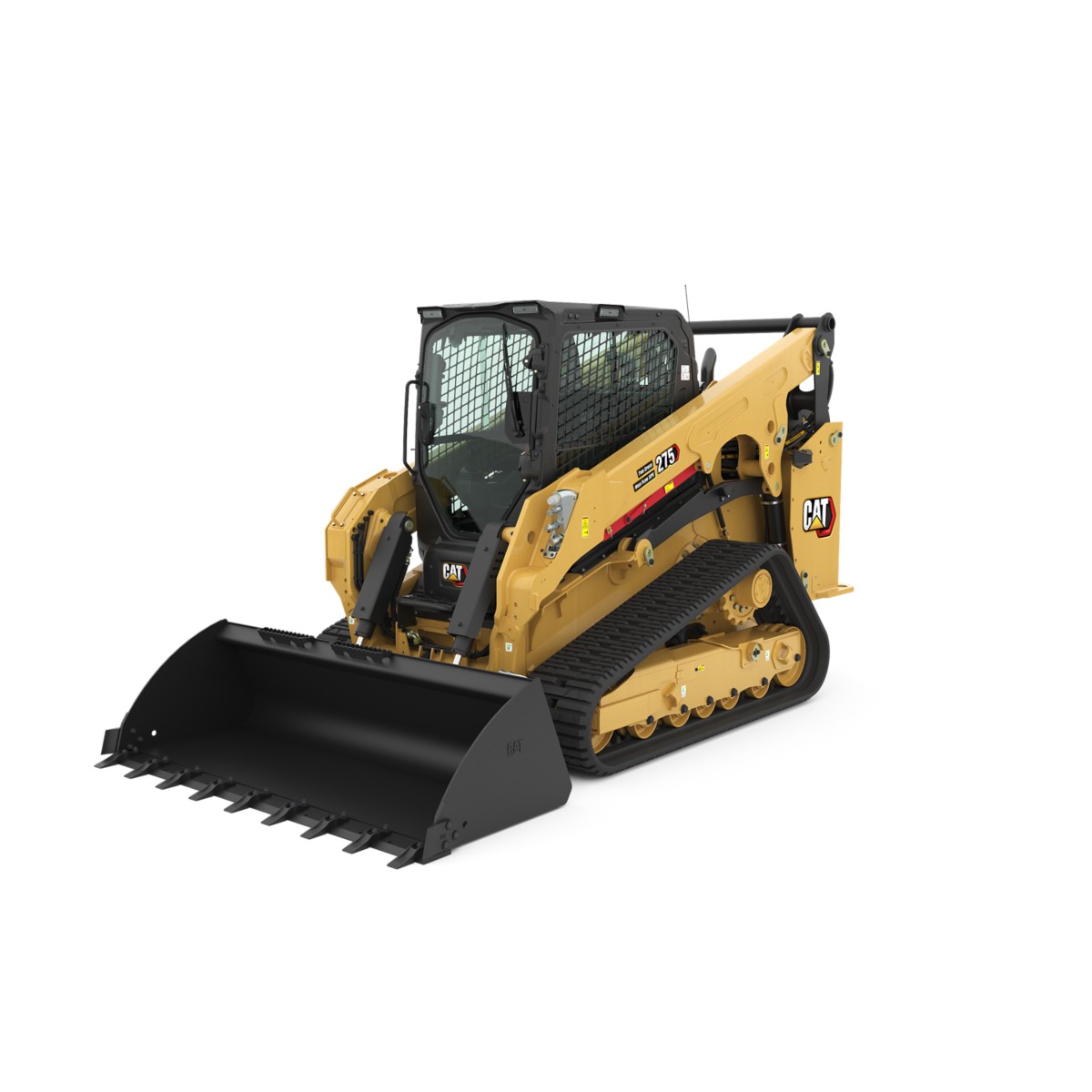
Caterpillar
Cat 275
$112,000
- Engine
- 111 hp
- Aux flow
- 23 GPM
- Weight
- 12,401 lbs
Cat's large-frame CTL class gets the next-generation redesign in the 275, effectively succeeding the 289D3 and 299D3 with a 111 hp C3.6TA engine and a 4,156 lb rated operating capacity. High Flow XPS pushes 34 GPM at up to 4,061 psi, and a higher-powered 275 XE variant sits above it for maximum attachment production.
Full sheet & owner reports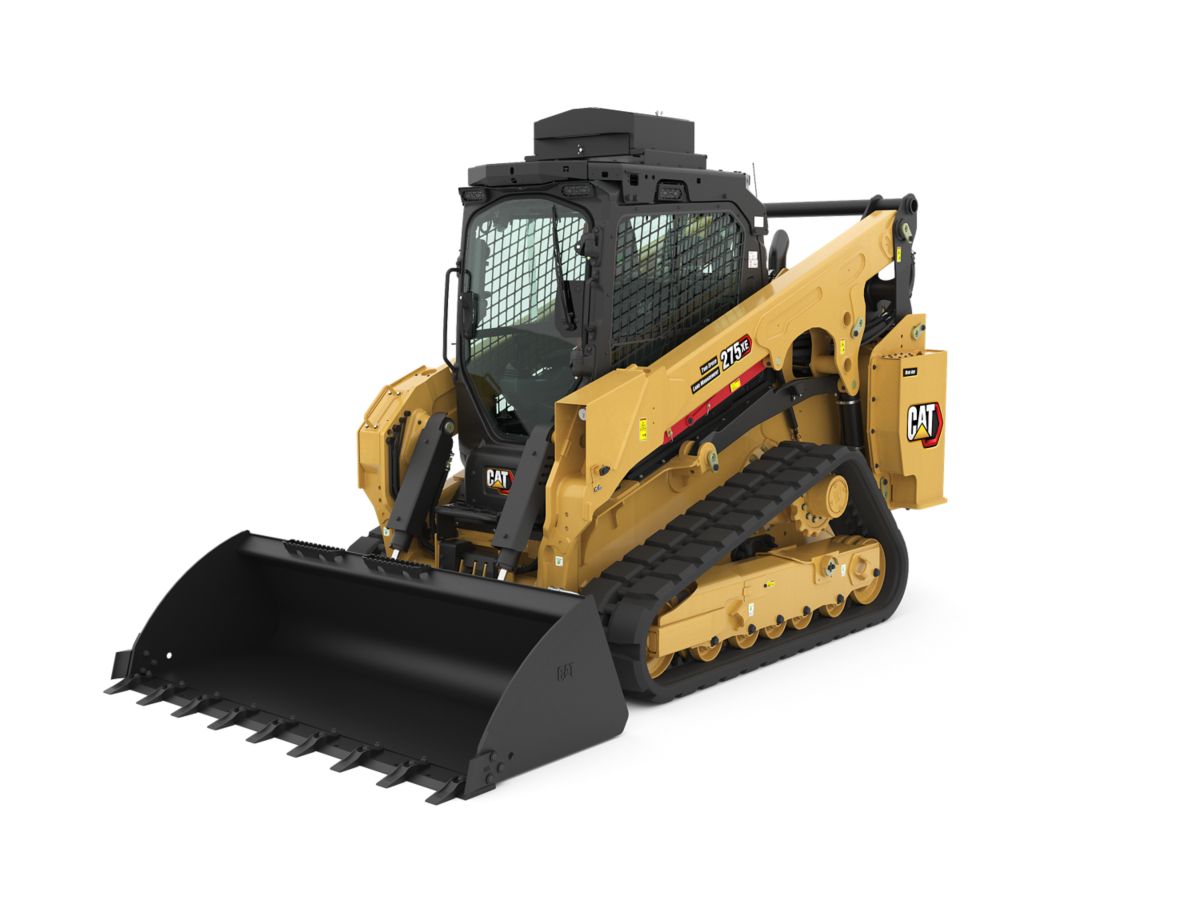
Caterpillar
Cat 275 XE
$142,446
- Engine
- 122 hp
- Aux flow
- 23 GPM
- Weight
- 12,705 lbs
Sitting above the 275 in Cat's large-frame track loader range, the XE adds the top 40 GPM auxiliary package at 4,496 psi and a higher-output tune of the 122 hp C3.6. Land-clearing and mulching outfits are the buyers; for anything else the premium buys hydraulics you will not use.
Full sheet & owner reports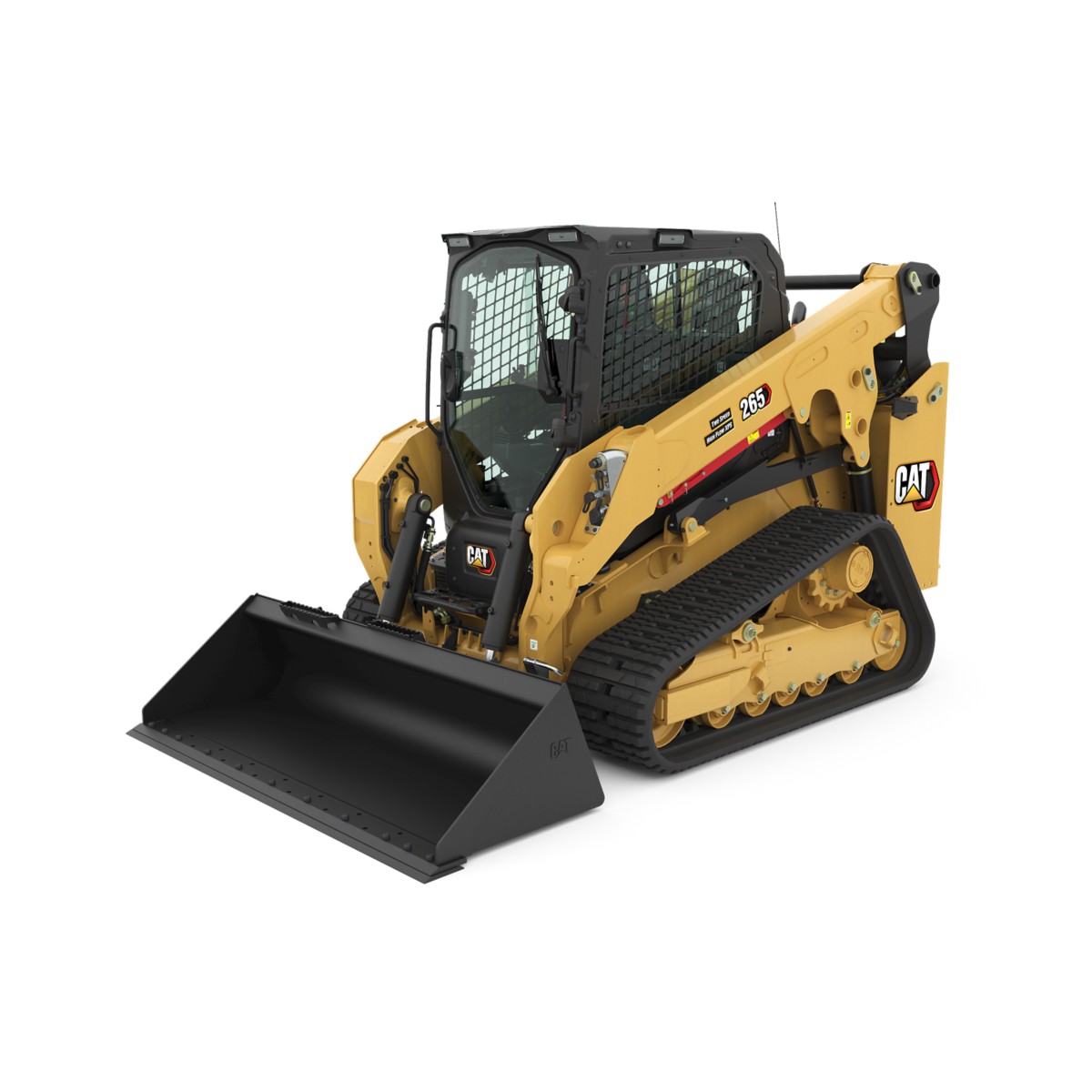
Caterpillar
Cat 265
$95,000
- Engine
- 74 hp
- Aux flow
- 23 GPM
- Weight
- 10,492 lbs
Larger of the first two next-generation Cat compact track loaders, the 265 replaces both the 279D3 and 289D3. Its turbo after-cooled C2.8TA delivers a 43% torque increase over the outgoing models, and the vertical-lift arms reach a 132-inch pin height, with High Flow XPS pushing 34 GPM for demanding attachments.
Full sheet & owner reports