Caterpillar
Cat 275 XE
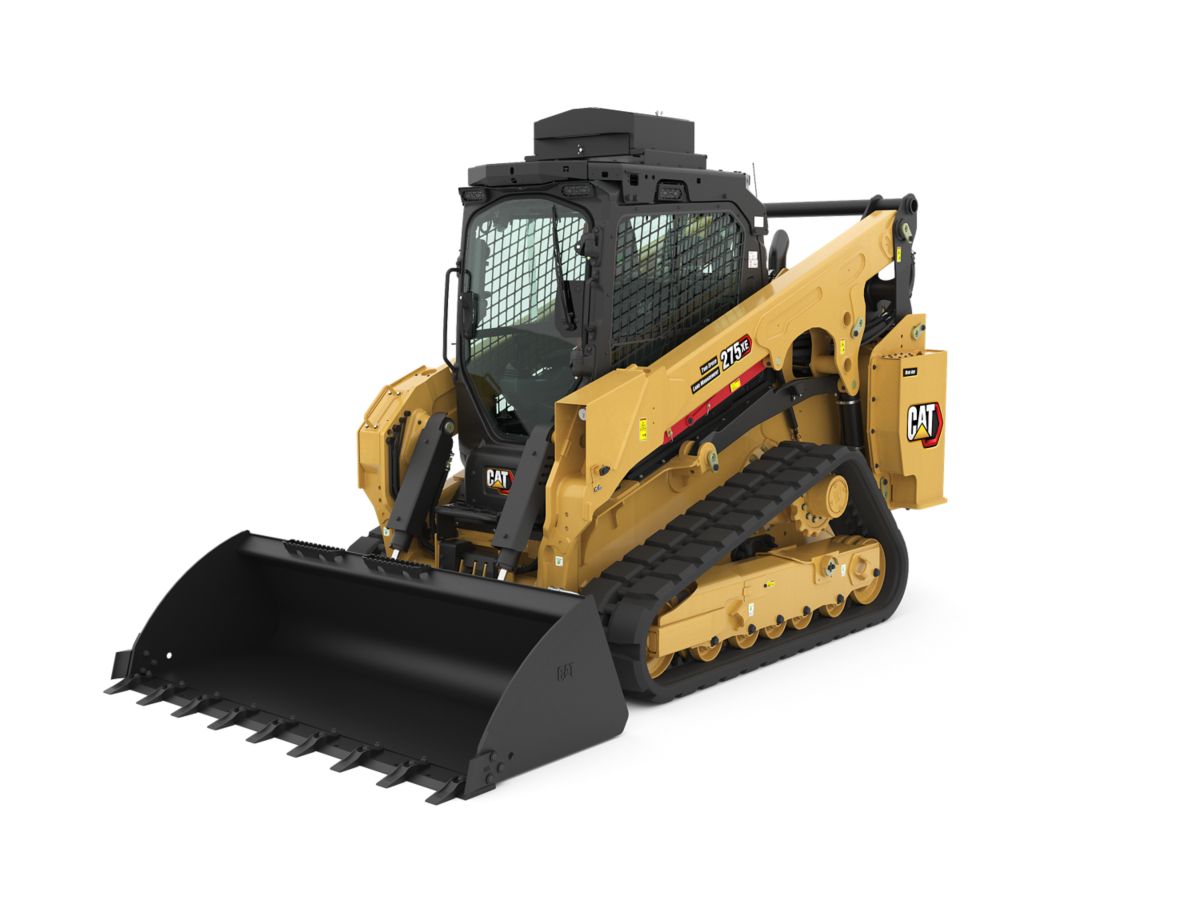
The bright segment is what Cat 275 XE is rated to carry; the grey run past it is the rest of its tipping load. Bar length is tipping load drawn to the same scale on every machine on the site, so a short bar is a smaller machine and not a conservative rating.
Sitting above the 275 in Cat's large-frame track loader range, the XE adds the top 40 GPM auxiliary package at 4,496 psi and a higher-output tune of the 122 hp C3.6. Land-clearing and mulching outfits are the buyers; for anything else the premium buys hydraulics you will not use.
Suits: Land-clearing and mulching contractors who need maximum hydraulic output in a tracked carrier Its vertical lift path reaches highest at full extension, for loading high-sided trucks and stacking.
Lifting and reach
- Rated operating capacityTrack loader rating convention
- 4,205 lbs
- Tipping load
- 12,015 lbs
- Lift height to hinge pin
- 134.4 in
- Lift path
- Vertical Lift
- Operating weight
- 12,705 lbs
Power and hydraulics
- Engine power
- 122 hp
- Engine
- Cat C3.6 TA
- Auxiliary flowStandard circuit
- 23 GPM
- Flow type
- Standard
- Warranty
- 2 yr / 2,000 hr
Fitted or available
What this machine can be ordered with. Some of these are standard and some cost extra, and which is which moves between trim levels, so check them against the quote rather than against this list.
What owners report
Summarised from the sources listed below. Nothing here was tested by us.
Attachment carrier first, loader second. This is the version of the 275 built for machines that spend the day with a mulching head, a large planer or a wheel saw on the front, and the whole justification is the High Flow XE circuit: 40 GPM at 4,496 psi where the standard machine offers 34 GPM at 4,061 psi. A contractor in vegetation management has taken one past 1,000 hours in exactly that role and calls it the machine everybody wants to be in, which is about as direct an endorsement as this class gets.
The reported experience backs the intent. Over those hours, at eight to ten hours a day in heat and dust, there were no catastrophic failures and no overheating, and the single recurring annoyance was a coupler hose that let go twice. With a 3,000 lb head on the front the machine was described as exponentially more stable than what it replaced, and — the point of the hydraulic package — it held power to the head and the tracks simultaneously while working through timber. The cab drew the strongest praise of all: 22% more volume, far better visibility rearward, and climate control good enough that the operator noticed retrospectively how bad his older machines had been. What you pay for that is weight and complexity, a DEF tank, and undercarriage consumption that is the real running-cost line on a brush machine.
Worth buying only if a high-flow attachment runs most of the day, because the premium buys nothing else — the standard 275 lifts to the same height with essentially the same capacity for around $30,000 less. Be sceptical of the paperwork: two different horsepower figures are in circulation for this machine, and Cat's own spec table contains at least one impossible capacity cell, so verify any surprising number against a second source and against the machine on the lot. Then price tracks and rollers, confirm your trailer is rated for the machine plus the head, and ask the dealer about response time, because a 40 GPM electro-hydraulic system is not something you diagnose in a field.
What owners like
- One vegetation-management contractor has run one past 1,000 hours at eight to ten hours a day and reports zero catastrophic failures — the only repeat item across that whole period was the same hose on the coupler breaking twice.
- It did not overheat on 90-degree dusty days under continuous mulching load, which is precisely the condition that exposes a cooling package on this kind of machine.
- Carrying a 3,000 lb mulching head, that same operator describes it as exponentially more stable than the track-loader-and-mulcher combinations he had run before, and specifically that he is not losing power to the head or to the track system while twisting and turning in timber.
- The High Flow XE circuit runs 40 GPM at 4,496 psi against the standard 275's 34 GPM at 4,061 psi on High Flow XPS. That is the concrete thing the badge buys, and it is what holds a large rotor at speed instead of letting it bog into the cut.
- Engine output rises with it — 122 hp gross and 406 lb-ft against the standard 275's 111 hp and 370 lb-ft, from the same C3.6TA block.
- Cab comfort is what the operator who lived in one names first: you do not realise how uncomfortable you were in older machines until you are in something like this. The touchscreen is integrated into the joysticks well enough to change the radio without letting go of the controls.
- Cat publishes $142,446 as a starting price, which is unusual at this end of the market and turns the premium over a standard 275 into a figure you can argue about rather than guess at.
What owners complain about
- The roughly $30,000 premium over a standard 275 buys hydraulic flow, hydraulic pressure and about eleven more horsepower. It does not buy lift: both machines reach the same 134.4 inch pin height, and their rated capacities are within 50 lb of each other.
- That makes it a poor buy for anyone not running a power-hungry attachment most of the working day. Used as a bucket machine it is a 275 with a more expensive invoice and nothing to show for it.
- XE is a hydraulics and engine-output package, not an electric or hybrid drivetrain, whatever the badge suggests. There is no battery, no electric traction motor and no electric-drive fuel saving to bank — if a salesperson frames it that way, ask to see the hydraulic flow and pressure figures instead, because that is the entire product.
- Published horsepower for this machine contradicts itself. Cat's launch material quotes 134 hp while current spec sheets say 121 to 122 hp gross, and both figures circulate on dealer pages. Expect to have that conversation at the counter.
- Cat's own spec table for the 275 XE is unreliable in at least two cells — the 50% rated-capacity figure reads 4,033 lb, which is lower than the 4,205 lb quoted at 35% of the same tipping load and therefore arithmetically impossible. Cross-check anything surprising against a second source before you build a decision on it.
- At 12,705 lb before you hang a 3,000 lb mulcher on it, legal transport means a 20,000 lb-class trailer, and the 122 hp engine carries the full Tier 4 Final package with a DEF tank to fill.
- Undercarriage wear is the dominant running cost for a heavy machine working brush all day, and Cat parts pricing sits at the top of the market. Price a set of tracks and rollers before you model the job rate.
Drawn from equipmentworld.com, youtube.com, fl-part.com, constructionequipmentguide.com, foleyinc.com, cat.com.
What buyers ask
Is the XE an electric or hybrid machine?
What does the premium over a standard 275 actually buy?
How has it held up in heavy use?
Why do I see 134 hp quoted in some places and 121 in others?
Can I trust Cat's published spec table for this model?
What are the real running costs on a brush machine like this?
Put the Cat 275 XE against
Machines in the same range
The rest of the Caterpillar line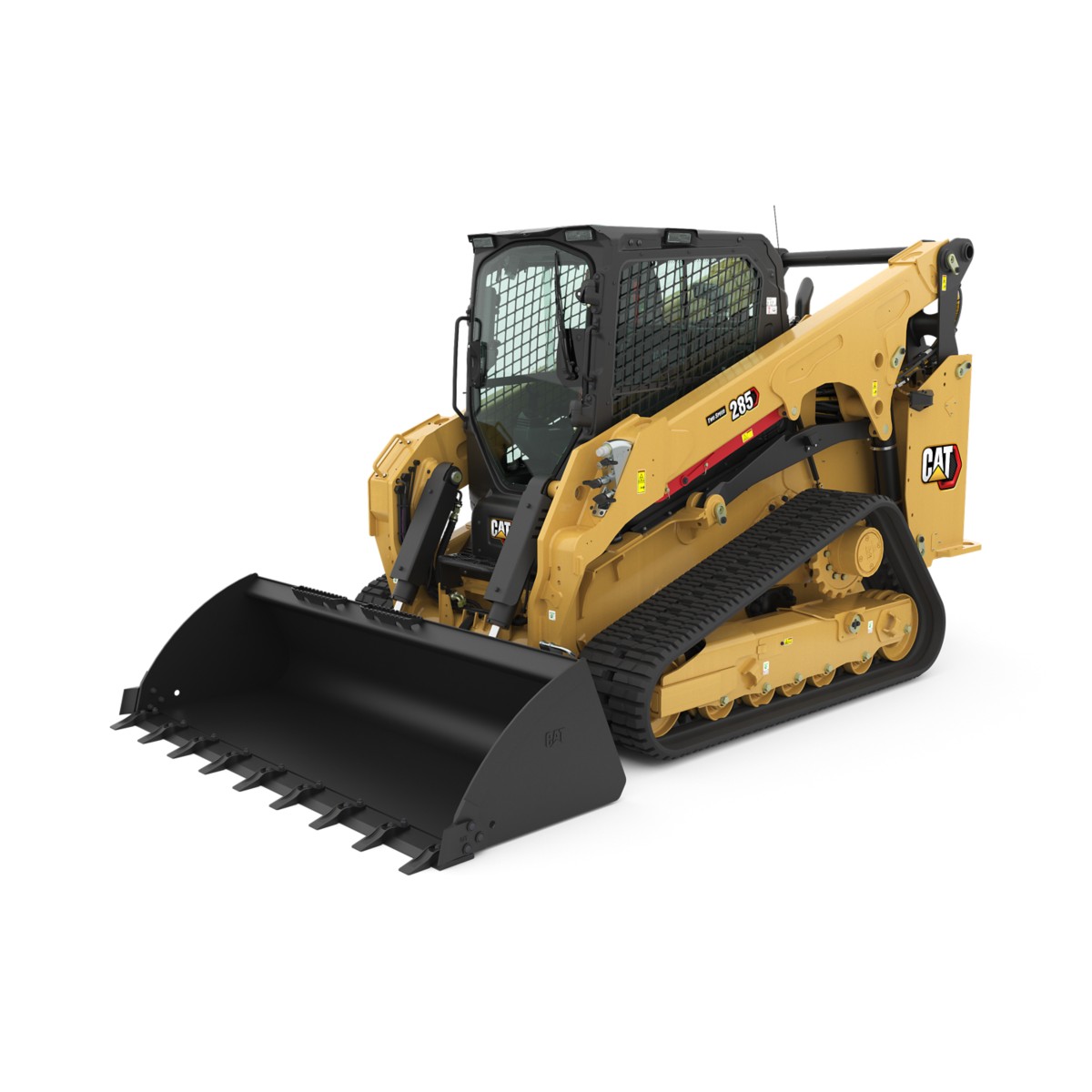
Caterpillar
Cat 285
$122,000
- Engine
- 111 hp
- Aux flow
- 23 GPM
- Weight
- 13,497 lbs
No Caterpillar compact track loader has ever been bigger than the 285, which tops the next-generation lineup above the 275 and competes in a new class size against machines like the Case TV620B. Its 146.6-inch bucket pin height and 4,461 lb rated operating capacity let it load full-size trucks and hoppers that no previous Cat CTL could reach, with a 285 XE variant above it for maximum power.
Full sheet & owner reports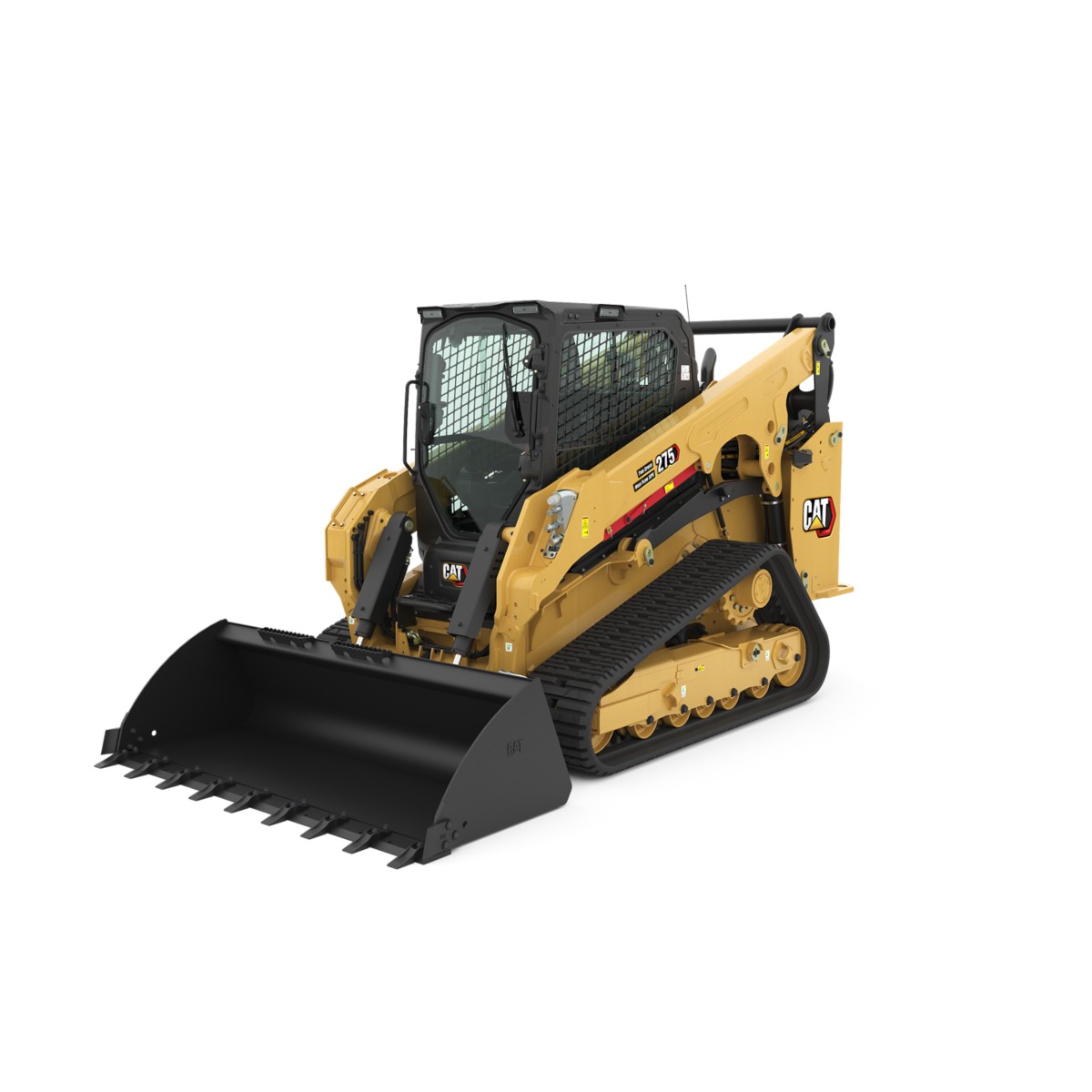
Caterpillar
Cat 275
$112,000
- Engine
- 111 hp
- Aux flow
- 23 GPM
- Weight
- 12,401 lbs
Cat's large-frame CTL class gets the next-generation redesign in the 275, effectively succeeding the 289D3 and 299D3 with a 111 hp C3.6TA engine and a 4,156 lb rated operating capacity. High Flow XPS pushes 34 GPM at up to 4,061 psi, and a higher-powered 275 XE variant sits above it for maximum attachment production.
Full sheet & owner reports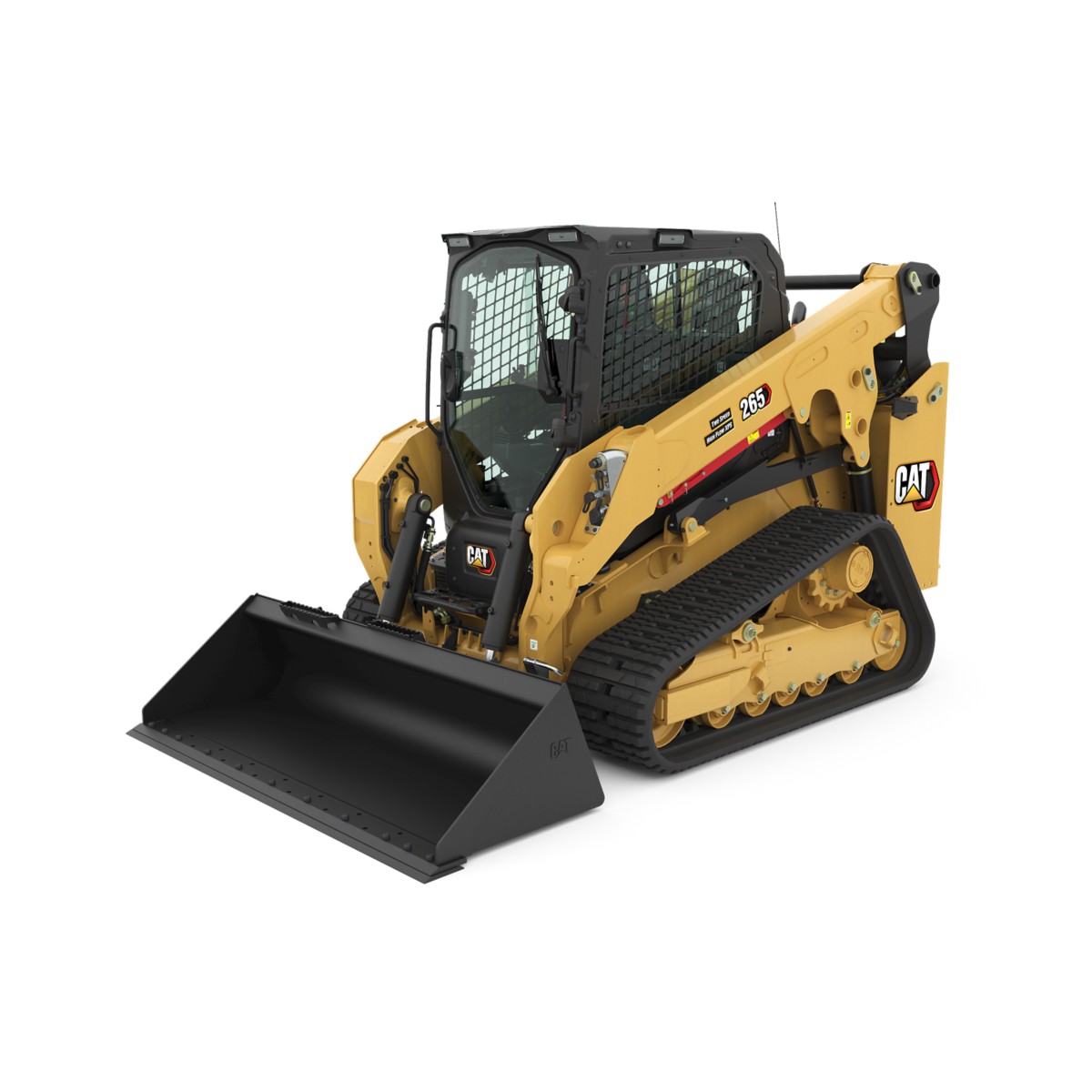
Caterpillar
Cat 265
$95,000
- Engine
- 74 hp
- Aux flow
- 23 GPM
- Weight
- 10,492 lbs
Larger of the first two next-generation Cat compact track loaders, the 265 replaces both the 279D3 and 289D3. Its turbo after-cooled C2.8TA delivers a 43% torque increase over the outgoing models, and the vertical-lift arms reach a 132-inch pin height, with High Flow XPS pushing 34 GPM for demanding attachments.
Full sheet & owner reports