John Deere 332G vs Cat 260
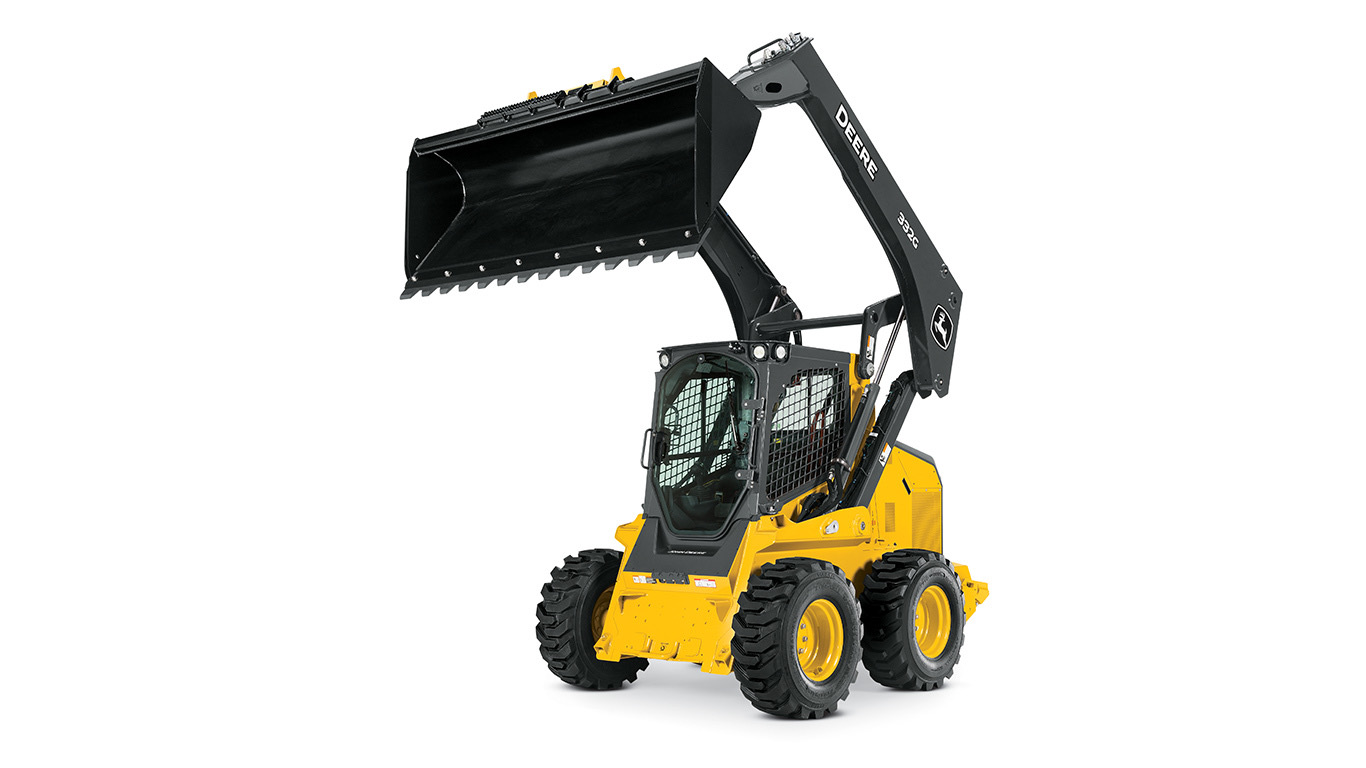
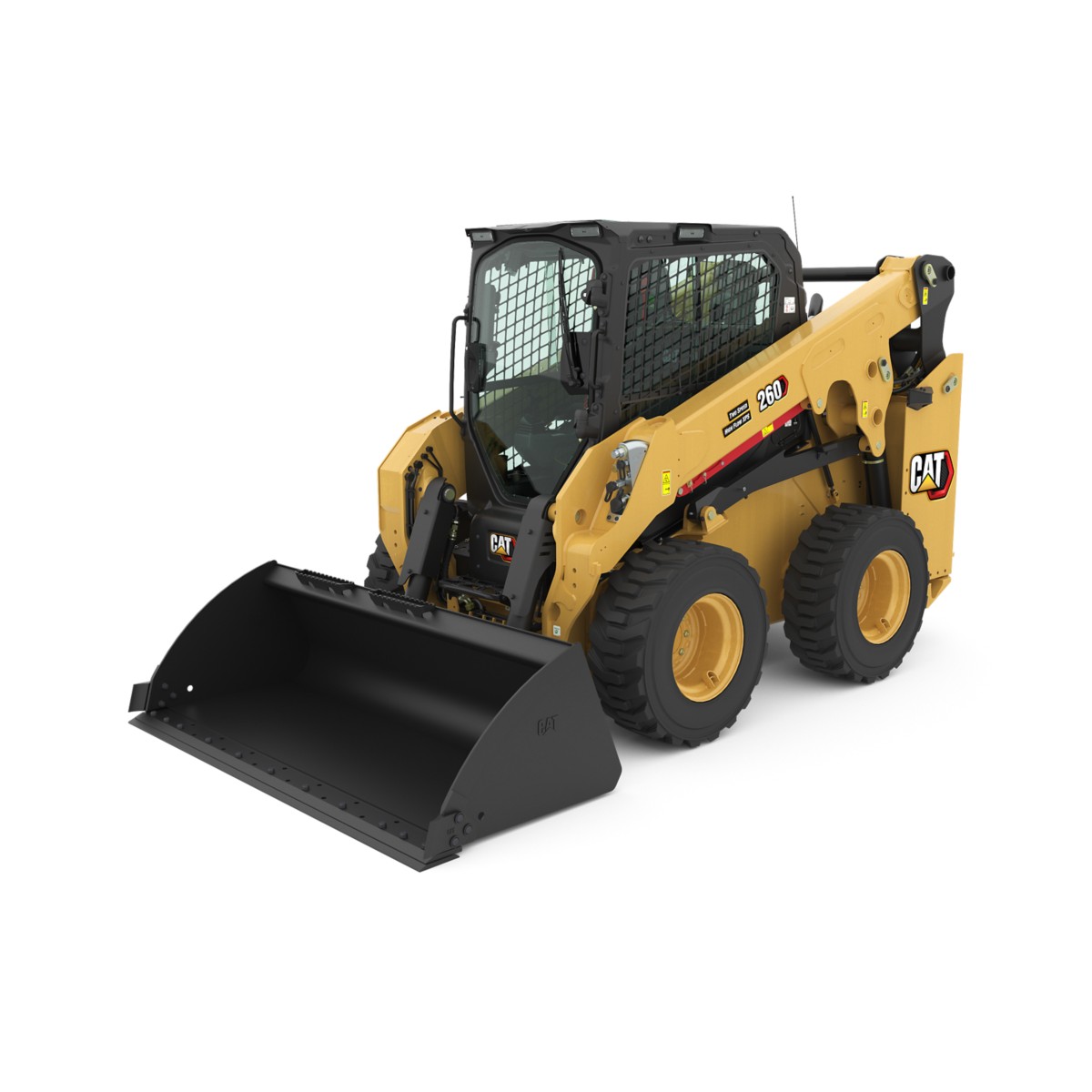
Quick take: The Cat 260 costs $4,000 less; the John Deere 332G has a higher rated operating capacity (3,600 vs 3,160 lbs); the John Deere 332G has more engine power (100 vs 74 hp).
| Spec | John Deere 332G | Cat 260 |
|---|---|---|
| Price | $78,000 | $74,000 |
| Rating | 4.5★ (360) | 4.6★ (130) |
| Type | Wheeled Skid Steer | Wheeled Skid Steer |
| Lift Path | Vertical Lift | Vertical Lift |
| ROC | 3600 lbs | 3160 lbs |
| Engine HP | 100 hp | 74 hp |
| Operating Weight | 10000 lbs | 8523 lbs |
| Tipping Load | 7200 lbs | 6321 lbs |
| Lift Height | 133 in | 132 in |
| Hydraulic Flow | 25 GPM | 20 GPM |
| Engine | Yanmar | Cat C2.8T |
| Tracks | No | No |
| Vertical lift | Yes | Yes |
| High-flow | Yes | Yes |
| Enclosed cab | Yes | Yes |
| Two-speed | Yes | Yes |
| Self-leveling | Yes | Yes |
| A/C & heat | Yes | Yes |
| Warranty | 2 yr / 2000 hr | 1 yr / 1000 hr |
Pros & cons
John Deere 332G
- ✓At 100 hp and 3,600 lb capacity the 332G is Deere's biggest wheeled skid steer, and heavy operators praise its production capability for loading and pushing.
- ✓The high-flow option up to 41 GPM is generous, and owners running planers, mulchers, and snow blowers say it powers demanding attachments with ease.
- ✓The 133-inch lift height makes loading the tallest trucks and hoppers effortless, a real advantage for aggregate and material handling.
- ✓Deere's huge dealer and financing network makes parts, service, and support easy, especially for customers already running green equipment.
- ✓The side-by-side cooling package resists overheating and cleans out easily in dusty, debris-heavy conditions.
- ✓EH controls with selectable response help operators run a big, powerful machine precisely for both grading and heavy work.
- ✓The large frame and heavy weight give a planted, stable feel when handling heavy loads at full reach.
- ✓Deere skid steers hold resale value well, supported by brand loyalty and the popularity of the large-frame G-Series.
- ✗Deere parts and dealer labor are on the higher end, and owners note maintenance costs on a big machine accumulate over time.
- ✗The Yanmar's DPF emissions system can be finicky with regen during light-duty idling, interrupting production.
- ✗As a wheeled machine it lacks the flotation of a CTL, so it's less suited to soft or muddy ground than the 333G.
- ✗At 10,000 lb it needs a heavy truck and trailer, and its size reduces versatility on tight residential sites.
- ✗Some operators find the EH controls take a learning curve and feel less direct than pilot or mechanical setups.
- ✗New pricing reflects the Deere premium, and value shoppers note Case and New Holland large frames can undercut it.
- ✗The feature-rich cab and high-flow package push the price up quickly, so a well-equipped 332G gets expensive.
- ✗Tires wear quickly under heavy loads on abrasive surfaces, and a full premium set is a steep recurring cost.
Cat 260
- ✓Rated operating capacity jumps to 3,160 lbs from the 262D3's 2,700, a 17% gain that owners handling brick, seed, and fertilizer pallets notice immediately.
- ✓The 132-inch bucket pin height is a genuine truck-loading height for a mid-frame wheeled machine, clearing dump truck sides the 262D3 strained to reach.
- ✓Torque from the new C2.8T is dramatically improved over the old C3.3B, and operators report the 260 holds ground speed while backdragging and pushing where the D3 bogged.
- ✓The High Flow XPS option brings 34 GPM to a wheeled mid-frame, enough for planers and wheel saws that used to demand a larger, more expensive carrier.
- ✓The sealed one-piece pressurized cab with available heated/ventilated air-ride seat is the same operator station as the big next-gen CTLs - a huge upgrade at this size.
- ✓Staying at 74 hp means no DEF tank or SCR system, keeping maintenance simple for owners who run high annual hours.
- ✓The 8-inch touchscreen with switchable ISO/H controls, rearview camera, and standard telematics matches features Bobcat and Deere charge option money for.
- ✓Cat's vertical lift with dual-direction self-leveling keeps forks level through the whole lift path, which material-handling operators single out as a daily time-saver.
- ✗Standard flow dropped to 20 GPM from the 262D3's 23 GPM, forcing buyers with existing attachments to double-check requirements or budget for the High Flow enablement.
- ✗The next-gen premium prices it against strong competition - a comparably equipped Bobcat S76 or Deere 330G often quotes lower, and owners say Cat dealers hold firm on price.
- ✗At 8,523 lbs it's a couple hundred pounds heavier than the 262D3, nudging total trailer loads closer to 10k limits once attachments come along.
- ✗Early production machines shared the next-gen line's software teething problems, with touchscreen freezes and sensor faults resolved only by dealer updates.
- ✗Buyers wanting more than 74 hp in a wheeled Cat have a big price gap to the 111 hp 270 - there's no intermediate 90 hp option like some competitors offer.
- ✗The added electronics and sealed cab design make some repairs dealer-only, which independent-shop loyalists count against it versus the simpler D3s.
- ✗Resale values for the new series are still unsettled, and some fleet buyers are waiting a cycle before committing, which can soften near-term trade-in offers.
- ✗Wheeled machines remain weather-dependent - several owners note they still end up renting tracks for wet-season work, making the 260 a fair-weather primary.