Head to head
ASV RT-65-1C against ASV VT-75-1C
The ASV RT-65-1C saves $12,000; the ASV VT-75-1C carries 300 lb more once both are rated the same way.

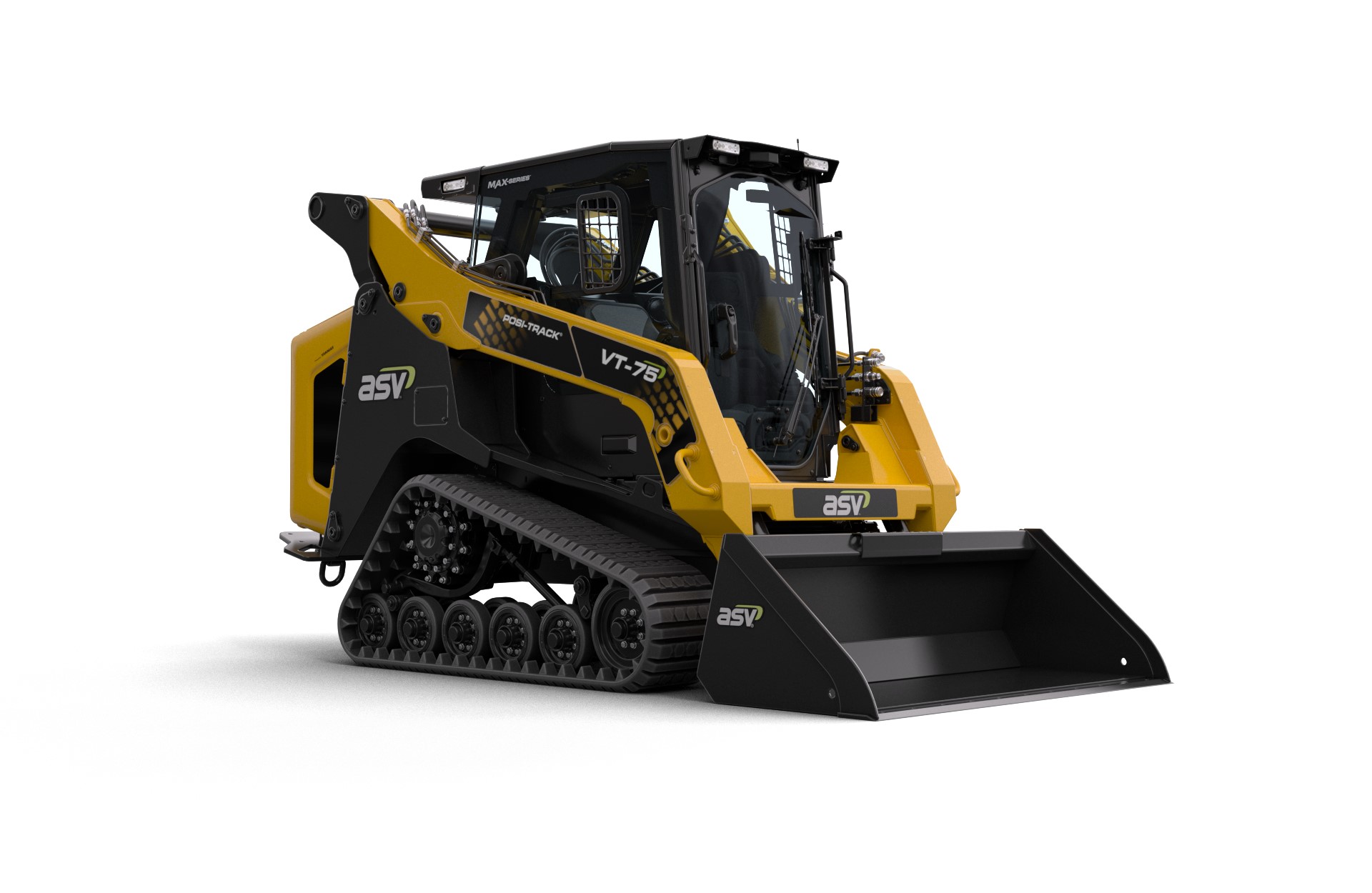
| Spec | ASV RT-65-1C | ASV VT-75-1C |
|---|---|---|
| Price | $61,000 | $73,000 |
| Rated capacity, as advertised | 2,000 lbs | 2,300 lbs |
| Rated at | 35% of tipping load | 35% of tipping load |
| Tipping load | 5,714 lbs | 6,571 lbs |
| Capacity at its class convention | 2,000 lbs | 2,300 lbs |
| Engine power | 67 hp | 72 hp |
| Engine | Yanmar 4TNV86CHT | Yanmar 4TN86CHT |
| Auxiliary flow | 21.4 GPM | 21.4 GPM |
| Lift height | 120 in | 126.5 in |
| Operating weight | 7,405 lbs | 7,915 lbs |
| Lift path | Radial Lift | Vertical Lift |
| Rubber tracks | Yes | Yes |
| High flow available | Yes | Yes |
| Enclosed cab available | Yes | Yes |
| Two-speed travel available | Yes | Yes |
| Self-levelling available | Yes | Yes |
| A/C and heat available | Yes | Yes |
| Warranty | 2 yr / 2,000 hr | 2 yr / 2,000 hr |
What owners say about each
ASV RT-65-1C
- Low ground pressure lets it work wet lawns, spring thaw, and sandy ground that bogs down steel-embedded track machines - the reason many owners switch to ASV.
- The 67.1 hp Yanmar turbo is torquey, DEF-free, and simple to service, keeping daily operation cheap for owner-operators.
- A 9.1 mph two-speed drive is quick for the class and makes long ground moves on acreage properties far less tedious.
- The 21.4 GPM standard circuit with a 26.7 GPM high-flow option runs augers, brush cutters, and snow blowers that starve on smaller machines.
- At 66 inches wide with a 120-inch hinge pin height it balances tight-access maneuverability with genuine truck-loading ability.
- The 2-year/2,000-hour warranty includes ASV's no-derailment track guarantee, unmatched coverage for a rubber-track undercarriage.
- Radial lift geometry gives strong bucket breakout for digging and grading, which is where mid-frame machines spend most of their hours.
- The multi-wheel Posi-Track undercarriage demands regular cleaning and bearing care, and deferred maintenance turns into cascading, expensive repairs.
- Replacement tracks cost noticeably more than conventional CTL tracks and chunk quickly on rock, rebar, and demolition debris.
- The 2,000 lb rated capacity trails similarly priced vertical-lift rivals, and the radial path limits reach at full height for truck loading.
- Yanmar engine parts are less stocked in rural America than Kubota, which can stretch downtime when something breaks.
- No self-leveling on base configurations means spec'ing carefully - pallet work without it spills material as the arms rise.
ASV VT-75-1C
- The vertical lift path and 126.5-inch hinge pin height clear standard dump truck sides - the main upgrade over the radial RT models it replaced.
- Low ground pressure works wet lawns, septic systems, and soft spring ground with minimal damage, keeping landscapers on the clock when rivals park.
- The 71.5 hp Yanmar turbo makes 193.8 ft-lbs of torque with no DEF, keeping the emissions system simple and the fuel bill modest.
- A 9.1 mph two-speed drive covers big properties quickly, and the drivetrain delivers power to the tracks with less parasitic loss than gear-driven rivals.
- The 21.4 GPM standard and 26.7 GPM optional high-flow circuits run attachments continuously with dedicated coolers that resist summer overheating.
- At 7,915 lbs it tows lighter than the 9,000-10,000 lb machines it competes with on capability, saving on trailer and truck requirements.
- The 2-year/2,000-hour warranty with no-derailment track guarantee removes the biggest fear buyers have about rubber-track undercarriages.
- Undercarriage upkeep is the ASV tax - dozens of wheels and bearings need regular attention, and rebuilds cost real money when neglected.
- The rubber tracks that grip so well in mud cut and chunk on rock, concrete, and demolition sites - this is a dirt and turf machine.
- The 2,300 lb rated capacity trails same-money conventional rivals like Kubota's SVL75-3, which lifts more per dollar.
- Yanmar parts and service expertise are harder to find at independent shops than Kubota or Deere equivalents.
- As a newer model the long-term durability record is short, and early adopters carry that uncertainty.
- Cab refinement is improved but still trails Cat and Deere flagships in noise, sealing, and display polish.