New Holland L328 vs Gehl R220
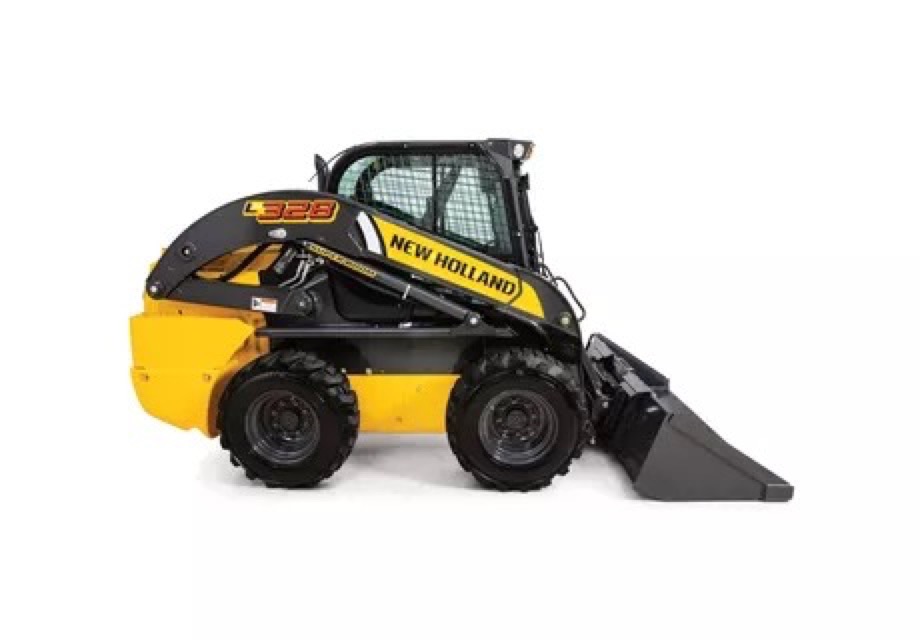
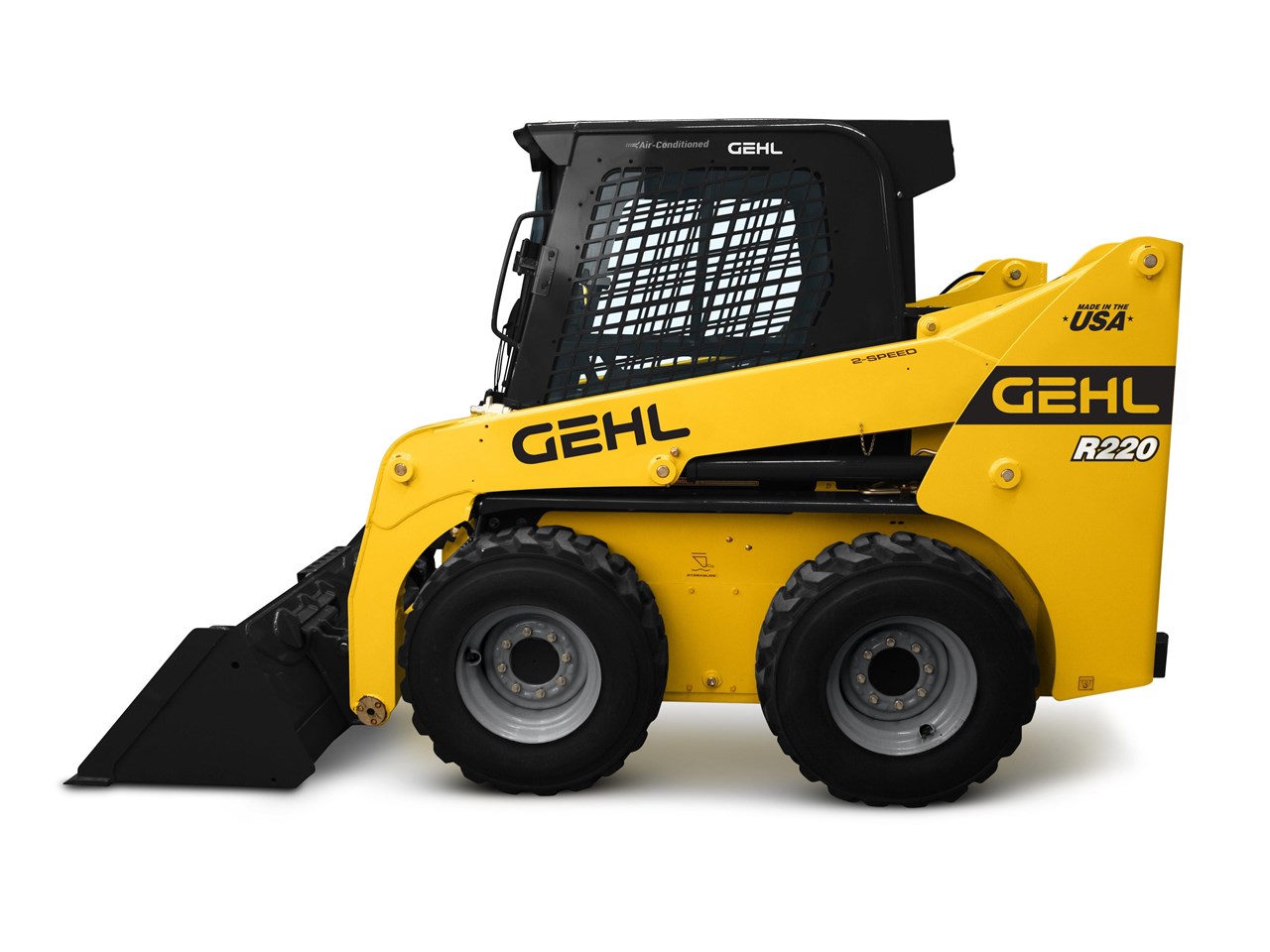
Quick take: The New Holland L328 has a higher rated operating capacity (2,800 vs 2,200 lbs); the New Holland L328 has more engine power (74 vs 72 hp).
| Spec | New Holland L328 | Gehl R220 |
|---|---|---|
| Price | $55,000 | $55,000 |
| Rating | 4.3★ (240) | 4.2★ (85) |
| Type | Wheeled Skid Steer | Wheeled Skid Steer |
| Lift Path | Vertical Lift | Radial Lift |
| ROC | 2800 lbs | 2200 lbs |
| Engine HP | 74 hp | 72 hp |
| Operating Weight | 7895 lbs | 7980 lbs |
| Tipping Load | 5600 lbs | 4400 lbs |
| Lift Height | 129 in | 123 in |
| Hydraulic Flow | 24 GPM | 23.5 GPM |
| Engine | FPT | Yanmar 4TNV98CT |
| Tracks | No | No |
| Vertical lift | Yes | No |
| High-flow | Yes | Yes |
| Enclosed cab | Yes | Yes |
| Two-speed | Yes | Yes |
| Self-leveling | Yes | Yes |
| A/C & heat | Yes | Yes |
| Warranty | 2 yr / 2000 hr | 2 yr / 2000 hr |
Pros & cons
New Holland L328
- ✓New Holland's patented Super Boom vertical lift gives class-leading dump height and reach, and operators say it loads the center of high-sided trucks better than anything in its price range.
- ✓The 129-inch hinge-pin height is exceptional for a medium frame, so stacking pallets and loading tall hoppers is genuinely easy.
- ✓The L328 undercuts Bobcat and Cat on price, so value-focused buyers feel they get premium lift geometry for less money.
- ✓The FPT engine has a solid reliability reputation, and the machine pulls strongly for a 74 hp unit in loading applications.
- ✓The cab is roomy with good visibility, and owners appreciate the comfortable layout and low-effort controls over long days.
- ✓The 24 GPM standard flow is generous, and the high-flow option opens up demanding attachments for added versatility.
- ✓Two-speed travel comes standard, making ground-to-ground moves quick on larger sites.
- ✓Owners doing a lot of loading and stacking specifically choose the Super Boom design over radial-lift competitors for the reach advantage.
- ✗New Holland's construction dealer network is thin in many regions, and owners report that parts and service access can be a real weak point.
- ✗Resale value trails the big three brands, so the lower purchase price is partly offset by a steeper depreciation hit.
- ✗Some owners report electrical and sensor issues on FPT-engined machines that can be frustrating to diagnose.
- ✗The Super Boom linkage adds pivot points and grease zerks, which owners note require diligent maintenance to avoid wear.
- ✗The attachment and used-implement ecosystem isn't as deep as Bobcat's, limiting options in some markets.
- ✗Fit-and-finish is judged by some operators as a step below Cat and Bobcat refinement.
- ✗Because dealers are sparse, warranty and service experience varies widely by location.
- ✗The vertical-lift geometry that helps loading compromises some low-end digging force versus a radial-lift machine.
Gehl R220
- ✓Radial-lift geometry on a large frame delivers serious breakout and prying force, and operators say it out-digs vertical-lift rivals in hard bank material.
- ✓The 72 hp Yanmar 4TNV98CT turbo diesel is a proven, simple engine that hits Tier 4 without the aftertreatment complexity of bigger-displacement rivals.
- ✓An optional 35 GPM high-flow circuit at 3,300 psi runs planers, mulchers, and augers that most radial machines in this class can't feed.
- ✓Typically sells thousands under a comparable Bobcat S76 or Case SR210B, making it one of the cheapest ways into a 2,200 lb machine.
- ✓Choice of hand-only T-bar, dual-hand, or joystick controls lets crews standardize on whatever scheme their operators already know.
- ✓Heavy-duty 100K drive chains and a straightforward hydrostatic driveline keep long-term maintenance simple and cheap.
- ✓Optional hydraulic self-leveling keeps forks and buckets flat through the lift, a feature owners doing pallet work call a must-have.
- ✓Parts commonality with the Manitou 2200 R doubles the supply network, and ag dealers who carry Gehl tend to stock wear parts deep.
- ✗The Gehl dealer network is thin outside the Midwest and farm country, so some buyers face long hauls for warranty and parts service.
- ✗Resale value is noticeably softer than Bobcat, Cat, or Deere equivalents, which erodes the purchase-price advantage at trade-in time.
- ✗At 123 inches to hinge pin, the radial path gives less reach and dump height at the top than vertical-lift rivals, making high truck sides awkward.
- ✗Nearly 8,000 lbs of operating weight demands a heavy-duty trailer and truck, more than some owners of older R-series machines expect.
- ✗The cab electronics and display feel basic next to the touchscreen packages on newer Bobcat R-Series and Deere P-Tier machines.
- ✗Two-speed travel, self-leveling, and high-flow are all extra-cost options, so a well-equipped unit narrows the price gap to the big brands.
- ✗Low brand recognition means fewer rental houses and used-market buyers know the machine, limiting exit options for fleets.
- ✗Some owners report slower parts turnaround on Gehl-specific components compared to the overnight availability the big four offer.