New Holland L328 vs New Holland L320
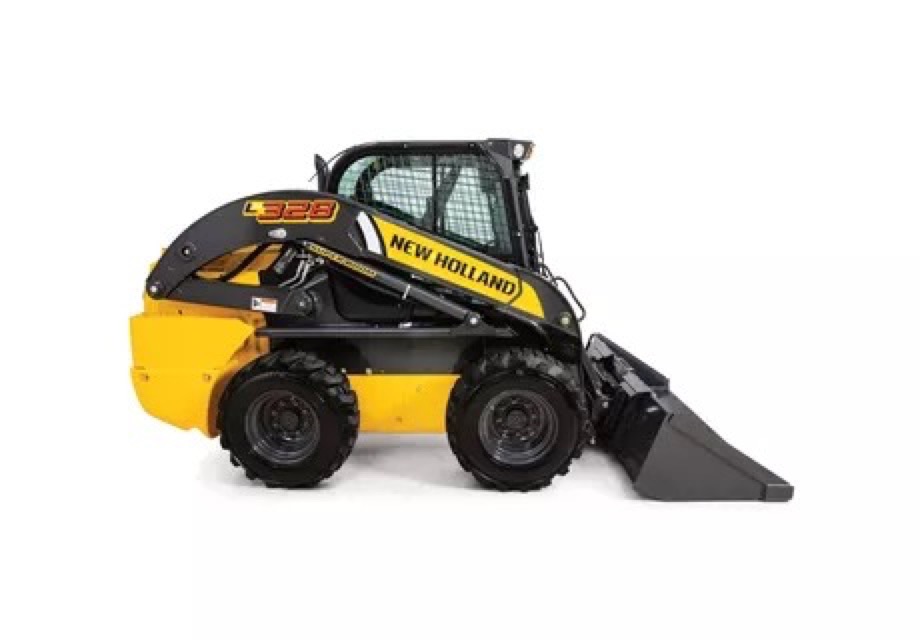
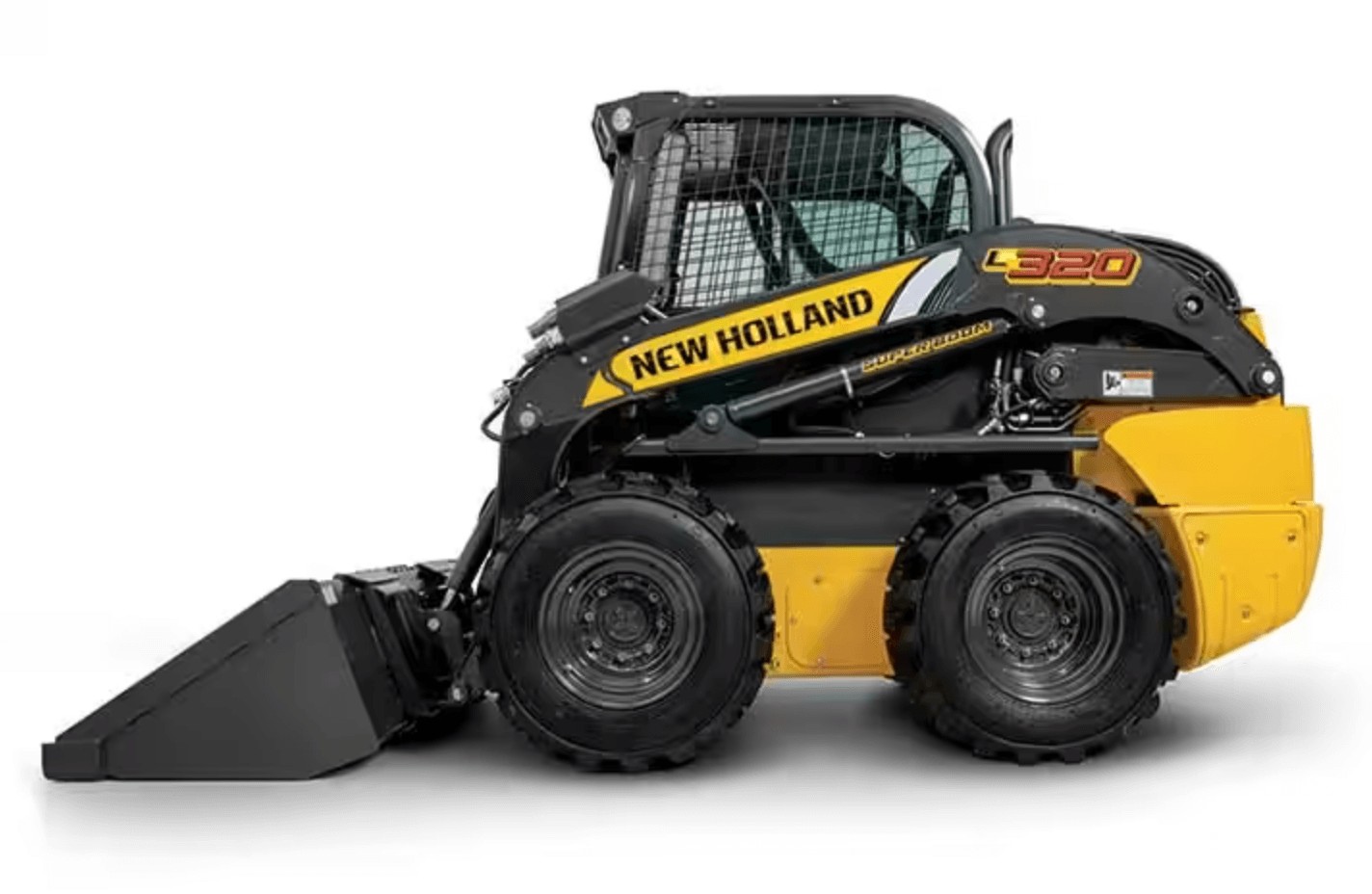
Quick take: The New Holland L320 costs $7,000 less; the New Holland L328 has a higher rated operating capacity (2,800 vs 2,000 lbs); the New Holland L328 has more engine power (74 vs 67 hp).
| Spec | New Holland L328 | New Holland L320 |
|---|---|---|
| Price | $55,000 | $48,000 |
| Rating | 4.3★ (240) | 4.3★ (130) |
| Type | Wheeled Skid Steer | Wheeled Skid Steer |
| Lift Path | Vertical Lift | Vertical Lift |
| ROC | 2800 lbs | 2000 lbs |
| Engine HP | 74 hp | 67 hp |
| Operating Weight | 7895 lbs | 6470 lbs |
| Tipping Load | 5600 lbs | 4000 lbs |
| Lift Height | 129 in | 121 in |
| Hydraulic Flow | 24 GPM | 20.6 GPM |
| Engine | FPT | FPT |
| Tracks | No | No |
| Vertical lift | Yes | Yes |
| High-flow | Yes | Yes |
| Enclosed cab | Yes | Yes |
| Two-speed | Yes | Yes |
| Self-leveling | Yes | Yes |
| A/C & heat | Yes | Yes |
| Warranty | 2 yr / 2000 hr | 2 yr / 2000 hr |
Pros & cons
New Holland L328
- ✓New Holland's patented Super Boom vertical lift gives class-leading dump height and reach, and operators say it loads the center of high-sided trucks better than anything in its price range.
- ✓The 129-inch hinge-pin height is exceptional for a medium frame, so stacking pallets and loading tall hoppers is genuinely easy.
- ✓The L328 undercuts Bobcat and Cat on price, so value-focused buyers feel they get premium lift geometry for less money.
- ✓The FPT engine has a solid reliability reputation, and the machine pulls strongly for a 74 hp unit in loading applications.
- ✓The cab is roomy with good visibility, and owners appreciate the comfortable layout and low-effort controls over long days.
- ✓The 24 GPM standard flow is generous, and the high-flow option opens up demanding attachments for added versatility.
- ✓Two-speed travel comes standard, making ground-to-ground moves quick on larger sites.
- ✓Owners doing a lot of loading and stacking specifically choose the Super Boom design over radial-lift competitors for the reach advantage.
- ✗New Holland's construction dealer network is thin in many regions, and owners report that parts and service access can be a real weak point.
- ✗Resale value trails the big three brands, so the lower purchase price is partly offset by a steeper depreciation hit.
- ✗Some owners report electrical and sensor issues on FPT-engined machines that can be frustrating to diagnose.
- ✗The Super Boom linkage adds pivot points and grease zerks, which owners note require diligent maintenance to avoid wear.
- ✗The attachment and used-implement ecosystem isn't as deep as Bobcat's, limiting options in some markets.
- ✗Fit-and-finish is judged by some operators as a step below Cat and Bobcat refinement.
- ✗Because dealers are sparse, warranty and service experience varies widely by location.
- ✗The vertical-lift geometry that helps loading compromises some low-end digging force versus a radial-lift machine.
New Holland L320
- ✓The 2000 lb rated capacity handles a full pallet of most materials, which is exactly why buyers step up from the L318.
- ✓Super Boom vertical lift delivers a 91.7-inch dump height with nearly 30 inches of reach, so filling high-sided trucks is genuinely easy for the frame size.
- ✓The 300 Series dual-range transmission comes standard, giving travel speeds over 11 mph for quick moves across larger sites.
- ✓At 67 hp the FPT engine avoids DEF-heavy aftertreatment while offering noticeably more grunt than the 60 hp frames below it.
- ✓The wide 300 Series cab, 8-inch LCD display, and standard backup camera make long days more comfortable than the class average.
- ✓A 30.7 GPM high-flow option lets it run attachments normally reserved for larger machines.
- ✓New Holland pricing undercuts comparable Bobcat and Cat models, and ag-dealer crossover means farm buyers can often bundle financing.
- ✓Owners note the low-effort EH joystick controls and creep mode make precise trenching and grading easier than older NH models.
- ✗New Holland's construction dealer coverage is thin in many areas, so parts and warranty service can mean long waits or long drives.
- ✗Resale values trail Bobcat, Cat, and Deere equivalents, which eats into the lower purchase price over an ownership cycle.
- ✗The Super Boom linkage has more pivots and grease points than a radial arm, demanding disciplined maintenance to avoid slop.
- ✗Vertical-lift geometry sacrifices some ground-level digging and prying power compared to radial-lift rivals.
- ✗The 20.6 GPM standard flow is midpack - several competitors give more hydraulic flow without the high-flow upcharge.
- ✗Owners report FPT-engined machines can throw sensor and emissions codes that are frustrating to chase without a nearby dealer.
- ✗The cab pressurization and door sealing draw mixed reviews in dusty conditions versus Cat's D3-series machines.
- ✗Wheeled traction limits wet-ground work, and there's no direct tracked twin at this exact capacity short of the C327.