Head to head
Cat 239D3 against Cat 236D3
The Cat 236D3 saves $2,775; only the Cat 239D3 runs tracks, so their advertised capacities are not measured the same way; the Cat 236D3 moves 2.0 GPM more through the auxiliary circuit; only the Cat 239D3 runs rubber tracks.
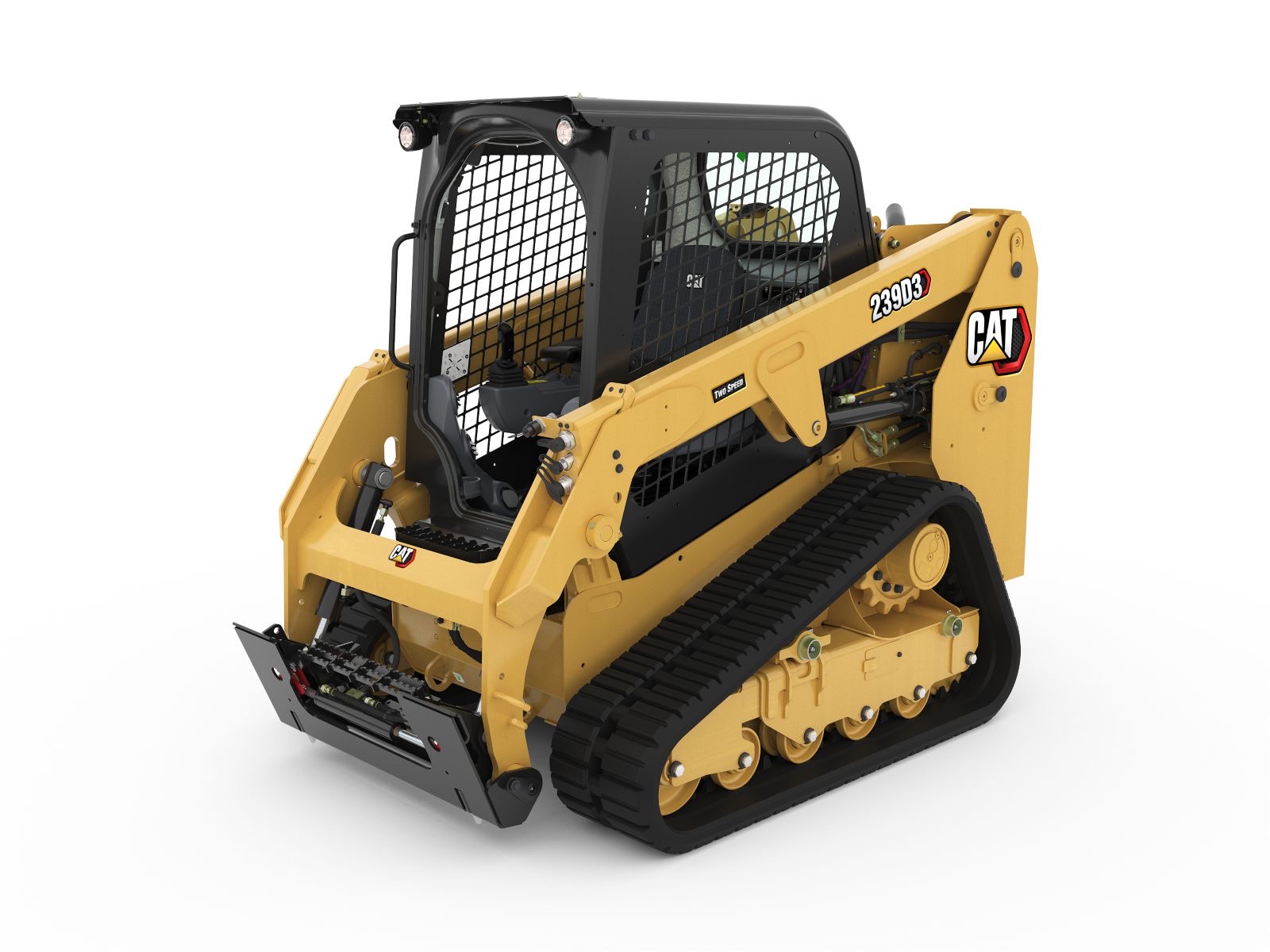
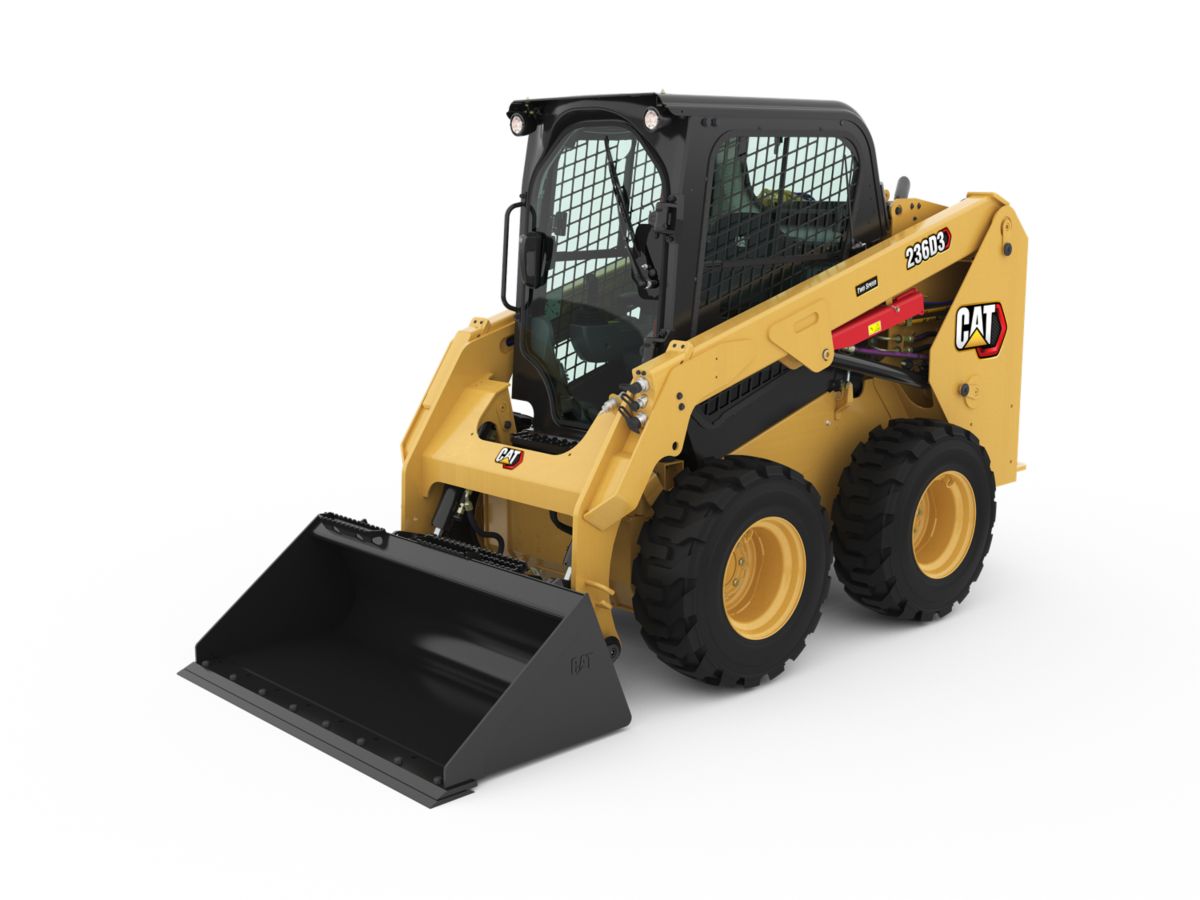
These two are rated differently on purpose. A wheeled skid steer is rated at half its tipping load and a track loader at 35 per cent, because the track machine holds back more reserve. So the capacity rows below are not a like-for-like contest, and the tipping load row is the closer thing to one.
| Spec | Cat 239D3 | Cat 236D3 |
|---|---|---|
| Price | $58,000 | $55,225 |
| Rated capacity, as advertised | 1,530 lbs | 1,800 lbs |
| Rated at | 35% of tipping load | 50% of tipping load |
| Tipping load | 4,370 lbs | 3,600 lbs |
| Capacity at its class convention | 1,530 lbs | 1,800 lbs |
| Engine power | 67 hp | 67 hp |
| Engine | Cat C2.2 CRDI | Cat C2.2 Turbo |
| Auxiliary flow | 18 GPM | 20 GPM |
| Lift height | 115 in | 122.9 in |
| Operating weight | 7,434 lbs | 6,567 lbs |
| Lift path | Radial Lift | Radial Lift |
| Rubber tracks | Yes | No |
| High flow available | Yes | Yes |
| Enclosed cab available | Yes | Yes |
| Two-speed travel available | Yes | Yes |
| Self-levelling available | Yes | Yes |
| A/C and heat available | Yes | Yes |
| Warranty | 2 yr / 2,000 hr | 2 yr / 2,000 hr |
What owners say about each
Cat 239D3
- Its small footprint lets it work in tight backyards and through gates that bigger CTLs can't reach, which landscapers specifically buy it for.
- Radial lift delivers strong breakout and digging force down low, so it excels at trenching, grading, and dozing tasks.
- The rubber-track suspension design is known for low maintenance and long track life when kept off abrasive surfaces, per owner reports.
- Two-speed travel comes standard, so ground-to-ground moves are quicker than on the wheeled 226D3, which operators appreciate.
- The intuitive controls and clear display make it approachable for newer operators and rental customers with minimal training.
- At 1,530 lb capacity it's one of the smaller CTLs available, and contractors routinely say they outgrew it and should have bought bigger.
- The low standard hydraulic flow limits attachment options, so mulchers and other hungry tools are essentially off the table.
- Cat parts and undercarriage components are expensive, and track replacement on a Cat runs higher than many rivals.
- The small C2.2 engine feels underpowered when pushing heavy material, and owners note slower cycle times under load.
- It stays on the D3 platform while everything from the 255 up has moved to the next generation, so the newer displays, telematics and torque gains stop below it.
Cat 236D3
- 20 GPM of standard auxiliary flow beats both the 226D3 and 232D3, so brooms, augers and small planers run properly without paying for a high-flow package.
- Radial geometry puts the boom's force low in the arc, which is exactly where trenching, backfilling and dozing use it.
- The 122.9-inch pin height is nearly seven inches taller than the 226D3's, so it is not the truck-loading compromise radial machines usually are.
- Under 75 hp means no DEF and no SCR - the simplest aftertreatment story Cat sells.
- Cat publishes $55,225 as the starting MSRP, a checkable figure rather than a dealer's opening bid.
- At 1,800 lb it rates below the vertical-lift 232D3 that lists $5,300 cheaper, so it only makes sense if the work is genuinely digging-led.
- Radial lift still reaches less at full height than a vertical boom, so loading a high-sided tandem means getting close to it.
- It is a D3-generation machine while the 250 and up have moved to the next-gen platform, and the newer cab tech does not reach down here.
- Cat dealer parts and labour carry the usual premium no matter how small the machine is.