Head to head
New Holland L328 against Case SR270B
The New Holland L328 carries 100 lb more once both are rated the same way; the Case SR270B moves 0.2 GPM more through the auxiliary circuit.
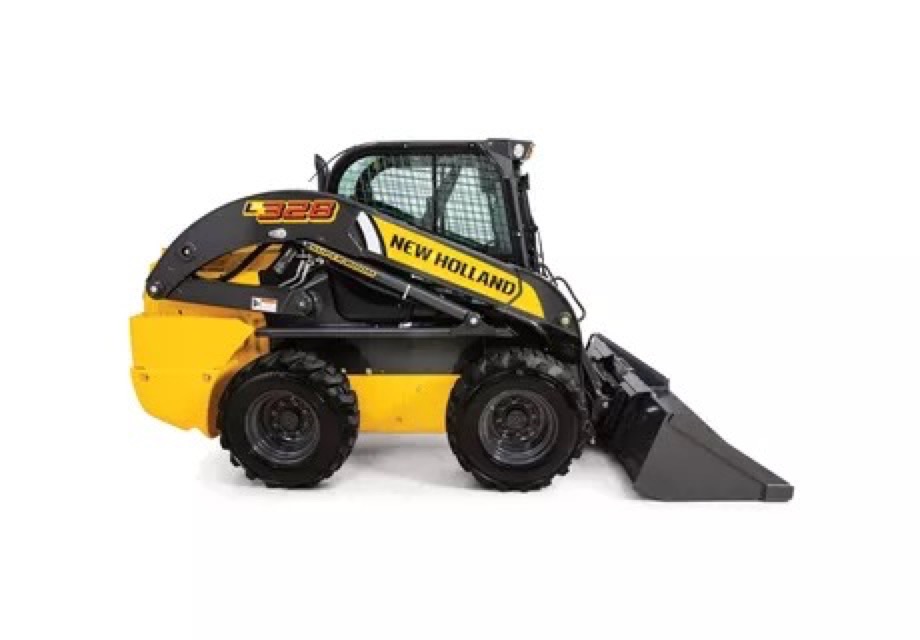
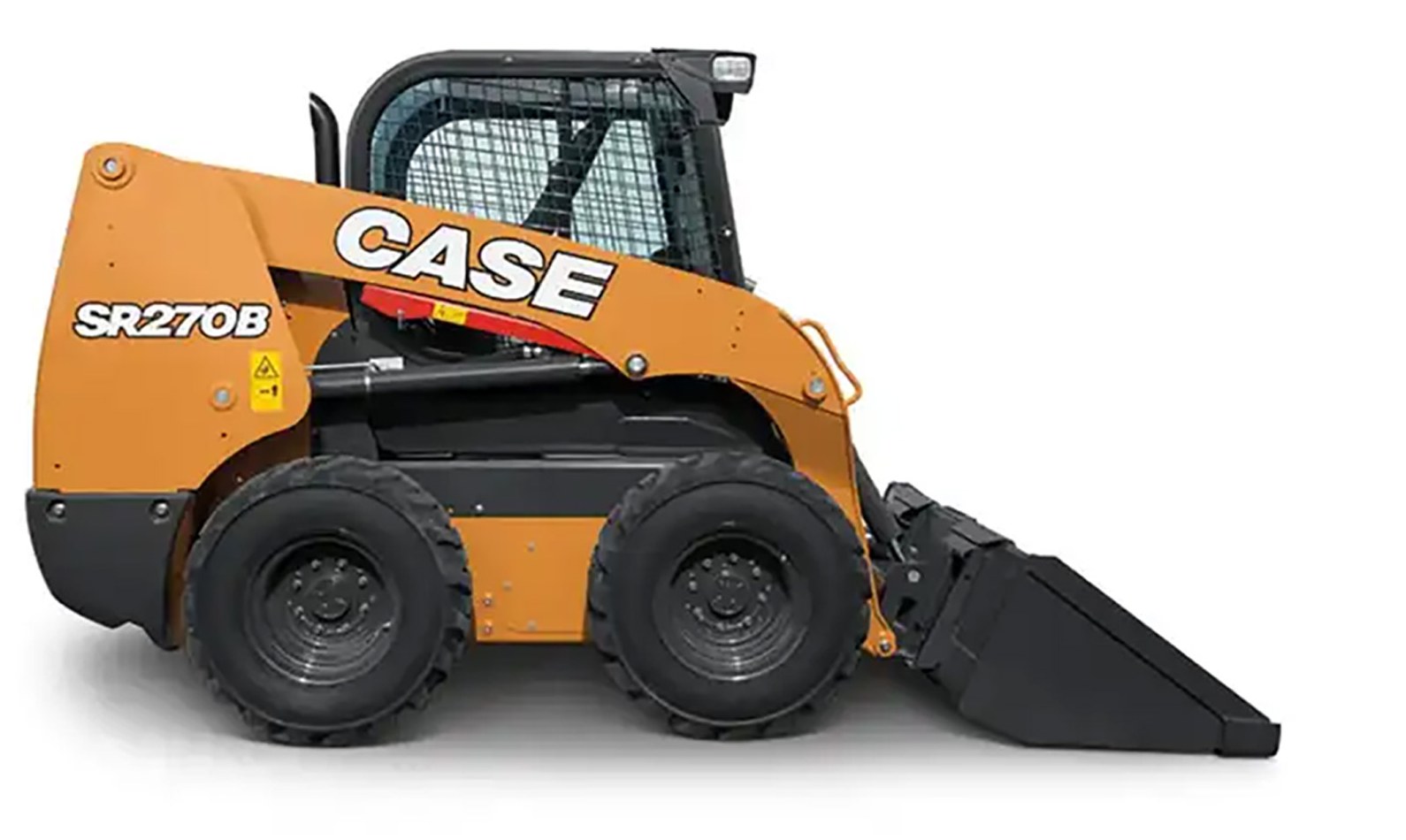
| Spec | New Holland L328 | Case SR270B |
|---|---|---|
| Price | $66,000 | $66,000 |
| Rated capacity, as advertised | 2,800 lbs | 2,700 lbs |
| Rated at | 50% of tipping load | 50% of tipping load |
| Tipping load | 5,600 lbs | 5,400 lbs |
| Capacity at its class convention | 2,800 lbs | 2,700 lbs |
| Engine power | 74 hp | 90 hp |
| Engine | FPT | FPT |
| Auxiliary flow | 24 GPM | 24.2 GPM |
| Lift height | 129 in | 125.1 in |
| Operating weight | 7,895 lbs | 8,117 lbs |
| Lift path | Vertical Lift | Radial Lift |
| Rubber tracks | No | No |
| High flow available | Yes | Yes |
| Enclosed cab available | Yes | Yes |
| Two-speed travel available | Yes | Yes |
| Self-levelling available | Yes | Yes |
| A/C and heat available | Yes | Yes |
| Warranty | 2 yr / 2,000 hr | 2 yr / 2,000 hr |
What owners say about each
New Holland L328
- The 129-inch hinge-pin height is exceptional for a medium frame, so stacking pallets and loading tall hoppers is genuinely easy.
- The L328 undercuts Bobcat and Cat on price, so value-focused buyers feel they get premium lift geometry for less money.
- The cab is roomy with good visibility, and owners appreciate the comfortable layout and low-effort controls over long days.
- The 24 GPM standard flow is generous, and the high-flow option opens up demanding attachments for added versatility.
- Two-speed travel comes standard, making ground-to-ground moves quick on larger sites.
- Resale value trails the big three brands, so the lower purchase price is partly offset by a steeper depreciation hit.
- Some owners report electrical and sensor issues on FPT-engined machines that can be frustrating to diagnose.
- The Super Boom linkage adds pivot points and grease zerks, which owners note require diligent maintenance to avoid wear.
- The attachment and used-implement ecosystem isn't as deep as Bobcat's, limiting options in some markets.
- Because dealers are sparse, warranty and service experience varies widely by location.
- The vertical-lift geometry that helps loading compromises some low-end digging force versus a radial-lift machine.
Case SR270B
- The 90 hp FPT's 282 lb-ft of torque is the most of any B-series Case, and operators say it pushes and digs with machines well above its weight class.
- The enhanced high-flow option delivers 35 GPM at 4,000 psi, enabling cold planers and rock saws that standard 3,050 psi systems can't run properly.
- Radial geometry with up to 8,677 lbs of breakout force makes it a true excavating machine - the pick of the big Cases for below-grade work.
- The DPF-free DOC/SCR emissions package means no regen cycles ever, just DEF top-offs, which owners prefer to particulate-filter headaches.
- The 8,117 lb operating weight gives it a planted, stable feel pushing heavy piles that lighter mid-frames can't match.
- It undercuts a comparable 90 hp Bobcat S86 or Cat 270 build on price while matching them on standard flow.
- Unlike the 74 hp B-series machines, the 90 hp engine needs SCR - so you're buying, storing, and dosing DEF, plus risking dosing-system faults.
- Radial lift limits dump height and reach at full lift, so buyers loading tall trucks all day are better served by the SV280B or SV340B.
- Case's dealer network is thinner than Bobcat's, Cat's, or Deere's, and parts delays are the most common ownership complaint.
- B-series electrical and sensor gremlins - especially the operator-presence system - show up regularly in owner forums.
- At over 8,100 lbs it demands a heavy trailer and at least a 3/4-ton truck, adding real transport cost for small outfits.
- Enhanced high-flow, ride control, and cab upgrades are pricey options that push a loaded unit into large-frame Bobcat money.
- The 2,700 lb rated capacity trails the cheaper vertical-lift SV280B by 100 lbs, so pure material handlers get better value elsewhere in the lineup.