Kubota
Kubota SVL75-3
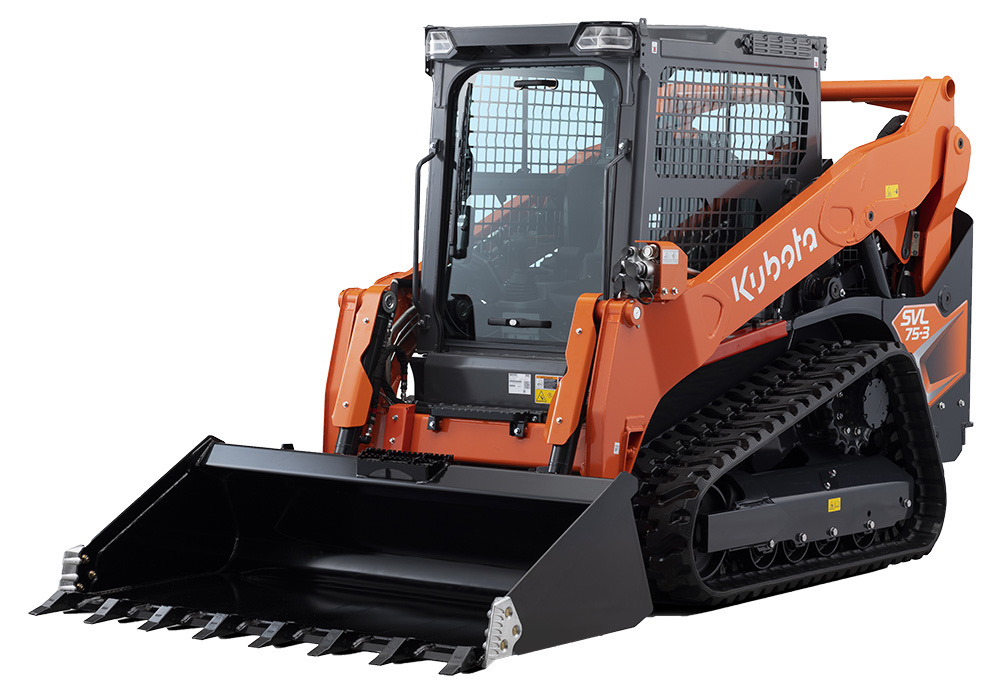
The bright segment is what Kubota SVL75-3 is rated to carry; the grey run past it is the rest of its tipping load. Bar length is tipping load drawn to the same scale on every machine on the site, so a short bar is a smaller machine and not a conservative rating.
One caveat on this machine: we could not find a published tipping load for it, so the figure above is its advertised capacity divided by the fraction its maker rates at. That makes the grey run arithmetic rather than a measurement, and it is the number worth asking a dealer to confirm.
No new CTL sells better in the US than the Kubota SVL75-3, a medium-frame vertical-lift compact track loader. Powered by Kubota's own diesel, it's praised for its roomy cab, easy service access, and strong value.
Suits: Best-selling value CTL with a great cab, for landscapers and contractors Its vertical lift path reaches highest at full extension, for loading high-sided trucks and stacking.
Lifting and reach
- Rated operating capacityTrack loader rating convention
- 2,490 lbs
- Tipping loadDerived from the advertised capacity, not published
- 7,114 lbs
- Lift height to hinge pin
- 123 in
- Lift path
- Vertical Lift
- Operating weight
- 9,420 lbs
Power and hydraulics
- Engine power
- 74 hp
- Engine
- Kubota V3307-TE5A
- Auxiliary flowStandard circuit
- 19.2 GPM
- Flow type
- Standard
- Warranty
- 2 yr / 2,000 hr
Fitted or available
What this machine can be ordered with. Some of these are standard and some cost extra, and which is which moves between trim levels, so check them against the quote rather than against this list.
What owners report
Summarised from the sources listed below. Nothing here was tested by us.
Kubota's mid-frame track loader is the volume seller in the class, and the reasons owners give are unglamorous: it costs less than a Cat 255 or a Bobcat T66 specced the same way, it runs an engine Kubota builds itself, and the dealer is usually one they already deal with for tractors. At 2,490 lb rated on the 35% basis and 74 hp it sits in the busiest part of the market, and the breakout numbers are strong enough that operators regularly say it digs like something a size up.
Day to day, the cab is the part people like and the door is the part they complain about, every time. The struts give up early and the door comes down on your head. The particulate filter is the other recurring theme: it needs real working RPM to burn soot off, so a machine that spends its life idling with an attachment running will eventually derate, and clearing the resulting code takes dealer software. Undercarriage is the real running cost and the place the price advantage can evaporate, with owners reporting around 1,500 hours on abrasive ground. Front idler knock is normal and Kubota says so. Smaller irritations that come up repeatedly: an A/C pack that operators in hot climates call undersized, a sealed belly pan that holds inches of water for days after rain, and attachment hoses that chafe on the boom unless you re-route them away from the pivot.
Value and service access over ride quality is the trade, and it only works if you can live with a hard-riding machine - not if you spend eight hours a day in the seat on rough ground. Get the high-flow circuit if a mulcher or planer is anywhere in your plans, because it is not a later upgrade the way Cat's software enablement is. Check track and roller condition hard on anything used, since a lightly used -3 at $60,000 to $68,000 sits close enough to new money that a worn undercarriage wipes out the saving. And confirm which coupler sizes the machine came with before ordering a high-flow attachment, because a mismatch there surprises people.
What owners like
- Owners who keep one for years tend to report boring reliability, which is the highest praise a track loader gets. One owner who sold his after five years and 900 hours said it never let him down and he had no reliability issues at all.
- Two-speed travel is standard rather than a line-item option, and 6,191 lb of bucket breakout against a 2,490 lb rated capacity is an aggressive ratio for the frame, so it digs harder than the capacity number suggests.
- Kubota builds the V3307 itself and holds the largest share of the global market for industrial diesels under 100 hp, so parts and diagnostics live at the same dealer counter that tractor owners already use.
- The tilt-up cab and wide rear door make it one of the easier machines in the class to service yourself, which matters a lot once the 2,000-hour warranty is behind you.
- Pricing genuinely undercuts Bobcat and Cat. A 2025 base machine starts around $71,700, and owners report high-flow machines with a bucket, a tooth bucket and forks quoting near $86,000 out the door, roughly $3,000 under a comparably kitted Cat 255.
- Vertical lift to a 123-inch hinge pin plus the roll-up door means the door opens with the loader arms anywhere, and operators coming from front-swinging doors bring that up first.
- Wide tracks are an option, taking the machine from about 66 inches to 71 inches overall, and owners working wet or soft ground credit that plus the low ground pressure for keeping them moving where narrower machines bog.
What owners complain about
- The roll-up door is the most repeated complaint by a wide margin. The gas struts do not hold it up for long, and owners describe the door dropping far enough to catch them on the head climbing in and out.
- Front idler knock in its housing is reported across SVL generations, and Kubota's answer has been that it is designed that way. Nothing changed on the -3, so do not expect a dealer fix.
- Undercarriage life is where the price advantage gets argued away. Reports of roughly 1,500 hours on abrasive ground are common against rivals quoting closer to 3,000, and tracks are a consumable rather than a warranty item.
- The particulate filter wants sustained working RPM. Short bursts and long idles load it with soot instead of burning it off, and owners doing light-duty or attachment-idle work collect regens, codes and eventually a derate.
- Fault codes clear through Kubota's dealer software, not an operator's scan tool, so even a nuisance code means a trip in or a mobile service call.
- Ride is the weak point against machines offered with suspended undercarriages. One owner traded an otherwise faultless SVL75 purely because his spine could not take the bouncing, and replaced it with a Bobcat specced with roller suspension, ride control and an air-ride seat.
Drawn from pdqequipment.com, blog.ritchiebros.com, skidsteerforum.com.
What buyers ask
Do I need the high-flow option to run a mulcher?
How long do the tracks and undercarriage actually last?
What is the deal with the door complaint?
Is the emissions system a real problem or an internet complaint?
What truck and trailer do I need?
New or lightly used?
Put the Kubota SVL75-3 against
Machines in the same range
The rest of the Kubota line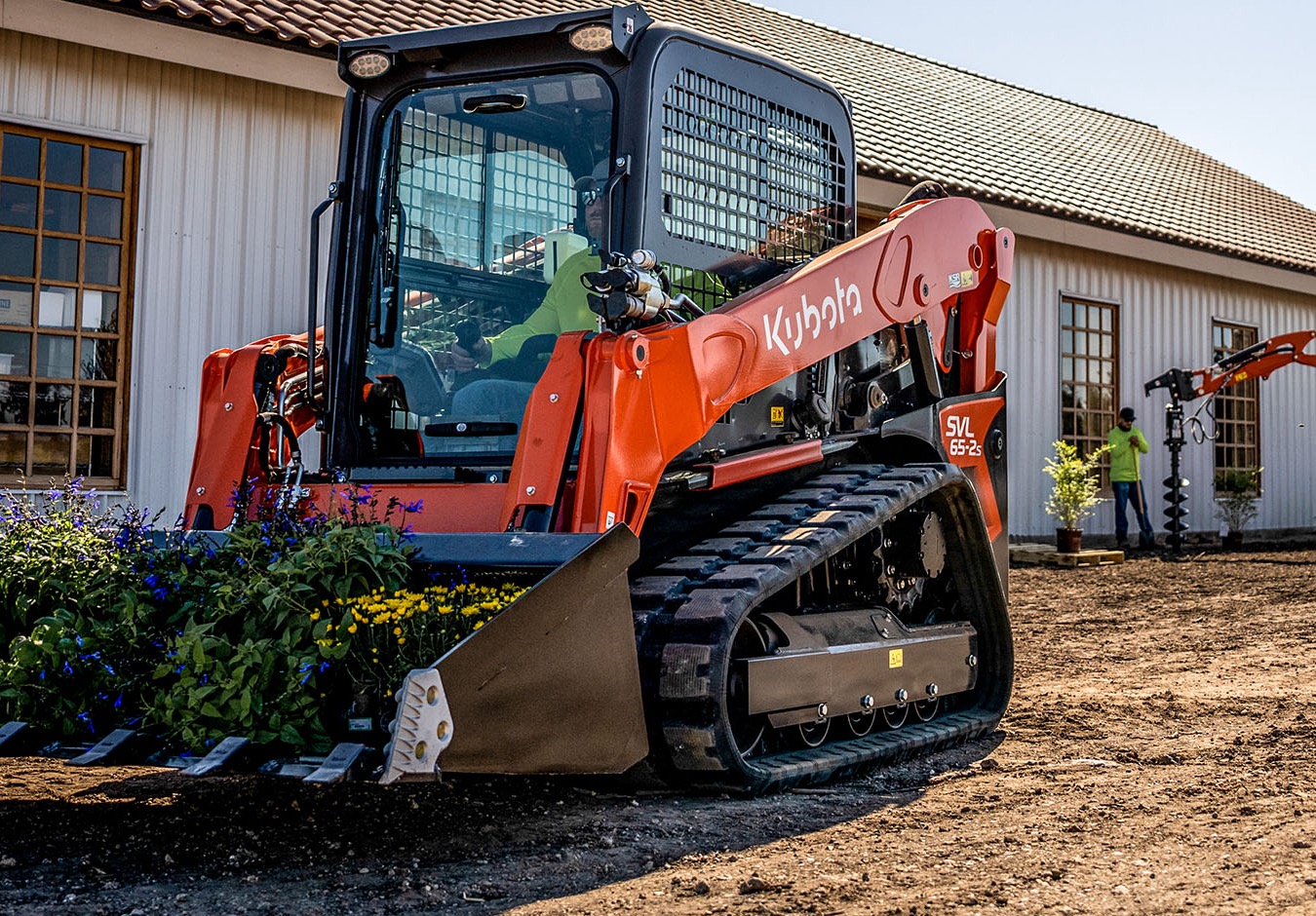
Kubota
Kubota SVL65-2s
$69,515
- Engine
- 68.4 hp
- Aux flow
- 17.4 GPM
- Weight
- 8,631 lbs
Successor to the SVL65-2, keeping the same 68.4 hp engine, 2,100 lb rated capacity and vertical lift path while taking operator-comfort and performance features from Kubota's larger next-generation loaders. Aimed at landscapers who want the small SVL's trailerable weight with an updated operator station.
Full sheet & owner reports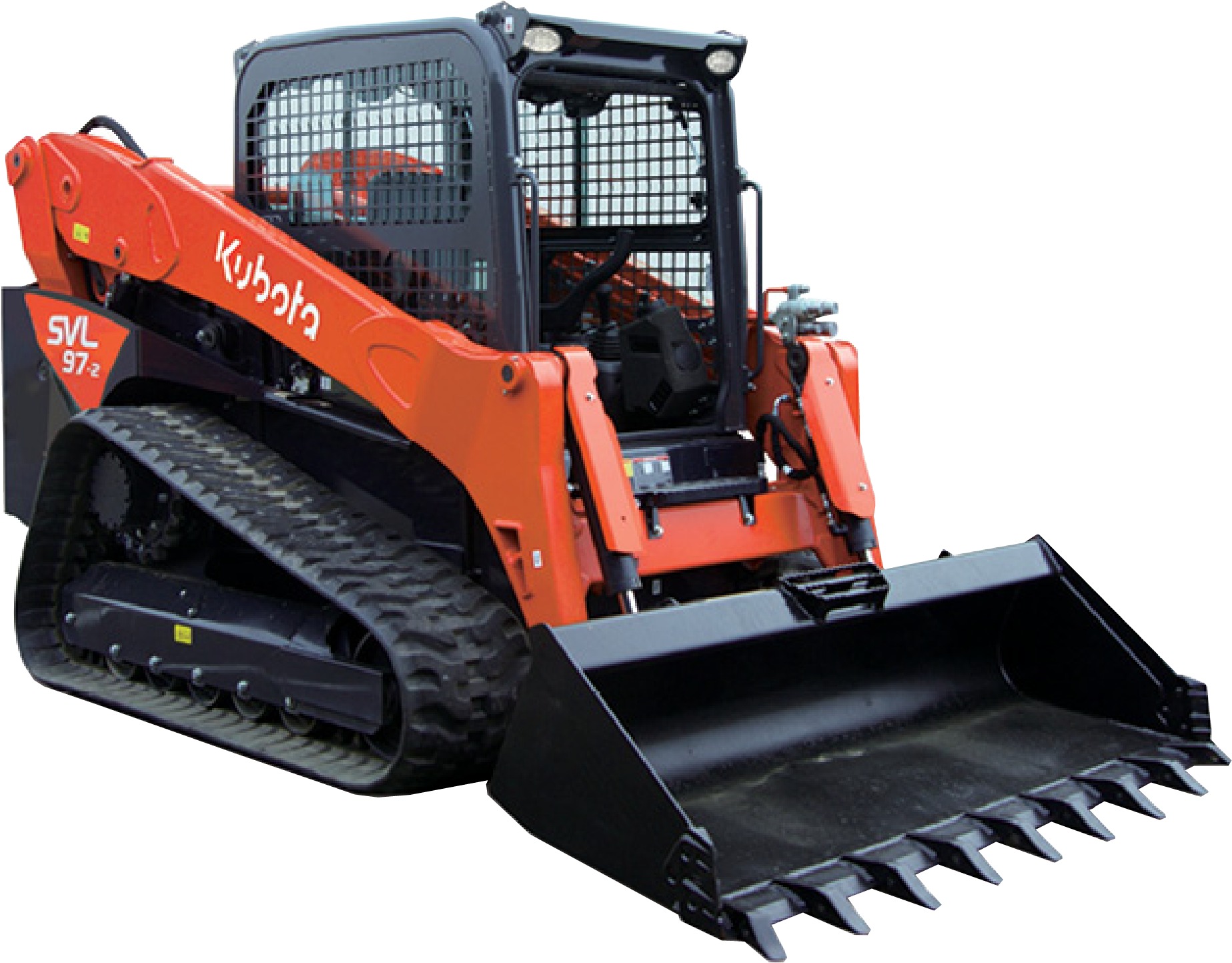
Kubota
Kubota SVL97-2
$82,000
- Engine
- 96 hp
- Aux flow
- 23.1 GPM
- Weight
- 11,299 lbs
Nothing in Kubota's lineup is bigger than the SVL97-2, which runs a 96 hp version of the company's own V3800 diesel. It delivers flagship-class capacity and an available 40 GPM high-flow package at a price that undercuts the Cat 299D3 and Bobcat T86 by a wide margin.
Full sheet & owner reports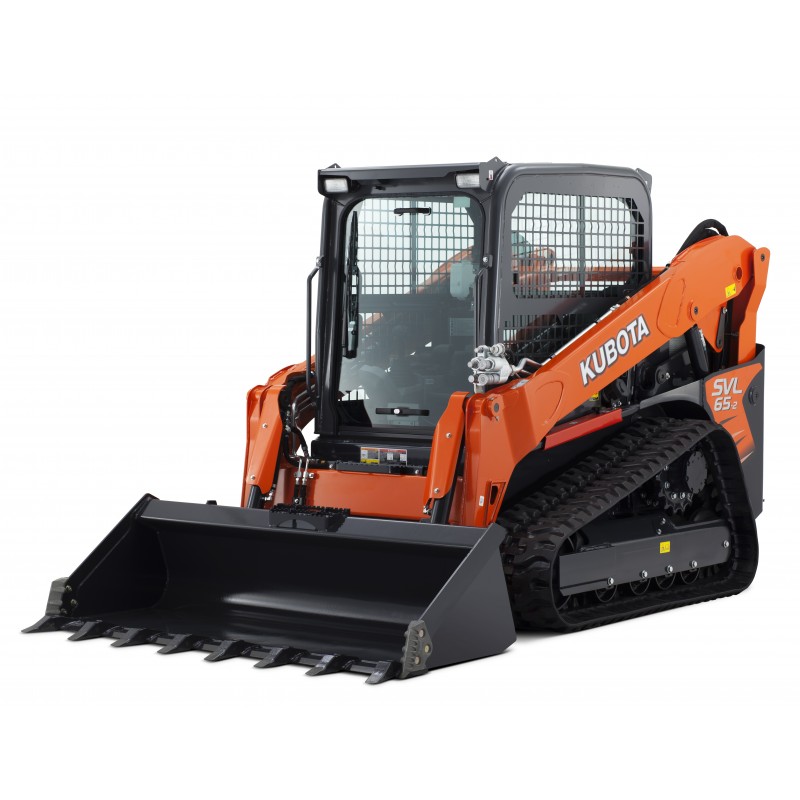
Kubota
Kubota SVL65-2
$65,297
- Engine
- 68 hp
- Aux flow
- 17.4 GPM
- Weight
- 8,565 lbs
Smallest of Kubota's SVL compact track loaders, the SVL65-2 pairs a 68 hp Kubota diesel with a vertical-lift path and standard self-leveling. It's the value-priced entry point to the best-selling SVL family for landscapers and property owners working in tight spaces.
Full sheet & owner reports