Head to head
Bobcat S76-2 against John Deere 330 P-Tier
The Bobcat S76-2 saves $1,175; the John Deere 330 P-Tier carries 50 lb more once both are rated the same way; the John Deere 330 P-Tier moves 1.7 GPM more through the auxiliary circuit.
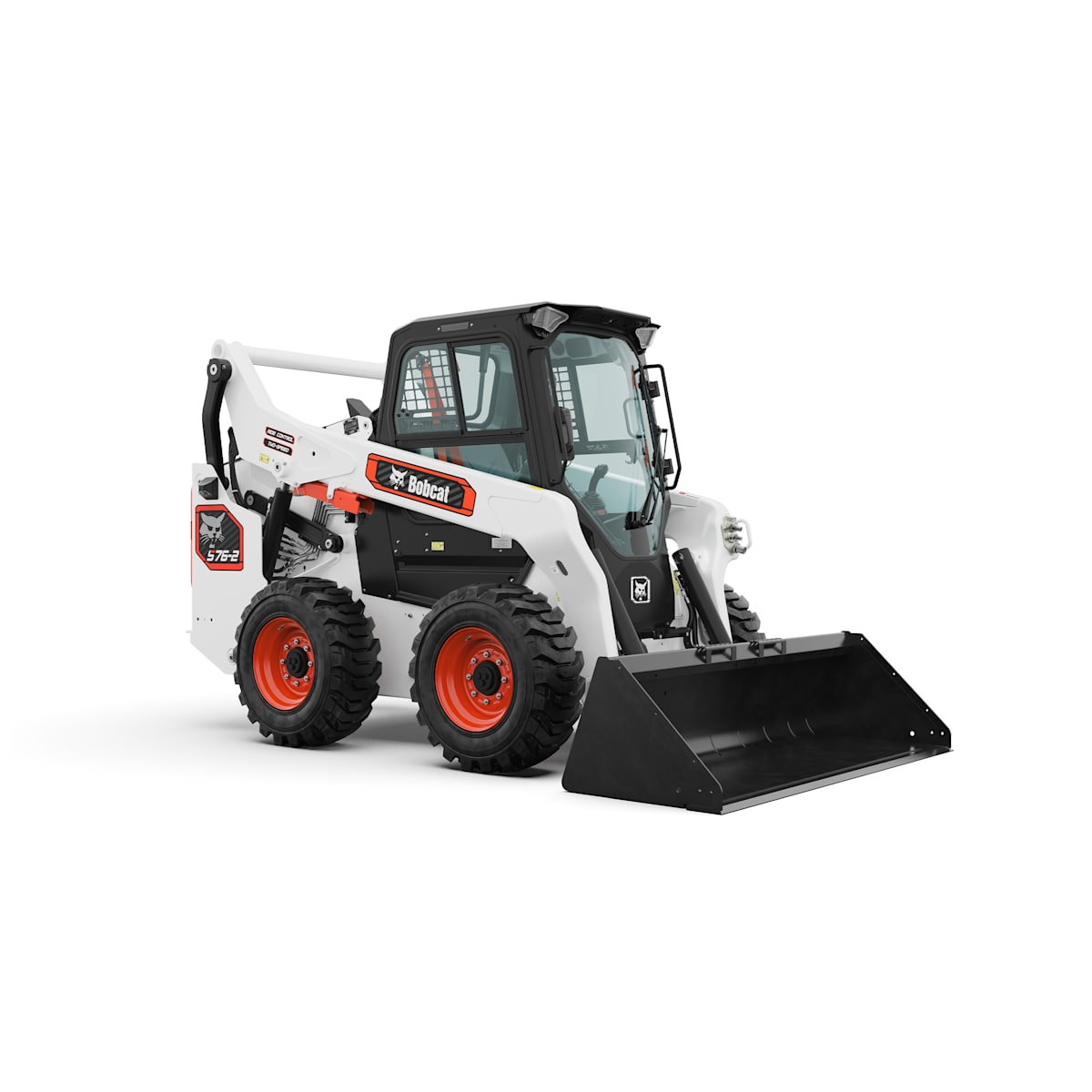
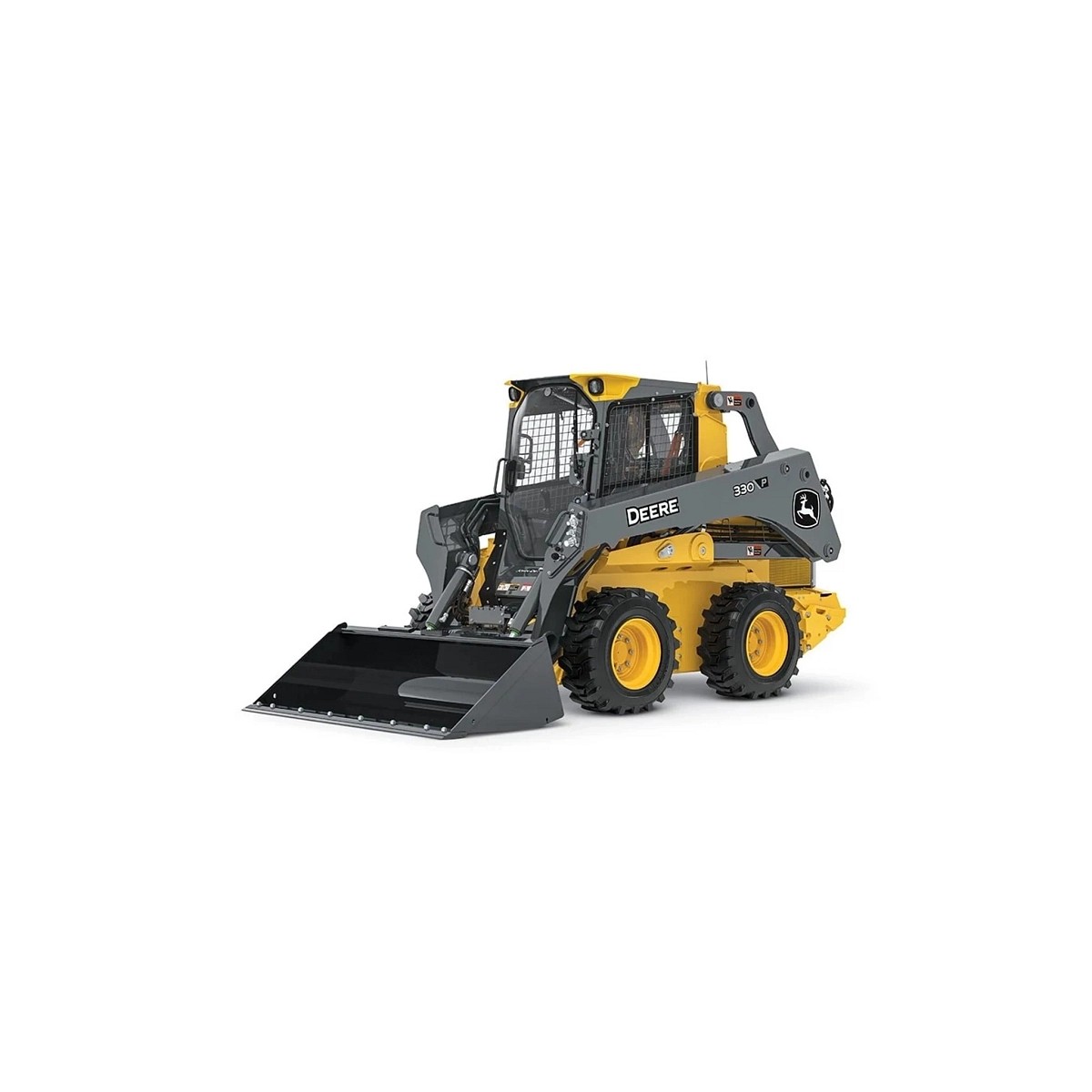
| Spec | Bobcat S76-2 | John Deere 330 P-Tier |
|---|---|---|
| Price | $74,000 | $75,175 |
| Rated capacity, as advertised | 2,900 lbs | 2,950 lbs |
| Rated at | 50% of tipping load | 50% of tipping load |
| Tipping load | 5,800 lbs | 5,900 lbs |
| Capacity at its class convention | 2,900 lbs | 2,950 lbs |
| Engine power | 74 hp | 98 hp |
| Engine | Bobcat (Doosan) D24 | Yanmar 4TNV94FHT |
| Auxiliary flow | 23.3 GPM | 25 GPM |
| Lift height | 128.3 in | 132 in |
| Operating weight | 8,014 lbs | 9,930 lbs |
| Lift path | Vertical Lift | Vertical Lift |
| Rubber tracks | No | No |
| High flow available | Yes | Yes |
| Enclosed cab available | Yes | Yes |
| Two-speed travel available | Yes | Yes |
| Self-levelling available | Yes | Yes |
| A/C and heat available | Yes | Yes |
| Warranty | 2 yr / 2,000 hr | 2 yr / 2,000 hr |
What owners say about each
Bobcat S76-2
- The 128.3-inch hinge pin height and vertical lift path remain the platform's calling card - operators consistently say it clears the sides of full-size dump trucks that shorter mid-frames struggle with.
- The strong 23.3 GPM standard auxiliary flow runs many attachments that force competitors into high-flow packages, and the optional 30.3 GPM high flow handles planers and blowers with headroom to spare.
- The DEF-free 74 hp D24 turbo-diesel carries over unchanged, so there's no exhaust fluid to manage and parts commonality with the massive R-Series fleet keeps service familiar.
- The new 8-inch glove-friendly touchscreen with 20 operator profiles, split-screen camera views, and Machine IQ telematics modernizes the cab to match Cat's next-generation loaders.
- Four drive modes with precision drive software let operators soften the machine for pallet work or sharpen it for aggressive digging, a flexibility the one-personality S76 never had.
- Starting price near $75k - and well past $80k with high flow and Sense options - puts it uncomfortably close to compact track loader money, and plenty of buyers at that price just move to tracks.
- First-model-year electronics are unproven; early adopters are effectively field-testing the new electrical architecture, touchscreen software, and sensor suite.
- Power is unchanged at 74 hp for emissions reasons, so despite the big frame, high-production mulching and cold planing still favor the 100+ hp S86 class.
- The electronics-dense platform increasingly requires dealer diagnostic tools, eroding the wrench-it-yourself appeal that long-time Bobcat owners value.
- At 8,615 lbs it needs a properly rated trailer and tow rig, and the large frame gives up the tight-site maneuverability that draws buyers to the S66 frame.
- Resale for the brand-new -2 generation is unproven, and clean used R-Series S76 machines on dealer lots undercut it by five figures.
- Wheeled machines this heavy rut soft ground badly, and owners doing turf or wet-site work admit they end up renting tracks anyway - the T76-2 costs more but does more.
John Deere 330 P-Tier
- The new one-piece sealed and pressurized cab is a generational leap over the 330G - operators report it's noticeably quieter, keeps dust out on dry sites, and the larger door and glass area improve visibility all around.
- The 98 hp turbo Yanmar is about 7% stronger than the 330G's engine, and the extra grunt shows up when pushing full buckets uphill or running a cold planer without bogging.
- The optional 39 GPM high-flow package runs mulchers and cold planers that used to require stepping up to a track machine, keeping a wheeled machine viable for attachment-heavy work.
- Larger fuel and DEF tanks mean a genuine full day of work without refueling, which crews coming from the 330G notice immediately on production jobs.
- The touchscreen display with onboard diagnostics, Bluetooth, and optional Surround View cameras brings the tech up to par with Cat's next-gen machines at a typically lower price point.
- At 2,950 lbs the rated operating capacity is actually 50 lbs lower on paper than the 330G it replaced, which surprises buyers expecting the new generation to lift more.
- Early-production machines are still working through software quirks, and some owners report touchscreen glitches and sensor faults that required dealer visits under warranty.
- The price jumped meaningfully over the outgoing 330G, and a well-optioned unit with high-flow and the camera package pushes past $90k.
- At nearly 10,000 lbs operating weight, transport requires a heavy trailer and a serious tow vehicle, so it's not a machine you casually move between jobs.
- The Tier 4 Final aftertreatment brings DEF consumption and regen cycles, and owners in stop-and-go work report more frequent regens than they'd like.
- Wheeled machines this size struggle on soft or muddy ground where the equivalent 331 P-Tier CTL keeps working, so buyers in wet climates often need to step up in price to tracks.