Head to head
Cat 275 against Cat 270 XE
The Cat 270 XE saves $7,221; only the Cat 275 runs tracks, so their advertised capacities are not measured the same way; only the Cat 275 runs rubber tracks.
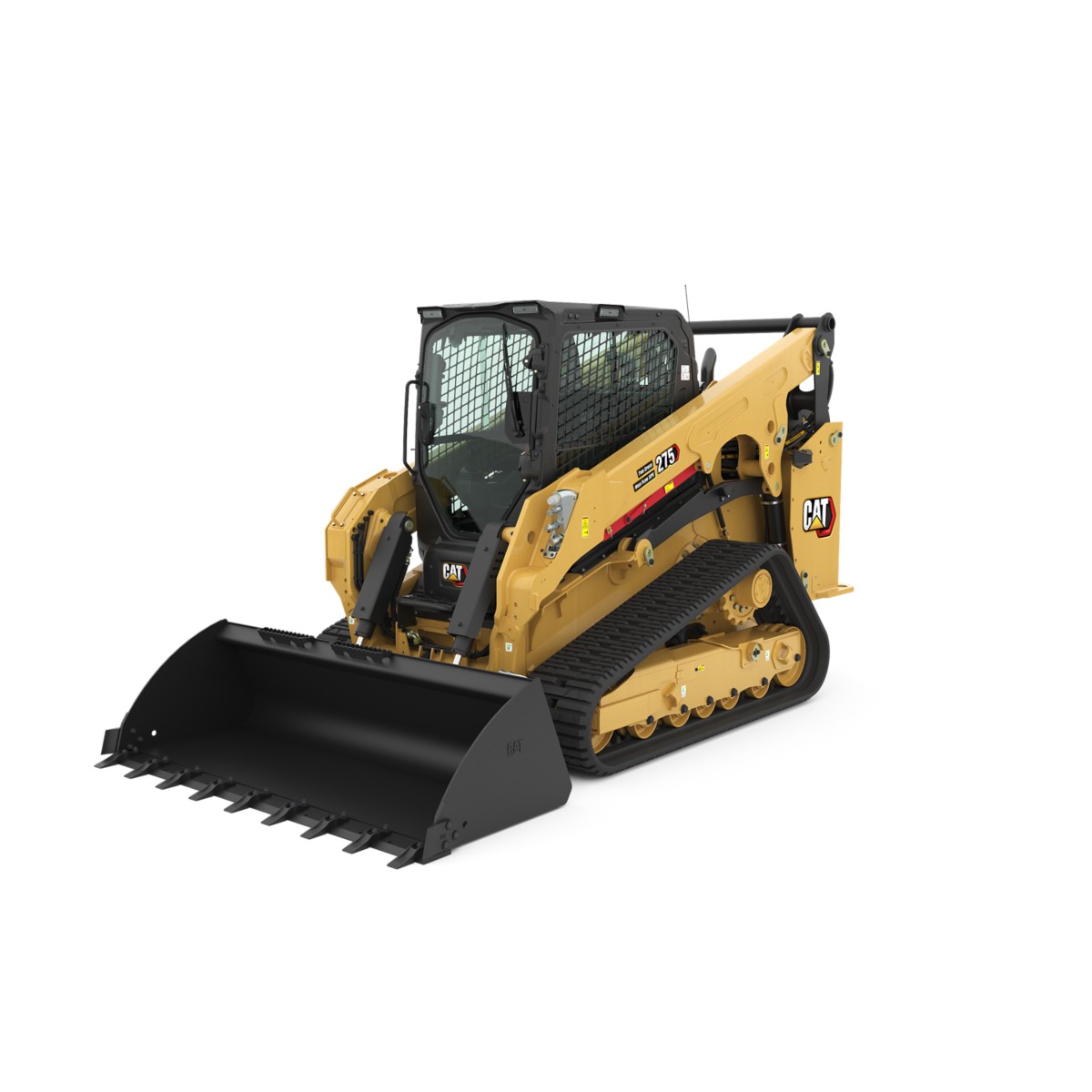
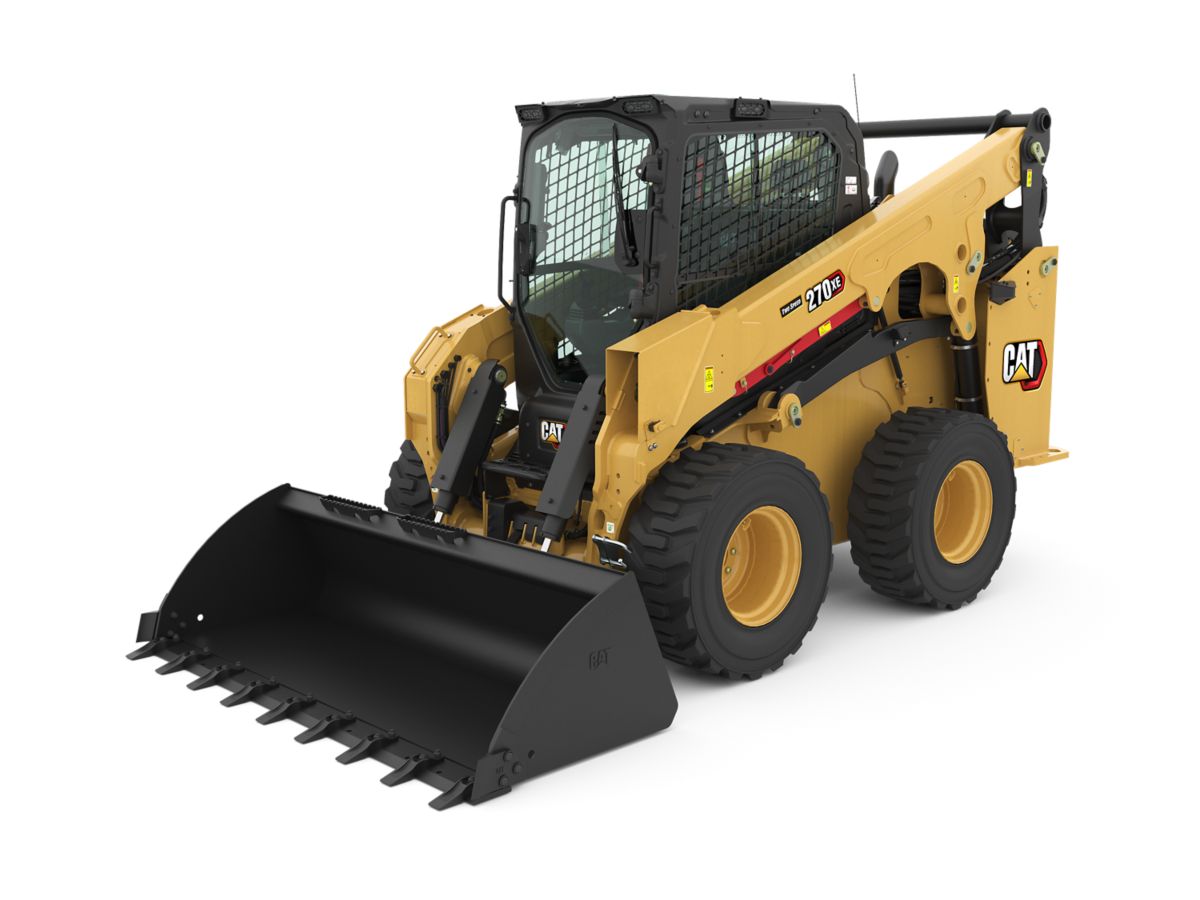
These two are rated differently on purpose. A wheeled skid steer is rated at half its tipping load and a track loader at 35 per cent, because the track machine holds back more reserve. So the capacity rows below are not a like-for-like contest, and the tipping load row is the closer thing to one.
| Spec | Cat 275 | Cat 270 XE |
|---|---|---|
| Price | $112,000 | $104,779 |
| Rated capacity, as advertised | 4,156 lbs | 4,015 lbs |
| Rated at | 35% of tipping load | 50% of tipping load |
| Tipping load | 11,874 lbs | 8,029 lbs |
| Capacity at its class convention | 4,156 lbs | 4,015 lbs |
| Engine power | 111 hp | 121 hp |
| Engine | Cat C3.6TA | Cat C3.6TA |
| Auxiliary flow | 23 GPM | 23 GPM |
| Lift height | 134 in | 135.4 in |
| Operating weight | 12,401 lbs | 10,847 lbs |
| Lift path | Vertical Lift | Vertical Lift |
| Rubber tracks | Yes | No |
| High flow available | Yes | Yes |
| Enclosed cab available | Yes | Yes |
| Two-speed travel available | Yes | Yes |
| Self-levelling available | Yes | Yes |
| A/C and heat available | Yes | Yes |
| Warranty | 2 yr / 2,000 hr | 2 yr / 2,000 hr |
What owners say about each
Cat 275
- The 4,156 lb rated operating capacity crushes the 299D3's 3,560 lbs, and owners moving pallets of block or full grapples of logs say the extra margin is obvious on the first day.
- The 111 hp C3.6TA with 25%+ more torque than the old C3.8 keeps mulchers and cold planers at full RPM under load, and production-focused buyers report meaningfully faster acreage rates.
- High Flow XPS delivers 34 GPM at 4,061 psi, among the strongest auxiliary hydraulic packages in the class, letting the 275 run attachments that used to require a dedicated mulching carrier.
- The nearly 11,874 lb tipping load makes it extremely planted when craning heavy loads at full height, and operators say it out-lifts and out-stabilizes the Deere 333G they cross-rented.
- The sealed one-piece pressurized cab with optional heated/ventilated air-ride seat is widely called the nicest operator station Cat has ever put in a compact machine.
- The 8-inch touchscreen with rearview camera and standard Product Link telematics makes fleet management practical, with remote hour and fault monitoring built in.
- The 275 XE option gives an upgrade path to even more power on the same platform, so high-production buyers aren't forced to another brand for a top-spec machine.
- Pricing lands well into six figures optioned up, a serious jump over the 299D3 it effectively replaces, and buyers say quotes vary widely between dealers.
- The 111 hp C3.6TA requires DEF and a full Tier 4 Final aftertreatment system, adding a fluid, sensors, and regen behavior that the sub-75 hp models avoid entirely.
- As a newer platform, early adopters report software teething issues with the touchscreen and attachment recognition that needed dealer updates to sort out.
- Undercarriage wear costs scale with the weight, and track and roller replacement on this frame is notably more expensive than on the mid-size machines.
- The complexity of the electro-hydraulic systems means field fixes are rare - downtime usually means a dealer visit, which rural owners flag as their biggest worry.
Cat 270 XE
- The 40 GPM XE circuit at 4,496 psi is the largest auxiliary package Cat offers in a wheeled skid steer, beyond even High Flow XPS on the standard 270.
- Its 4,015 lb rated capacity is the highest in Cat's wheeled line, 458 lb above the standard 270 on the same frame.
- The step up from the standard 270 is hydraulic, not just incremental: 40 GPM at 4,496 psi against the standard circuit's 23 GPM, which is the difference between running a large cold planer and struggling with one.
- Cat publishes $104,779 as the starting MSRP, so the premium over a standard 270 at $88,201 is a known number rather than a negotiation.
- On pavement a wheeled carrier still beats a track loader for milling and sweeping, with tyre costs in place of undercarriage costs.
- $104,779 before options is track-loader money for a wheeled machine, and it only pays back if the attachment runs most of the day.
- 121 hp means the full Tier 4 Final aftertreatment package - DEF, DPF and regens - that the 74 hp machines below it avoid.
- At 10,847 lb it is heavier than several compact track loaders, so the wheeled machine's towing advantage is largely gone.
- Some dealer pages quote 134 hp for it; that is the ISO figure with a high-flow attachment connected, not the SAE J1995 gross rating of 121 hp, so expect to have that conversation at the counter.
- Wheels still cannot follow a track loader onto soft ground, however good the hydraulics are.