Caterpillar
Cat 270 XE
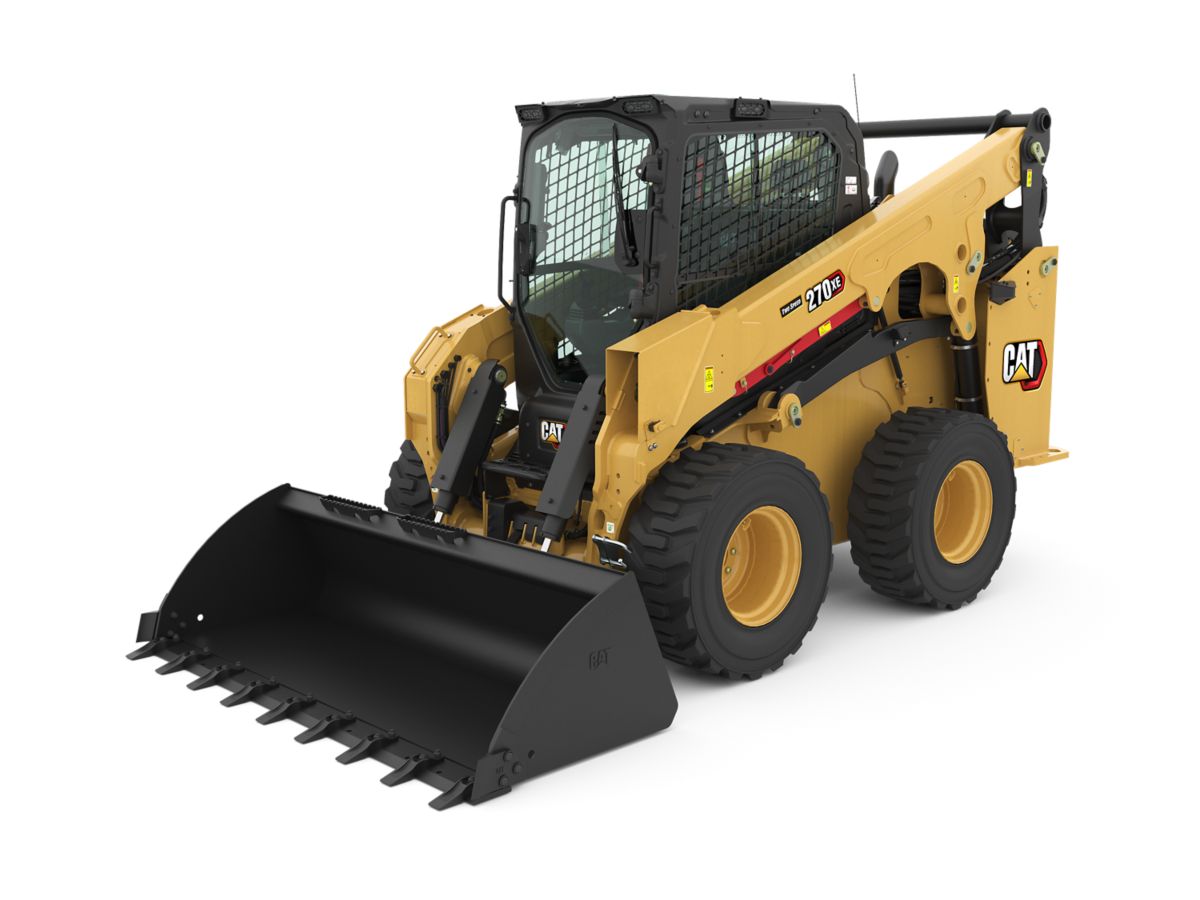
The bright segment is what Cat 270 XE is rated to carry; the grey run past it is the rest of its tipping load. Bar length is tipping load drawn to the same scale on every machine on the site, so a short bar is a smaller machine and not a conservative rating.
Caterpillar's XE badge marks the top auxiliary hydraulic package rather than an electric drivetrain: 40 GPM at 4,496 psi behind a 121 hp C3.6, above both the standard circuit and High Flow XPS. It is built for a wheeled carrier that runs a flow-hungry attachment most of the day on hard surfaces.
Suits: Contractors running a hydraulic attachment most of the day on pavement rather than dirt Its vertical lift path reaches highest at full extension, for loading high-sided trucks and stacking.
Lifting and reach
- Rated operating capacityWheeled rating convention
- 4,015 lbs
- Tipping load
- 8,029 lbs
- Lift height to hinge pin
- 135.4 in
- Lift path
- Vertical Lift
- Operating weight
- 10,847 lbs
Power and hydraulics
- Engine power
- 121 hp
- Engine
- Cat C3.6TA
- Auxiliary flowStandard circuit
- 23 GPM
- Flow type
- Standard
- Warranty
- 2 yr / 2,000 hr
Fitted or available
What this machine can be ordered with. Some of these are standard and some cost extra, and which is which moves between trim levels, so check them against the quote rather than against this list.
What owners report
Summarised from the sources listed below. Nothing here was tested by us.
Think of this as a hydraulic power unit that happens to have wheels and a bucket. It sits at the top of Cat's wheeled skid steer range purely on the strength of its auxiliary circuit — 40 GPM at 4,496 psi, more than the High Flow XPS package on any other wheeled Cat — and it exists for contractors running cold planers, wheel saws, sweepers and breakers on hard surfaces all day. On pavement that remains a job a track loader cannot do as cheaply, because tyres are consumable in a way undercarriages are not.
What comes with the hydraulics is 121 hp and 406 lb-ft from the C3.6TA, a 4,015 lb rated capacity that leads Cat's wheeled line, and the same next-generation cab, touchscreen and telematics as the rest of the range. What also comes with it is complexity and weight: the full Tier 4 Final aftertreatment with a DEF tank that the 74 hp machines skip, and 10,847 lb on the scale, which is heavier than several compact track loaders and removes most of the transport advantage that normally makes a wheeled machine the practical choice. One thing to go in clear-eyed about is the badge. XE here designates the hydraulic and engine-output package, not an electric or hybrid drivetrain — there is no electric traction motor and no electrification fuel saving, whatever the lettering implies.
This pays for itself only in a narrow case: hard-surface work, with a high-flow attachment running most of the working day, where the alternative is renting a dedicated carrier. For anything else the standard 270 at roughly $88,000 to $90,000 does the same lifting to the same height, and a compact track loader does dirt work this machine cannot touch — wheels stay on firm ground no matter how good the hydraulics are. Before committing, settle three things: which horsepower figure your quote uses, since both 121 and 134 hp are in circulation from Caterpillar itself; whether the 50%-based capacity rating is being compared fairly against any track loader you are also considering; and what the dealer will commit to on response time, because this platform is too new to have a service reputation you can check.
What owners like
- 40 GPM at 4,496 psi is the largest auxiliary circuit Cat puts in a wheeled skid steer, above even the 34 GPM and 4,061 psi of High Flow XPS on the standard 270.
- 4,015 lb of rated capacity tops Cat's wheeled line — 458 lb above the standard 270 on the same frame — paired with 121 hp and 406 lb-ft of torque from the C3.6TA.
- Cat publishes $104,779 as a starting price against roughly $88,000 to $90,000 for a standard 270, so the premium is a known figure rather than something you have to extract from a dealer.
- On pavement a wheeled carrier still beats a track machine outright for milling, sweeping and demolition, and tyres are cheap and quick to change where an undercarriage is neither.
- Two years or 2,000 hours of standard coverage, and it shares its cab, controls, telematics and parts with the rest of the next-generation line, so it does not become an orphan in a mixed fleet.
What owners complain about
- XE is a hydraulic and engine-output package, not an electric drivetrain. There is no battery, no electric traction motor and no electric-drive fuel economy to bank — the flow, pressure and horsepower figures are the entire product, so treat any pitch built on electrification with suspicion.
- $104,779 is compact track loader money for a wheeled machine, and it only earns that back if an attachment is turning most of the day rather than a bucket swinging.
- 4,015 lb is quoted at 50% of an 8,029 lb tipping load, which is the normal wheeled convention — but do not set it against a track loader's 35%-based figure. The Cat 275 quotes more on paper at 4,156 lb and has nearly half again the tipping load standing behind it.
- 121 hp brings the full Tier 4 Final package with a DEF tank, which the 74 hp 250 and 260 avoid entirely by running a diesel oxidation catalyst instead.
- At 10,847 lb it weighs more than several compact track loaders, so the usual argument that a wheeled machine is easier and cheaper to move has largely evaporated at this size.
- Some dealer pages quote 134 hp while Cat's current spec sheets say 121 hp gross, the higher number coming from the launch material. Two figures in circulation means checking which one your quote and your production estimate were built on.
- No long-term owner record exists yet. The wheeled XE is new enough that nothing has been published on hydraulic pump or final drive life at 3,000 hours, so on this one you are leaning on the dealer relationship rather than on a track record.
Drawn from cat.com, machinerytrader.com, westernstatescat.com, equipmentworld.com, constructionequipment.com, altorfer.com.
What buyers ask
Does XE mean this is an electric or hybrid machine?
Is it worth the premium over a standard 270?
How does its 4,015 lb capacity compare to a track loader's?
Why do sources disagree on whether it makes 121 or 134 hp?
Is a wheeled machine still the easier one to trailer at this size?
What are the unknowns on a machine this new?
Put the Cat 270 XE against
Machines in the same range
The rest of the Caterpillar line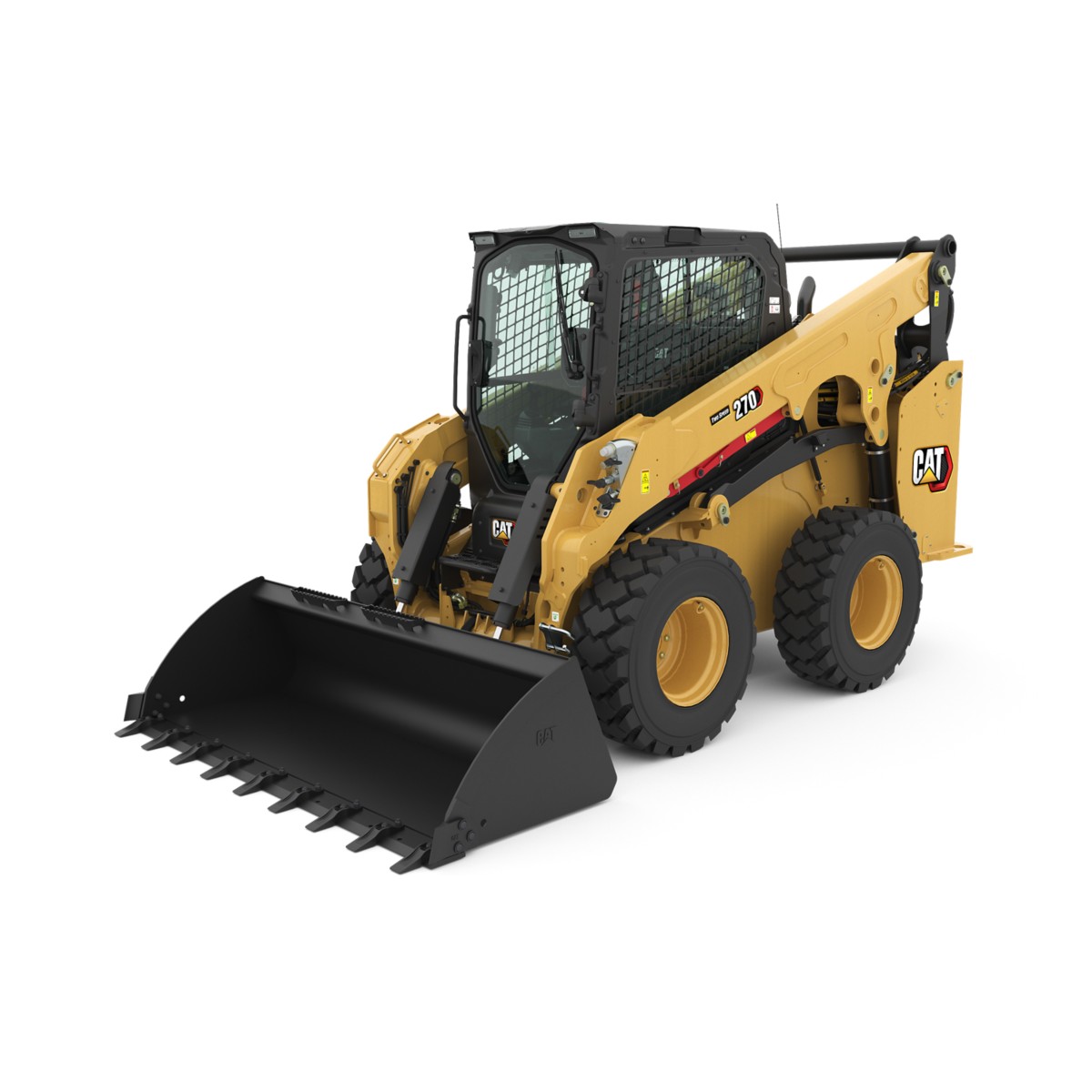
Caterpillar
Cat 270
$90,000
- Engine
- 100 hp
- Aux flow
- 23 GPM
- Weight
- 10,441 lbs
Cat's 270 tops the next-generation wheeled skid steer line, replacing the 272D3 with a 100 hp C3.6TA and a 3,557 lb rated operating capacity at a 134-inch pin height. High Flow XPS is available at 34 GPM and 4,061 psi, and the 270 XE sits above it with a 40 GPM circuit for attachment-heavy work.
Full sheet & owner reports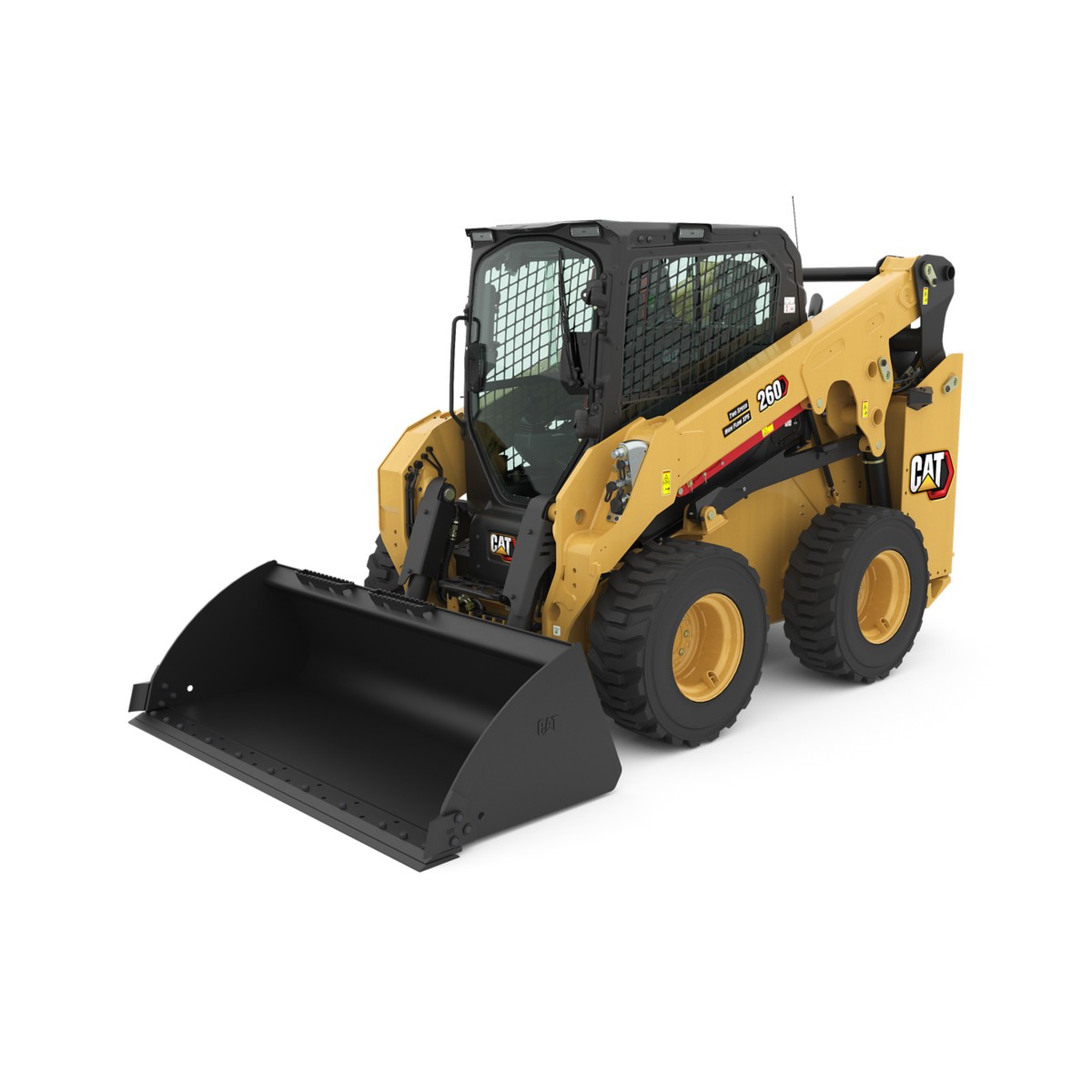
Caterpillar
Cat 260
$67,909
- Engine
- 74 hp
- Aux flow
- 20 GPM
- Weight
- 8,523 lbs
Anyone replacing a 262D3 wheeled skid steer gets the direct next-generation answer here. The Cat 260 lifts 3,160 lbs to a 132-inch pin height - both meaningful gains over the D3 - and pairs the 74 hp C2.8T with High Flow XPS hydraulics up to 34 GPM in Cat's new sealed, pressurized cab.
Full sheet & owner reports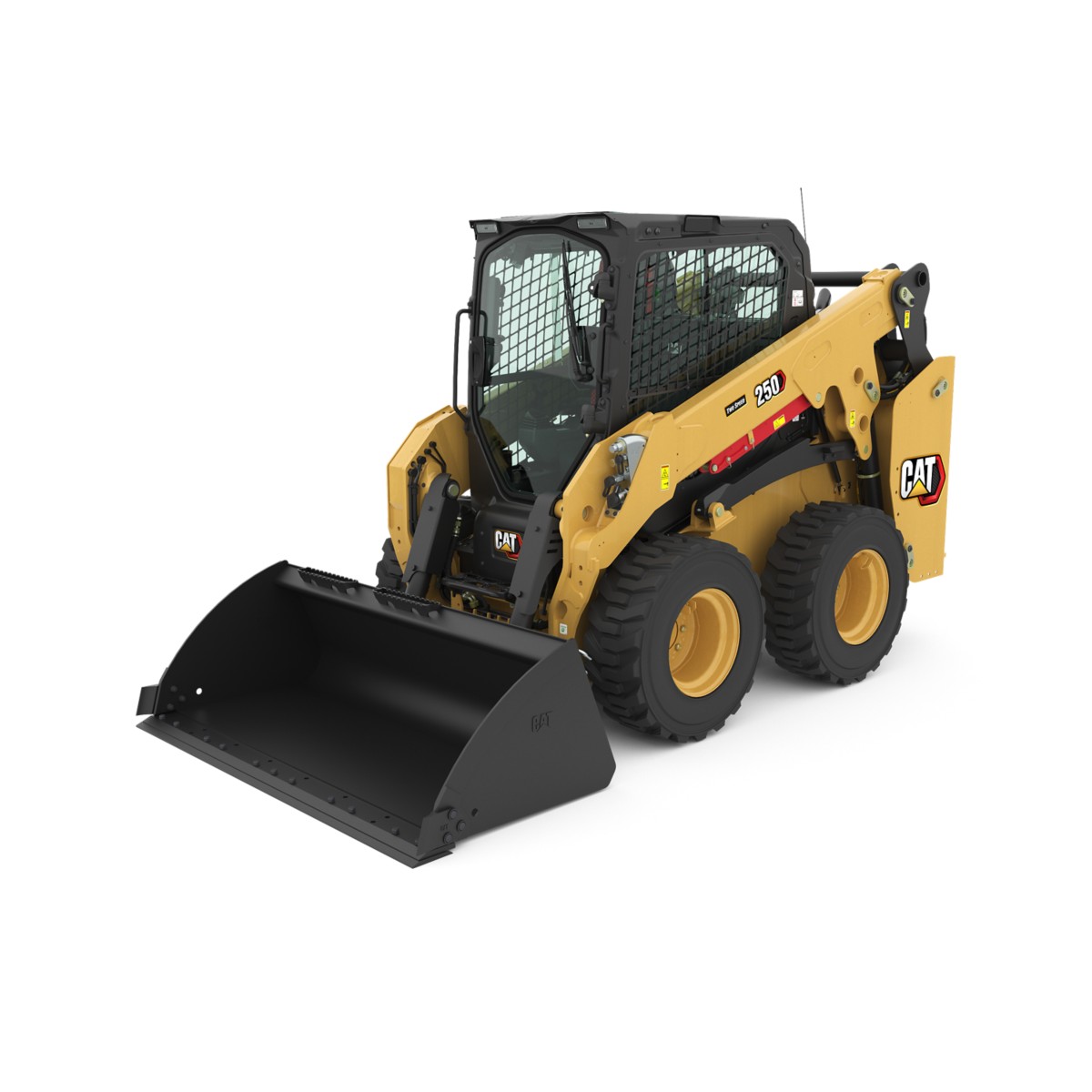
Caterpillar
Cat 250
$60,493
- Engine
- 74 hp
- Aux flow
- 20 GPM
- Weight
- 7,829 lbs
Launched in late 2024 alongside the 260 and 270, the Cat 250 is the entry point to Caterpillar's next-generation wheeled skid steer line. The C2.8T engine delivers 74 hp with peak power held across a wide RPM range, and its 124-inch lift height is 3 inches taller than the outgoing D3 machines it supersedes.
Full sheet & owner reports