Caterpillar
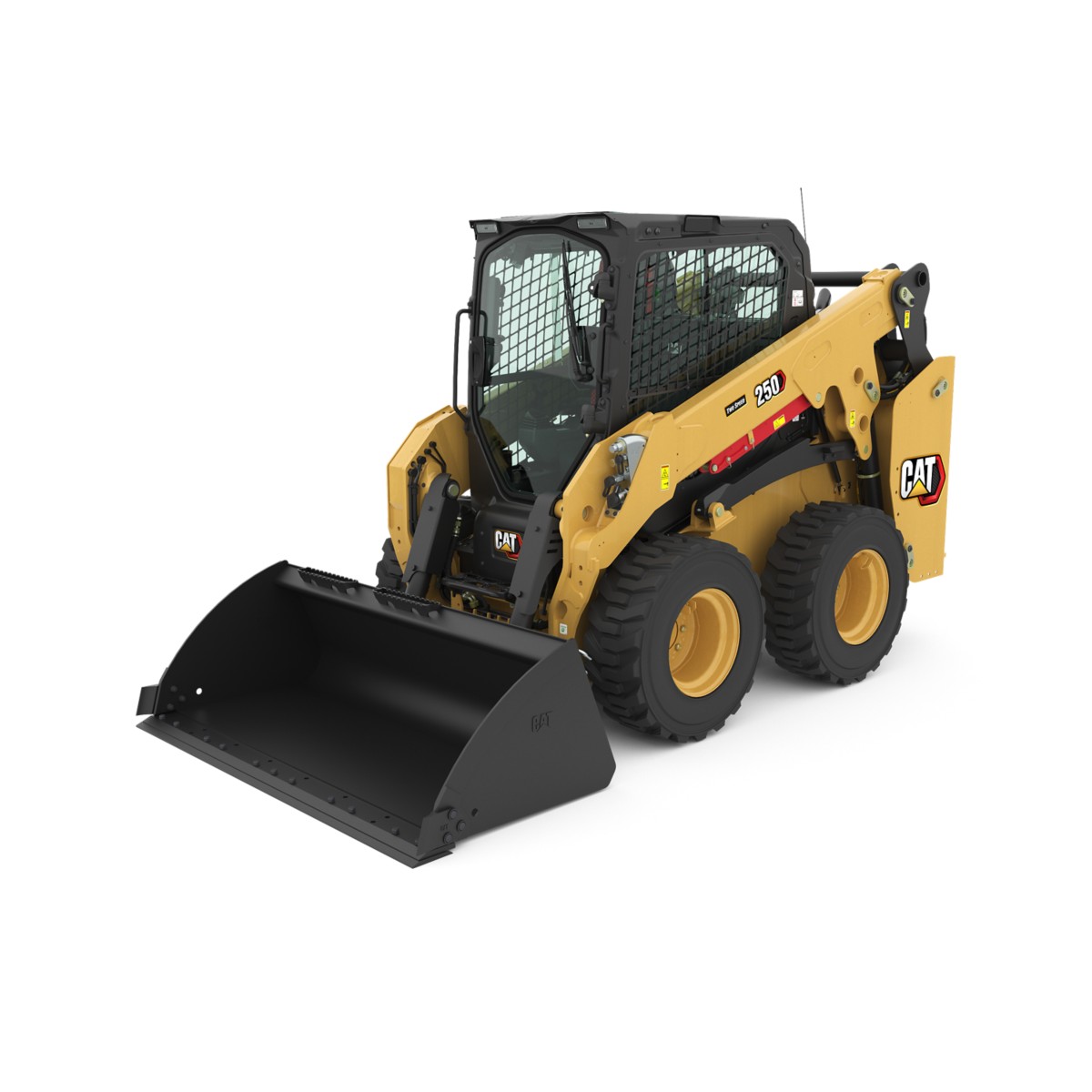
Cat 250
The bright segment is what Cat 250 is rated to carry; the grey run past it is the rest of its tipping load. Bar length is tipping load drawn to the same scale on every machine on the site, so a short bar is a smaller machine and not a conservative rating.
One caveat on this machine: we could not find a published tipping load for it, so the figure above is its advertised capacity divided by the fraction its maker rates at. That makes the grey run arithmetic rather than a measurement, and it is the number worth asking a dealer to confirm.
Launched in late 2024 alongside the 260 and 270, the Cat 250 is the entry point to Caterpillar's next-generation wheeled skid steer line. The C2.8T engine delivers 74 hp with peak power held across a wide RPM range, and its 124-inch lift height is 3 inches taller than the outgoing D3 machines it supersedes.
Suits: The modern Cat platform in an affordable, trailer-friendly wheeled machine Its vertical lift path reaches highest at full extension, for loading high-sided trucks and stacking.
Lifting and reach
- Rated operating capacityWheeled rating convention
- 2,689 lbs
- Tipping loadDerived from the advertised capacity, not published
- 5,378 lbs
- Lift height to hinge pin
- 124 in
- Lift path
- Vertical Lift
- Operating weight
- 7,829 lbs
Power and hydraulics
- Engine power
- 74 hp
- Engine
- Cat C2.8T
- Auxiliary flowStandard circuit
- 20 GPM
- Flow type
- Standard
- Warranty
- 2 yr / 2,000 hr
Fitted or available
What this machine can be ordered with. Some of these are standard and some cost extra, and which is which moves between trim levels, so check them against the quote rather than against this list.
What owners report
Summarised from the sources listed below. Nothing here was tested by us.
Replacing the 242D3 gave Cat room to move this size class up rather than sideways, and the gains are real where it counts: roughly 21 percent more rated capacity, three more inches of lift to 124 inches, and 36 percent more tilt breakout force. It is the smallest next-generation skid steer, it clears the sideboards on most tandem dump trucks, and it still goes down the road behind an ordinary truck and trailer at 7,829 lb.
Where the marketing oversells it is the engine. The 250 and 260 picked up 13 percent more torque, against 35 percent on the 270 and 43 percent on the 265 — so what this machine really buys over a D3 is lift geometry and cab rather than grunt. The cab is a genuine step: 22 percent more volume and 26 percent more foot space across the next-generation line, with telematics, a camera and the touchscreen standard. Auxiliary flow starts at 20 GPM with a software-enabled path to 30 GPM at 3,500 psi, so the hydraulics decision can wait. Worth saying plainly that independent long-term owner reporting on the next-generation wheeled machines is still thin — they are recent, and most of the detailed operator feedback in circulation concerns the track loaders.
Hard surfaces and established sites are its ground, and it brings current-generation lift geometry at the bottom of that range. It gets awkward in both directions at once: the 232D3 at $49,910 and 236D3 at $55,225 are still on the price list below it, and the 260 is only about $7,400 above with a 132-inch lift and roughly 470 lb more capacity. Price all four the same way before signing, and be honest about ground conditions — if you are regularly in mud the money belongs on tracks, even though the cheapest next-generation track loader is another $15,000.
What owners like
- As the machine that replaces the 242D3 it gains about 21 percent in rated capacity, three more inches of lift to 124 inches, 36 percent more tilt breakout force and 26 percent more lift breakout — the biggest proportional gains anywhere in the next-generation wheeled line.
- The 124-inch pin height clears the sideboards on most tandem dump trucks, which is the practical threshold that decides whether a small wheeled machine is useful for loading or merely for carrying.
- At 7,829 lb it still tows on a standard 10,000 lb equipment trailer with attachments aboard — the advantage that keeps wheeled machines in the conversation against every compact track loader.
- Standard flow is 20 GPM and high flow is a software-enabled setting that lifts it to 30 GPM at the standard 3,500 psi rather than a hardware kit, so the attachment decision does not have to be final at the order desk.
- Product Link telematics, a rearview camera and the touchscreen are standard rather than extra-cost, which at this price point is not universal in the class.
- The whole next-generation line gained a 5 percent increase in standard system pressure to 3,500 psi and a cab 22 percent larger by volume with 26 percent more foot space than the D3 cab it replaces.
What owners complain about
- Its 2,689 lb rating is quoted at 50 percent of a 5,378 lb tipping load, the standard basis for wheeled machines — which means it carries less reserve than a track loader's 35 percent figure, so the 250's 2,689 lb should not be read as equivalent to the 265's 2,823 lb.
- The torque story is far less dramatic here than the next-generation launch suggests: the 250 and 260 gained 13 percent, against 35 percent on the 270 and 43 percent on the 265. Most of what this machine gains over the 242D3 is geometry and cab, not engine.
- At $60,493 it sits $10,583 above the 232D3 and about $5,300 above the 236D3, both of which Cat still sells new — for light material handling the older machines do much the same work for meaningfully less money.
- The 260 is only about $7,400 more and brings a 132-inch lift height and 3,160 lb of capacity, roughly 470 lb more on a shared frame, which makes it a genuinely close call rather than an obvious upsell.
- Wheels still cannot follow a track loader onto soft or wet ground, and buyers who conclude they need tracks face a jump to about $75,400 for the cheapest next-generation compact track loader, the 255.
Drawn from compactequip.com, compact.miltoncat.com, constructionequipment.com, cat.com.
What buyers ask
What does the Cat 250 replace, and is the 242D3 still available?
Should I buy the 250 or step up to the 260?
Can I add high-flow hydraulics later?
Is the next-generation engine much stronger than the D3's?
Why does the 250 list 2,689 lb when a similar-priced track loader lists less?
Put the Cat 250 against
Machines in the same range
The rest of the Caterpillar line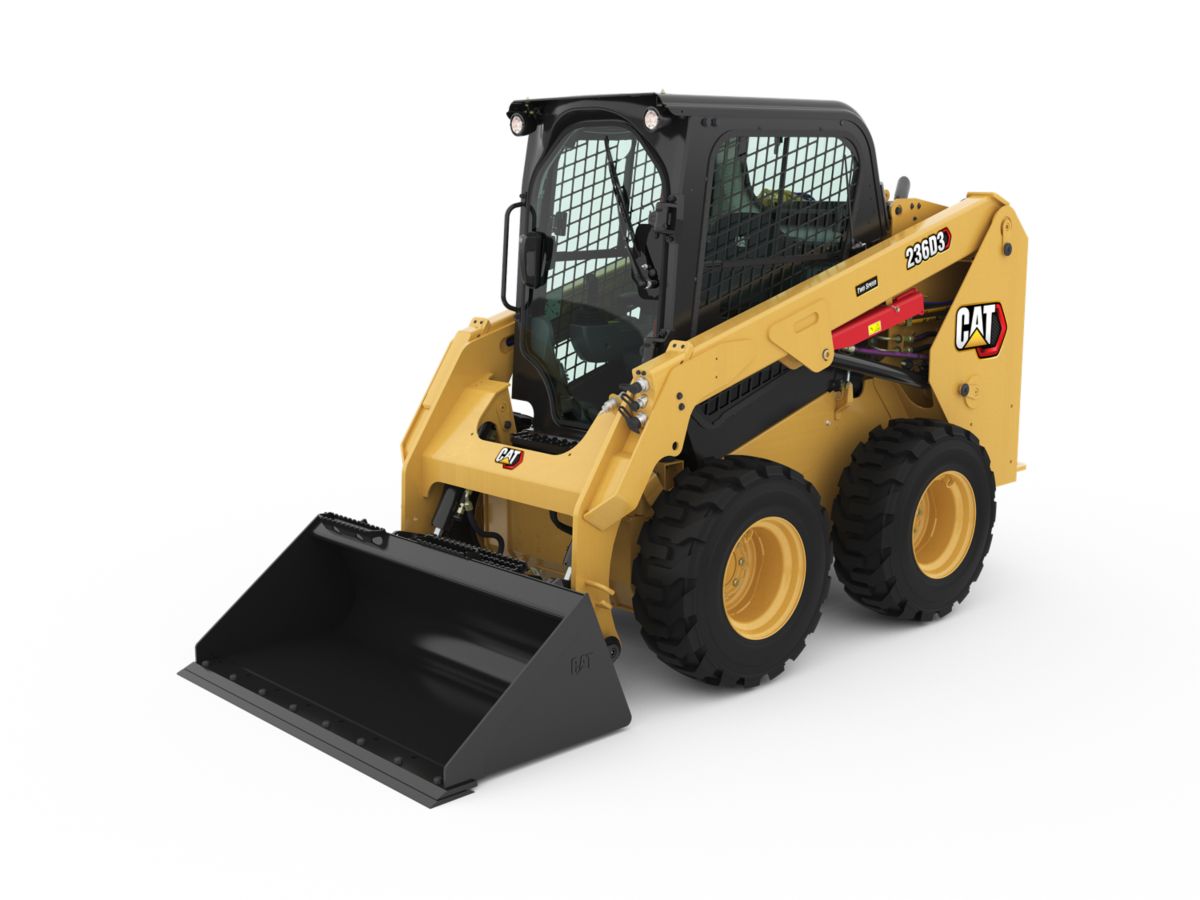
Caterpillar
Cat 236D3
$55,225
- Engine
- 67 hp
- Aux flow
- 20 GPM
- Weight
- 6,567 lbs
Radial lift and a 20 GPM standard circuit make the 236D3 the digging-oriented member of Cat's small-frame D3 trio, with a 122.9-inch pin height that is unusually tall for a radial boom. It fits contractors whose day is trenching, backfilling and grading rather than loading trucks.
Full sheet & owner reports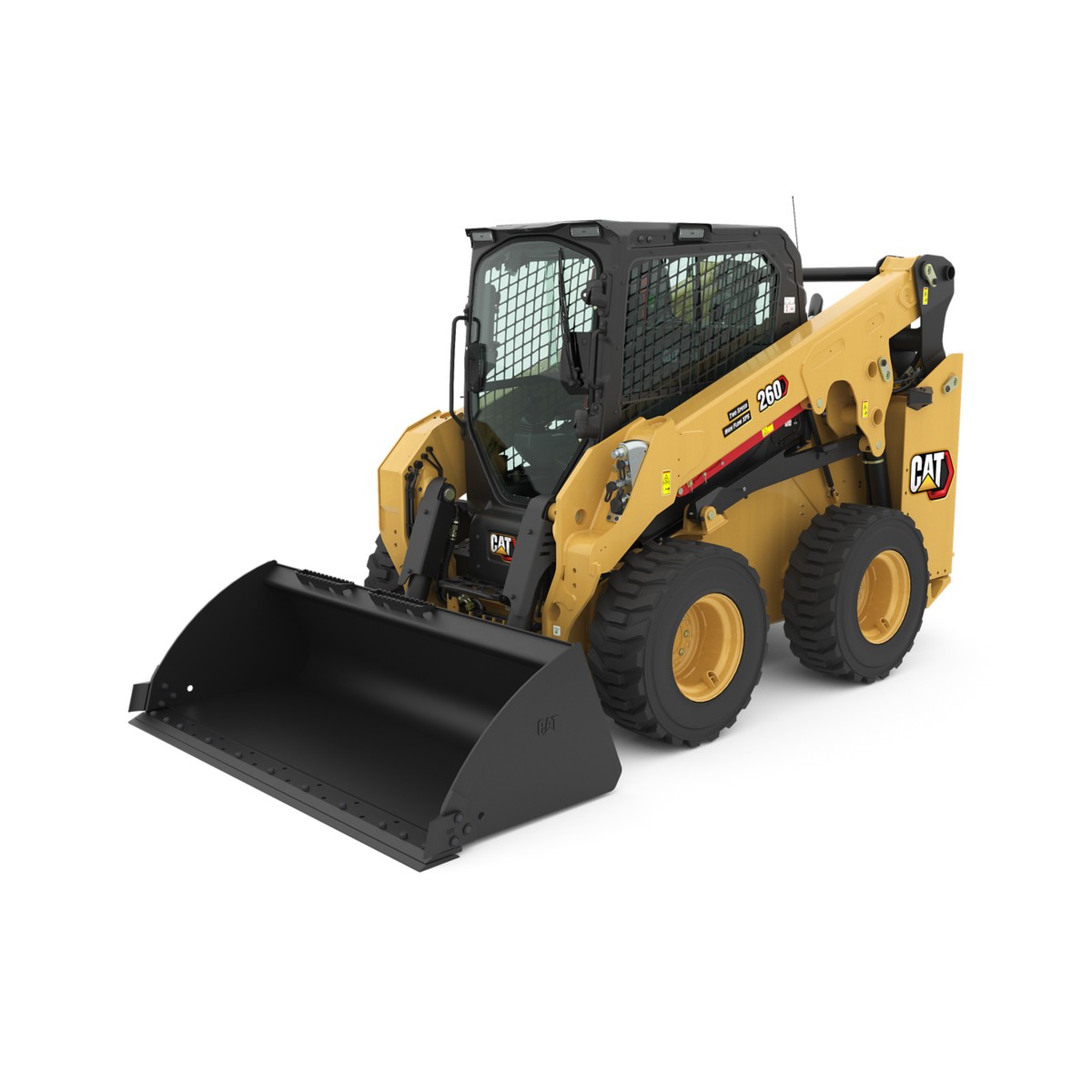
Caterpillar
Cat 260
$67,909
- Engine
- 74 hp
- Aux flow
- 20 GPM
- Weight
- 8,523 lbs
Anyone replacing a 262D3 wheeled skid steer gets the direct next-generation answer here. The Cat 260 lifts 3,160 lbs to a 132-inch pin height - both meaningful gains over the D3 - and pairs the 74 hp C2.8T with High Flow XPS hydraulics up to 34 GPM in Cat's new sealed, pressurized cab.
Full sheet & owner reports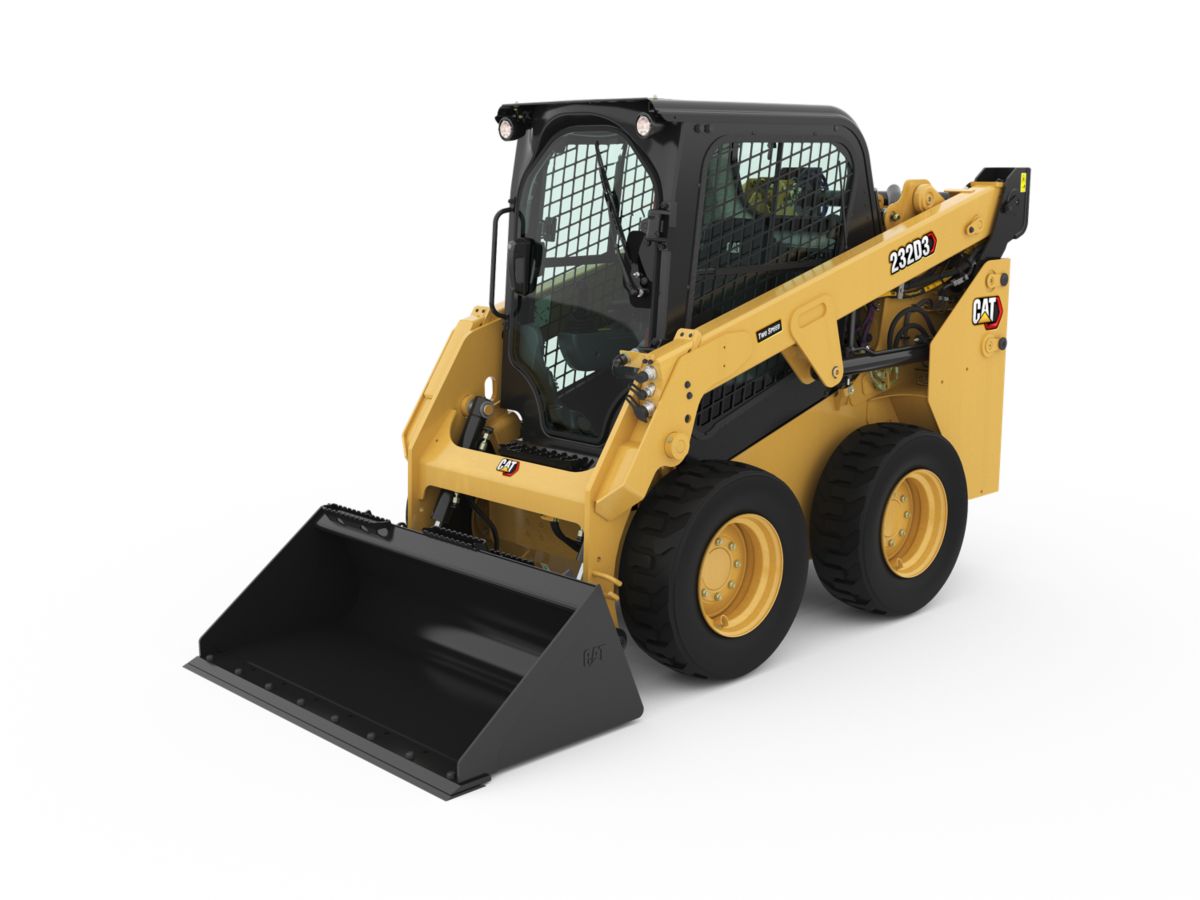
Caterpillar
Cat 232D3
$49,910
- Engine
- 67 hp
- Aux flow
- 18 GPM
- Weight
- 6,514 lbs
Caterpillar's 232D3 sits one frame step above the 226D3, trading that machine's radial boom for a vertical lift path and 350 lb more rated capacity on the same 67 hp engine. It suits owner-operators who load pallets and trailers more often than they dig, and who want the Cat cab at the bottom of the price list.
Full sheet & owner reports