Head to head
JCB 2TS-7T Teleskid against JCB 300
The JCB 300 saves $3,000; only the JCB 2TS-7T Teleskid runs tracks, so their advertised capacities are not measured the same way; the JCB 300 moves 5.2 GPM more through the auxiliary circuit; only the JCB 2TS-7T Teleskid runs rubber tracks.
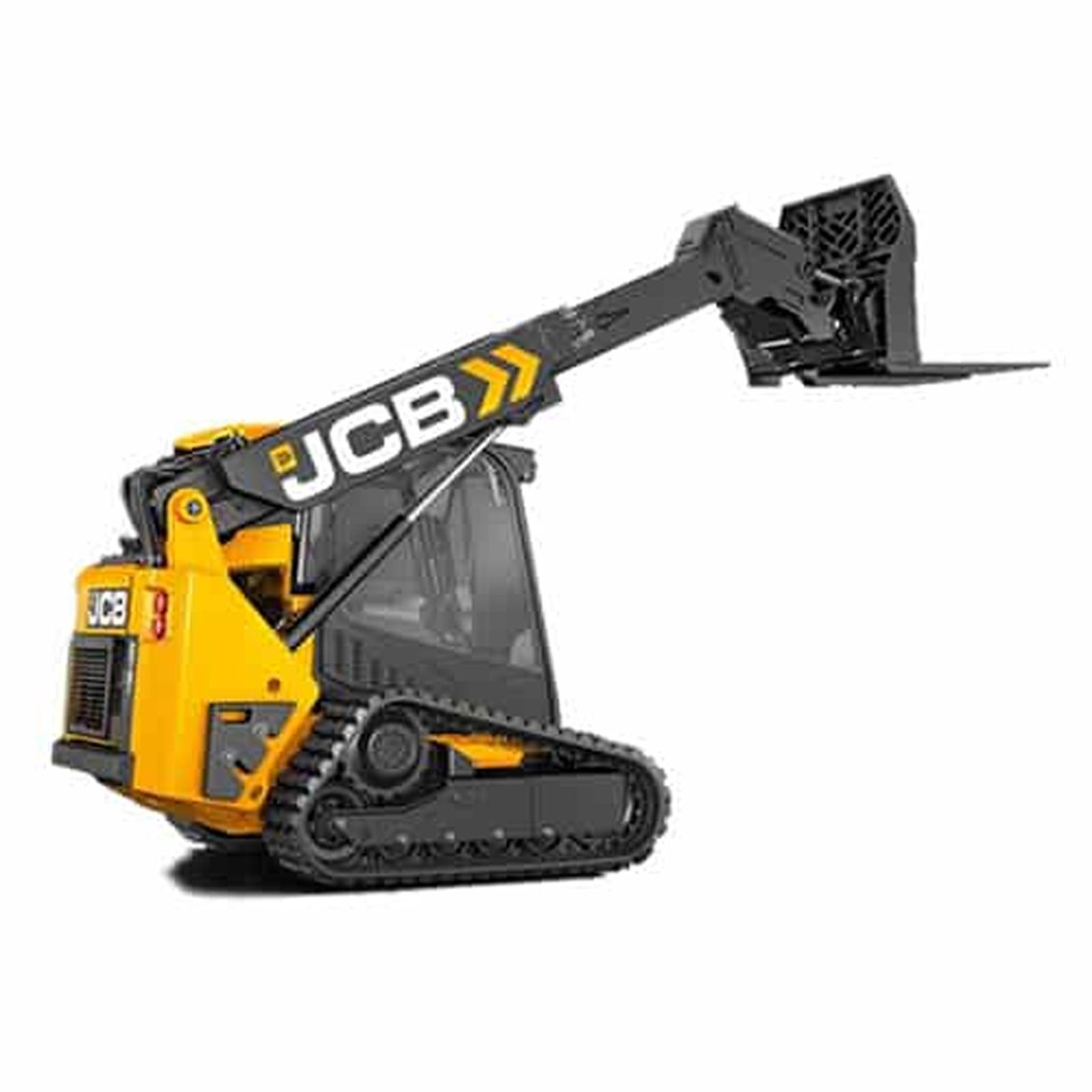
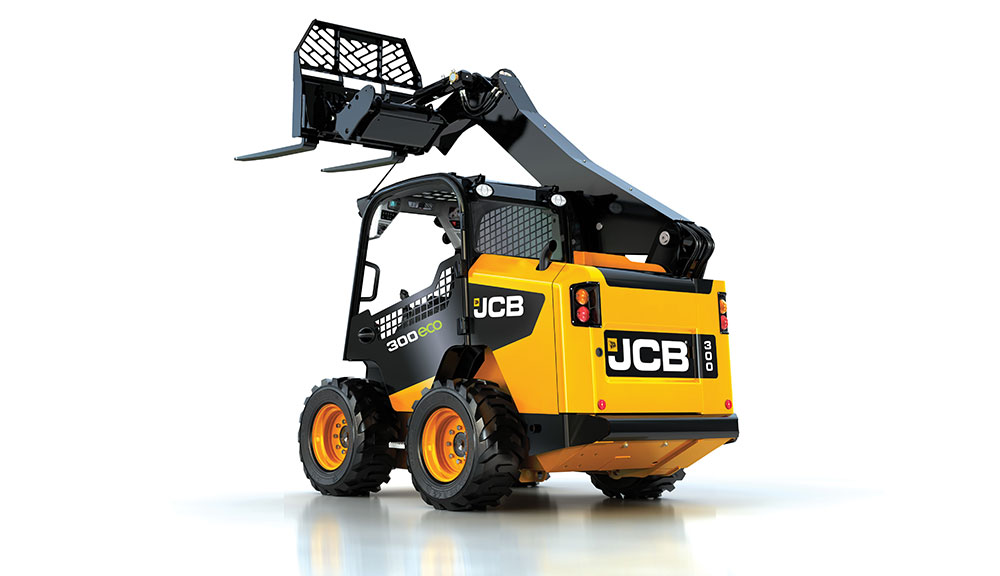
These two are rated differently on purpose. A wheeled skid steer is rated at half its tipping load and a track loader at 35 per cent, because the track machine holds back more reserve. So the capacity rows below are not a like-for-like contest, and the tipping load row is the closer thing to one.
| Spec | JCB 2TS-7T Teleskid | JCB 300 |
|---|---|---|
| Price | $70,000 | $67,000 |
| Rated capacity, as advertised | 2,096 lbs | 3,186 lbs |
| Rated at | 34% of tipping load | 50% of tipping load |
| Tipping load | 6,138 lbs | 6,369 lbs |
| Capacity at its class convention | 2,148 lbs | 3,185 lbs |
| Engine power | 74 hp | 74 hp |
| Engine | JCB by Kohler 2.5L | JCB EcoMAX TCAE-55 |
| Auxiliary flow | 18.6 GPM | 23.8 GPM |
| Lift height | 144 in | 126 in |
| Operating weight | 9,914 lbs | 9,288 lbs |
| Lift path | Radial Lift | Vertical Lift |
| Rubber tracks | Yes | No |
| High flow available | Yes | Yes |
| Enclosed cab available | Yes | Yes |
| Two-speed travel available | Yes | Yes |
| Self-levelling available | Yes | Yes |
| A/C and heat available | Yes | Yes |
| Warranty | 2 yr / 2,000 hr | 2 yr / 2,000 hr |
What owners say about each
JCB 2TS-7T Teleskid
- The telescopic boom is a genuine one-of-a-kind in the small platform class - 12'0" of lift height and 7 feet of forward reach let it load high-sided trucks and stack bales no conventional CTL this size can touch.
- It digs 2 feet below grade with the boom extended, so light trenching, footing cleanup, and loading out of pits happen without bringing in an excavator.
- The 74 hp JCB by Kohler engine needs no DPF or DEF, eliminating regen downtime and emissions fluid costs entirely.
- JCB claims 20% more breakout force than similarly sized machines, and owners confirm it digs harder than its footprint suggests.
- The cab is 47% larger than competitor small-platform machines, with climate control and switchable ISO/H-pattern controls.
- Capacity drops from 2,096 lbs retracted to 1,140 lbs at full boom extension, so the headline reach comes with real load limits.
- At 9,914 lbs it's heavy for a 2,100 lb capacity machine - conventional CTLs lift the same for thousands of pounds less weight and money.
- The telescopic boom adds wear points - extension pads, internal hoses, and a sliding section - that conventional fixed booms simply don't have.
- Standard 18.6 GPM auxiliary flow is modest, and you'll want the optional 29.4 GPM high-flow for hungry attachments.
- JCB's compact dealer network is thinner than Bobcat's or Cat's in much of the U.S., which matters for a specialized boom needing dealer service.
- Around $70,000 to start, it costs notably more than conventional CTLs with similar rated capacity.
- The left-side door is the only entry point, so obstructions on that side lock the operator out.
JCB 300
- The side-entry door means operators never climb over the attachment or under a raised boom - on a 3,000 lb-class machine handling heavy loads, that's a meaningful safety edge every shift.
- The single-arm PowerBoom eliminates the right-side arm for roughly 60% better visibility, and the one-piece boom stays tight and rattle-free after hard hours.
- At 3,186 lbs of rated capacity it's JCB's strongest wheeled skid steer, comfortably handling brick packs, seed pallets, and full concrete mixing duties.
- The 74 hp EcoMAX diesel meets Tier 4 Final with no DPF and no DEF - no regen cycles, no emissions fluid, and less aftertreatment plumbing to fail out of warranty.
- A 23.8 GPM standard circuit with an optional high-flow package up to 33 GPM runs demanding attachments like cold planers and snow blowers.
- Two-speed travel tops out around 12.4 mph, which is genuinely fast for ground-to-ground moves on large sites.
- Traditional buyers remain skeptical of the single-boom design, which can narrow the buyer pool when it's time to sell.
- JCB's compact-equipment dealer network is thinner than Bobcat's, Cat's, or Deere's in much of rural America, slowing parts and service.
- At 9,288 lbs it needs a serious trailer and truck - this is not a machine you tow behind a half-ton.
- 74 hp is modest for a 3,000 lb-class machine, and rivals like the Bobcat S86 offer notably more engine power in the same weight class.
- The left-side door is the only entry, so tight parking against that side locks the operator out.
- Wheels limit it in mud and soft ground where the tracked 300T keeps working - and the track version costs a hefty premium.
- High-flow hydraulics cost extra, so the attachment-heavy buyers this machine targets end up paying above the base price.