JCB
JCB 2TS-7T Teleskid
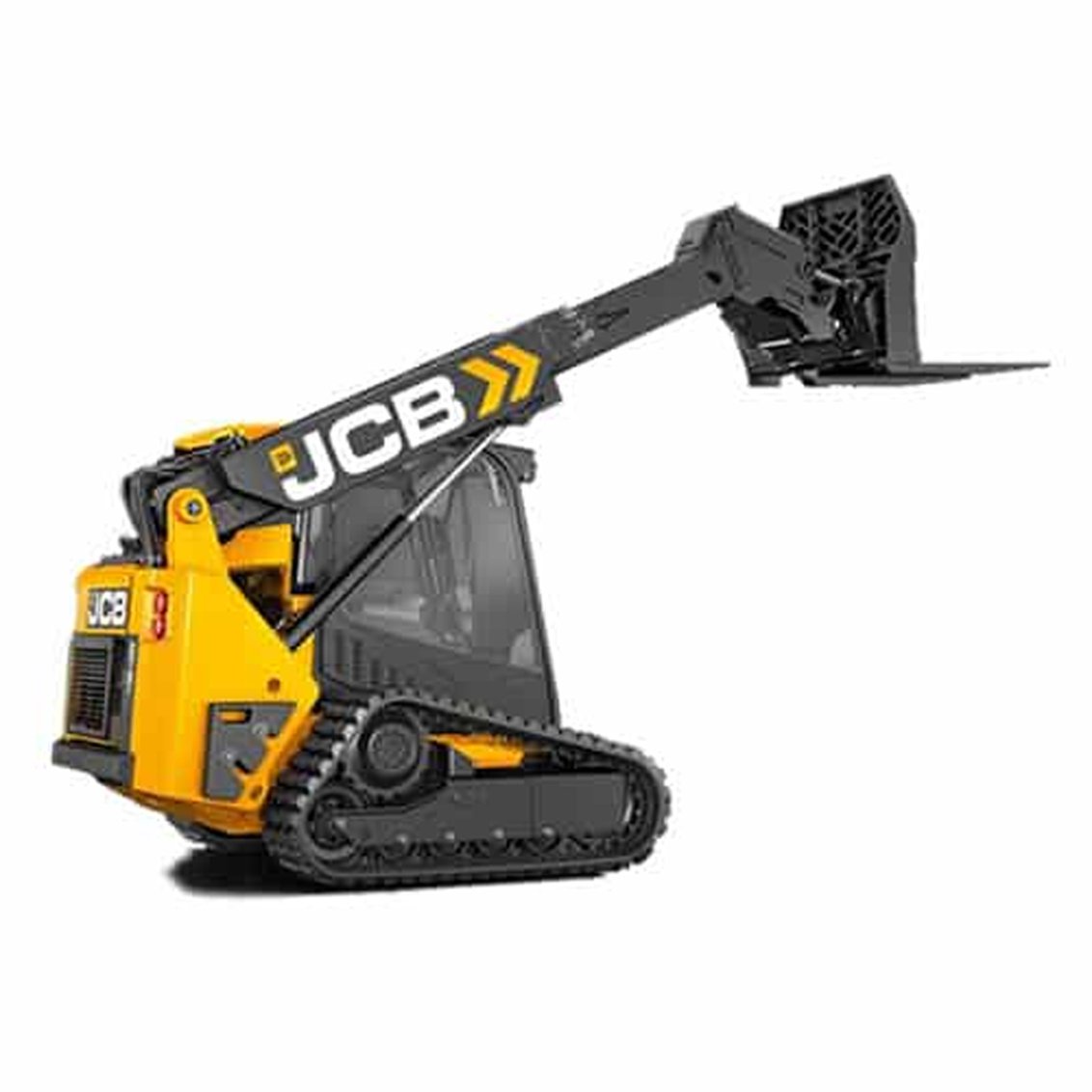
The bright segment is what JCB 2TS-7T Teleskid is rated to carry; the grey run past it is the rest of its tipping load. Bar length is tipping load drawn to the same scale on every machine on the site, so a short bar is a smaller machine and not a conservative rating.
The JCB 2TS-7T is the world's only small-platform compact track loader with a telescopic boom. The extending single-arm PowerBoom reaches 12'0" of lift height and 7 feet of forward reach from a machine sized and priced against conventional mid-size CTLs, with a 74 hp no-DPF Kohler diesel and JCB's side-entry cab door.
Suits: Operators who want telehandler-style reach - stacking bales, loading high trucks, digging below grade - from one compact machine Its radial lift path reaches furthest at mid-height, for digging, grading and backfilling.
Lifting and reach
- Rated operating capacityTrack loader rating convention
- 2,096 lbs
- Tipping load
- 6,138 lbs
- Lift height to hinge pin
- 144 in
- Lift path
- Radial Lift
- Operating weight
- 9,914 lbs
Power and hydraulics
- Engine power
- 74 hp
- Engine
- JCB by Kohler 2.5L
- Auxiliary flowStandard circuit
- 18.6 GPM
- Flow type
- Standard
- Warranty
- 2 yr / 2,000 hr
Fitted or available
What this machine can be ordered with. Some of these are standard and some cost extra, and which is which moves between trim levels, so check them against the quote rather than against this list.
What owners of the same hardware report
Nobody has written up this exact machine yet, so this is drawn from reports on the machines that share its hardware — the model it replaced, a sibling on the same platform, or the same machine sold under another badge. The prose says which in each case. It is accurate about the iron rather than about this particular model.
Reach is the entire argument for this machine, and it is the only small-platform track loader that offers any. JCB puts the numbers at 11 ft 10 in of lift, 7 ft of forward reach and 2 ft of dig below grade, which covers work that otherwise means a telehandler on site or a second trip with the excavator. Nobody has published a long-term ownership account of this exact model, so what follows comes from operators running the same telescoping Powerboom on JCB's wheeled Teleskid and from contractors given tracked demo machines - the boom, the engine and the cab are shared, the undercarriage is not.
On the wheeled machine the boom did what it promises: square bales stacked four high, a loaded grab tipped onto a heap at full height and reach without protest, and the extension used to pull material away from walls that a fixed boom would have had to nose into. The awkward parts are documented too. High-flow couplers only function with the boom retracted, a deliberate stability interlock; maximum dump angle with JCB's bucket is 42 degrees, which is tight for loading a trailer; and rated capacity drops from 2,096 lbs to 1,140 lbs as the boom goes out. The 74 hp Kohler runs without a particulate filter or exhaust fluid, the rear bonnet and tilting cab make daily service fast, and the side door means the operator never passes under a raised boom.
Buy it if reach is a recurring problem rather than an occasional one, and price it against a conventional loader plus the telehandler or excavator trips it replaces rather than against other track loaders. JCB's starting figure is $67,990 and the boom is the whole premium. Before signing, get the load chart at full extension rather than the retracted rating, confirm in writing whether a high-flow circuit is actually orderable on your build and whether it is locked out at reach, and find out how far away the nearest dealer who has serviced a telescoping boom actually is.
What owners like
- The telescoping Powerboom is the only one of its kind on a small-platform track loader, and JCB's figures for it are 11 ft 10 in of lift, a full 7 ft of forward reach and the ability to dig 2 ft below grade. Operators who have worked the wheeled Teleskid, which carries the same boom and the same 74 hp engine, used that reach to stack large square bales four high and to tip a loaded grab onto a muck heap at full height without the machine complaining.
- Capacity at reach is published rather than hidden: 2,096 lbs with the boom in, 1,140 lbs with it fully out. Plenty of specialised machines quote only the flattering number, and having both means the load chart can be checked against the work before the order goes in.
- The 74 hp Kohler meets Tier 4 Final with no particulate filter and no exhaust fluid, so there is no regeneration cycle to sit through on short-cycle loading and no tank to keep topped up.
- One boom arm and a door in the left side of the cab means the operator steps in at ground level rather than climbing over a loaded attachment or under a raised boom - the entry route federal safety guidance on these machines specifically warns about. Operators who have climbed into JCB's small platform make the practical point that the attachment can be anywhere and the door still opens.
- Daily servicing on the Teleskid platform is genuinely quick: filters and check points sit behind a wide rear bonnet, and the whole cab pivots forward on gas struts after two bolts, even with the boom resting on the ground.
- Loader response and transmission response each have three selectable modes that can be reprogrammed, which matters on a machine whose boom behaves very differently retracted and extended, and on one shared between operators.
What owners complain about
- On the Teleskid boom the high-flow couplers work only with the boom retracted. JCB did that deliberately, to stop anyone running a mulcher out at reach where stability goes away, but it means the two headline features cannot be used at the same time. Confirm the same interlock on the tracked machine before buying a high-flow head for it.
- Rated capacity falls from 2,096 lbs to 1,140 lbs between boom in and boom out. That is physics, not a defect, but a buyer planning pallet work at reach is shopping a 1,140 lb machine.
- JCB's own compact product manager told a trade interviewer in late 2025 that high-flow hydraulics are not available on the small-platform machines at all, while JCB's model pages and trade coverage both list a roughly 29 gpm high-flow option. Whichever is right for the current build, get it written on the quote rather than assumed.
- Maximum dump angle with JCB's own bucket is 42 degrees, which operators running the same boom found awkward when tipping into a trailer rather than onto a heap.
- Visibility is lopsided by design - excellent past the open side, worse on the boom side. Operators coming off a twin-arm machine describe needing time to recalibrate, which is worth a demo rather than a leap of faith.
- Ask what breaks at 3,000 hours and the answers come from people who have sat in one or watched one work, not from anyone who has owned one that long. The telescoping section, its wear pads and its internal hose routing have no public field record on this model.
- JCB lists it from $67,990. A conventional track loader of the same 2,096 lb rating costs considerably less, so the whole premium is the boom - and if reach is an occasional rather than a daily problem, that money buys a lot of telehandler rental.
Drawn from jcb.com, farmersguardian.com, earthmovers-magazine.com.au, earthmoversmagazine.co.uk, skidsteerforum.com, compactequip.com.
What buyers ask
How much can it lift with the boom all the way out?
Can I run a mulcher or a cold planer on it at reach?
Is it worth the money over a conventional small track loader?
Does it need DEF or run regeneration cycles?
What is the catch with the side door?
How good is visibility with only one boom arm?
Put the JCB 2TS-7T Teleskid against
Machines in the same range
The rest of the JCB line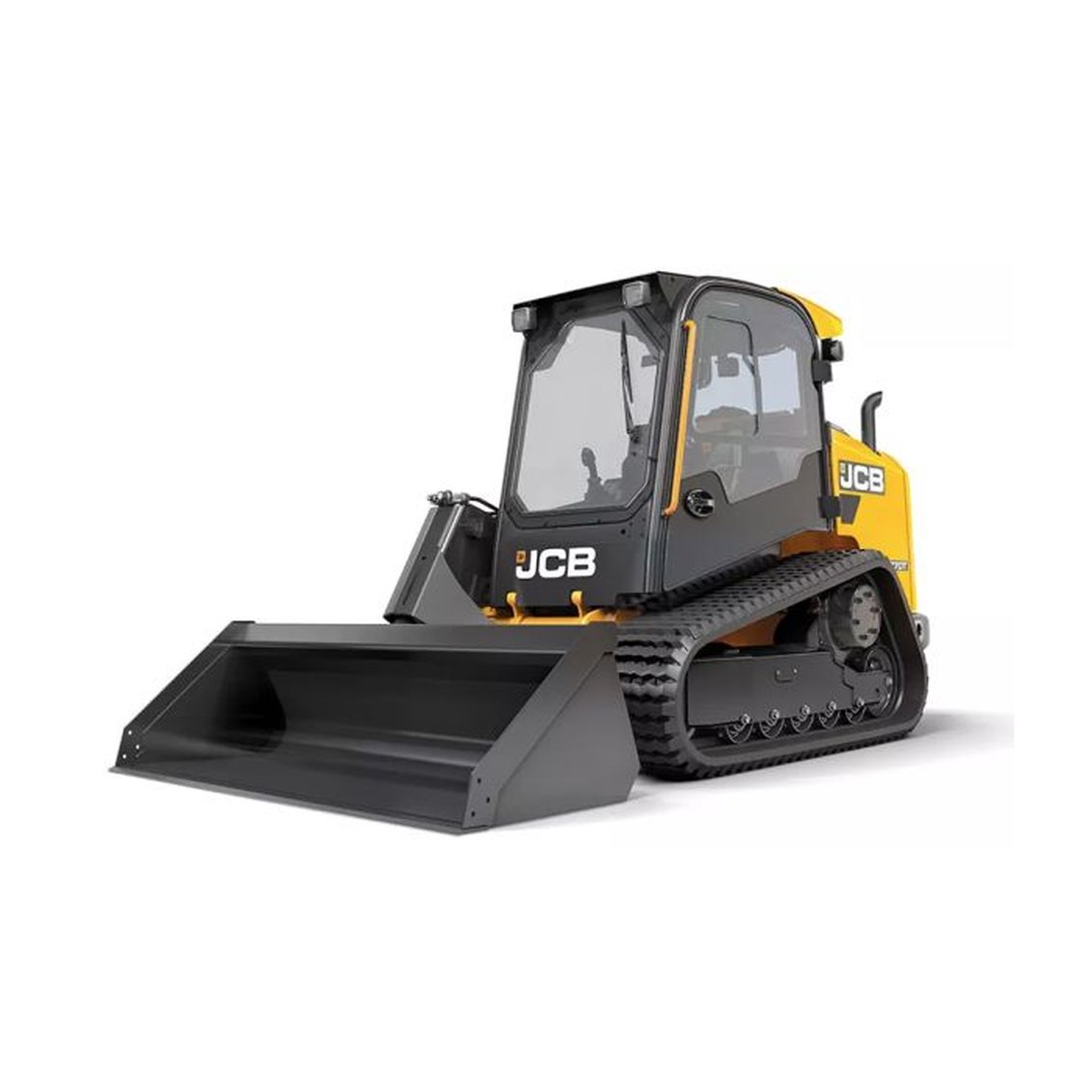
JCB
JCB 270T
$75,490
- Engine
- 74 hp
- Aux flow
- 24 GPM
- Weight
- 11,003 lbs
Visibility and entry safety no twin-arm machine can offer are the JCB 270T's argument, from the brand's signature single-arm PowerBoom and side-entry door. A torquey 4.4L JCB EcoMAX rated at 74 hp drives this large-platform vertical-lift compact track loader and its 2,723 lb rated capacity.
Full sheet & owner reports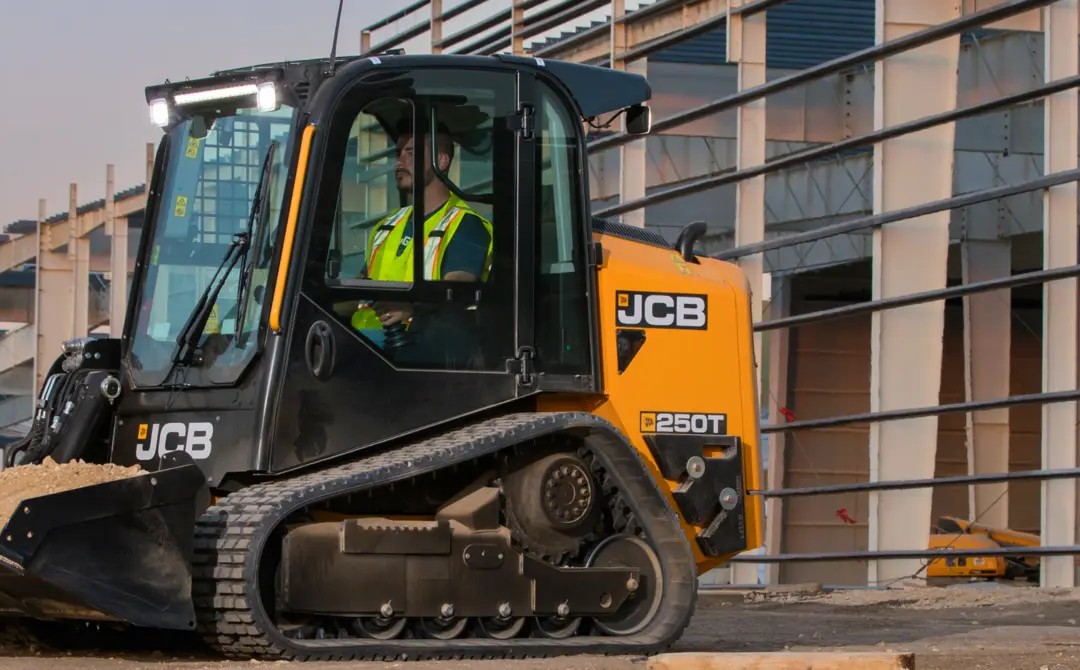
JCB
JCB 250T
$63,790
- Engine
- 74 hp
- Aux flow
- 18.5 GPM
- Weight
- 9,667 lbs
Launched in 2026, the JCB 250T brings the single-arm PowerBoom and side-entry door to the most contested mid-size CTL class, on a large-platform frame with a 2,526 lb rated capacity and a 125-inch hinge pin height. A 74 hp JCB EcoMAX TCAE-55 diesel with no DPF or DEF powers it, and at 10,622 lbs it sits at the heavy end of its capacity class.
Full sheet & owner reports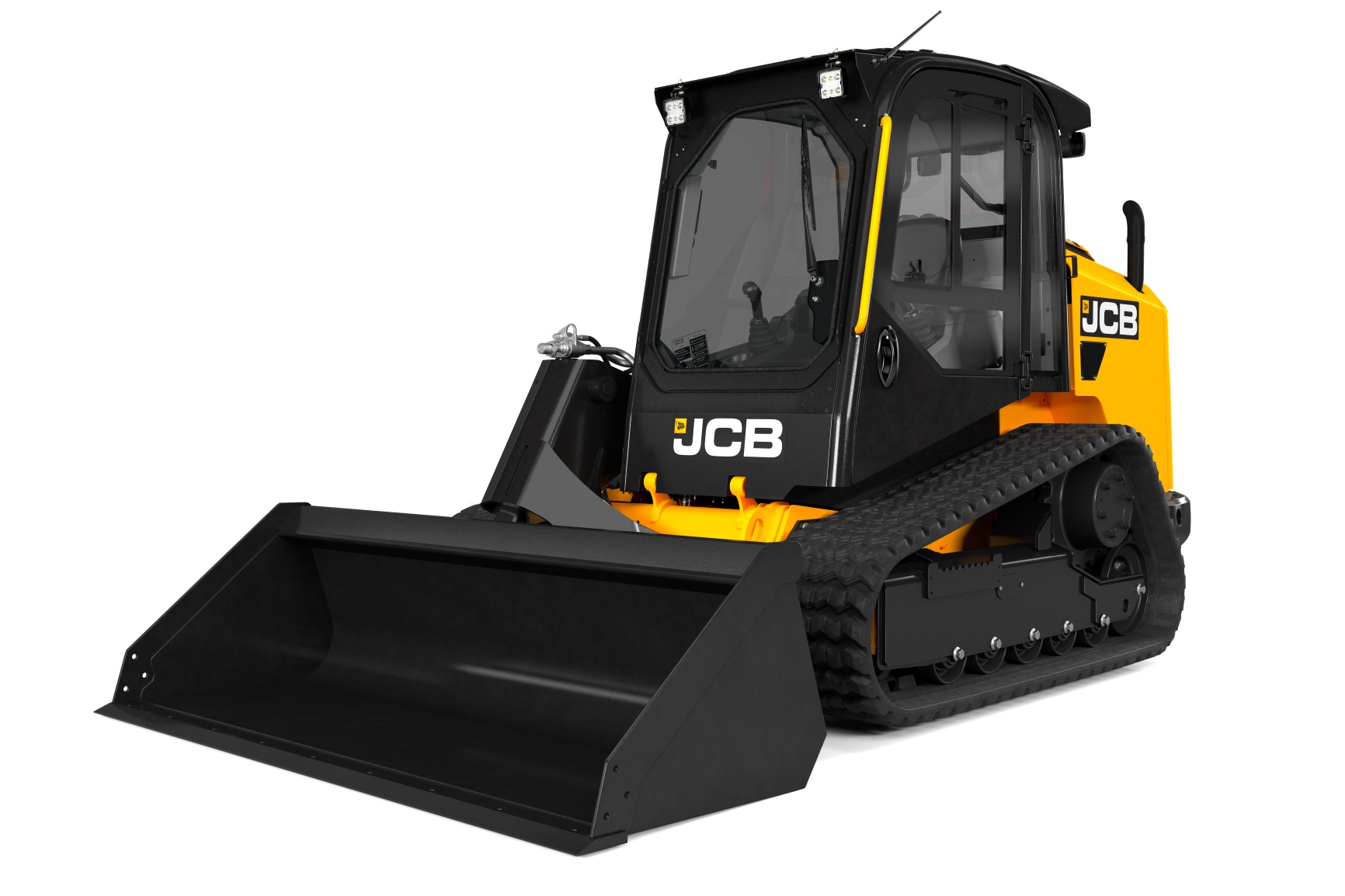
JCB
JCB 215T
$50,590
- Engine
- 74 hp
- Aux flow
- 18.5 GPM
- Weight
- 9,098 lbs
Operators never climb over the attachment to get into the JCB 215T - the single-arm PowerBoom and side-entry door see to that on this small-platform vertical-lift compact track loader. A 74 hp Kohler diesel with no DPF keeps emissions hardware simple on the 2,105 lb capacity machine.
Full sheet & owner reports