JCB
JCB 215T
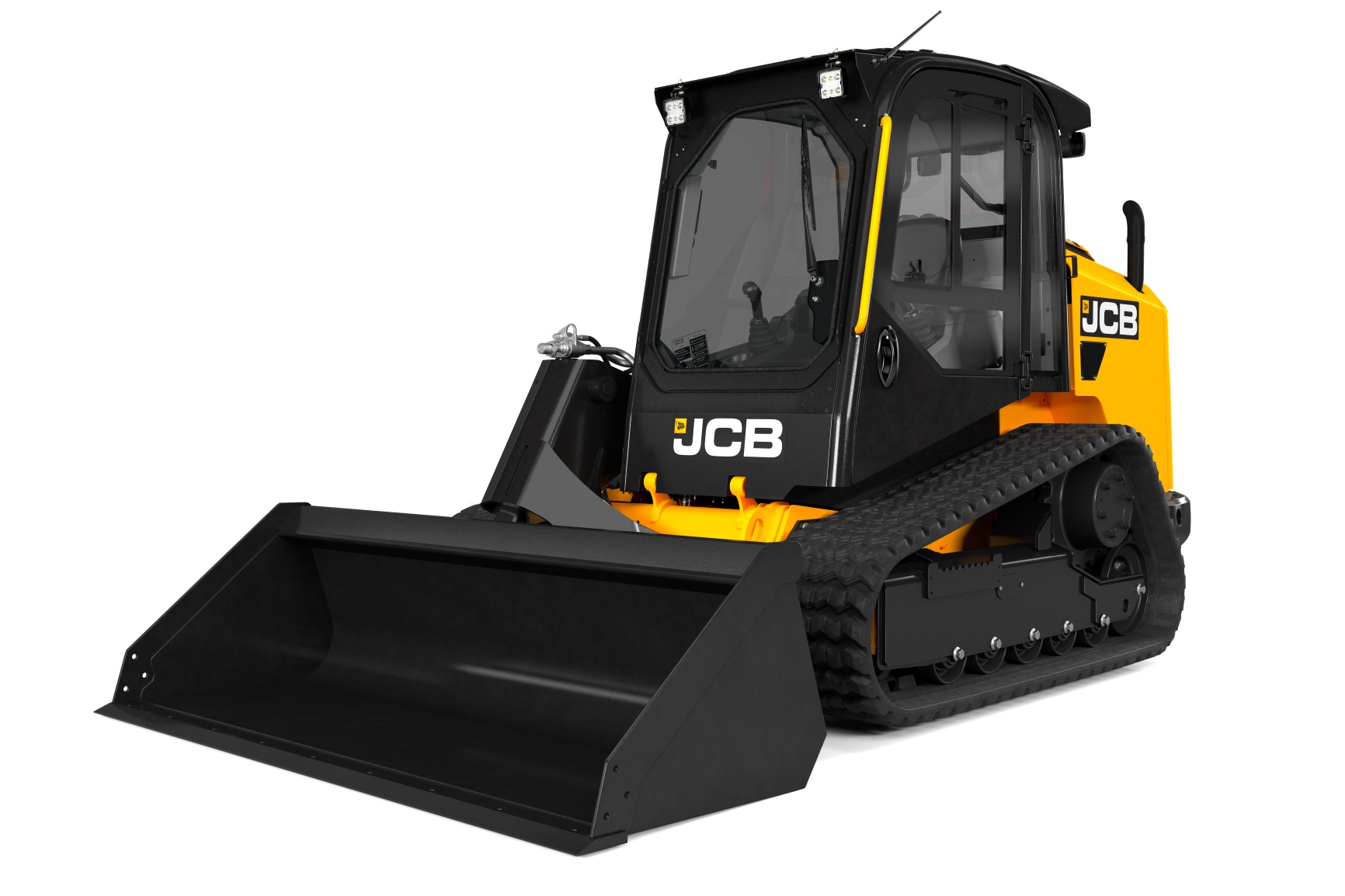
The bright segment is what JCB 215T is rated to carry; the grey run past it is the rest of its tipping load. Bar length is tipping load drawn to the same scale on every machine on the site, so a short bar is a smaller machine and not a conservative rating.
Operators never climb over the attachment to get into the JCB 215T - the single-arm PowerBoom and side-entry door see to that on this small-platform vertical-lift compact track loader. A 74 hp Kohler diesel with no DPF keeps emissions hardware simple on the 2,105 lb capacity machine.
Suits: Side-door entry and unmatched visibility in a mid-size CTL Its vertical lift path reaches highest at full extension, for loading high-sided trucks and stacking.
Lifting and reach
- Rated operating capacityTrack loader rating convention
- 2,105 lbs
- Tipping load
- 6,016 lbs
- Lift height to hinge pin
- 119 in
- Lift path
- Vertical Lift
- Operating weight
- 9,098 lbs
Power and hydraulics
- Engine power
- 74 hp
- Engine
- Kohler KDI 2.5L
- Auxiliary flowStandard circuit
- 18.5 GPM
- Flow type
- Standard
- Warranty
- 2 yr / 2,000 hr
Fitted or available
What this machine can be ordered with. Some of these are standard and some cost extra, and which is which moves between trim levels, so check them against the quote rather than against this list.
What owners of the same hardware report
Nobody has written up this exact machine yet, so this is drawn from reports on the machines that share its hardware — the model it replaced, a sibling on the same platform, or the same machine sold under another badge. The prose says which in each case. It is accurate about the iron rather than about this particular model.
Buyers come to this one for its layout rather than its numbers. One boom arm instead of two and a door in the side of the cab is a different way of getting to work, and JCB has built its whole compact line around it. No long-term ownership account of the 215T itself has been published, so what follows draws on operators who have run and climbed into JCB's other single-arm machines, on the same Kohler KDI engine family in a rival's loader, and on JCB's own product people talking specifics about this model.
On paper the machine is unremarkable and that is arguably the point: 2,105 lbs rated, 74 hp, 18.5 gpm at 3,335 psi standard, vertical lift. JCB's product manager frames that hydraulic circuit as covering trenchers, augers, forks, grapples and brooms, which is most of what a small track loader actually does. The awkward number is mass - 9,098 lbs to lift 2,105 lbs is heavy for the class, and it shows up both behind the truck and on finished ground. Daily service is all at ground level through a rear door, the cab tilts, and the Kohler needs neither a particulate filter nor exhaust fluid, so there is no regeneration cycle to sit through.
This is the machine for someone who wants JCB's entry and visibility layout without the 270T's price or weight, and who works inside a 2,100 lb envelope. At roughly $60,000 against the 270T's $75,490 list, the gap buys 618 lbs of rated capacity and a much higher tipping load. Before signing, settle the high-flow question in writing - JCB's own statements contradict each other on whether the option exists for this frame - take a demo specifically to test how you get on with the boom-side blind spot, and find out how far the nearest JCB compact service department actually is.
What owners like
- Single arm and a side door is the whole reason to look at this machine over a Bobcat T64 or a Deere 317. Operators who have climbed into JCB's small platform make the same two practical points: the attachment can sit anywhere and the door still opens, and you never pass under a raised boom to get in - the entry route federal safety guidance on skid steers warns about.
- The 74 hp Kohler KDI reaches Tier 4 Final with no particulate filter and no exhaust fluid. An owner running the same KDI family in another maker's loader called it a good runner, though at 250 hours that is a short sample rather than a durability verdict.
- Standard hydraulics are 18.5 gpm at 3,335 psi, which JCB's own product manager describes as covering trenchers, augers, pallet forks, grapples, brooms and buckets without paying for an upgrade. For most landscape and utility work that is the whole attachment list.
- All daily checks happen at ground level through a recessed rear service door, and the cab tilts for drivetrain access - a layout shared across JCB's compact line and one of the few things about it nobody argues with.
- JCB's product manager puts street pricing for this model around $60,000, against a $75,490 list on the 270T. The bigger machine buys 618 lbs more rated capacity and a much higher tipping load; if you do not need them, this is the cheaper way into the same cab, boom and engine architecture.
What owners complain about
- JCB's compact product manager told a trade interviewer in late 2025 that high-flow hydraulics are not available on the small-platform machines. JCB's own 215T product page says a high-flow option up to 30.4 gpm is available. Both statements are current and they cannot both be right, so anyone buying this machine for a mulcher or a large snow blower needs the circuit itemised on the quote.
- At 9,098 lbs for a 2,105 lb rating, it carries a lot of machine per pound lifted. Conventional twin-arm rivals in this class lift as much on less weight, which shows up on the trailer and on finished turf.
- There is one door and it is on the left, with no front exit over a lowered attachment as a twin-arm machine offers. Parking tight against an obstruction on that side locks the operator out.
- Visibility is asymmetric rather than uniformly better - clear past the open side, worse on the boom side. Operators moving across from twin-arm machines describe a period of adjustment, so demo it rather than trusting the 60 percent figure.
- Nobody has published an ownership account of this model at hours. The engine, cab and boom architecture are shared with JCB machines that have been in the field longer, but undercarriage life, final drives and track wear on this specific frame are unanswered questions.
- JCB builds its North American compact machines in Savannah, Georgia and describes its dealer network here as growing, which is an honest way of saying it is not Bobcat's or Deere's yet. Measure the drive to the nearest JCB compact service department before this becomes a warranty problem.
Drawn from compactequip.com, jcb.com, skidsteerforum.com.
What buyers ask
Does the 215T offer high-flow hydraulics or not?
How does it compare with the 270T?
Is 9,098 lbs a problem for towing?
What is the trade-off with the single-arm boom?
Does it need DEF or a particulate filter?
Put the JCB 215T against
Machines in the same range
The rest of the JCB line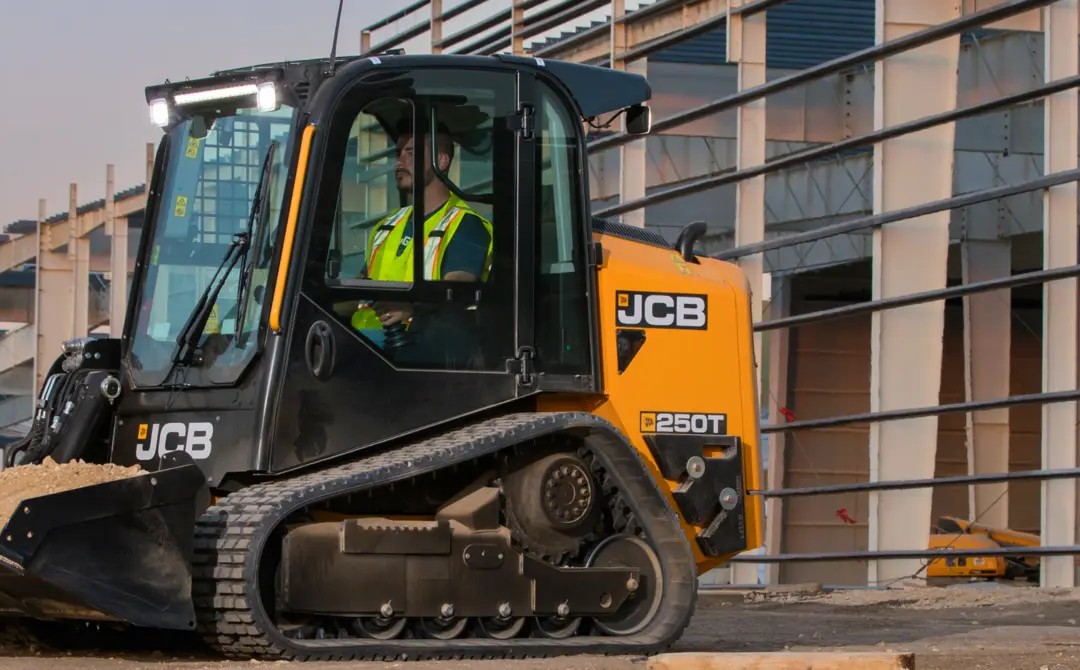
JCB
JCB 250T
$63,790
- Engine
- 74 hp
- Aux flow
- 18.5 GPM
- Weight
- 9,667 lbs
Launched in 2026, the JCB 250T brings the single-arm PowerBoom and side-entry door to the most contested mid-size CTL class, on a large-platform frame with a 2,526 lb rated capacity and a 125-inch hinge pin height. A 74 hp JCB EcoMAX TCAE-55 diesel with no DPF or DEF powers it, and at 10,622 lbs it sits at the heavy end of its capacity class.
Full sheet & owner reports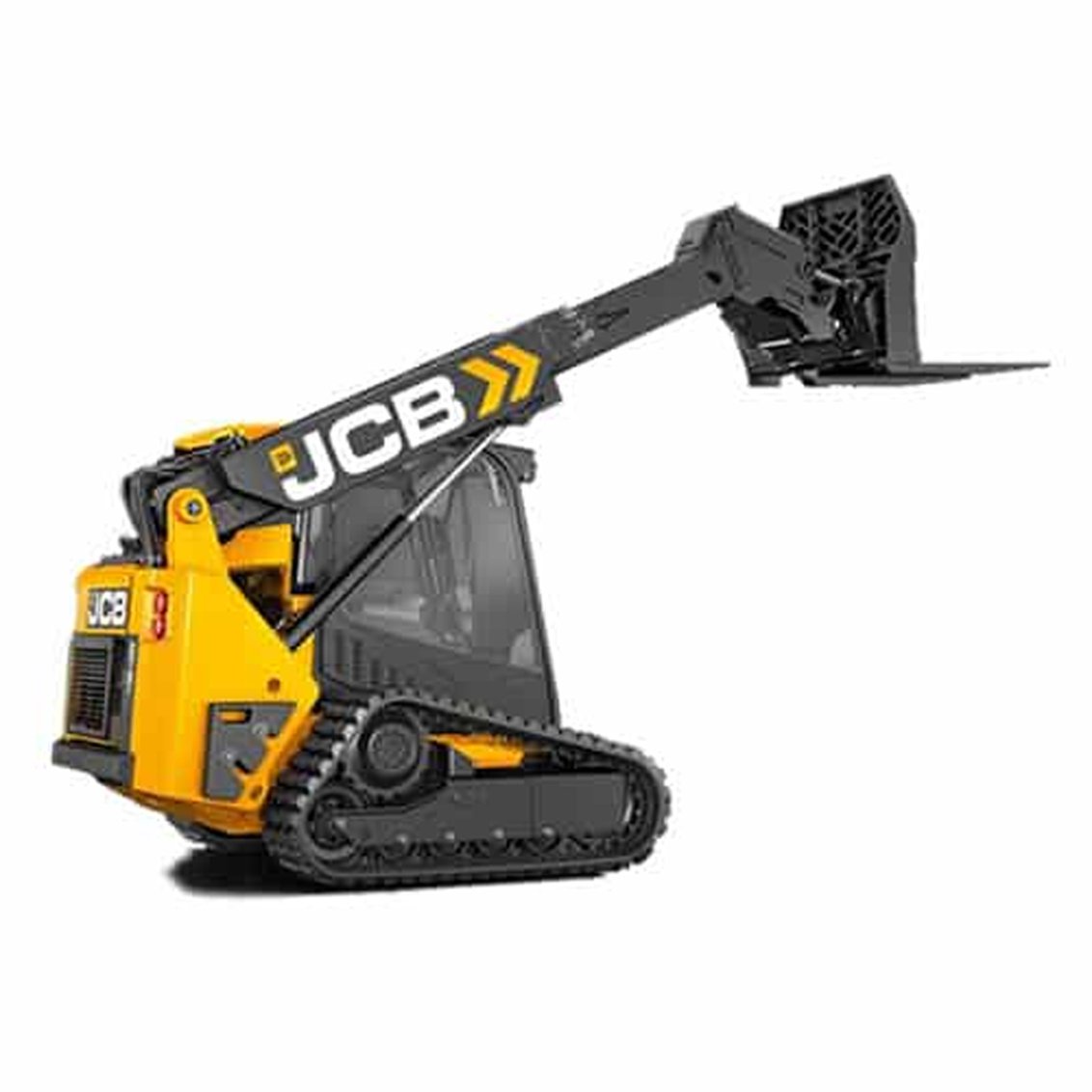
$70,000
- Engine
- 74 hp
- Aux flow
- 18.6 GPM
- Weight
- 9,914 lbs
The JCB 2TS-7T is the world's only small-platform compact track loader with a telescopic boom. The extending single-arm PowerBoom reaches 12'0" of lift height and 7 feet of forward reach from a machine sized and priced against conventional mid-size CTLs, with a 74 hp no-DPF Kohler diesel and JCB's side-entry cab door.
Full sheet & owner reports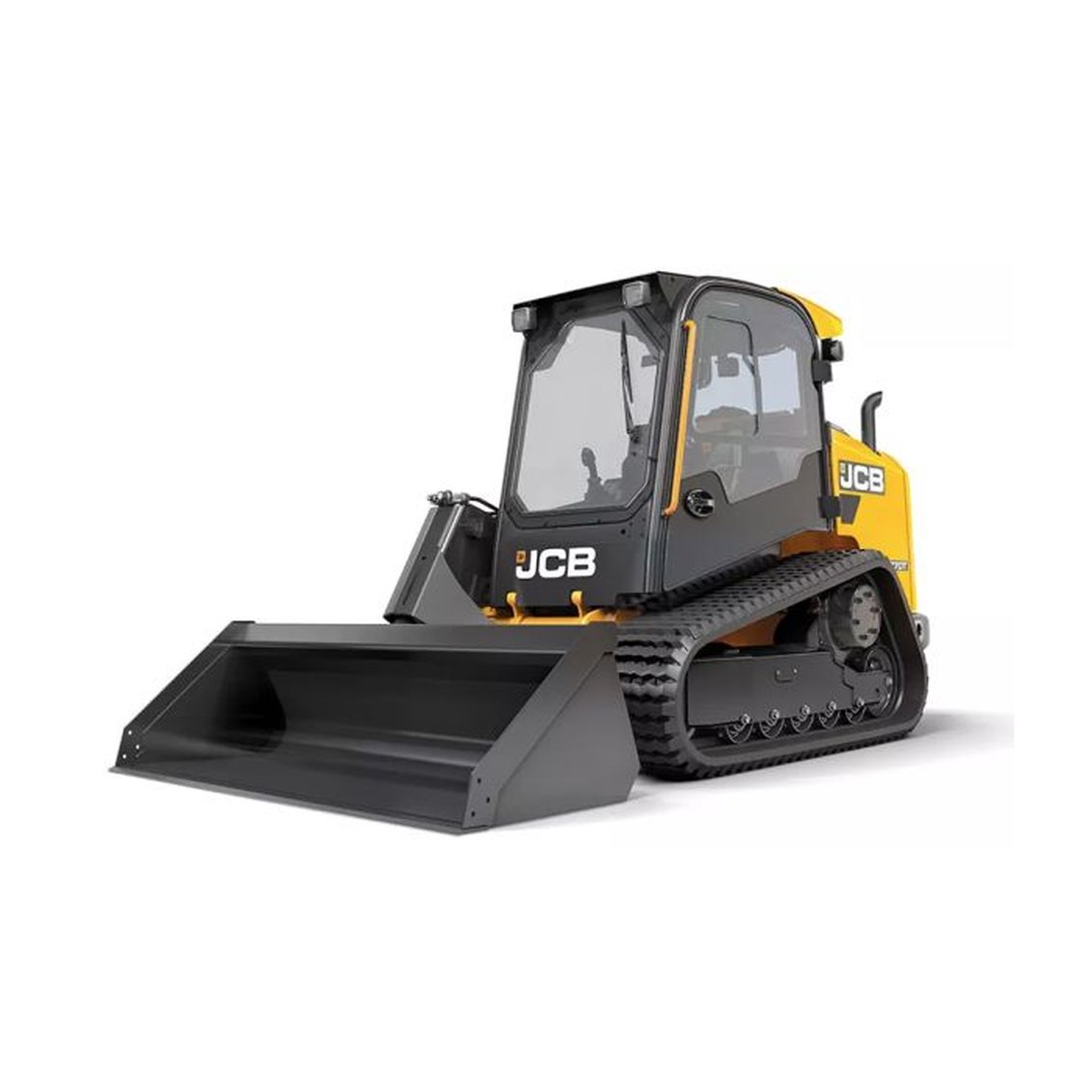
JCB
JCB 270T
$75,490
- Engine
- 74 hp
- Aux flow
- 24 GPM
- Weight
- 11,003 lbs
Visibility and entry safety no twin-arm machine can offer are the JCB 270T's argument, from the brand's signature single-arm PowerBoom and side-entry door. A torquey 4.4L JCB EcoMAX rated at 74 hp drives this large-platform vertical-lift compact track loader and its 2,723 lb rated capacity.
Full sheet & owner reports