JCB
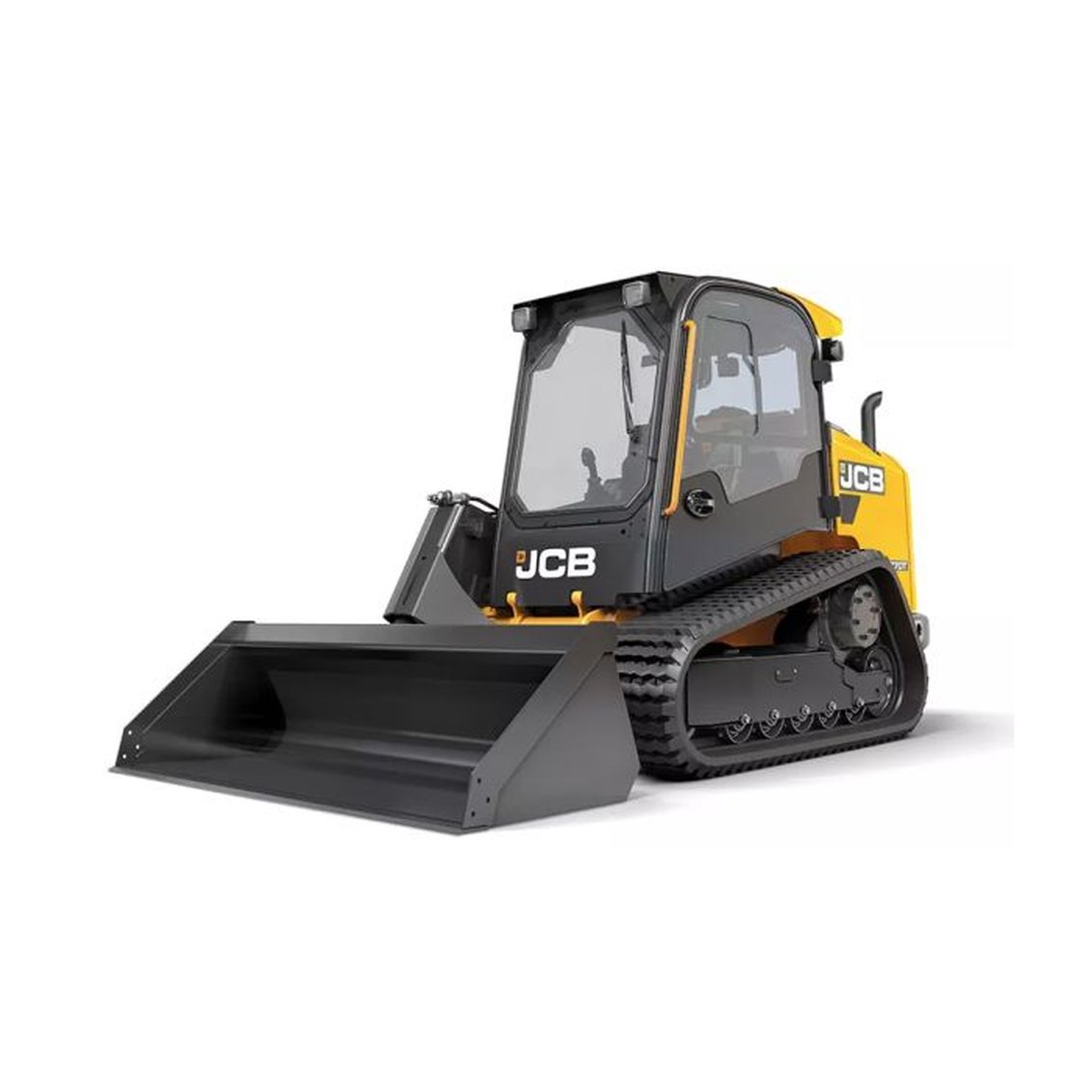
JCB 270T
The bright segment is what JCB 270T is rated to carry; the grey run past it is the rest of its tipping load. Bar length is tipping load drawn to the same scale on every machine on the site, so a short bar is a smaller machine and not a conservative rating.
Visibility and entry safety no twin-arm machine can offer are the JCB 270T's argument, from the brand's signature single-arm PowerBoom and side-entry door. A torquey 4.4L JCB EcoMAX rated at 74 hp drives this large-platform vertical-lift compact track loader and its 2,723 lb rated capacity.
Suits: Large-frame CTL capacity plus side-door entry and single-arm boom visibility Its vertical lift path reaches highest at full extension, for loading high-sided trucks and stacking.
Lifting and reach
- Rated operating capacityTrack loader rating convention
- 2,723 lbs
- Tipping load
- 7,990 lbs
- Lift height to hinge pin
- 125 in
- Lift path
- Vertical Lift
- Operating weight
- 11,003 lbs
Power and hydraulics
- Engine power
- 74 hp
- Engine
- JCB EcoMAX
- Auxiliary flowStandard circuit
- 24 GPM
- Flow type
- Standard
- Warranty
- 2 yr / 2,000 hr
Fitted or available
What this machine can be ordered with. Some of these are standard and some cost extra, and which is which moves between trim levels, so check them against the quote rather than against this list.
What owners report
Summarised from the sources listed below. Nothing here was tested by us.
Buyers come to this machine for the layout before the specification. One boom arm instead of two and a door in the side of the cab is a different way of working - the operator never climbs over a muddy attachment or under a raised boom, which is the part of the routine that wears on you on a machine you get in and out of twenty times a day. Everything else about the machine follows from having built it that way.
The numbers underneath are solid rather than spectacular. A 24 gpm standard auxiliary circuit beats a lot of the class's base flow, with a high-flow option to around 33 gpm when a planer or a blower demands it. The 74 hp EcoMAX runs with no particulate filter and no exhaust fluid, so short-cycle work is never interrupted by a regeneration. The cab is well equipped for a shared machine, with a touchscreen, adjustable joystick response and a choice of ISO or H-pattern controls. The weakness is mass: 11,003 lbs is heavy for a 2,723 lb rating, awkward on turf and awkward on a trailer.
The real decision is this machine against its own wheeled twin. Both are rated 2,723 lbs, but that figure is 35 percent of a 7,990 lb tipping load here and 50 percent of a 5,448 lb one on the 270, and JCB's published prices put $25,000 between them. That money buys flotation and tipping reserve, and nothing else. Before signing, work out honestly how many days a year your ground is soft, confirm whether high flow and SmoothRide are on the quote or assumed, and check how far away the nearest dealer with JCB compact parts on the shelf is.
What owners like
- The 2,723 lb rating is 35 percent of a 7,990 lb tipping load, which is the conservative basis. The wheeled 270 carries exactly the same 2,723 lb headline off a 5,448 lb tipping load at 50 percent - so the two machines that look identical on paper are nearly 50 percent apart in actual tipping load, and this is the one holding real reserve.
- A 24 gpm standard auxiliary circuit is above what much of the class offers as base flow, which means a lot of attachment work happens without buying the high-flow option at all. That option, when it is needed, takes it to around 33 gpm.
- Removing the right-hand loader arm is the point of the whole design: JCB puts the gain at 60 percent better visibility around the machine, and the side door means the operator steps in past one arm instead of over a loaded bucket at chest height. That removes the climb over a raised attachment entirely, which is a real difference in how you get in and out all day.
- The 74 hp EcoMAX reaches Tier 4 Final with no particulate filter, no exhaust fluid and no aftertreatment, so there is no regeneration to sit through on short-cycle work and no emissions hardware to fail after the warranty ends.
- Cab controls are unusually configurable for the class: a touchscreen with customisable settings, MyChoice software for joystick sensitivity, and a choice of ISO or H-pattern. On a machine several people share, being able to store per-operator response rather than argue about it is a genuine fleet feature.
- Vertical lift geometry puts the load out over the side of a truck cleanly rather than swinging it back in towards the machine, which is what the radial-lift Teleskids give up for reach.
- JCB publishes a starting price of $75,490, which is more than can be said for the 300 and 300T - it is possible to negotiate this model against a known number.
What owners complain about
- Tracks cost about $25,000 on this platform. JCB's own published prices put the wheeled 270 at $50,490 and this machine at $75,490 for the same engine and the same rated capacity, so the undercarriage and the flotation are the entire difference. On firm ground worked year-round that is a hard premium to justify.
- At 11,003 lbs it is among the heaviest machines in its capacity class, which complicates both towing and the turf work that a track loader is supposed to be good at - it is a lot of weight to put on a finished lawn.
- Seventy-four horsepower is torque-rich but it is still 74 horsepower, and for sustained high-flow mulching the 100-plus hp machines in the wider market will simply keep cutting where this one has to back off.
- High flow and the SmoothRide ride-control system are both options rather than standard, so the configuration most buyers actually want sits above the published starting price.
- There is one door, on the left, with no front exit over a lowered attachment as a twin-arm machine offers. Working between buildings or in tight demolition, that is worth planning around rather than discovering.
Drawn from jcb.com, compactequip.com.
What buyers ask
Why does the 270T cost $25,000 more than the 270?
Is its 2,723 lb capacity the same as the wheeled 270's?
Do I need the high-flow option?
Is 11,003 lbs a problem?
Can multiple operators share it without fighting over the controls?
Put the JCB 270T against
Machines in the same range
The rest of the JCB line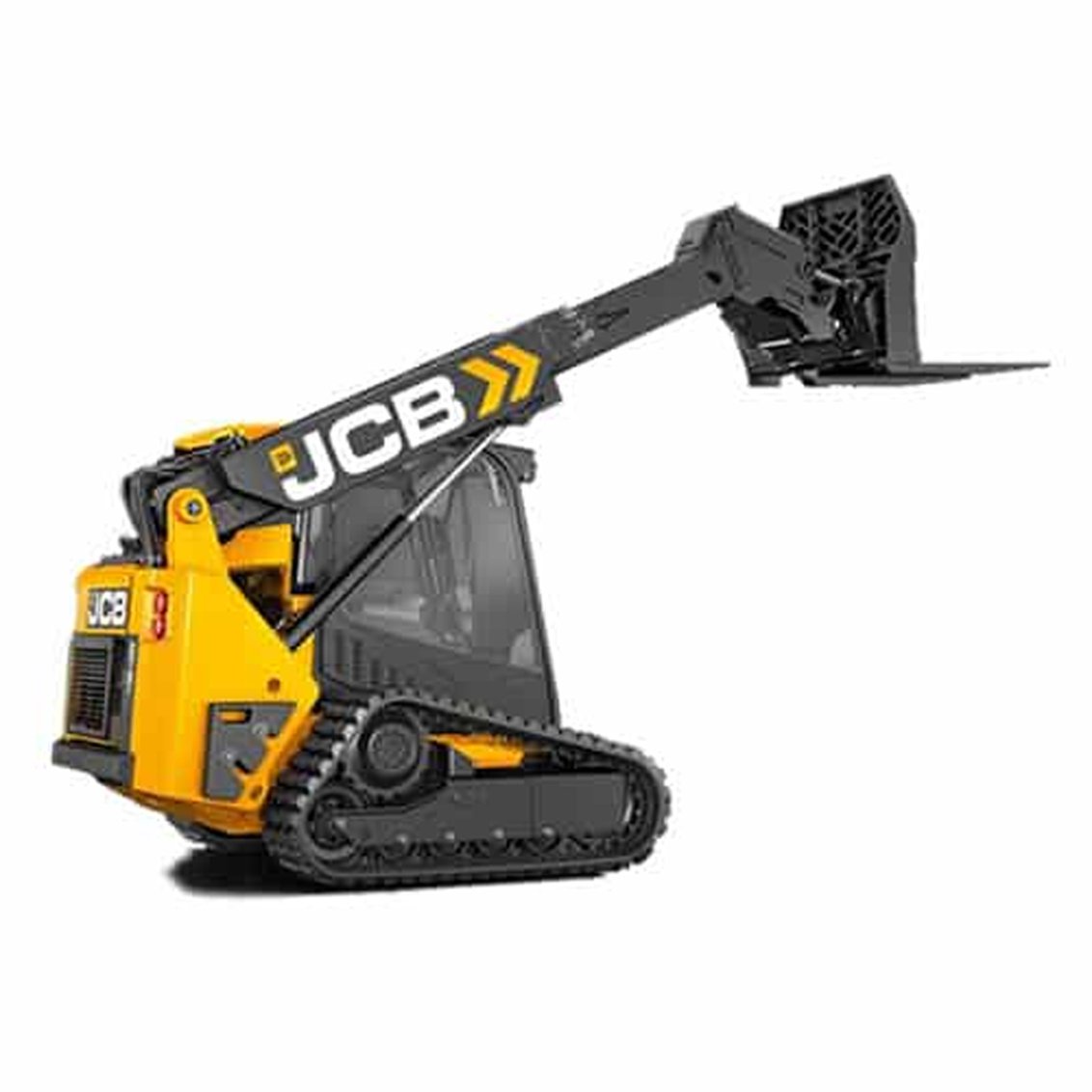
$70,000
- Engine
- 74 hp
- Aux flow
- 18.6 GPM
- Weight
- 9,914 lbs
The JCB 2TS-7T is the world's only small-platform compact track loader with a telescopic boom. The extending single-arm PowerBoom reaches 12'0" of lift height and 7 feet of forward reach from a machine sized and priced against conventional mid-size CTLs, with a 74 hp no-DPF Kohler diesel and JCB's side-entry cab door.
Full sheet & owner reports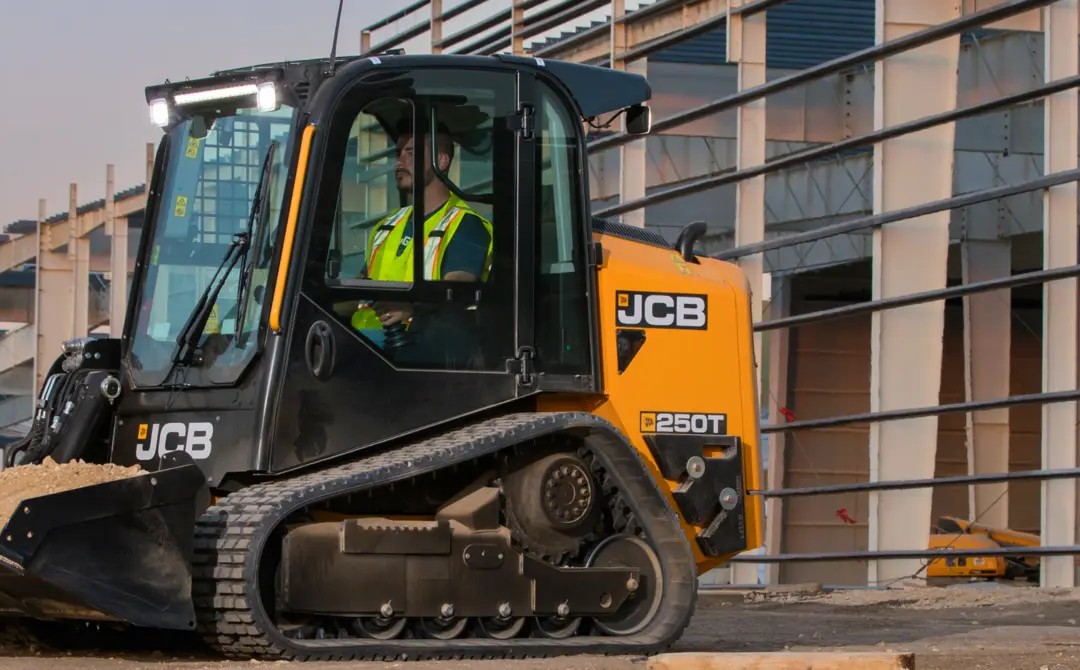
JCB
JCB 250T
$63,790
- Engine
- 74 hp
- Aux flow
- 18.5 GPM
- Weight
- 9,667 lbs
Launched in 2026, the JCB 250T brings the single-arm PowerBoom and side-entry door to the most contested mid-size CTL class, on a large-platform frame with a 2,526 lb rated capacity and a 125-inch hinge pin height. A 74 hp JCB EcoMAX TCAE-55 diesel with no DPF or DEF powers it, and at 10,622 lbs it sits at the heavy end of its capacity class.
Full sheet & owner reports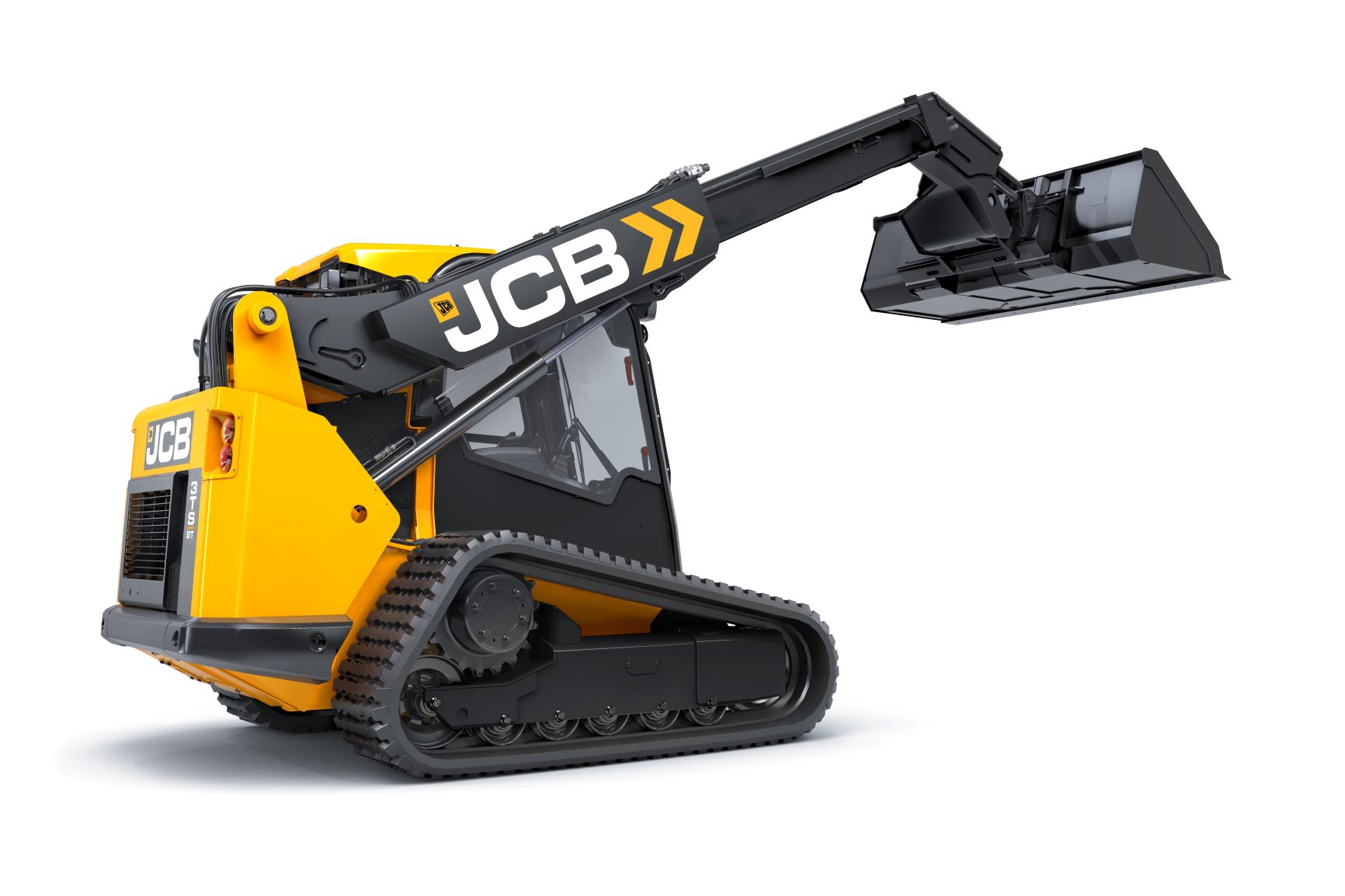
$92,000
- Engine
- 74 hp
- Aux flow
- 24 GPM
- Weight
- 12,615 lbs
Only one compact track loader in the world carries a telescopic boom, and the JCB 3TS-8T Teleskid is it, reaching 13 feet 3 inches up, 8 feet forward, and even 3 feet below grade. Its single-arm PowerBoom design also allows a side-entry cab door, so operators never climb over an attachment to get in.
Full sheet & owner reports