JCB
JCB 250T
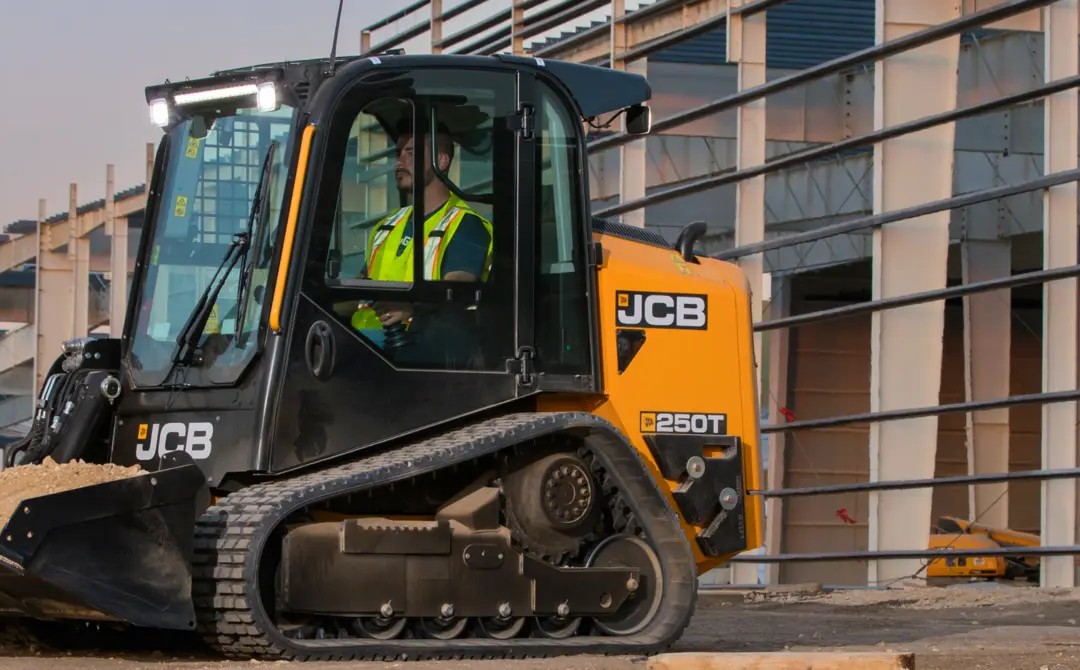
The bright segment is what JCB 250T is rated to carry; the grey run past it is the rest of its tipping load. Bar length is tipping load drawn to the same scale on every machine on the site, so a short bar is a smaller machine and not a conservative rating.
Launched in 2026, the JCB 250T brings the single-arm PowerBoom and side-entry door to the most contested mid-size CTL class, on a large-platform frame with a 2,526 lb rated capacity and a 125-inch hinge pin height. A 74 hp JCB EcoMAX TCAE-55 diesel with no DPF or DEF powers it, and at 10,622 lbs it sits at the heavy end of its capacity class.
Suits: Mid-size CTL buyers who want side-door entry and 270-degree visibility without stepping up to a large frame Its vertical lift path reaches highest at full extension, for loading high-sided trucks and stacking.
Lifting and reach
- Rated operating capacityTrack loader rating convention
- 2,317 lbs
- Tipping load
- 7,045 lbs
- Lift height to hinge pin
- 119 in
- Lift path
- Vertical Lift
- Operating weight
- 9,667 lbs
Power and hydraulics
- Engine power
- 74 hp
- Engine
- Kohler KDI2504TCR/26A
- Auxiliary flowStandard circuit
- 18.5 GPM
- Flow type
- Standard
- Warranty
- 2 yr / 2,000 hr
Fitted or available
What this machine can be ordered with. Some of these are standard and some cost extra, and which is which moves between trim levels, so check them against the quote rather than against this list.
What owners of the same hardware report
Nobody has written up this exact machine yet, so this is drawn from reports on the machines that share its hardware — the model it replaced, a sibling on the same platform, or the same machine sold under another badge. The prose says which in each case. It is accurate about the iron rather than about this particular model.
Bringing the side door and the single-arm boom into the most popular compact track loader size class is the entire pitch here, and JCB is explicit about the target: rental fleets and residential contractors who want one versatile machine. It reached the market in March 2026, so nobody has owned one long enough to report anything. What follows rests on operators of JCB's other single-arm machines, which share the entry layout and the cab, and on the specifications JCB published at launch.
The transport argument is the strongest concrete thing about it. JCB publishes it at 9,667 lbs bare and 9,870 lbs with both pairs of suitcase weights fitted, so it stays under the 10,000 lb line either way and a three-quarter-ton pickup on a standard trailer moves it without a CDL - unusual for a machine rated at 2,317 lbs, or 2,429 with the counterweights that push it to the top of that range. Tracks are 15.7 in wide at under 5 psi ground bearing pressure, which keeps it civil on prepared surfaces. The 74 hp engine needs neither a particulate filter nor exhaust fluid, so short-cycle work is never interrupted by a regeneration. Against that, 74 hp is modest for the class, published capacity and weight figures do not all agree between sources, and the one door is on the left with no alternative way out.
This suits a rental house that wants a machine any operator can get into safely, or a residential contractor who moves between jobs daily and values staying under the towing threshold more than raw power. Cross-shop it against JCB's own 270T, which lists at $75,490 and lifts 2,723 lbs on a much higher tipping load, and against conventional twin-arm machines in the same bracket. Before signing, weigh the actual build rather than trusting the under-10,000 lb claim, get the auxiliary flow specification in writing, and accept that you are the field trial - price and warranty terms should reflect that.
What owners like
- JCB has put its side door and single arm into the size class that actually sells. Operators who run the company's other single-arm machines make the same practical case for it every time: the attachment can be anywhere and the door still opens, and nobody climbs in under a raised boom - which is the entry route federal safety guidance on skid steers warns about.
- Published operating weight is 9,870 lbs, which keeps the machine plus a standard trailer behind a three-quarter-ton pickup without a CDL. At a rated capacity in the 2,400 lb region that combination is unusual; most machines that lift this much have already crossed the line where transport gets complicated.
- Tracks are 15.7 in wide and ground bearing pressure is under 5 psi, so it treads lighter on prepared surfaces and finished turf than a machine of this capacity normally would.
- The 74 hp Kohler runs Tier 4 Final with no particulate filter and no exhaust fluid, a consistent feature across JCB's compact line. No regeneration cycle to sit through on short-cycle loading, no fluid to buy, and no aftertreatment hardware waiting to fail after the warranty.
What owners complain about
- It was announced in March 2026. There is no field record of any kind - no undercarriage life, no final drive history, no idea what the first owners will find at 2,000 hours. Anyone buying early is buying JCB's engineering reputation rather than evidence.
- Published figures do not all agree. JCB's launch material and the trade coverage of it give 9,870 lbs and a rated capacity around 2,429 lbs, while higher numbers for both circulate in spec listings. The entire towing argument rests on staying under 10,000 lbs, so weigh the machine as configured rather than trusting any brochure figure.
- Seventy-four horsepower is the same engine rating JCB uses two size classes down on the 215T. In the class this machine targets, rivals reach considerably higher power, and sustained high-flow work - mulching in particular - is where that shows.
- One door, on the left, and no front exit over a lowered attachment the way a twin-arm machine offers. Working between buildings or inside a demolition footprint, that is worth planning around rather than discovering.
- Visibility is asymmetric by design: clearly better past the open side, worse on the boom side. Operators moving from twin-arm machines describe an adjustment period, and on a brand-new model there is no used market to sample before committing.
- JCB announced a larger 290T alongside this machine, so the track loader range is still being filled in. An early 250T buyer is choosing a configuration before the line around it has settled, which historically does resale no favours.
Drawn from heavyequipmentguide.ca, compactequip.com, jcb.com.
What buyers ask
Can I really tow it with a three-quarter-ton pickup?
How new is this machine?
Is 74 hp enough for this size class?
What does the side door actually get me?
How does it compare with JCB's 270T?
Should I wait for the 290T?
Put the JCB 250T against
Machines in the same range
The rest of the JCB line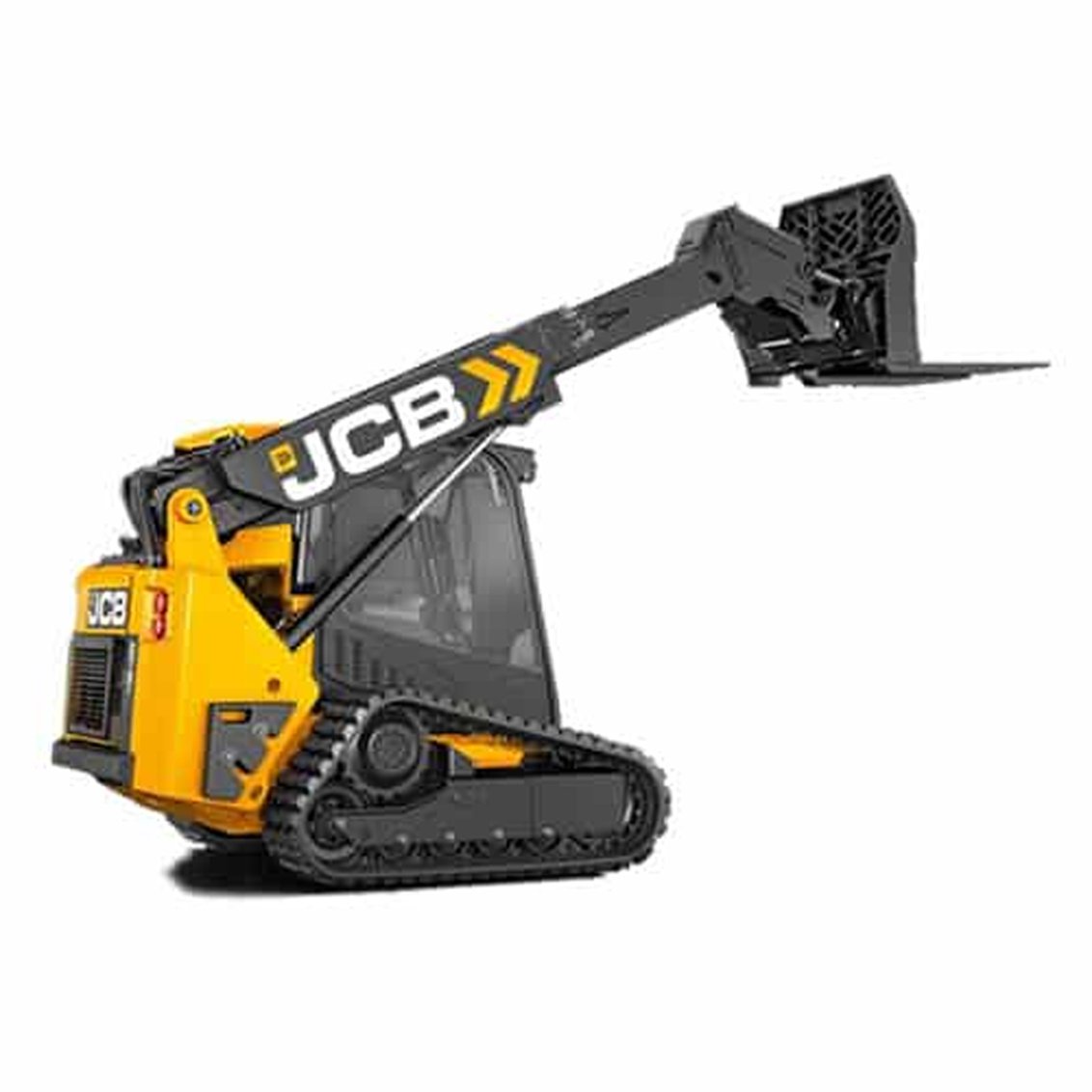
$70,000
- Engine
- 74 hp
- Aux flow
- 18.6 GPM
- Weight
- 9,914 lbs
The JCB 2TS-7T is the world's only small-platform compact track loader with a telescopic boom. The extending single-arm PowerBoom reaches 12'0" of lift height and 7 feet of forward reach from a machine sized and priced against conventional mid-size CTLs, with a 74 hp no-DPF Kohler diesel and JCB's side-entry cab door.
Full sheet & owner reports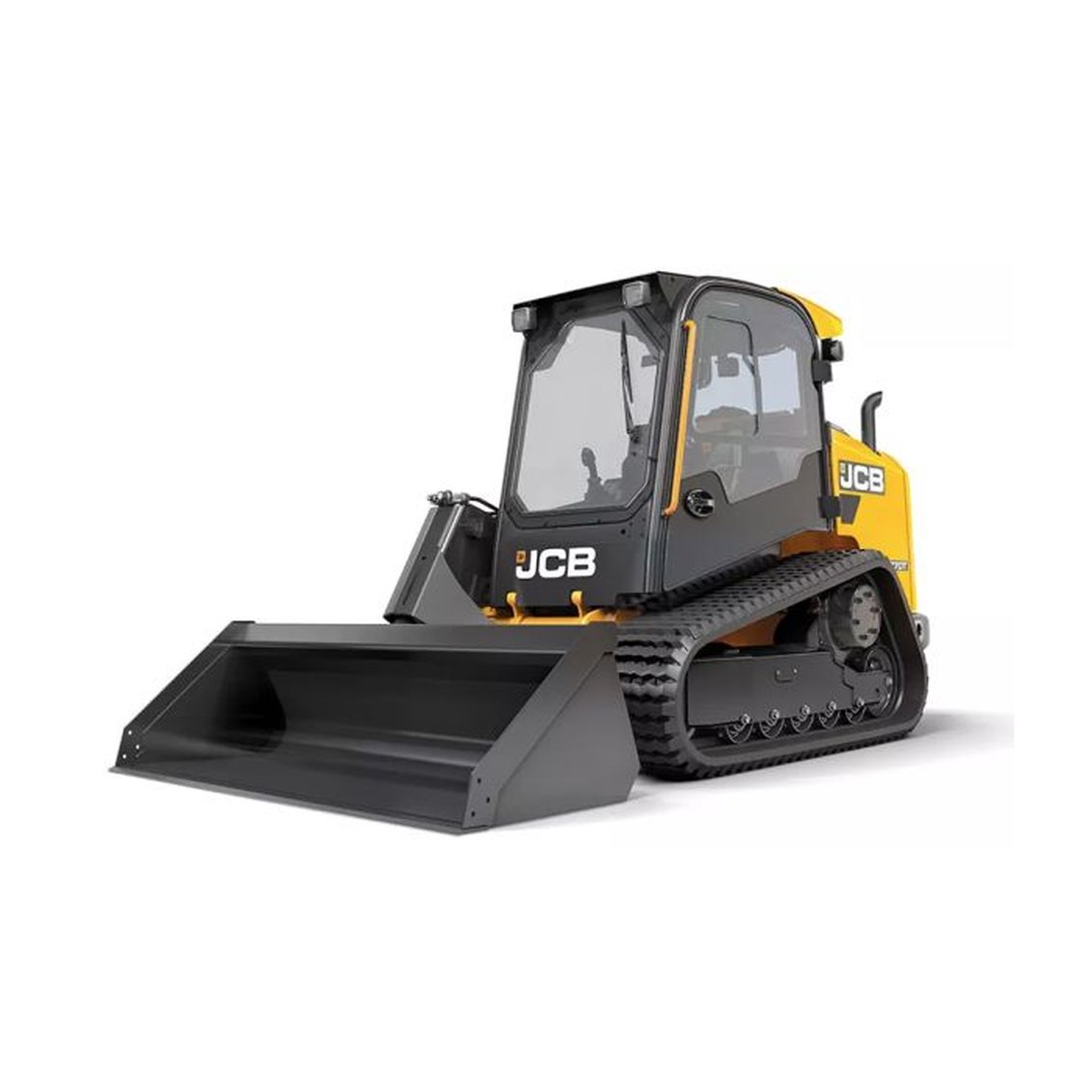
JCB
JCB 270T
$75,490
- Engine
- 74 hp
- Aux flow
- 24 GPM
- Weight
- 11,003 lbs
Visibility and entry safety no twin-arm machine can offer are the JCB 270T's argument, from the brand's signature single-arm PowerBoom and side-entry door. A torquey 4.4L JCB EcoMAX rated at 74 hp drives this large-platform vertical-lift compact track loader and its 2,723 lb rated capacity.
Full sheet & owner reports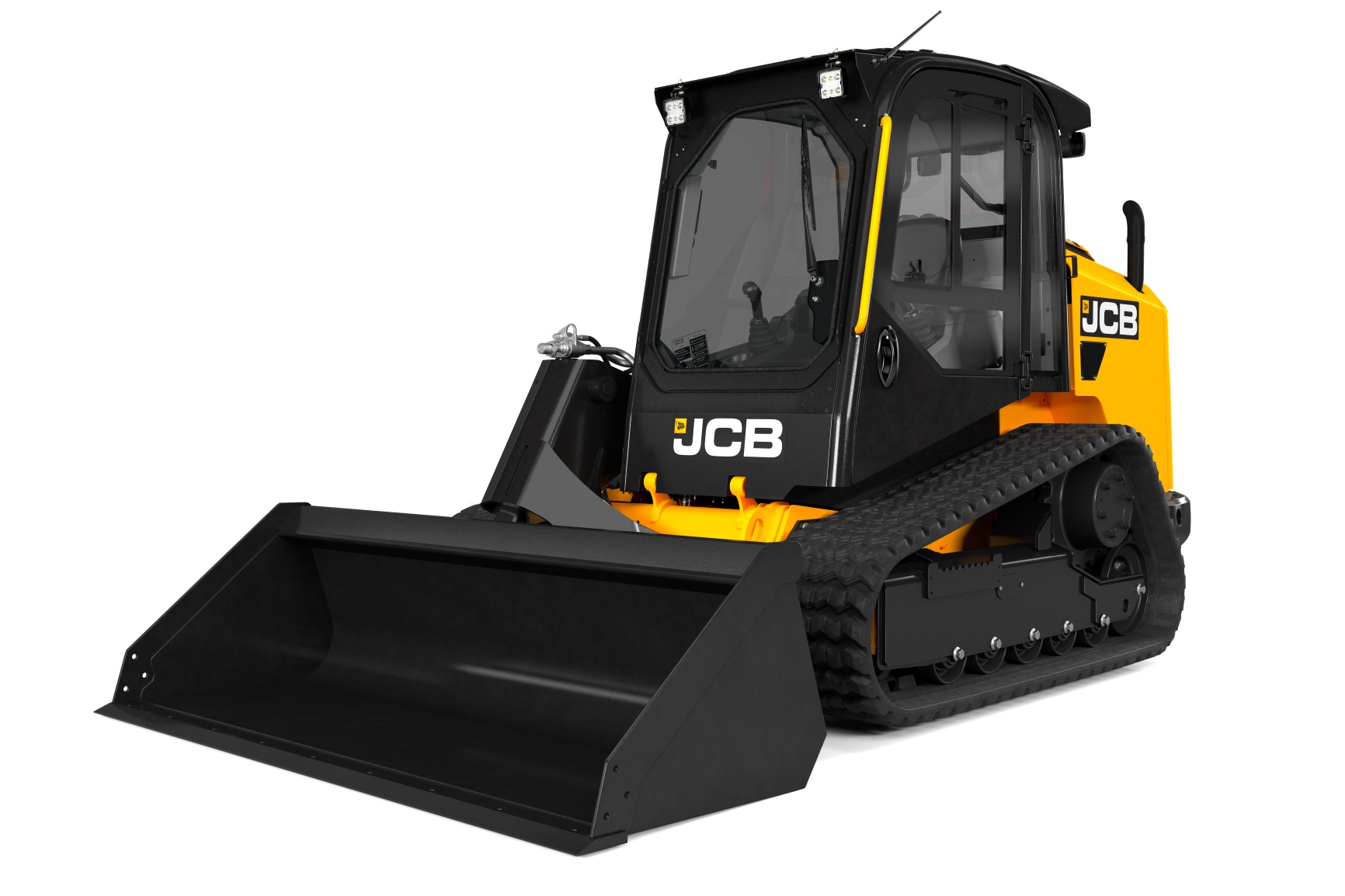
JCB
JCB 215T
$50,590
- Engine
- 74 hp
- Aux flow
- 18.5 GPM
- Weight
- 9,098 lbs
Operators never climb over the attachment to get into the JCB 215T - the single-arm PowerBoom and side-entry door see to that on this small-platform vertical-lift compact track loader. A 74 hp Kohler diesel with no DPF keeps emissions hardware simple on the 2,105 lb capacity machine.
Full sheet & owner reports