JCB
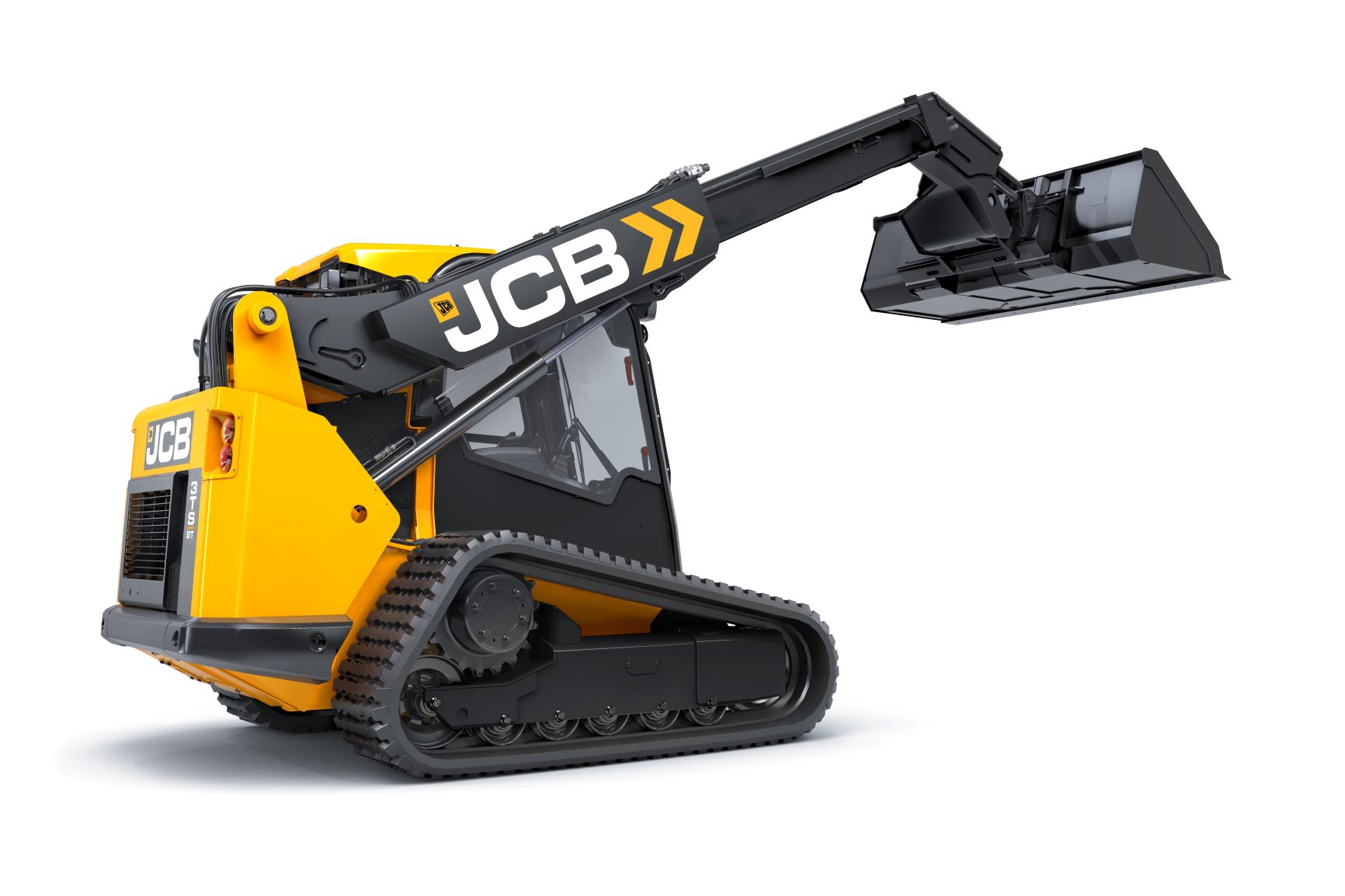
JCB 3TS-8T Teleskid
The bright segment is what JCB 3TS-8T Teleskid is rated to carry; the grey run past it is the rest of its tipping load. Bar length is tipping load drawn to the same scale on every machine on the site, so a short bar is a smaller machine and not a conservative rating.
Only one compact track loader in the world carries a telescopic boom, and the JCB 3TS-8T Teleskid is it, reaching 13 feet 3 inches up, 8 feet forward, and even 3 feet below grade. Its single-arm PowerBoom design also allows a side-entry cab door, so operators never climb over an attachment to get in.
Suits: Telehandler reach in a skid steer footprint, for bales, trusses, and truck loading Its radial lift path reaches furthest at mid-height, for digging, grading and backfilling.
Lifting and reach
- Rated operating capacityTrack loader rating convention
- 3,695 lbs
- Tipping load
- 10,558 lbs
- Lift height to hinge pin
- 159 in
- Lift path
- Radial Lift
- Operating weight
- 12,615 lbs
Power and hydraulics
- Engine power
- 74 hp
- Engine
- JCB EcoMAX
- Auxiliary flowStandard circuit
- 24 GPM
- Flow type
- Standard
- Warranty
- 2 yr / 2,000 hr
Fitted or available
What this machine can be ordered with. Some of these are standard and some cost extra, and which is which moves between trim levels, so check them against the quote rather than against this list.
What owners report
Summarised from the sources listed below. Nothing here was tested by us.
Nothing else on the market does what this machine does, and that is both the reason to buy it and the reason most people do not. A telescopic mono-boom gives eight feet of forward reach, over thirteen feet of lift and three feet of dig below grade, and owners who build their week around that reach talk about it replacing a telehandler or a second machine outright. Owners who bought it as a slightly clever track loader tend to end up resenting the complexity. That split is the honest picture of this machine, and averaging the two views together would misrepresent both.
The practical trade-offs are concrete. Capacity at full extension drops to roughly 1,600 lb on the tracked version, so the headline rating is a retracted number and planning around it will disappoint you. Boom leak-down is common enough that finding the attachment drifted overnight is a known symptom rather than a one-off. The wider reliability record is where the strongest language comes from: hydraulic leaks, wrongly fitted O-rings, valve and cylinder failures, bad safety sensors, overheating and joystick faults that disable the controls without failing cleanly enough for a warranty claim. Parts support compounds it, with owners describing months-long backorders and steep markups on commodity bearings the factory would not identify by part number. Older machines were reportedly worse and late-model units better, but nobody describes support as good.
Two things have to be true: the reach is a weekly requirement, and you have a dealer who will actually stand behind the machine, because that dealer is doing more work here than on any conventional loader. Rent or demo one for a real job before committing, and get the leak-down behaviour and the joystick checked at handover. With JCB listing it from around $90,300, against roughly $75,000 for a conventional 74 hp track loader, you are paying telehandler-replacement money, so the question is simply whether you would otherwise be renting a lift. If the answer is a few times a year, the conventional machine and the rental invoice work out cheaper and quieter.
What owners like
- The telescopic boom does work nothing else in this class can. Eight feet of forward reach and over thirteen feet of lift height means dumping over a 12-foot wagon, unloading a semi trailer from one side, and placing material onto a second storey without renting a telehandler.
- It also digs three feet below grade with the boom extended, so one machine backfills from one side of a trench and loads from one side of a truck. A residential builder who keeps a machine on site all year described that reach as replacing a lift ninety percent of the time.
- The side-entry door means you never climb over the attachment or under a raised boom. Owners rank it as one of the two features they would not give up, alongside the boom.
- JCB states the EcoMAX engine needs neither diesel exhaust fluid nor a particulate filter, so there are no regen interruptions and nothing to top off, which is a genuine advantage for buyers who have fought emissions systems on other machines.
- The single-side boom opens up the view to the right, and owners who have sat in one notice the difference against a conventional twin-arm machine immediately, while being honest that the boom side is worse than a two-arm machine rather than better.
What owners complain about
- Capacity collapses as the boom goes out, and JCB publishes both numbers: 3,695 lb rated retracted at 35% of tipping load against 1,600 lb fully extended. Buyers who plan around the headline figure and then try to place a heavy pallet at reach are consistently disappointed.
- Boom leak-down is a widely reported fault. Owners find the forks tilted up in the morning after leaving them down the night before, and the same drift makes lift capacity feel unreliable in use.
- Quality control on new machines draws the angriest reports. An owner who bought a brand-new Teleskid said that without the telescopic boom it would be the worst machine he had ever owned, citing controls repeatedly bricked by a faulty joystick that would not fail cleanly enough for a warranty replacement, and permanently stored trouble codes.
- Rental fleets churn through them, which tells you something: one operator running rented Teleskids was on his third machine in two months, and reported technicians unable to look up a persistent fault code across several service visits.
- Parts support is the story owners tell most bitterly. One waited close to four months and paid a large premium through the dealer for a standard 205KRR2 implement bearing that was available two miles away, after the factory declined to supply a part number and pushed him back to that dealer.
- The manual does not list equivalent fluid specifications, which turns routine servicing into a dealer phone call in a way owners of other brands simply do not deal with.
- JCB lists it from about $90,300 and real-world quotes run higher, and the recurring verdict from people who have priced one is that they cannot justify $80,000 to $100,000 unless they would use the reach weekly rather than a few times a year.
- At over 12,600 lb it is the heaviest machine in the class, so the truck and trailer bill arrives alongside the machine, and operators handling loads out at extension describe the feel as sketchy until they adapt.
Drawn from machinestore.jcb.com, jcb.com, skidsteerforum.com.
What buyers ask
How much can it lift at full boom extension?
Does it really replace a telehandler?
What is the leak-down problem?
Does the engine need DEF or a particulate filter?
How bad is parts and dealer support really?
Is the side door worth as much as JCB claims?
Put the JCB 3TS-8T Teleskid against
Machines in the same range
The rest of the JCB line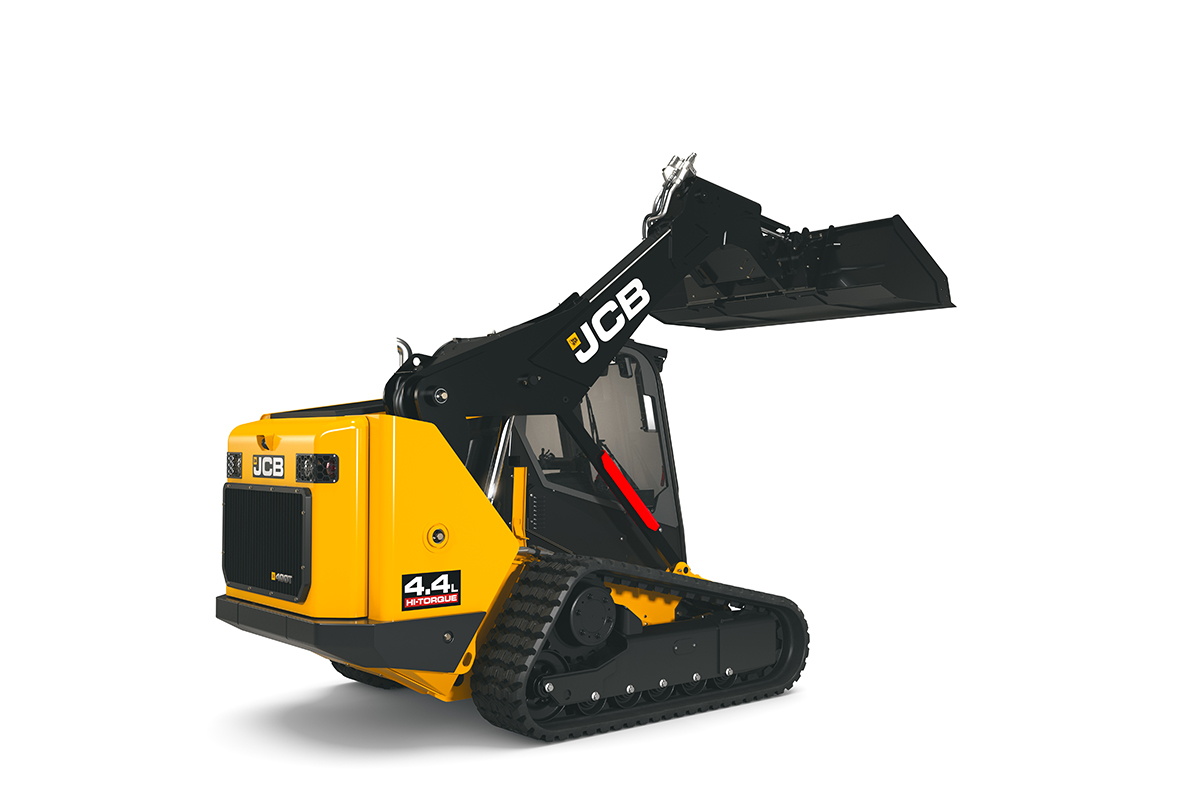
JCB
JCB 400T
$99,890
- Engine
- 109 hp
- Aux flow
- 24 GPM
- Weight
- 12,544 lbs
JCB's largest and most powerful compact track loader ever, the 400T launched in April 2026 to break into the 100-plus horsepower class. A 109 hp 4.4L EcoMax diesel with no DPF, a 3,994 lb rated capacity, and up to 42.3 GPM of Super Flow hydraulics make it a high-production dirt and forestry machine built around the signature single-arm PowerBoom and side-door entry.
Full sheet & owner reports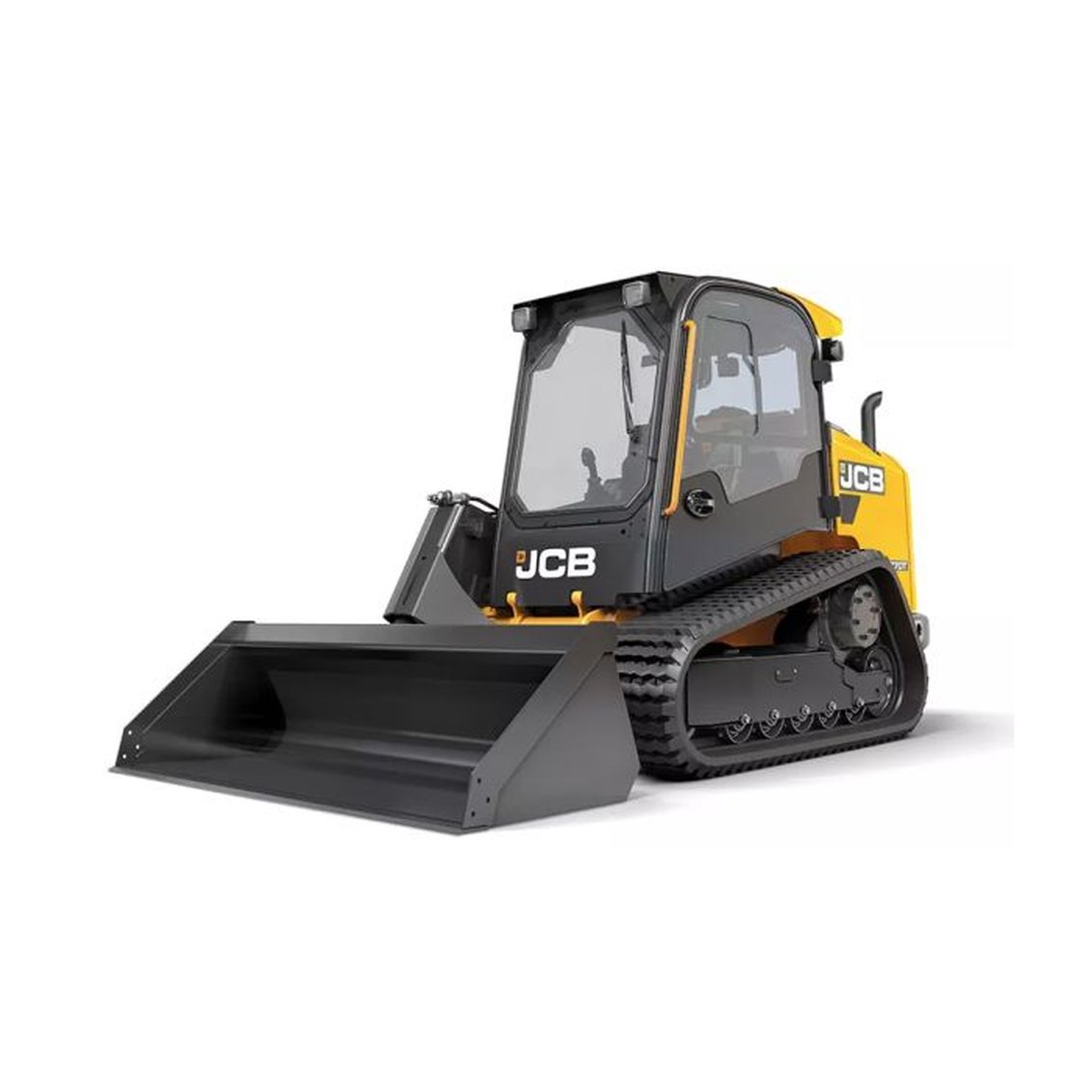
JCB
JCB 270T
$75,490
- Engine
- 74 hp
- Aux flow
- 24 GPM
- Weight
- 11,003 lbs
Visibility and entry safety no twin-arm machine can offer are the JCB 270T's argument, from the brand's signature single-arm PowerBoom and side-entry door. A torquey 4.4L JCB EcoMAX rated at 74 hp drives this large-platform vertical-lift compact track loader and its 2,723 lb rated capacity.
Full sheet & owner reports
$113,290
- Engine
- 109 hp
- Aux flow
- 24 GPM
- Weight
- 13,000 lbs
The JCB 4TS-8T is the most powerful Teleskid ever built, launched in April 2026 with a 109 hp 4.4L EcoMax engine and a telescopic single-arm PowerBoom that reaches a 15-foot hinge pin height - unmatched by any compact track loader. It lifts 3,999 lbs, reaches over 8 feet forward, digs 3 feet below grade, and runs up to 42.3 GPM of Super Flow hydraulics.
Full sheet & owner reports