JCB
JCB 4TS-8T Teleskid

The bright segment is what JCB 4TS-8T Teleskid is rated to carry; the grey run past it is the rest of its tipping load. Bar length is tipping load drawn to the same scale on every machine on the site, so a short bar is a smaller machine and not a conservative rating.
One caveat on this machine: we could not find a published tipping load for it, so the figure above is its advertised capacity divided by the fraction its maker rates at. That makes the grey run arithmetic rather than a measurement, and it is the number worth asking a dealer to confirm.
The JCB 4TS-8T is the most powerful Teleskid ever built, launched in April 2026 with a 109 hp 4.4L EcoMax engine and a telescopic single-arm PowerBoom that reaches a 15-foot hinge pin height - unmatched by any compact track loader. It lifts 3,999 lbs, reaches over 8 feet forward, digs 3 feet below grade, and runs up to 42.3 GPM of Super Flow hydraulics.
Suits: Crews who want one machine to replace a CTL, telehandler, and mini excavator - loading tall trucks, stacking, and digging below grade Its radial lift path reaches furthest at mid-height, for digging, grading and backfilling.
Lifting and reach
- Rated operating capacityTrack loader rating convention
- 3,999 lbs
- Tipping loadDerived from the advertised capacity, not published
- 11,426 lbs
- Lift height to hinge pin
- 180 in
- Lift path
- Radial Lift
- Operating weight
- 13,000 lbs
Power and hydraulics
- Engine power
- 109 hp
- Engine
- JCB EcoMax 4.4L
- Auxiliary flowStandard circuit
- 24 GPM
- Flow type
- Standard
- Warranty
- 2 yr / 2,000 hr
Fitted or available
What this machine can be ordered with. Some of these are standard and some cost extra, and which is which moves between trim levels, so check them against the quote rather than against this list.
What owners report
Summarised from the sources listed below. Nothing here was tested by us.
Reach is the reason this machine exists, and it is the only compact track loader on the market that has any. Fifteen feet of lift and eight feet of forward extension put it into work that otherwise needs a telehandler on site, and owners tend to split cleanly into two camps: those who restructured how they load and feed and now would not go back, and those who decided the extra hardware was complexity they did not need.
Underneath the boom it is a conventional JCB, which is mostly a good thing. The 109 hp 4.4-litre EcoMAX is a long-serving block from the backhoe and telehandler lines and needs neither a particulate filter nor exhaust fluid, which at this power rating almost nobody else manages. Hydraulics hold over 40 gpm at 4,000 psi with the boom extended, and a low-leak valve body was added to keep the boom from drifting under an attachment's weight. The single arm and side door mean the operator never climbs over a bucket, which on a machine you climb in and out of all day is a real difference, at the cost of a machine with only one way in and a blind side.
Reach has to be a recurring problem rather than an occasional one, and the 13,000 lb transport weight something your trailer already handles. Price it against a mid-frame loader plus a used telehandler, not against other track loaders, because that is the substitution it actually makes. Before signing, get the load chart at full extension rather than the retracted rating, confirm what the boom warranty covers and for how long, and find out how far away the nearest dealer who has actually serviced a telescoping boom is.
What owners like
- A telescopic boom on a track loader is something no other manufacturer builds at all, and on this machine it reaches 15 feet up and 8 feet forward. Operators who rebuild their workflow around it stop hitching a telehandler for the two loads a day that need height, and load silage trucks and hoppers from a machine that also does the yard work.
- It holds full hydraulic performance with the boom extended - over 40 gpm at 4,000 psi - and JCB added a low-leak valve body specifically to stop boom drift when an attachment is working out at reach. That combination is what separates it from bolting a telehandler boom onto a loader and hoping.
- The 4.4-litre EcoMAX is not a new engine: it is the same block JCB has run in its backhoes, telehandlers and excavators for years, now at 109 hp. It reaches Tier 4 Final with no particulate filter and no exhaust fluid, which at over 100 hp is genuinely unusual - most rivals in that bracket run both.
- Single-arm boom plus a side door means the operator steps in past one arm instead of climbing over a muddy attachment or under an unsupported boom. Whether that matters to you depends on how many times a day you get in and out, which on a machine doing varied work is more often than buyers expect.
- Retracted rated capacity is close to 4,000 lbs, so the telescoping ability is not paid for with a smaller machine underneath - this is large-frame capacity with a trick boom, not a compromise in both directions.
- The boom itself carries a warranty far longer than the 2-year, 2,000-hour machine cover, which is worth knowing on the single most expensive structural component and the one buyers are most nervous about.
What owners complain about
- Capacity collapses as the boom goes out, and that is physics rather than a defect. On the 74 hp Teleskid an independent operator review measured 611 kg at full extension against a machine that handled full 1,000-litre IBCs retracted. Anyone planning to work at reach needs the load chart, not the headline number.
- JCB publishes no tipping load for this machine, so there is no way to level its rated capacity onto the 35 or 50 percent basis and compare it honestly against a Bobcat T86 or a Case TV620B. You are trusting the rated figure alone.
- List price is the highest in the compact class - the $113,000 region before options - and the machine it most obviously replaces, a used telehandler, costs considerably less.
- At 13,000 lbs before an attachment it needs a 20,000 lb trailer and a truck to match, which is a bigger jump than most compact fleets expect when they move up from a mid-frame loader.
- It only reached dealers recently, so the largest telescoping boom JCB has built has no field record. Every durability question about the extension, the wear pads and the hose routing at 3,000 hours is currently unanswerable.
- Owners of the existing Teleskids note the asymmetry the single arm creates - visibility is excellent on the open side and worse on the boom side, which takes adjustment for anyone coming off a twin-arm machine.
- There is one door and it is on the left. Park tight against a wall on that side and nobody gets in or out, and unlike a conventional loader there is no front exit over the attachment as a second route.
Drawn from compactequip.com, constructionequipment.com, jcb.com, farmersguardian.com, skidsteerforum.com.
What buyers ask
How much can it lift at full boom extension?
Is the telescopic boom worth the money over a standard 400T?
Does it need DEF or run regeneration cycles?
Why can't I compare its rated capacity to a Bobcat or Case machine?
What does the side door actually buy you?
Machines in the same range
The rest of the JCB line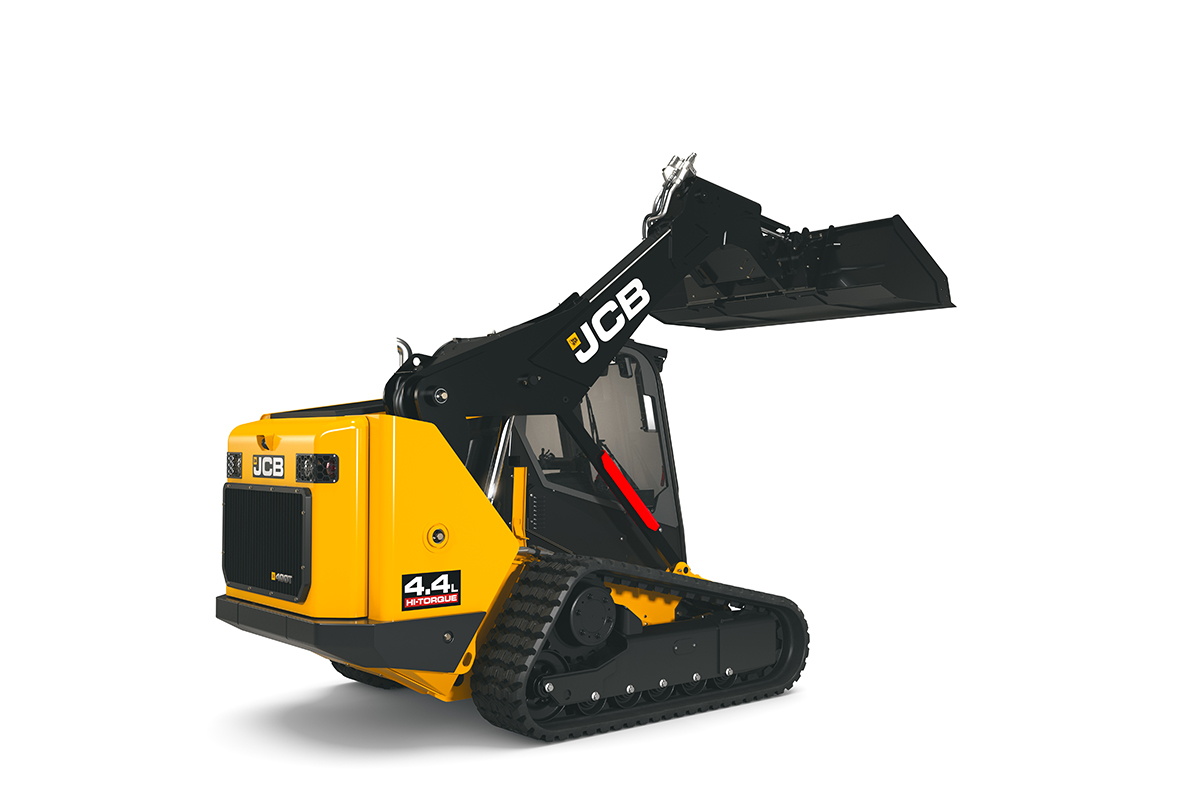
JCB
JCB 400T
$99,890
- Engine
- 109 hp
- Aux flow
- 24 GPM
- Weight
- 12,544 lbs
JCB's largest and most powerful compact track loader ever, the 400T launched in April 2026 to break into the 100-plus horsepower class. A 109 hp 4.4L EcoMax diesel with no DPF, a 3,994 lb rated capacity, and up to 42.3 GPM of Super Flow hydraulics make it a high-production dirt and forestry machine built around the signature single-arm PowerBoom and side-door entry.
Full sheet & owner reports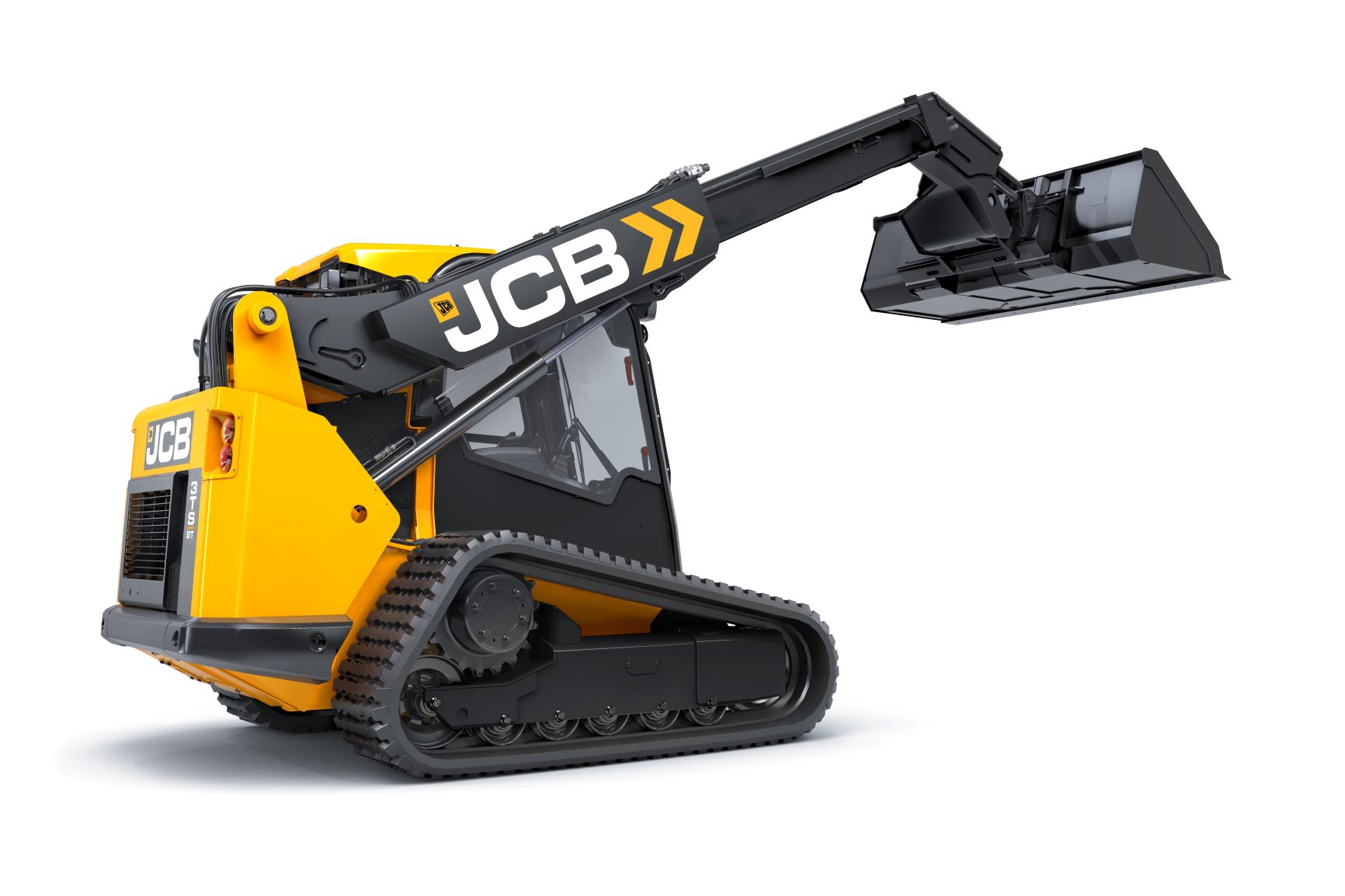
$92,000
- Engine
- 74 hp
- Aux flow
- 24 GPM
- Weight
- 12,615 lbs
Only one compact track loader in the world carries a telescopic boom, and the JCB 3TS-8T Teleskid is it, reaching 13 feet 3 inches up, 8 feet forward, and even 3 feet below grade. Its single-arm PowerBoom design also allows a side-entry cab door, so operators never climb over an attachment to get in.
Full sheet & owner reports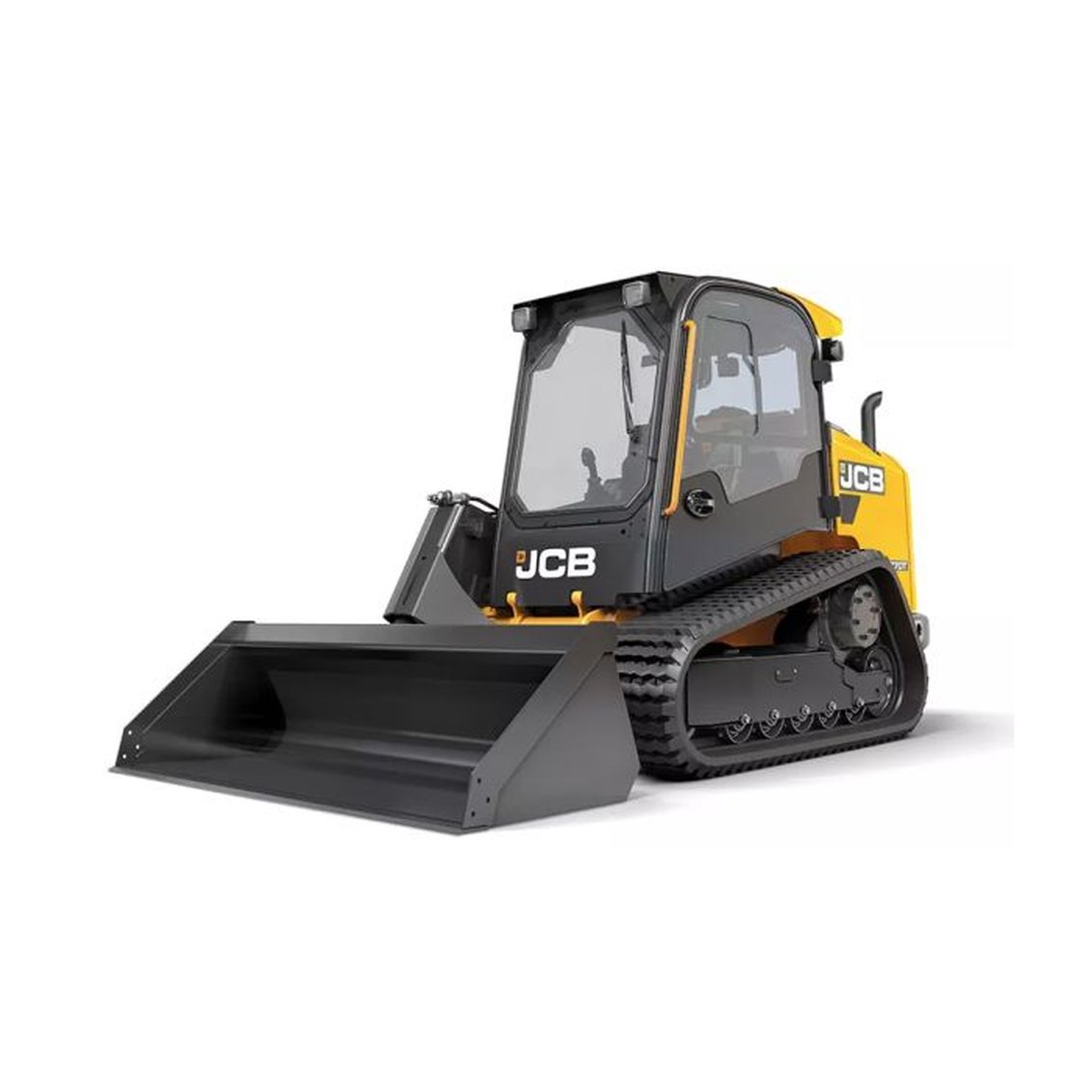
JCB
JCB 270T
$75,490
- Engine
- 74 hp
- Aux flow
- 24 GPM
- Weight
- 11,003 lbs
Visibility and entry safety no twin-arm machine can offer are the JCB 270T's argument, from the brand's signature single-arm PowerBoom and side-entry door. A torquey 4.4L JCB EcoMAX rated at 74 hp drives this large-platform vertical-lift compact track loader and its 2,723 lb rated capacity.
Full sheet & owner reports