JCB
JCB 400T
The bright segment is what JCB 400T is rated to carry; the grey run past it is the rest of its tipping load. Bar length is tipping load drawn to the same scale on every machine on the site, so a short bar is a smaller machine and not a conservative rating.
One caveat on this machine: we could not find a published tipping load for it, so the figure above is its advertised capacity divided by the fraction its maker rates at. That makes the grey run arithmetic rather than a measurement, and it is the number worth asking a dealer to confirm.
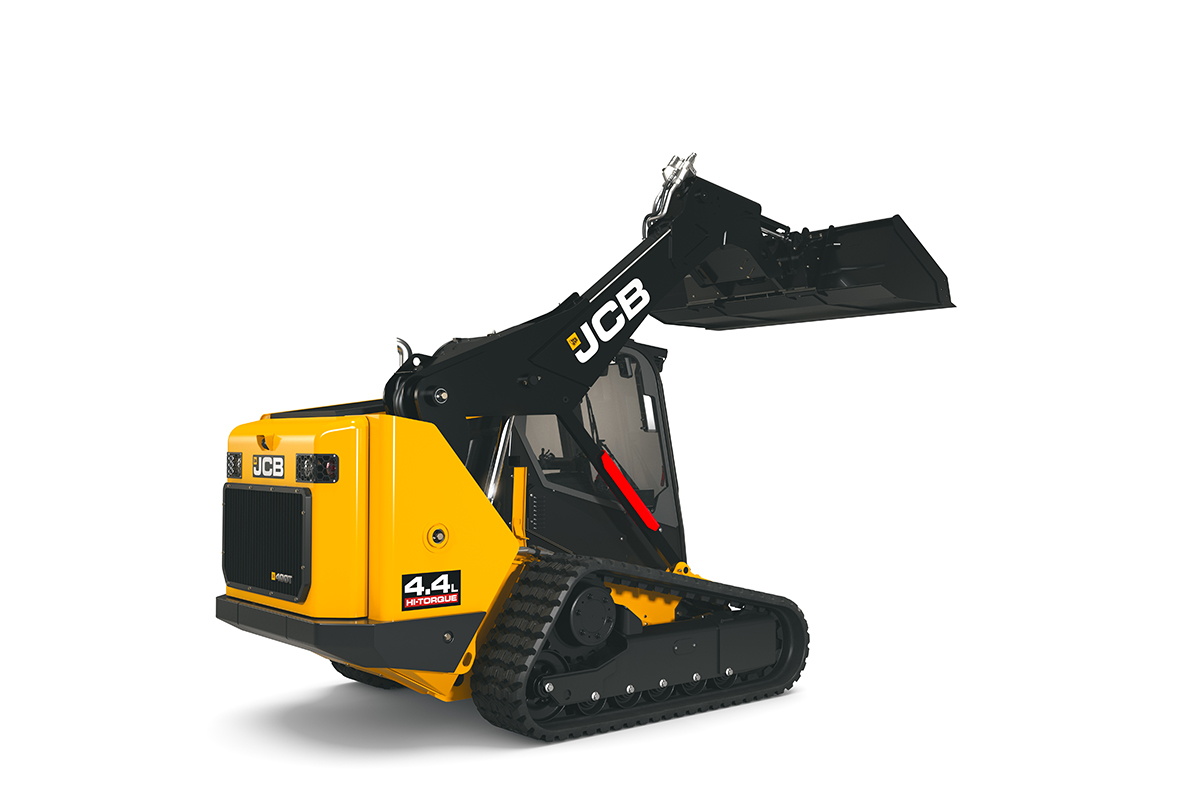
JCB's largest and most powerful compact track loader ever, the 400T launched in April 2026 to break into the 100-plus horsepower class. A 109 hp 4.4L EcoMax diesel with no DPF, a 3,994 lb rated capacity, and up to 42.3 GPM of Super Flow hydraulics make it a high-production dirt and forestry machine built around the signature single-arm PowerBoom and side-door entry.
Suits: High-production dirt work, site prep, mulching, and forestry crews who want big-flow attachment power with JCB's side-entry safety Its vertical lift path reaches highest at full extension, for loading high-sided trucks and stacking.
Lifting and reach
- Rated operating capacityTrack loader rating convention
- 3,994 lbs
- Tipping loadDerived from the advertised capacity, not published
- 11,411 lbs
- Lift height to hinge pin
- 123 in
- Lift path
- Vertical Lift
- Operating weight
- 12,544 lbs
Power and hydraulics
- Engine power
- 109 hp
- Engine
- JCB EcoMax 4.4L
- Auxiliary flowStandard circuit
- 24 GPM
- Flow type
- Standard
- Warranty
- 2 yr / 2,000 hr
Fitted or available
What this machine can be ordered with. Some of these are standard and some cost extra, and which is which moves between trim levels, so check them against the quote rather than against this list.
What owners report
Summarised from the sources listed below. Nothing here was tested by us.
JCB's first push past 100 hp in a track loader arrived as a pair, and this is the conventional half of it - the 4TS Teleskid's chassis, engine and cab with a normal vertical-lift boom in place of the telescoping one. The 109 hp 4.4-litre EcoMAX is a long-serving block from the backhoe and telehandler lines rather than a new design, which takes some of the risk out of a brand-new model.
What JCB built the machine around is high-flow work. Over 40 gpm at 4,000 psi on the high-flow package is a higher working pressure than most of the class offers, and the redesigned chassis carries an expanded cooling pack that removes the auxiliary cooler kit forestry machines usually need bolted on. Against that, the standard circuit is an ordinary 24 gpm, the 9-foot-6 dump height is unremarkable for the power, and at 12,544 lbs the transport problem is real. The single-arm boom and side door carry over unchanged, which means excellent sightlines on the open side, a blind side where the arm is, and exactly one way into the cab.
Mulching, cold planing and heavy grading, where attachment pressure decides the job, is its work, and the buyer is someone whose trailer already handles six tons. Price it against the Teleskid first, because the roughly $13,000 between them is the entire question of whether you need reach. Before signing, confirm the high-flow package is on the order rather than assumed, measure your truck sideboards against 9 feet 6, and find out how far the nearest dealer stocking parts for a 100 hp JCB actually is.
What owners like
- Hydraulic pressure is the specification that matters here and it is the one JCB pushed: over 40 gpm at 4,000 psi on the high-flow package, where most of the class tops out at 3,300 to 3,500 psi. Flow moves an attachment; pressure is what lets a drum mulcher keep cutting when the head loads up.
- The chassis was redesigned around an expanded cooling pack that removes the need for an auxiliary cooler. Bolt-on cooler kits are a standard retrofit on high-flow machines doing forestry work and a standard source of leaks and debris packing, so not needing one is a real durability gain rather than a spec-sheet line.
- Getting 109 hp with no diesel particulate filter and no exhaust fluid is genuinely rare - almost every competitor at this rating runs a DPF and most run DEF as well. No regeneration means no forced interruption in the middle of a mulching or grading pass, and there is no fluid tank to manage.
- It is the same machine as the 4TS Teleskid without the telescoping boom, and costs roughly $13,000 less. Buyers who priced the Teleskid, decided reach was not their problem and still wanted the 109 hp platform have a direct, cheaper answer rather than having to change brands.
- Vertical lift geometry, the single-arm boom and the side door come together well on a machine this size: the operator steps in past one arm instead of climbing over a 5-foot bucket at chest height, which is the entry that causes most skid steer access injuries.
What owners complain about
- Maximum dump height is 9 feet 6 inches, which is modest for 109 hp and is the number to measure against the sideboards of the trucks you actually load. Horsepower buys breakout force and attachment capability here, not height.
- The 40-plus gpm at 4,000 psi is the high-flow package, not the base machine - the standard circuit is an ordinary 24 gpm. The headline hydraulic figure and the base configuration are different machines, and the attachment-heavy buyers this is aimed at will be paying for the upgrade.
- JCB publishes no tipping load for it, so its rated capacity cannot be levelled onto the 35 or 50 percent basis that makes a cross-brand comparison meaningful. That is a step backwards from the 270T and 300T, where the tipping figure is published.
- It arrived at dealers too recently to have a field record. The chassis, the cooling pack and the 109 hp application of the EcoMAX are all new in this combination, and early buyers are the ones finding out how they hold up.
- At 12,544 lbs before an attachment, legal transport needs a heavier trailer and tow vehicle than most compact fleets already run - a cost that turns up after the purchase decision rather than during it.
- JCB's compact dealer coverage is thinner than Bobcat's, Cat's or Deere's across much of rural North America, and the calculation changes when the machine down is your largest and most specialised one rather than a commodity mid-frame.
Drawn from constructionequipment.com, compactequip.com, jcb.com.
What buyers ask
What is the difference between the 400T and the 4TS Teleskid?
Do I need the high-flow package?
Does it require DEF or a diesel particulate filter?
Is 9 feet 6 inches of dump height enough for loading trucks?
How risky is buying a first-year model?
Why can't I compare its rated capacity against a Bobcat T86 or Case TV620B?
Put the JCB 400T against
Machines in the same range
The rest of the JCB line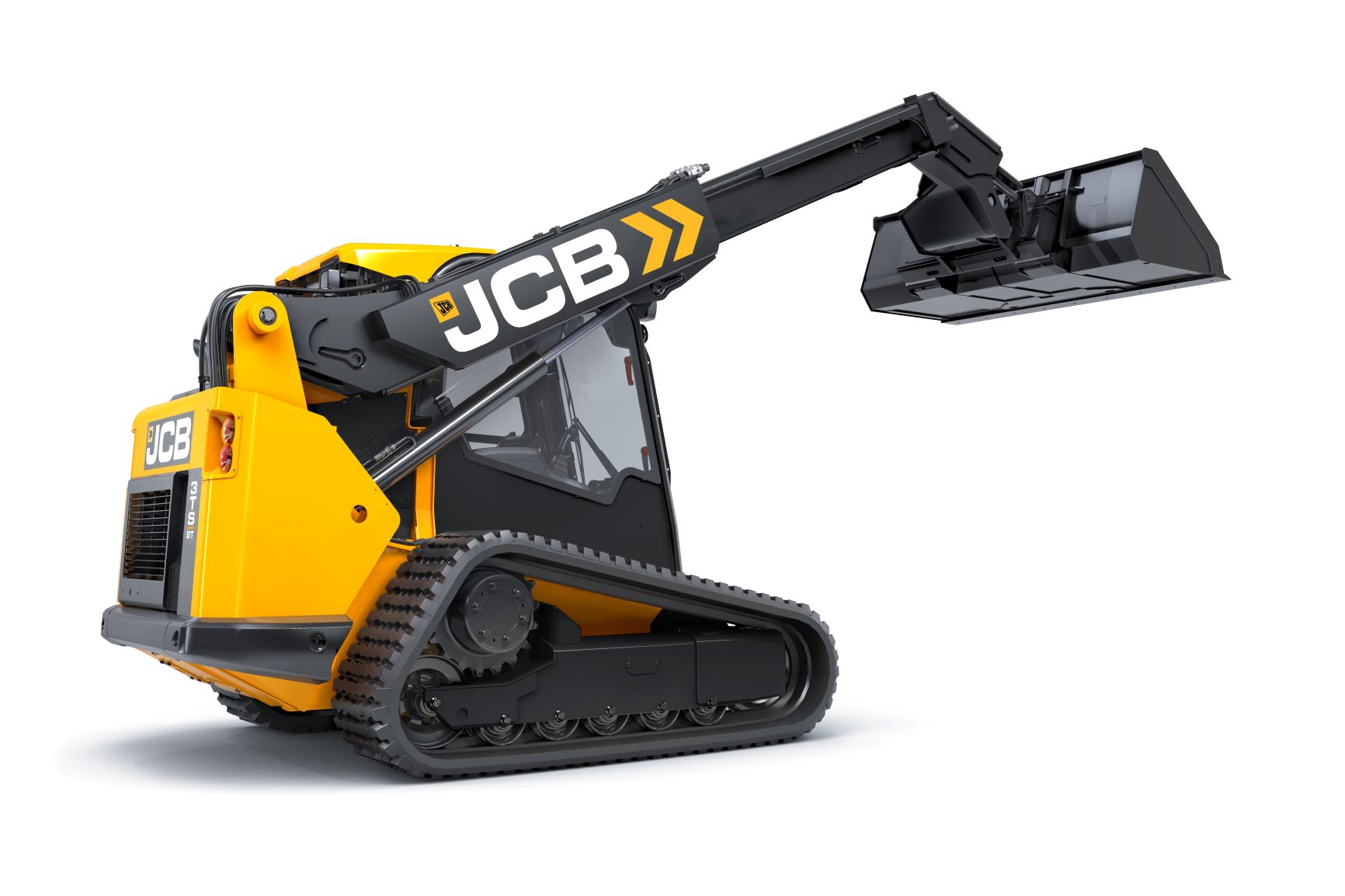
$92,000
- Engine
- 74 hp
- Aux flow
- 24 GPM
- Weight
- 12,615 lbs
Only one compact track loader in the world carries a telescopic boom, and the JCB 3TS-8T Teleskid is it, reaching 13 feet 3 inches up, 8 feet forward, and even 3 feet below grade. Its single-arm PowerBoom design also allows a side-entry cab door, so operators never climb over an attachment to get in.
Full sheet & owner reports
$113,290
- Engine
- 109 hp
- Aux flow
- 24 GPM
- Weight
- 13,000 lbs
The JCB 4TS-8T is the most powerful Teleskid ever built, launched in April 2026 with a 109 hp 4.4L EcoMax engine and a telescopic single-arm PowerBoom that reaches a 15-foot hinge pin height - unmatched by any compact track loader. It lifts 3,999 lbs, reaches over 8 feet forward, digs 3 feet below grade, and runs up to 42.3 GPM of Super Flow hydraulics.
Full sheet & owner reports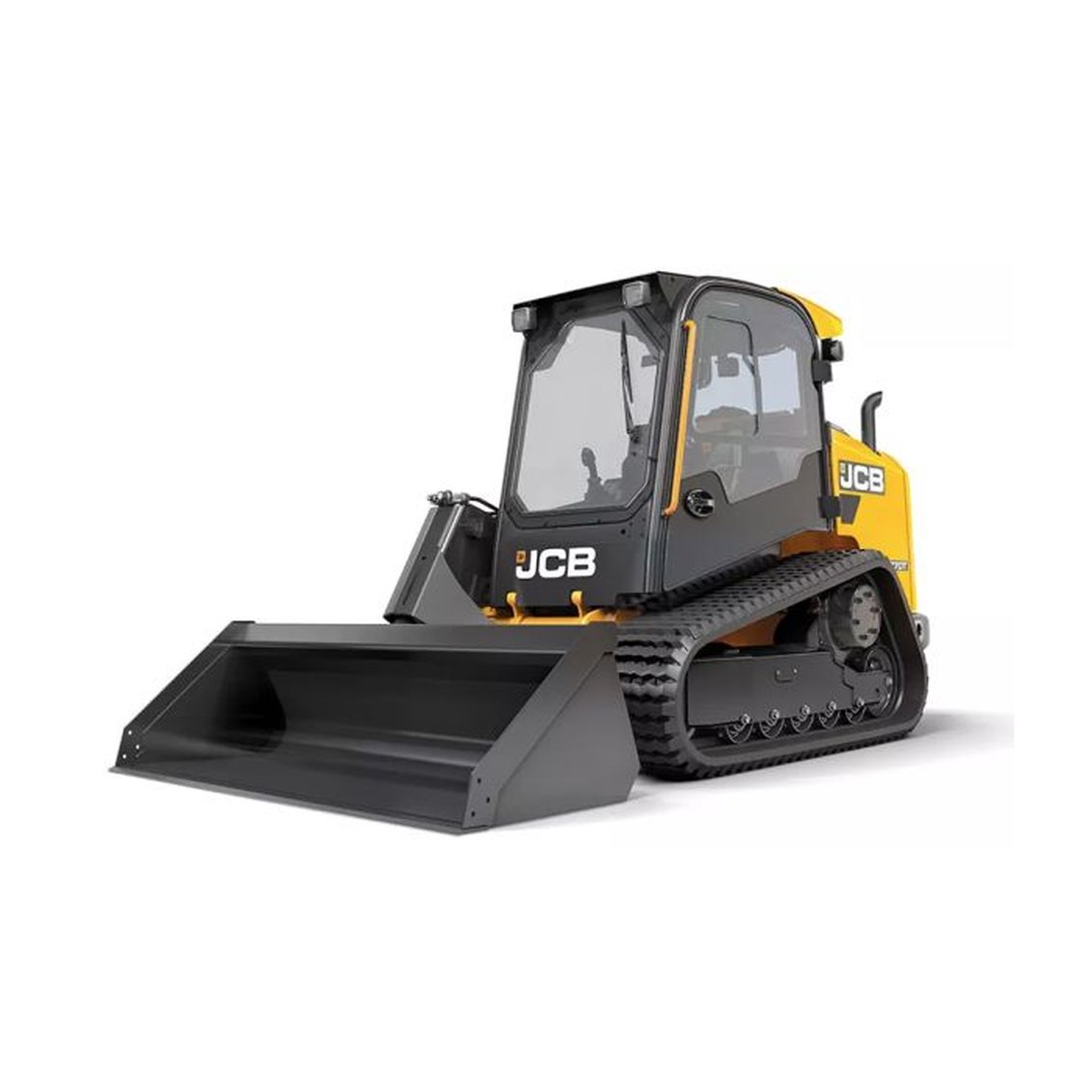
JCB
JCB 270T
$75,490
- Engine
- 74 hp
- Aux flow
- 24 GPM
- Weight
- 11,003 lbs
Visibility and entry safety no twin-arm machine can offer are the JCB 270T's argument, from the brand's signature single-arm PowerBoom and side-entry door. A torquey 4.4L JCB EcoMAX rated at 74 hp drives this large-platform vertical-lift compact track loader and its 2,723 lb rated capacity.
Full sheet & owner reports