Head to head
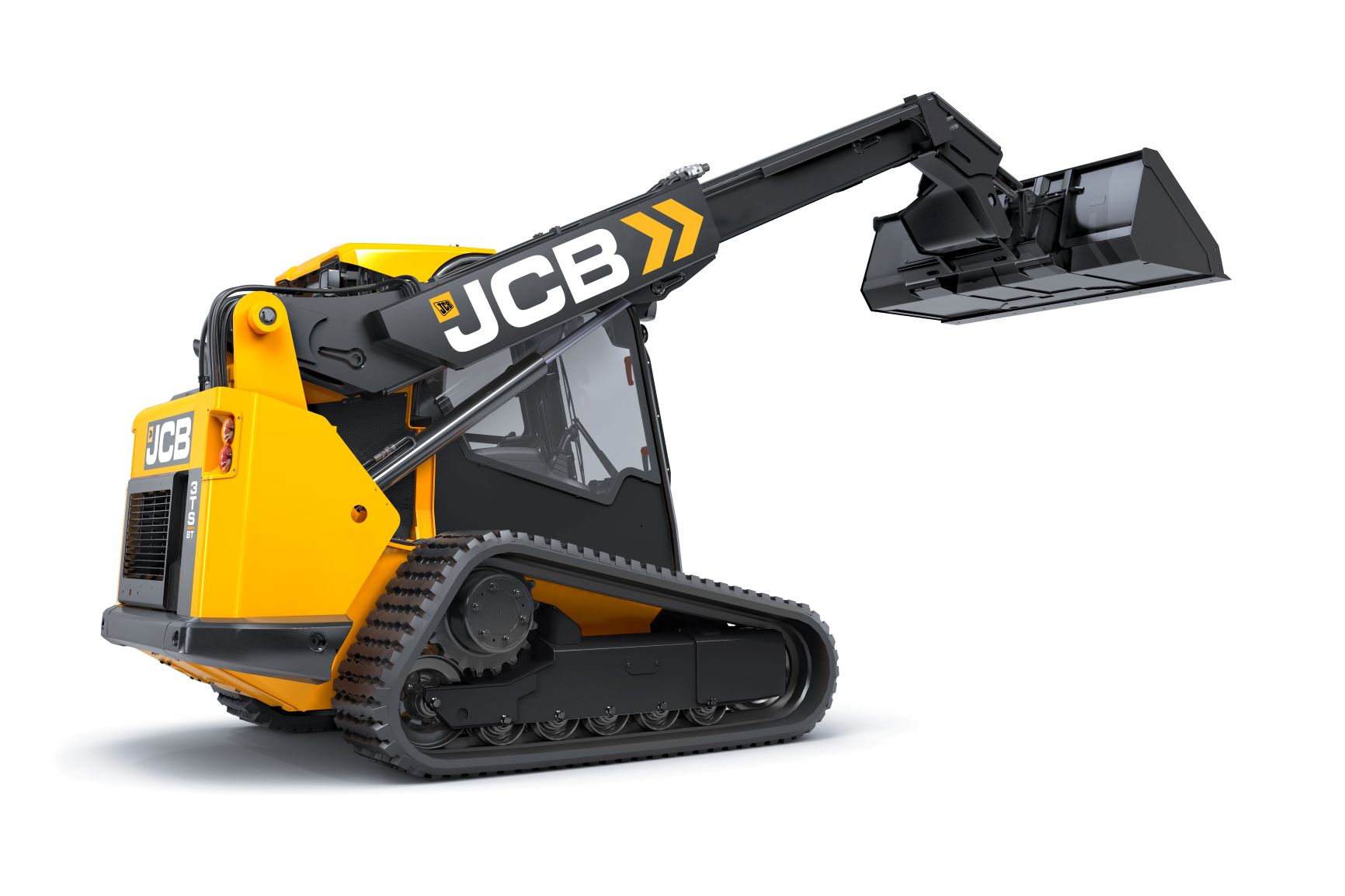
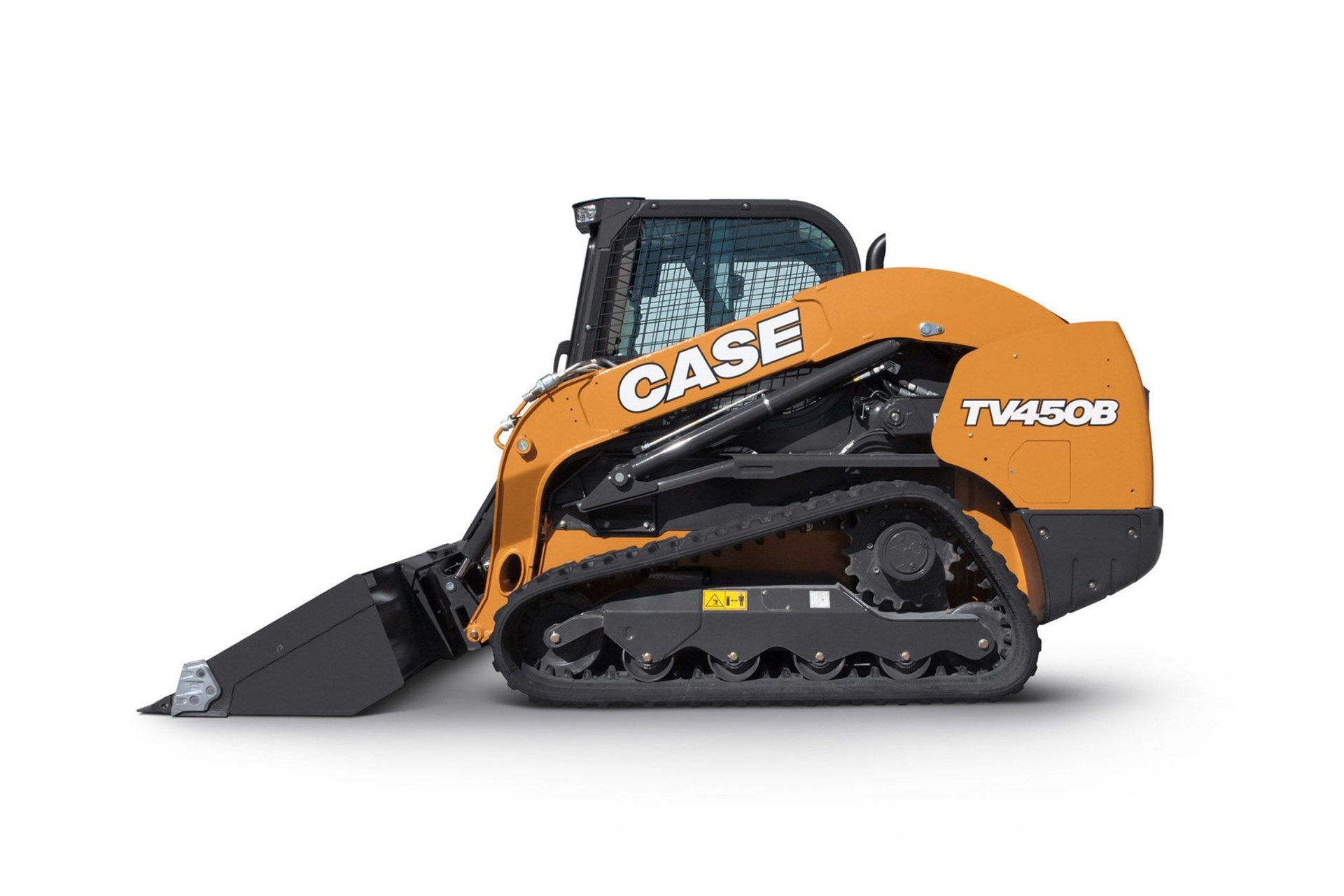
JCB 3TS-8T Teleskid against Case TV450B
The JCB 3TS-8T Teleskid carries 545 lb more once both are rated the same way; the Case TV450B moves 0.2 GPM more through the auxiliary circuit.
| Spec | JCB 3TS-8T Teleskid | Case TV450B |
|---|---|---|
| Price | $92,000 | $92,000 |
| Rated capacity, as advertised | 3,695 lbs | 4,500 lbs |
| Rated at | 35% of tipping load | 50% of tipping load |
| Tipping load | 10,558 lbs | 9,000 lbs |
| Capacity at its class convention | 3,695 lbs | 3,150 lbs |
| Engine power | 74 hp | 90 hp |
| Engine | JCB EcoMAX | FPT |
| Auxiliary flow | 24 GPM | 24.2 GPM |
| Lift height | 159 in | 131.6 in |
| Operating weight | 12,615 lbs | 10,610 lbs |
| Lift path | Radial Lift | Vertical Lift |
| Rubber tracks | Yes | Yes |
| High flow available | Yes | Yes |
| Enclosed cab available | Yes | Yes |
| Two-speed travel available | Yes | Yes |
| Self-levelling available | Yes | Yes |
| A/C and heat available | Yes | Yes |
| Warranty | 2 yr / 2,000 hr | 2 yr / 2,000 hr |
What owners say about each
JCB 3TS-8T Teleskid
- The telescopic boom is genuinely unique — 13'3" of lift height and 8 feet of forward reach let it stack bales two-high, load feed mixers, and reach across trailers in ways no conventional skid steer can.
- The side-entry door means operators never crawl over the attachment or under a raised boom, and owners call it a game-changing safety and convenience feature after living with front-entry machines.
- It can dig 3 feet below grade with the boom extended, letting it backfill from one side of a trench or unload from a single trailer side — party tricks that replace a second machine on some jobs.
- The JCB EcoMAX engine hits 74 hp without a DPF or DEF, so there are no regen interruptions or fluid top-offs, which owners burned by emissions headaches specifically appreciate.
- The single-arm PowerBoom is made of high-tensile steel with a huge cross-section, and JCB's decades of backhoe and telehandler experience show in the boom's rigidity.
- Visibility is exceptional — with no right-side boom arm and a big glass area, operators report a 60% better view than conventional twin-arm skid steers.
- The US Marine Corps selected the Teleskid for its Multi-Terrain Loader program, a durability endorsement owners like to cite.
- Capacity at full extension drops to around 1,600 lb, and buyers expecting to lift heavy pallets at maximum reach are consistently disappointed — the big rated number only applies with the boom retracted.
- At around $92,000 it costs flagship-CTL money, and forum users repeatedly question whether the reach justifies the price unless you truly need it weekly.
- The single-side boom concentrates weight on one side, and operators cutting grades report the machine leaning toward the boom side until they adapt.
- The telescoping boom adds wear points, and JCB has revised the boom design over the years to address slop and wear at the extension points.
- Some owners report quality-control irritations like A/C and sensor faults that took multiple dealer visits to resolve.
- At over 12,600 lb it's the heaviest machine in its class, requiring a serious truck and trailer to move between jobs.
Case TV450B
- The 4,500 lb rated capacity handles full pallets of block, sod, and stone that make 3,000 lb-class machines nervous, and owners say it genuinely replaces a small wheel loader.
- The optional enhanced high-flow package delivers hydraulic power at 4,000 psi, letting it run cold planers and heavy mulchers that usually demand a 110 hp machine.
- The 90 hp FPT's 282 lb-ft of torque pulls hard into piles without bogging, and operators consistently note it feels stronger than the spec-sheet horsepower.
- Vertical lift with a 131.6-inch hinge pin height places loads well over high-sided dump trucks and hopper feeders with room to spare.
- At 10,610 lbs it delivers near-Cat 275 capacity for meaningfully less money, and value-focused buyers say the price per pound of ROC is hard to beat.
- Ride control and two-speed travel keep material in the bucket on long ground moves, making it productive on big open sites.
- Unlike the 74 hp TV370B's DEF-free setup, the 90 hp engine uses SCR aftertreatment, so you're back to filling a DEF tank and living with dosing-system sensors.
- The 'operator not fully present' seat sensor faults common to B-series machines can lock out hydraulics until sensors are cleaned or replaced.
- At 10,610 lbs plus a trailer you're into CDL territory in many states, a jump owners coming from mid-frame machines don't always anticipate.
- Owners report electrical gremlins and display glitches on B-series machines, and owners describe dealer software updates as a recurring fix.
- Enhanced high-flow, ride control, and the premium cab package are expensive options that push a well-equipped unit well past base price.
- Resale values trail Bobcat, Cat, and Deere, so the attractive purchase price gives some value back at trade-in time.
- The rigid-mount undercarriage rides rough at speed compared to torsion-suspended machines like ASV, and tall vertical-lift towers limit rearward visibility.