JCB
JCB 300
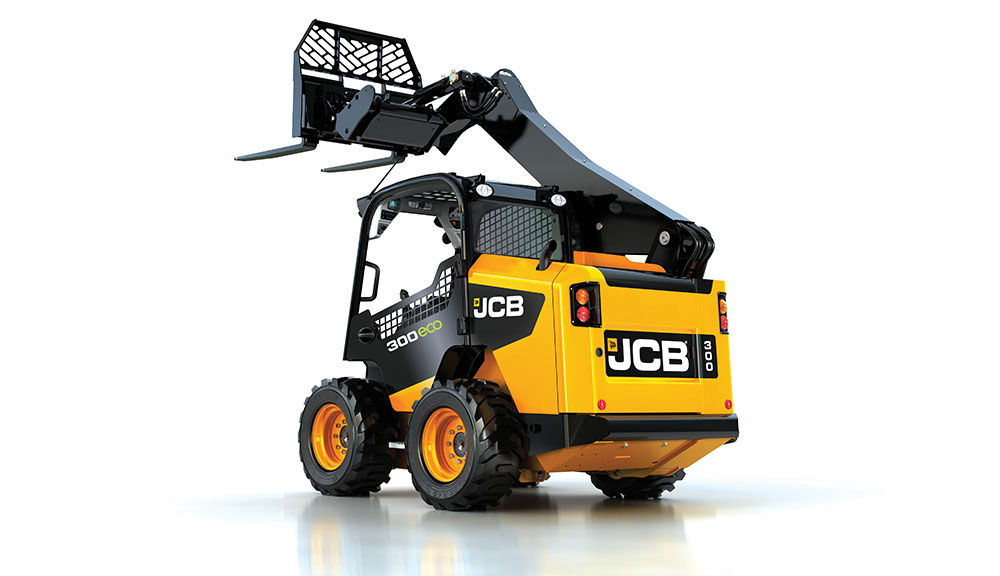
The bright segment is what JCB 300 is rated to carry; the grey run past it is the rest of its tipping load. Bar length is tipping load drawn to the same scale on every machine on the site, so a short bar is a smaller machine and not a conservative rating.
The JCB 300 is the biggest wheeled skid steer in JCB's lineup - a large-platform vertical-lift machine with a 3,186 lb rated capacity built around the single-arm PowerBoom and side-entry door. The 74 hp EcoMAX diesel runs without a DPF or DEF, and two-speed travel tops 12 mph for fast work across big sites and farmyards.
Suits: Heavy pallet handling, truck loading, and big-acreage farm work where maximum wheeled capacity and side-door safety both matter Its vertical lift path reaches highest at full extension, for loading high-sided trucks and stacking.
Lifting and reach
- Rated operating capacityWheeled rating convention
- 3,186 lbs
- Tipping load
- 6,369 lbs
- Lift height to hinge pin
- 126 in
- Lift path
- Vertical Lift
- Operating weight
- 9,288 lbs
Power and hydraulics
- Engine power
- 74 hp
- Engine
- JCB EcoMAX TCAE-55
- Auxiliary flowStandard circuit
- 23.8 GPM
- Flow type
- Standard
- Warranty
- 2 yr / 2,000 hr
Fitted or available
What this machine can be ordered with. Some of these are standard and some cost extra, and which is which moves between trim levels, so check them against the quote rather than against this list.
What owners report
Summarised from the sources listed below. Nothing here was tested by us.
Being the biggest wheeled machine JCB makes is the pitch, and 3,186 lbs of rated capacity genuinely covers brick packs, seed pallets and mixed material handling in a yard. What actually distinguishes it from every rival at the same capacity is not the number, though - it is the layout. One boom arm instead of two and a door in the side means the operator never climbs over a loaded bucket, and that is a different machine to live with all day rather than a different specification.
The practical details are mostly sensible. Cooling air comes in high and exhausts through the sides and rear, which keeps chaff and demolition dust out of the core. The EcoMAX carries no particulate filter, no exhaust fluid and no aftertreatment at all, so there is nothing to regenerate and nothing to fail out of warranty. The cab tilts for one-person service and the daily checks are at ground level. Against that, 74 hp is the same rating fitted to much smaller JCBs, parallel lift is an option on a machine sold for pallet work, and there is exactly one way into the cab.
Yards, farms and demolition contractors on firm ground who want the side-entry layout and have no need for tracks: that is the audience. Price it directly against the tracked 300T, because JCB's own published ladder shows what tracks cost on this platform: the wheeled 270 lists at $50,490 against $75,490 for the tracked 270T on the same engine and the same rated capacity. Before signing, get a written price since JCB does not publish one for this model, confirm whether parallel lift is on the order, and check which capacity basis any comparison you have been shown is using.
What owners like
- At 3,186 lbs of rated capacity this is the strongest wheeled machine JCB builds, and it does that on the same 74 hp EcoMAX as the 270 - the extra capacity comes from frame and geometry rather than from burning more fuel, which shows up in running cost rather than on the spec sheet.
- The single-arm PowerBoom removes the right-hand loader arm entirely, which JCB puts at 60 percent better visibility around the machine, and the side door means the operator steps in past one arm rather than climbing over an attachment or under an unsupported boom. It is the clearest practical difference between a JCB and anything else here, and the one owners mention first.
- Cooling air is drawn from above the machine and exhausted through the sides and rear rather than pulled in low at the back. In chaff, sawdust and dusty demolition work that is the difference between cleaning a core weekly and cleaning it daily.
- The 74 hp EcoMAX reaches Tier 4 Final with no particulate filter, no exhaust fluid and no aftertreatment at all, so there is no regeneration cycle to sit through and no emissions plumbing to fail once the warranty is gone.
- It takes an industry-standard quick hitch, so an existing rack of other-brand attachments carries over rather than having to be re-plated or replaced - not something every manufacturer with a distinctive machine design gets right.
- The cab tilts for service and one person can do it, and the daily checks are all reachable from ground level. On a machine bought by owner-operators rather than fleets, that is where the maintenance hours actually go.
What owners complain about
- JCB publishes a list price for the 270 and 270T but not for this machine - it is quoted on request. That makes it the hardest model in the range to price-shop honestly, and buyers end up negotiating without knowing where the ladder starts.
- Rated capacity is quoted at 50 percent of the 6,369 lb tipping load. That is the ordinary convention for a wheeled skid steer, but it means the 3,186 lb headline holds back less in reserve than the 35 percent figures on JCB's tracked machines - the 300T's smaller-looking 3,000 lbs sits on an 8,627 lb tipping load and is the more conservative number of the two.
- Seventy-four horsepower is the same rating JCB fits to the much smaller machines in the range, so buyers stepping up expecting more grunt with the extra capacity are getting frame, not engine. Rivals in the 3,000 lb wheeled class commonly offer meaningfully more power.
- Parallel lift is an option rather than standard, which matters on a machine sold for pallet and brick handling - without it, loads want to tip back through the lift and the operator is correcting with the tilt all the way up.
- There is one door and it is on the left. Park tight against an obstruction on that side and nobody gets in, and unlike a twin-arm machine there is no front exit over a lowered attachment as a fallback.
Drawn from jcb.com, compactequip.com.
What buyers ask
Why is there no published price for the JCB 300?
Is the 300's 3,186 lb capacity really bigger than the 300T's 3,000 lbs?
What does the side-entry door actually change day to day?
Can I use my existing attachments on it?
Does it need DEF or run regeneration cycles?
Put the JCB 300 against
Machines in the same range
The rest of the JCB line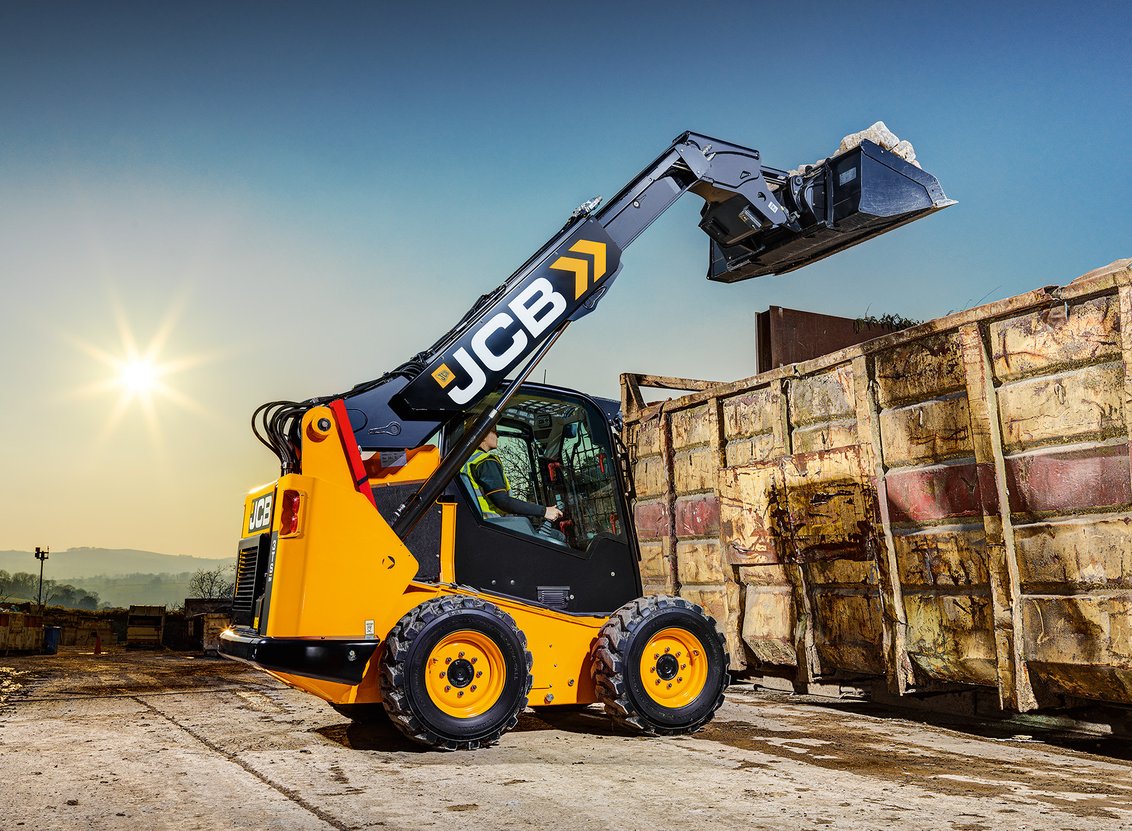
$79,590
- Engine
- 74 hp
- Aux flow
- 24 GPM
- Weight
- 9,859 lbs
Wheeled version of the Teleskid, the JCB 3TS-8W is the only skid steer on the market with a telescopic boom. It lifts 3,208 lbs to a 13'3" hinge pin, reaches 8 feet forward, and digs 3 feet below grade, all from a 74 hp no-DPF machine with JCB's single-arm PowerBoom and side-door entry.
Full sheet & owner reports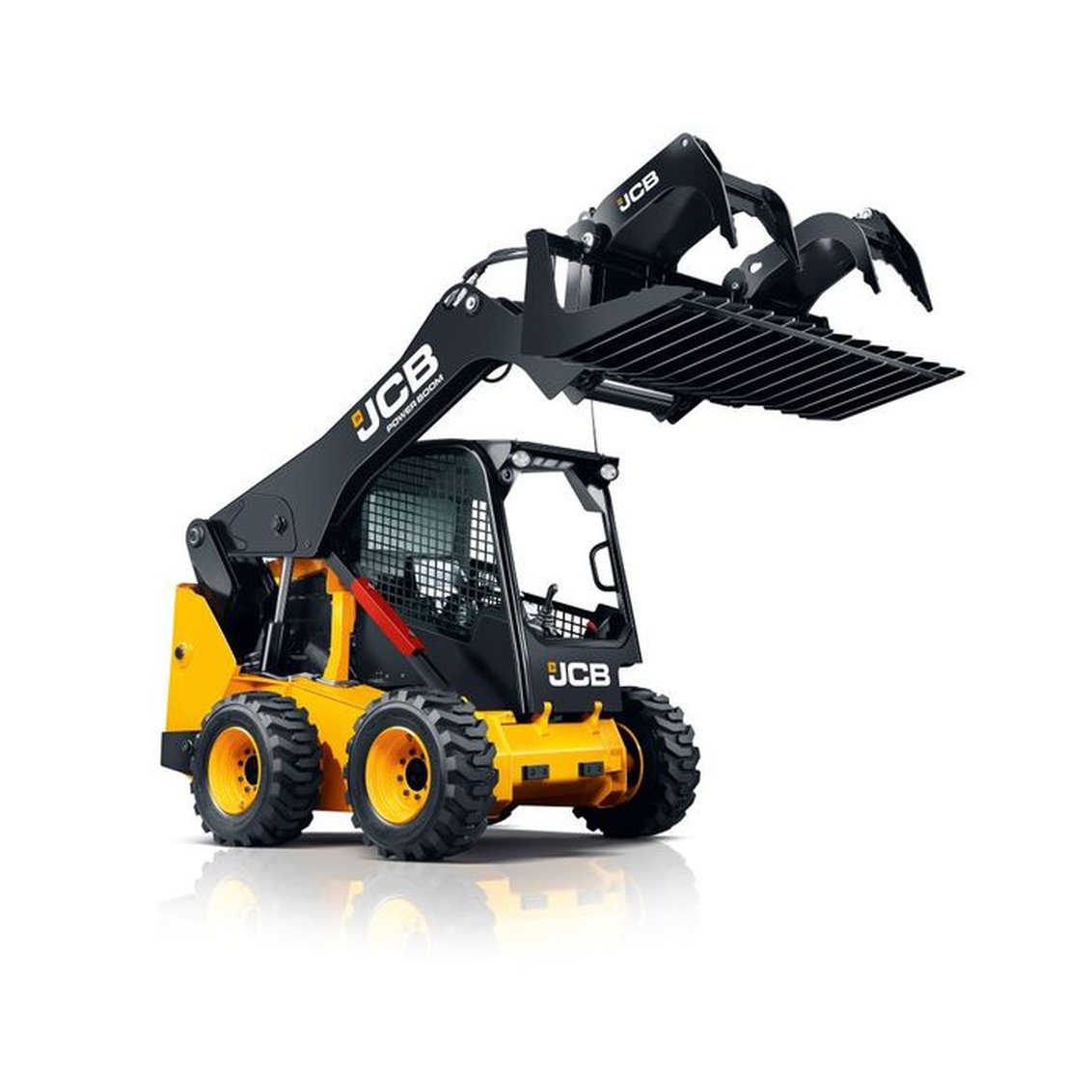
JCB
JCB 270
$50,490
- Engine
- 74 hp
- Aux flow
- 23.8 GPM
- Weight
- 8,680 lbs
The JCB 270 is a large-platform vertical-lift wheeled skid steer with a 2,723 lb rated capacity and JCB's signature single-arm PowerBoom with side-entry door. The 74 hp EcoMAX diesel needs no DPF or DEF, and a 23.8 GPM standard circuit plus 12 mph two-speed travel make it a productive truck-loading and material-handling machine.
Full sheet & owner reports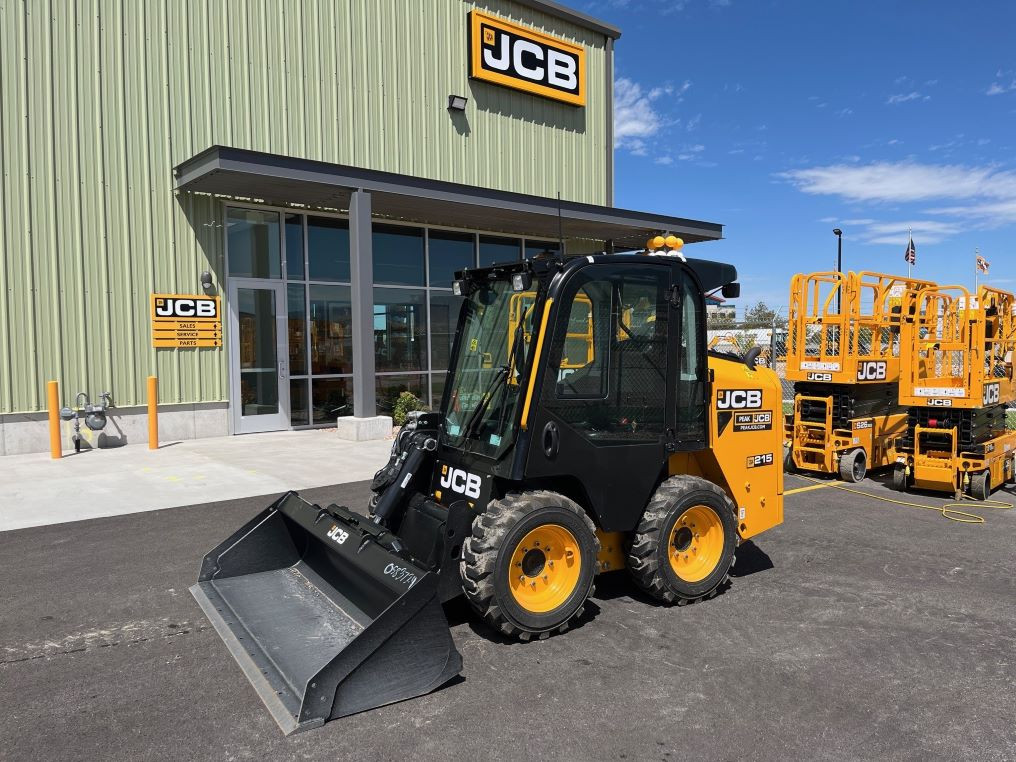
JCB
JCB 215
$44,390
- Engine
- 74 hp
- Aux flow
- 18.5 GPM
- Weight
- 7,253 lbs
Small-platform size with large-platform power and hydraulic flow is JCB's pitch for the 215, a vertical-lift wheeled skid steer built around the single-arm PowerBoom and side-entry door. A 74 hp turbocharged JCB by Kohler diesel with no DPF powers its 2,112 lb rated capacity.
Full sheet & owner reports