JCB
JCB 3TS-8W Teleskid
The bright segment is what JCB 3TS-8W Teleskid is rated to carry; the grey run past it is the rest of its tipping load. Bar length is tipping load drawn to the same scale on every machine on the site, so a short bar is a smaller machine and not a conservative rating.
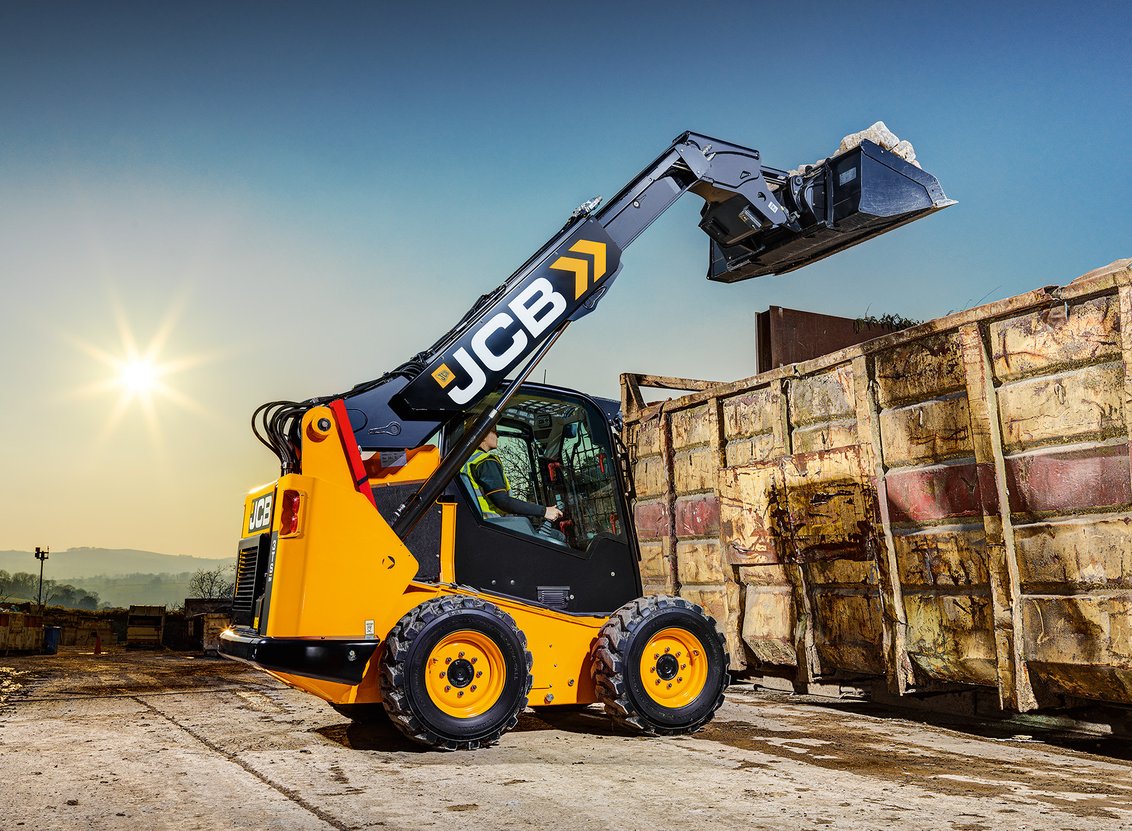
Wheeled version of the Teleskid, the JCB 3TS-8W is the only skid steer on the market with a telescopic boom. It lifts 3,208 lbs to a 13'3" hinge pin, reaches 8 feet forward, and digs 3 feet below grade, all from a 74 hp no-DPF machine with JCB's single-arm PowerBoom and side-door entry.
Suits: Hard-surface operators - farms, yards, recycling, and snow work - who want telehandler reach without paying for tracks they don't need Its radial lift path reaches furthest at mid-height, for digging, grading and backfilling.
Lifting and reach
- Rated operating capacityWheeled rating convention
- 3,208 lbs
- Tipping load
- 6,418 lbs
- Lift height to hinge pin
- 159 in
- Lift path
- Radial Lift
- Operating weight
- 9,859 lbs
Power and hydraulics
- Engine power
- 74 hp
- Engine
- JCB EcoMAX
- Auxiliary flowStandard circuit
- 24 GPM
- Flow type
- Standard
- Warranty
- 2 yr / 2,000 hr
Fitted or available
What this machine can be ordered with. Some of these are standard and some cost extra, and which is which moves between trim levels, so check them against the quote rather than against this list.
What owners report
Summarised from the sources listed below. Nothing here was tested by us.
Wheels and a telescoping boom is an unusual combination, and it is the cheapest way into the only boom design in the skid steer market. Thirteen feet three of lift, eight feet of forward reach and three feet of below-grade dig put this into work that normally needs a telehandler or a mini excavator alongside the loader, and the owners who get value from it are the ones who reorganised how they stack, feed and load around the reach rather than treating it as an occasional bonus.
An operator running one at length found the things that go right are mostly ergonomic: stepping into the cab past a single arm instead of over a dirty bucket, a much better view down to the headstock once the tilt cylinder moved inside the mast, easy service access through a wide bonnet and a cab on gas struts. The things that go wrong are mostly about load and setup - 611 kg at full extension against a machine that shifts a full IBC retracted, a 42-degree dump angle that fights you over trailer sides, and a transmission sharp enough to feel jumpy until the response is softened. High-flow couplers stay bolted to the chassis rather than running to the boom end, a deliberate stability decision that also closes off the heaviest attachments at reach.
Daily height and reach on firm ground, at a farm or a yard, is the case for it - and where about $79,590 is the budget rather than the $113,000 the tracked 109 hp version costs. It is the wrong machine for soft sites or for anyone whose work is mostly pushing and carrying at ground level, where a conventional wheeled loader of the same capacity costs substantially less. Before signing, get the load chart at extension, ask the dealer to soften the drive response during setup, and check how far the nearest technician who has worked on a telescoping boom actually is.
What owners like
- Thirteen feet three inches of lift, eight feet of forward reach and the ability to dig three feet below grade are things no other wheeled skid steer can do, because no other manufacturer builds a telescoping boom into one. On a farm it stacks bales higher than the machine, loads over the side of a high trailer and cleans out a pit without a second machine on site.
- An operator putting real hours on one reported cab access as easy as on any conventional telescopic loader - stepping in past a single arm rather than over a bucket - and found the ISO joystick layout became second nature, with three programmable control modes to suit different operators and attachments.
- Relocating the tilt cylinder inside the mast measurably improved the view down to the headstock, which is the sightline that matters when picking a pallet or a bale, and a wide-angle rear mirror was singled out as giving genuinely good rearward vision.
- It costs about $79,590 against roughly $113,000 for the 109 hp tracked 4TS - wheels and a 74 hp engine buy the same telescoping trick for around 30 percent less, with no undercarriage to replace at 2,000 hours.
- The 74 hp EcoMAX needs no diesel particulate filter and no exhaust fluid, so there are no regeneration cycles interrupting yard work and nothing extra to buy and store on a farm.
- Service access is unusually good for the class: a wide-opening bonnet, transmission access behind two bolts, and a cab that pivots on gas struts so one person can get underneath it.
What owners complain about
- Capacity falls away sharply as the boom extends - an operator review measured 611 kg at full extension on a machine that handled full 1,000-litre IBCs with the boom retracted. The reach figures and the 3,208 lb rated capacity describe different jobs, and confusing them is how a Teleskid gets tipped.
- The high-flow couplers are fixed to the chassis rather than routed out to the boom end. JCB did that deliberately, to stop anyone hanging a heavy high-flow attachment out at eight feet of reach, but it means the heaviest attachments cannot use the telescoping section at all.
- The bucket dump angle is 42 degrees, which a reviewer flagged as awkward when tipping over the side of a trailer - material wants more angle to clear cleanly, and the workaround is getting closer and higher than the reach was supposed to make necessary.
- Transmission response out of the box was described as sharp enough to make movements slightly jumpy, better suited to loading than to general yard work until the settings are softened. It is adjustable, but it is worth having the dealer set it up rather than discovering it on delivery.
- Rated capacity is quoted at 50 percent of the 6,418 lb tipping load, which is the normal convention for a wheeled skid steer. It still means the 3,208 lb headline holds back less reserve than the 35 percent figures JCB quotes on its tracked machines - the 300T's smaller-sounding 3,000 lb sits on an 8,627 lb tipping load.
- At 9,859 lbs it is heavy for a wheeled machine of this capacity, so the trailer and truck requirement is closer to a tracked loader's than to a conventional skid steer's - and on soft or chewed-up ground the tyres give up flotation the tracked Teleskid keeps.
Drawn from farmersguardian.com, jcb.com, compactequip.com, skidsteerforum.com.
What buyers ask
How much will it lift with the boom fully out?
Should I buy this or the tracked Teleskid?
Can I run a mulcher or cold planer out at full reach?
Is 3,208 lbs of rated capacity comparable to a JCB 300T's 3,000 lbs?
Does it need DEF or a particulate filter?
What should I have the dealer adjust before delivery?
Put the JCB 3TS-8W Teleskid against
Machines in the same range
The rest of the JCB line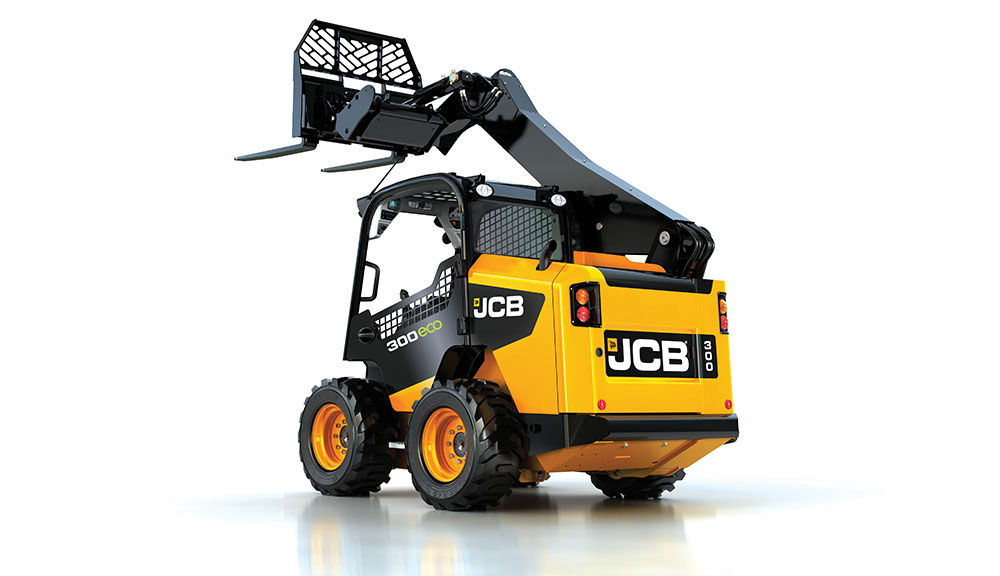
JCB
JCB 300
$67,000
- Engine
- 74 hp
- Aux flow
- 23.8 GPM
- Weight
- 9,288 lbs
The JCB 300 is the biggest wheeled skid steer in JCB's lineup - a large-platform vertical-lift machine with a 3,186 lb rated capacity built around the single-arm PowerBoom and side-entry door. The 74 hp EcoMAX diesel runs without a DPF or DEF, and two-speed travel tops 12 mph for fast work across big sites and farmyards.
Full sheet & owner reports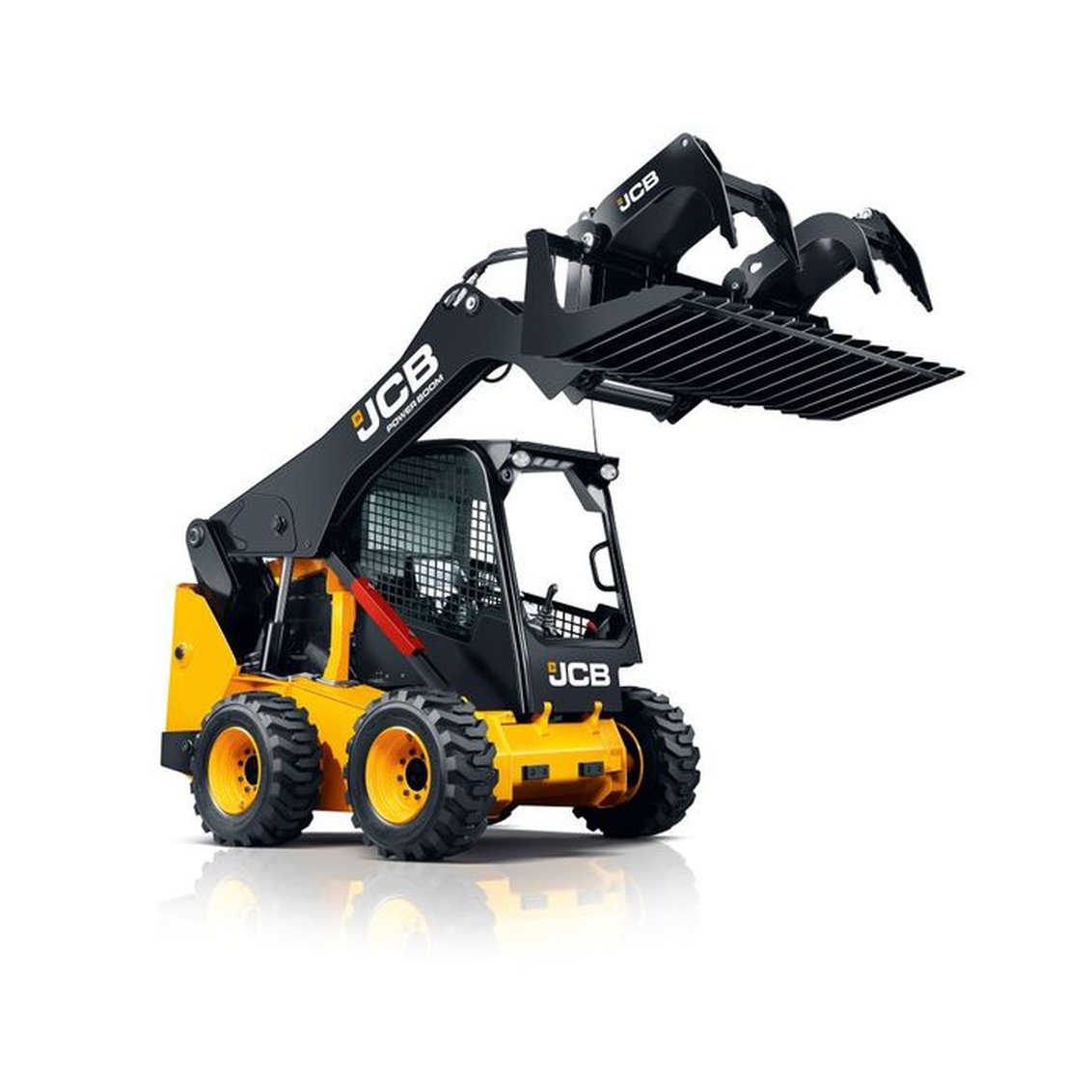
JCB
JCB 270
$50,490
- Engine
- 74 hp
- Aux flow
- 23.8 GPM
- Weight
- 8,680 lbs
The JCB 270 is a large-platform vertical-lift wheeled skid steer with a 2,723 lb rated capacity and JCB's signature single-arm PowerBoom with side-entry door. The 74 hp EcoMAX diesel needs no DPF or DEF, and a 23.8 GPM standard circuit plus 12 mph two-speed travel make it a productive truck-loading and material-handling machine.
Full sheet & owner reports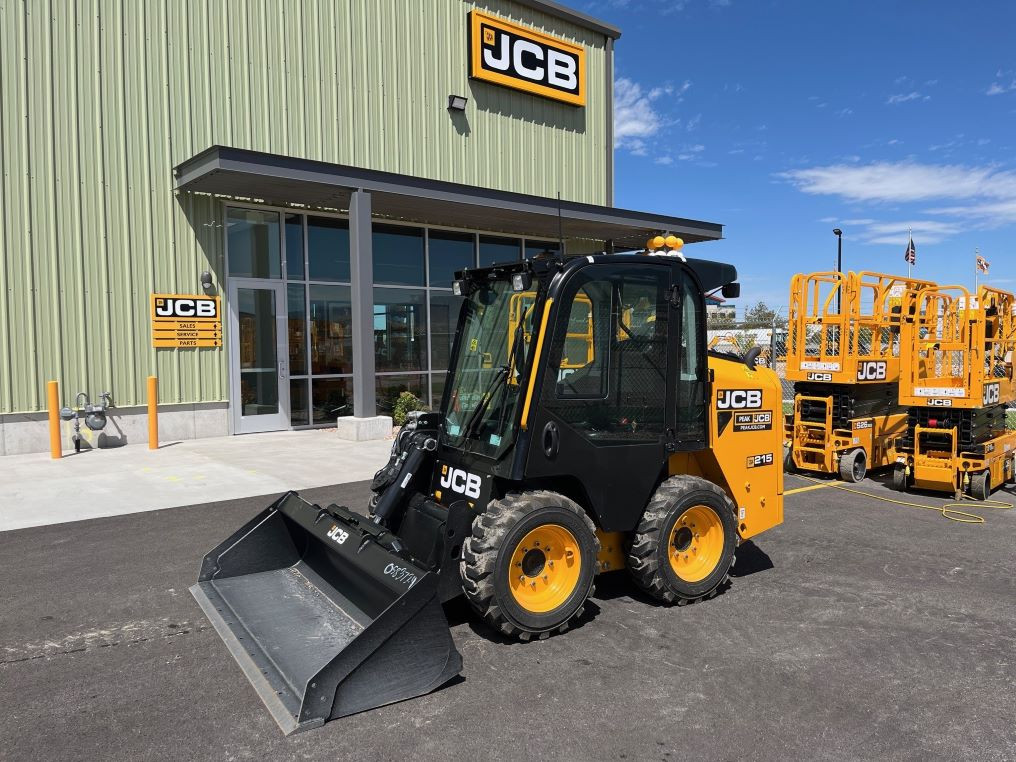
JCB
JCB 215
$44,390
- Engine
- 74 hp
- Aux flow
- 18.5 GPM
- Weight
- 7,253 lbs
Small-platform size with large-platform power and hydraulic flow is JCB's pitch for the 215, a vertical-lift wheeled skid steer built around the single-arm PowerBoom and side-entry door. A 74 hp turbocharged JCB by Kohler diesel with no DPF powers its 2,112 lb rated capacity.
Full sheet & owner reports