JCB
JCB 215
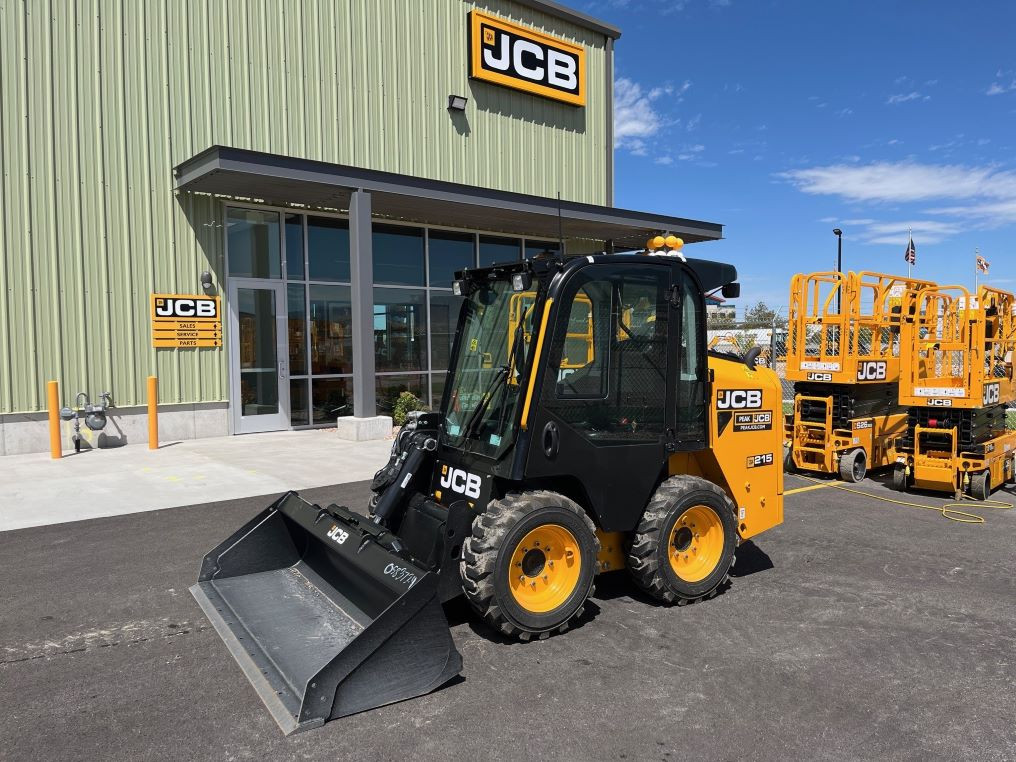
The bright segment is what JCB 215 is rated to carry; the grey run past it is the rest of its tipping load. Bar length is tipping load drawn to the same scale on every machine on the site, so a short bar is a smaller machine and not a conservative rating.
Small-platform size with large-platform power and hydraulic flow is JCB's pitch for the 215, a vertical-lift wheeled skid steer built around the single-arm PowerBoom and side-entry door. A 74 hp turbocharged JCB by Kohler diesel with no DPF powers its 2,112 lb rated capacity.
Suits: Farms and contractors who want side-door entry and big visibility in an affordable mid-size wheeled package Its vertical lift path reaches highest at full extension, for loading high-sided trucks and stacking.
Lifting and reach
- Rated operating capacityWheeled rating convention
- 2,112 lbs
- Tipping load
- 4,222 lbs
- Lift height to hinge pin
- 118 in
- Lift path
- Vertical Lift
- Operating weight
- 7,253 lbs
Power and hydraulics
- Engine power
- 74 hp
- Engine
- JCB by Kohler 2.5L
- Auxiliary flowStandard circuit
- 18.5 GPM
- Flow type
- Standard
- Warranty
- 2 yr / 2,000 hr
Fitted or available
What this machine can be ordered with. Some of these are standard and some cost extra, and which is which moves between trim levels, so check them against the quote rather than against this list.
What owners of the same hardware report
Nobody has written up this exact machine yet, so this is drawn from reports on the machines that share its hardware — the model it replaced, a sibling on the same platform, or the same machine sold under another badge. The prose says which in each case. It is accurate about the iron rather than about this particular model.
Entry layout is the reason anyone shortlists this machine, and at $44,390 to start it is the cheapest door into it. One boom arm instead of two means the operator steps into the cab from the side rather than climbing over an attachment, and everything else about the machine follows from having built it that way. No owner has published an account of this model at hours, so the ground here is JCB's other single-arm machines, which share the boom architecture, the cab and the Kohler engine - the wheels and the wheel motors are its own.
What the specification says is a small-platform machine with large-platform manners: 74 hp, a 2,112 lb rating, vertical lift geometry for loading rather than grading, and an engine that needs neither a particulate filter nor exhaust fluid. Wheels are the real decision. On firm and finished ground they run faster, cost nothing in undercarriage and sidestep the largest recurring expense a track loader carries. In mud, on slopes and in snow they simply stop working where the tracked 215T keeps going, for about $6,200 more.
This fits an owner-operator on hardstanding, yard work, or landscape jobs that are mostly finished surfaces, who wants the side door without the tracked machine's price or weight. Watch the rated-capacity basis when comparing it to a track loader - the same quoted number means less reserve here. Before signing, take a demo long enough to find out how you get on with the boom-side blind spot, get the auxiliary hydraulic flow and pressure written on the quote rather than inferred, and measure the drive to the nearest JCB compact service department, because it is usually further than the Bobcat or Deere one.
What owners like
- JCB lists it from $44,390, which makes it much the cheapest way into the side-door layout - about $6,200 under the tracked 215T and a little over half the 270T's $75,490. If the entry design is what you want and your ground is firm, this is where it starts.
- One boom arm and a door in the side means stepping in at ground level rather than over a loaded attachment or under a raised boom. Operators who have climbed into JCB's small platform keep coming back to the same detail: the bucket can be anywhere and the door still opens.
- Wheels mean no undercarriage. Tracks, rollers and idlers are the largest recurring cost on a compact track loader, and on firm and finished ground a wheeled machine sidesteps that bill entirely while running faster between piles.
- Vertical lift geometry with a 2,112 lb rating puts loads out over a truck side rather than swinging them back toward the machine, which is the right geometry for loading and pallet stacking rather than grading.
- The 74 hp JCB Diesel by Kohler reaches Tier 4 Final with no particulate filter and no exhaust fluid, so short-cycle loading is never interrupted by a regeneration and there is no emissions hardware to fail once the warranty is gone.
- Daily checks are all at ground level through a large rear service door, and JCB offers its SmoothRide ride-control system as an option, which matters more on a wheeled machine carrying a load across rough ground than it does on tracks.
What owners complain about
- The 2,112 lb rating is 50 percent of a 4,222 lb tipping load, the convention for wheeled skid steers. Track loaders quote 35 percent. Two machines showing the same rated number are therefore not holding the same reserve, and this one is holding less - worth knowing when it is cross-shopped against a similarly-rated CTL.
- JCB's public materials are inconsistent about high-flow hydraulics on the small platform: the company's product pages advertise a high-flow option on some models while its own compact product manager has said high-flow is not offered on these frames at all. Get the auxiliary circuit, its flow and its pressure itemised on the quote rather than assumed from a brochure.
- There is one door and it is on the left, with no front exit over a lowered attachment as a twin-arm machine offers. Park tight against a wall on that side and nobody gets in or out.
- Visibility is lopsided rather than uniformly better - clear past the open side, worse on the boom side. Operators moving from twin-arm machines describe a real adjustment period, which is the best argument for demoing one on your own work.
- Nobody has published an ownership account of this model at hours. The engine, cab and Powerboom architecture are shared with JCB machines that have been in the field longer, but wheel motors, final drives and what this specific frame does at 3,000 hours are all open questions.
Drawn from jcb.com, compactequip.com, skidsteerforum.com.
What buyers ask
Why is its rated capacity not comparable to a track loader's?
How much more is the tracked 215T, and is it worth it?
Does it offer high-flow hydraulics?
What is the catch with the single-arm boom?
Does it need DEF or run regeneration cycles?
Put the JCB 215 against
Machines in the same range
The rest of the JCB line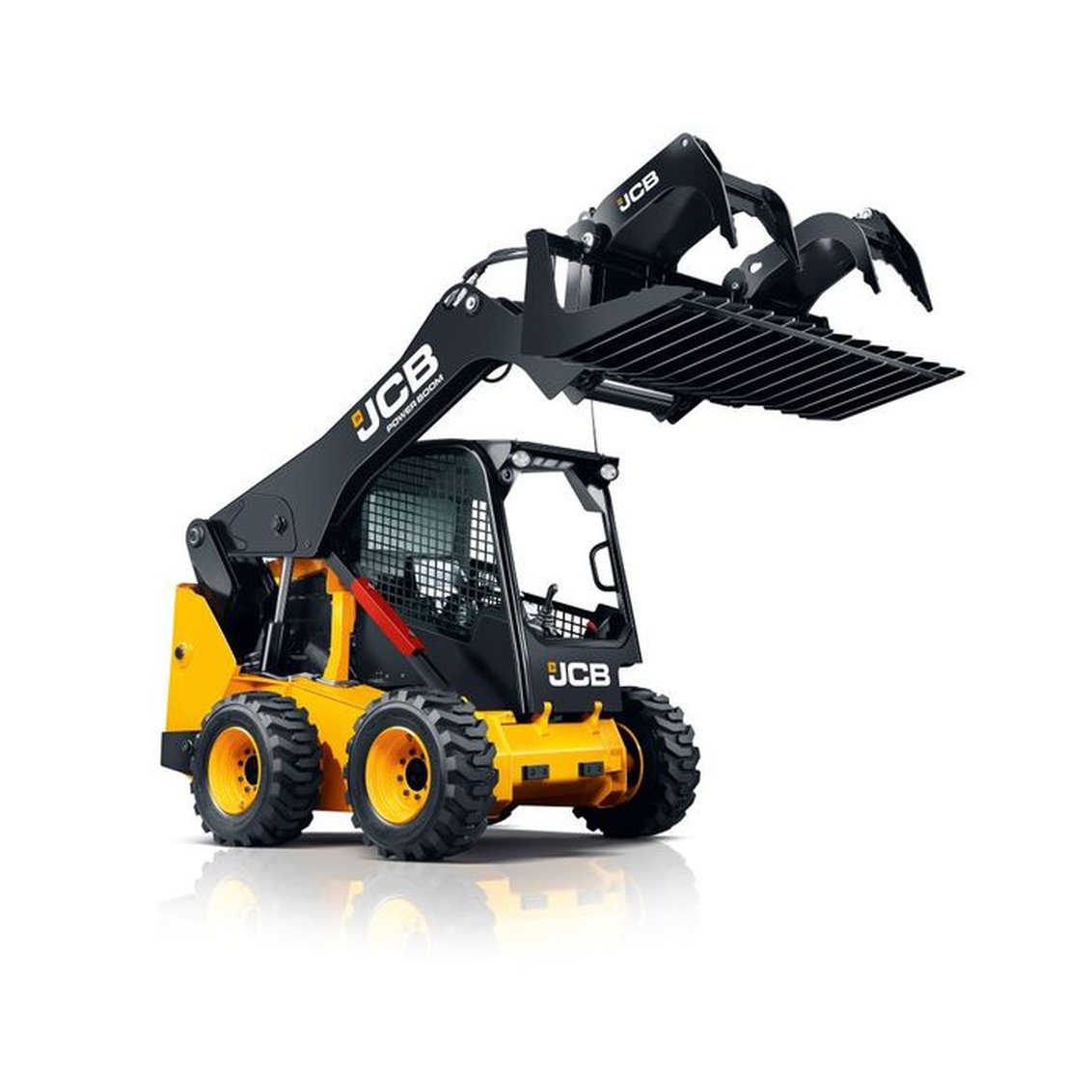
JCB
JCB 270
$50,490
- Engine
- 74 hp
- Aux flow
- 23.8 GPM
- Weight
- 8,680 lbs
The JCB 270 is a large-platform vertical-lift wheeled skid steer with a 2,723 lb rated capacity and JCB's signature single-arm PowerBoom with side-entry door. The 74 hp EcoMAX diesel needs no DPF or DEF, and a 23.8 GPM standard circuit plus 12 mph two-speed travel make it a productive truck-loading and material-handling machine.
Full sheet & owner reports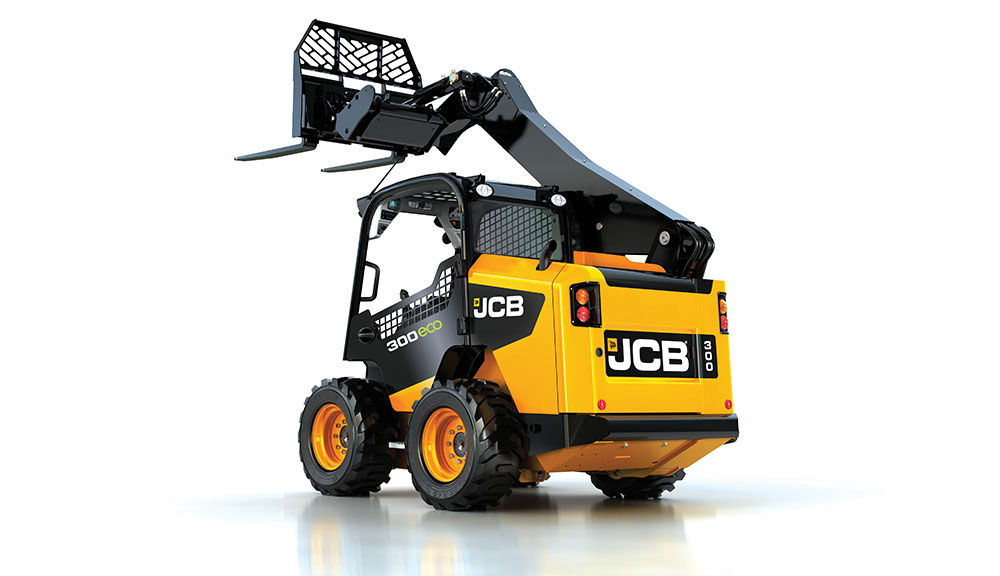
JCB
JCB 300
$67,000
- Engine
- 74 hp
- Aux flow
- 23.8 GPM
- Weight
- 9,288 lbs
The JCB 300 is the biggest wheeled skid steer in JCB's lineup - a large-platform vertical-lift machine with a 3,186 lb rated capacity built around the single-arm PowerBoom and side-entry door. The 74 hp EcoMAX diesel runs without a DPF or DEF, and two-speed travel tops 12 mph for fast work across big sites and farmyards.
Full sheet & owner reports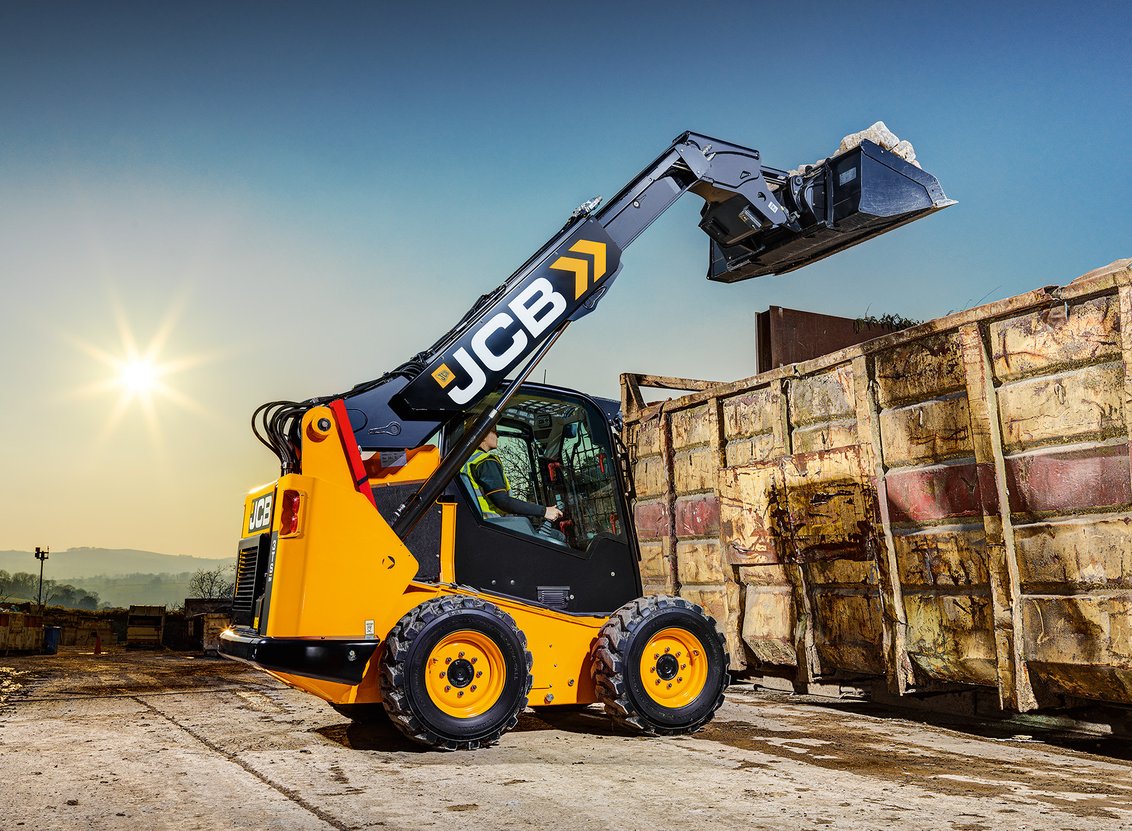
$79,590
- Engine
- 74 hp
- Aux flow
- 24 GPM
- Weight
- 9,859 lbs
Wheeled version of the Teleskid, the JCB 3TS-8W is the only skid steer on the market with a telescopic boom. It lifts 3,208 lbs to a 13'3" hinge pin, reaches 8 feet forward, and digs 3 feet below grade, all from a 74 hp no-DPF machine with JCB's single-arm PowerBoom and side-door entry.
Full sheet & owner reports