JCB
JCB 270
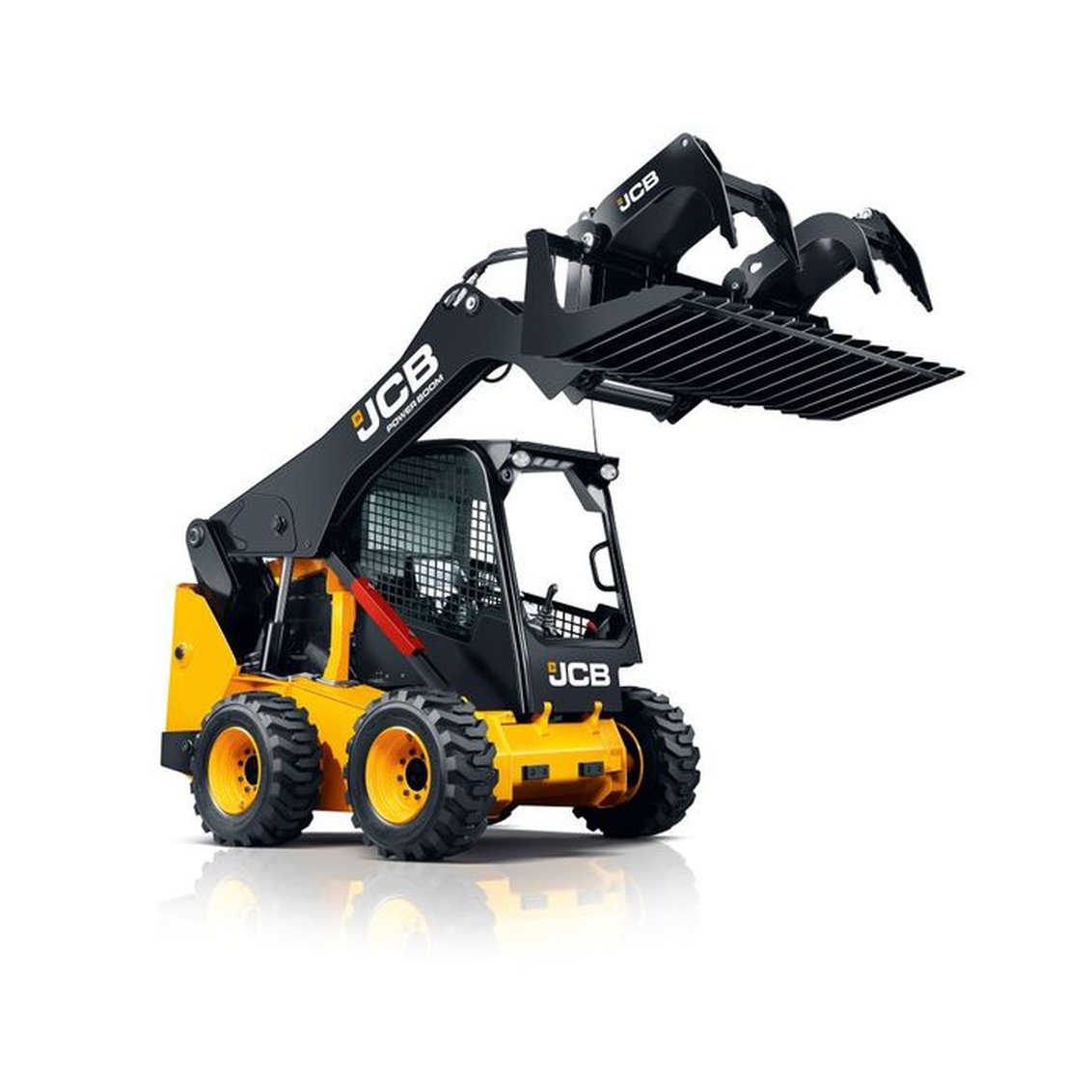
The bright segment is what JCB 270 is rated to carry; the grey run past it is the rest of its tipping load. Bar length is tipping load drawn to the same scale on every machine on the site, so a short bar is a smaller machine and not a conservative rating.
The JCB 270 is a large-platform vertical-lift wheeled skid steer with a 2,723 lb rated capacity and JCB's signature single-arm PowerBoom with side-entry door. The 74 hp EcoMAX diesel needs no DPF or DEF, and a 23.8 GPM standard circuit plus 12 mph two-speed travel make it a productive truck-loading and material-handling machine.
Suits: Contractors and farms loading trucks and moving heavy pallets who want large-platform capacity with side-door entry safety Its vertical lift path reaches highest at full extension, for loading high-sided trucks and stacking.
Lifting and reach
- Rated operating capacityWheeled rating convention
- 2,723 lbs
- Tipping load
- 5,448 lbs
- Lift height to hinge pin
- 126 in
- Lift path
- Vertical Lift
- Operating weight
- 8,680 lbs
Power and hydraulics
- Engine power
- 74 hp
- Engine
- JCB EcoMAX TCAE-55
- Auxiliary flowStandard circuit
- 23.8 GPM
- Flow type
- Standard
- Warranty
- 2 yr / 2,000 hr
Fitted or available
What this machine can be ordered with. Some of these are standard and some cost extra, and which is which moves between trim levels, so check them against the quote rather than against this list.
What owners report
Summarised from the sources listed below. Nothing here was tested by us.
Entry price into JCB's distinctive layout is what this machine represents. Every JCB skid steer uses one boom arm rather than two so the cab can have a door in its side, and at $50,490 this is the least expensive way to buy into that - about $25,000 below the tracked 270T that carries the same engine and the same rated capacity. Operators either find stepping in past a single arm instead of over a dirty bucket transformative, or they never think about it again after the first week.
JCB aims it at demolition, breakers and rock saws rather than at high-flow forestry, and the machine reflects that: a fully welded chassis, a 23.8 gpm standard circuit that covers most attachments, two-speed travel for yard moves, and an optional SmoothRide system that lets the boom float independently so a full bucket survives the trip. The 74 hp EcoMAX runs with no particulate filter, no exhaust fluid and no aftertreatment at all, which on short-cycle idling duty is worth more than it looks. Its weaknesses are the ones every wheeled machine has, plus one of its own: 8,680 lbs is heavy for the capacity, soft ground stops it where the tracked version keeps working, and there is exactly one way into the cab.
Firm-ground work is the target - yards, demolition, farm concrete, hard-packed sites - where the tracked premium would be money spent on flotation you do not need. Read the capacity figure carefully when comparing: 2,723 lbs here is 50 percent of a 5,448 lb tipping load, while the same 2,723 lbs on the 270T is 35 percent of 7,990. Before signing, decide on high flow at order time, price the SmoothRide option against how rough your ground is, and find out where the nearest dealer stocking JCB compact parts actually sits.
What owners like
- At $50,490 it is the cheapest way into JCB's single-arm, side-entry layout, and that layout is the reason to look at the brand at all. It is also $25,000 less than the tracked 270T with the same engine and the same 2,723 lb rating - a gap that is entirely undercarriage.
- Losing the right-hand loader arm gives what JCB puts at 60 percent better visibility around the machine, and the side door means the operator enters past a single arm instead of climbing over an attachment or under an unsupported boom. It is the clearest practical difference between a JCB and anything else in this catalog.
- JCB pitches it at demolition work, breakers and rock saws, and the fully welded chassis backs that up. For a contractor whose work is percussive rather than high-flow, this is a more relevant strength than a headline gpm figure.
- No particulate filter, no exhaust fluid and no aftertreatment on the 74 hp EcoMAX. On a machine that spends a lot of its day idling between short cycles - exactly the duty that clogs filtered engines - that removes both the regeneration interruptions and a category of post-warranty repair.
- A 23.8 gpm standard auxiliary circuit is generous at this size and covers most attachments before the high-flow option comes into it, and two-speed travel makes moves across a large yard or farm quick.
- The optional SmoothRide system lets the boom and load move independently of the chassis, which on a wheeled machine travelling at speed over rough ground is the difference between arriving with a full bucket and arriving with most of one.
What owners complain about
- The 2,723 lb rating is 50 percent of a 5,448 lb tipping load, the normal convention for a wheeled skid steer. But it is the identical headline number JCB quotes for the tracked 270T, which is 35 percent of a 7,990 lb tipping load - so two machines that read the same on a spec sheet are nowhere near the same in reserve, and this is the lighter-footed one.
- At 8,680 lbs it is heavy for its rated capacity, so several rivals lift more per pound of machine and the trailer requirement is higher than the capacity figure suggests.
- Wheels give up the flotation the 270T keeps in mud and on torn-up ground, and on a site that turns soft the machine stops being useful rather than becoming slower.
- High flow is an option, not standard, so the buyers who chose the machine for breaker and rock-saw work may still find the attachment they want next year sits above the base circuit.
- One door, on the left, with no front exit over a lowered attachment. In confined demolition - the work JCB markets this model for - being unable to open the only door because of where the machine ended up is worth thinking about in advance.
- JCB's compact dealer coverage is thinner than Bobcat's, Cat's or Deere's across much of rural North America, and the single-arm design means fewer independent shops have seen one. Support quality depends heavily on which dealer is closest to you.
Drawn from jcb.com, compactequip.com.
What buyers ask
How does the 270 differ from the 270T besides tracks?
Is it really suitable for demolition work?
What is SmoothRide and is it worth the money?
Does the 23.8 gpm standard circuit run most attachments?
Does it need DEF or a particulate filter?
How is JCB's parts and service support?
Put the JCB 270 against
Machines in the same range
The rest of the JCB line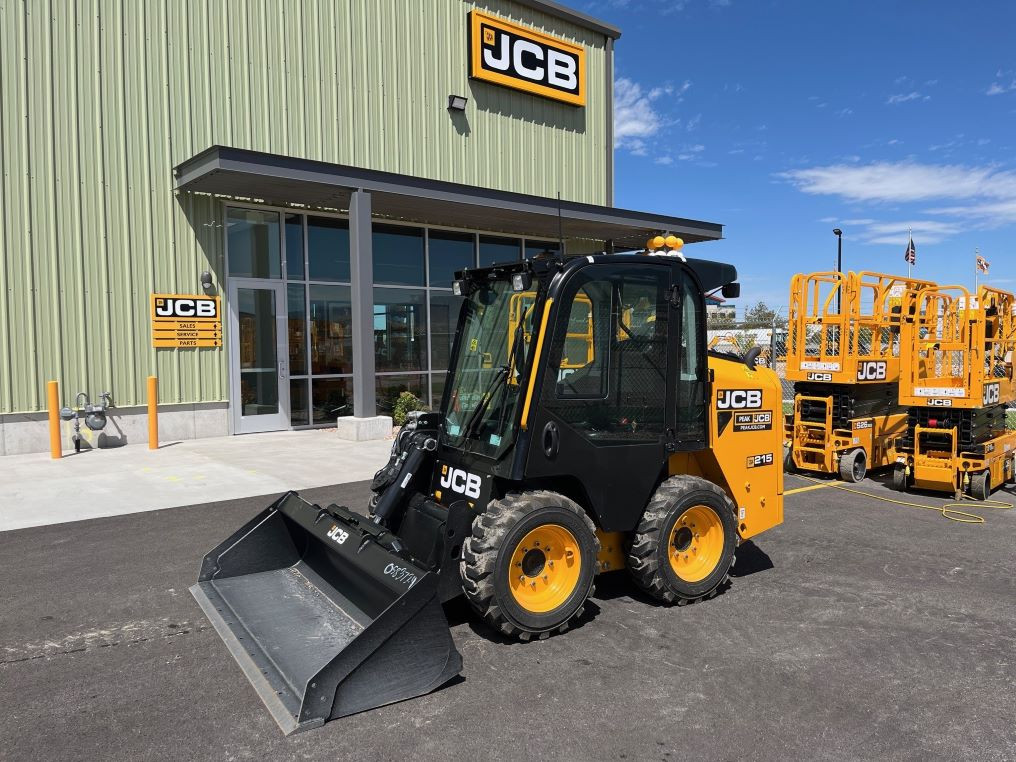
JCB
JCB 215
$44,390
- Engine
- 74 hp
- Aux flow
- 18.5 GPM
- Weight
- 7,253 lbs
Small-platform size with large-platform power and hydraulic flow is JCB's pitch for the 215, a vertical-lift wheeled skid steer built around the single-arm PowerBoom and side-entry door. A 74 hp turbocharged JCB by Kohler diesel with no DPF powers its 2,112 lb rated capacity.
Full sheet & owner reports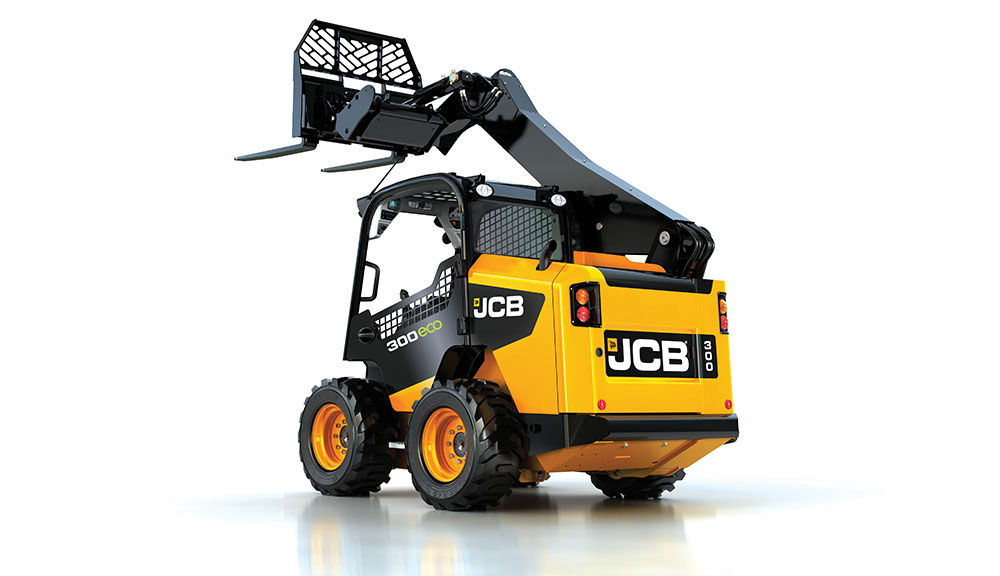
JCB
JCB 300
$67,000
- Engine
- 74 hp
- Aux flow
- 23.8 GPM
- Weight
- 9,288 lbs
The JCB 300 is the biggest wheeled skid steer in JCB's lineup - a large-platform vertical-lift machine with a 3,186 lb rated capacity built around the single-arm PowerBoom and side-entry door. The 74 hp EcoMAX diesel runs without a DPF or DEF, and two-speed travel tops 12 mph for fast work across big sites and farmyards.
Full sheet & owner reports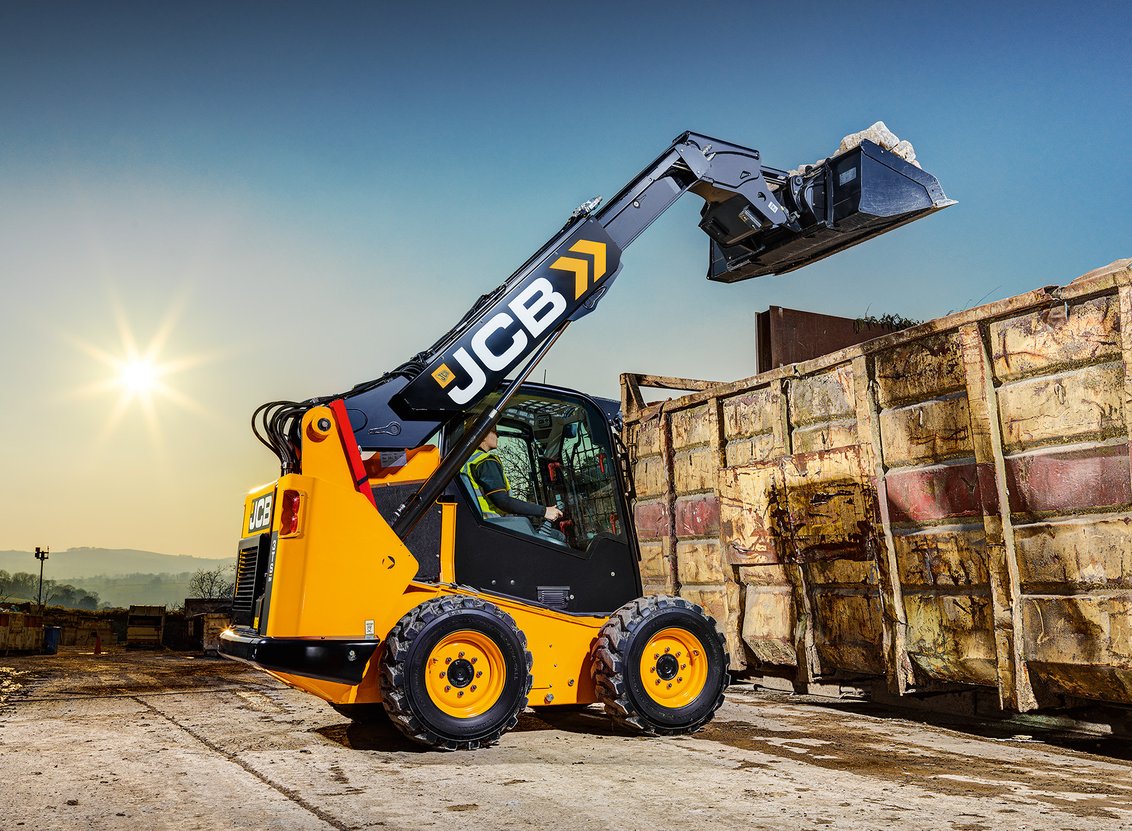
$79,590
- Engine
- 74 hp
- Aux flow
- 24 GPM
- Weight
- 9,859 lbs
Wheeled version of the Teleskid, the JCB 3TS-8W is the only skid steer on the market with a telescopic boom. It lifts 3,208 lbs to a 13'3" hinge pin, reaches 8 feet forward, and digs 3 feet below grade, all from a 74 hp no-DPF machine with JCB's single-arm PowerBoom and side-door entry.
Full sheet & owner reports