Head to head
John Deere 320 P-Tier against John Deere 318 P-Tier
The John Deere 318 P-Tier saves $3,558; the John Deere 320 P-Tier carries 245 lb more once both are rated the same way; the John Deere 320 P-Tier moves 4.0 GPM more through the auxiliary circuit.
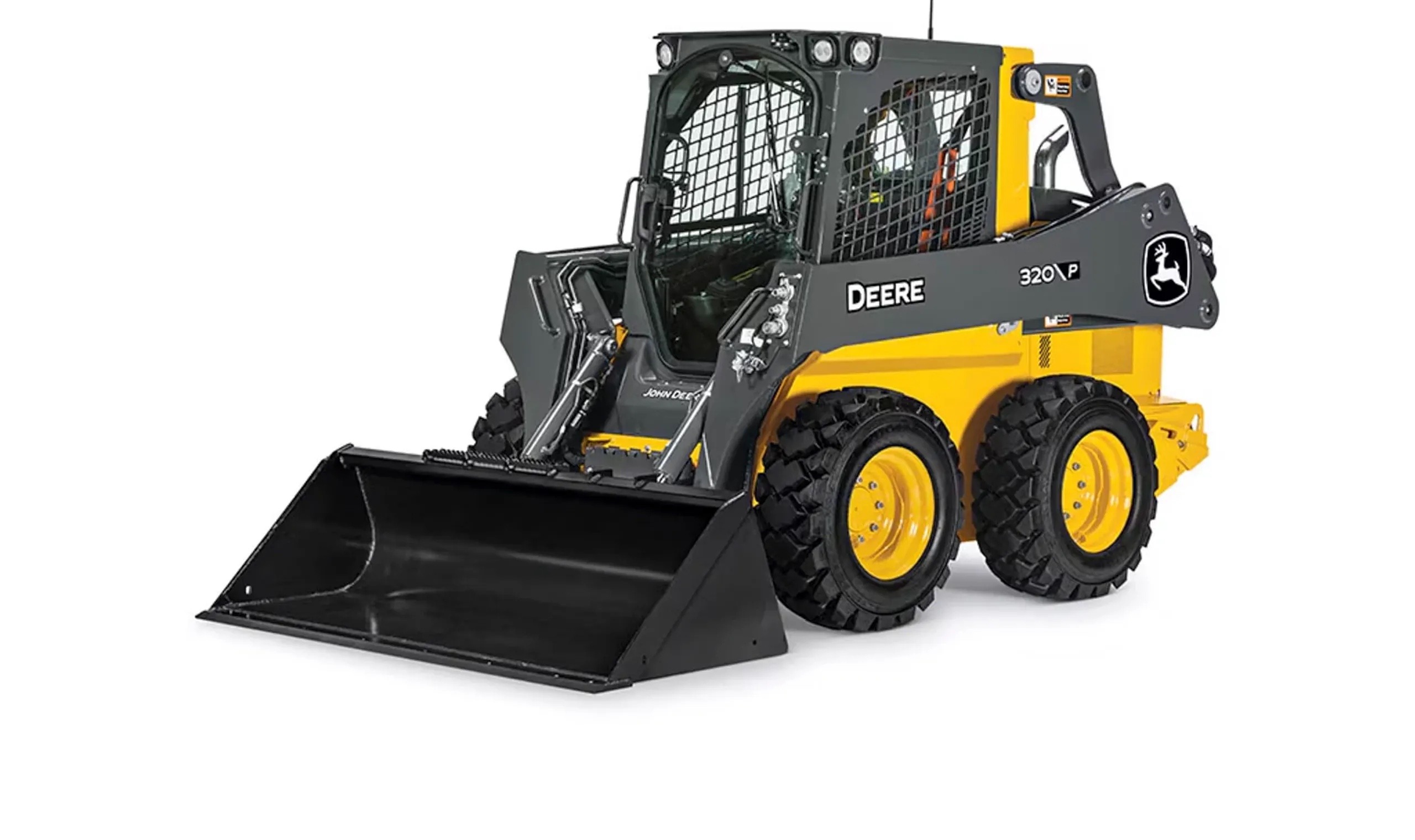
vs
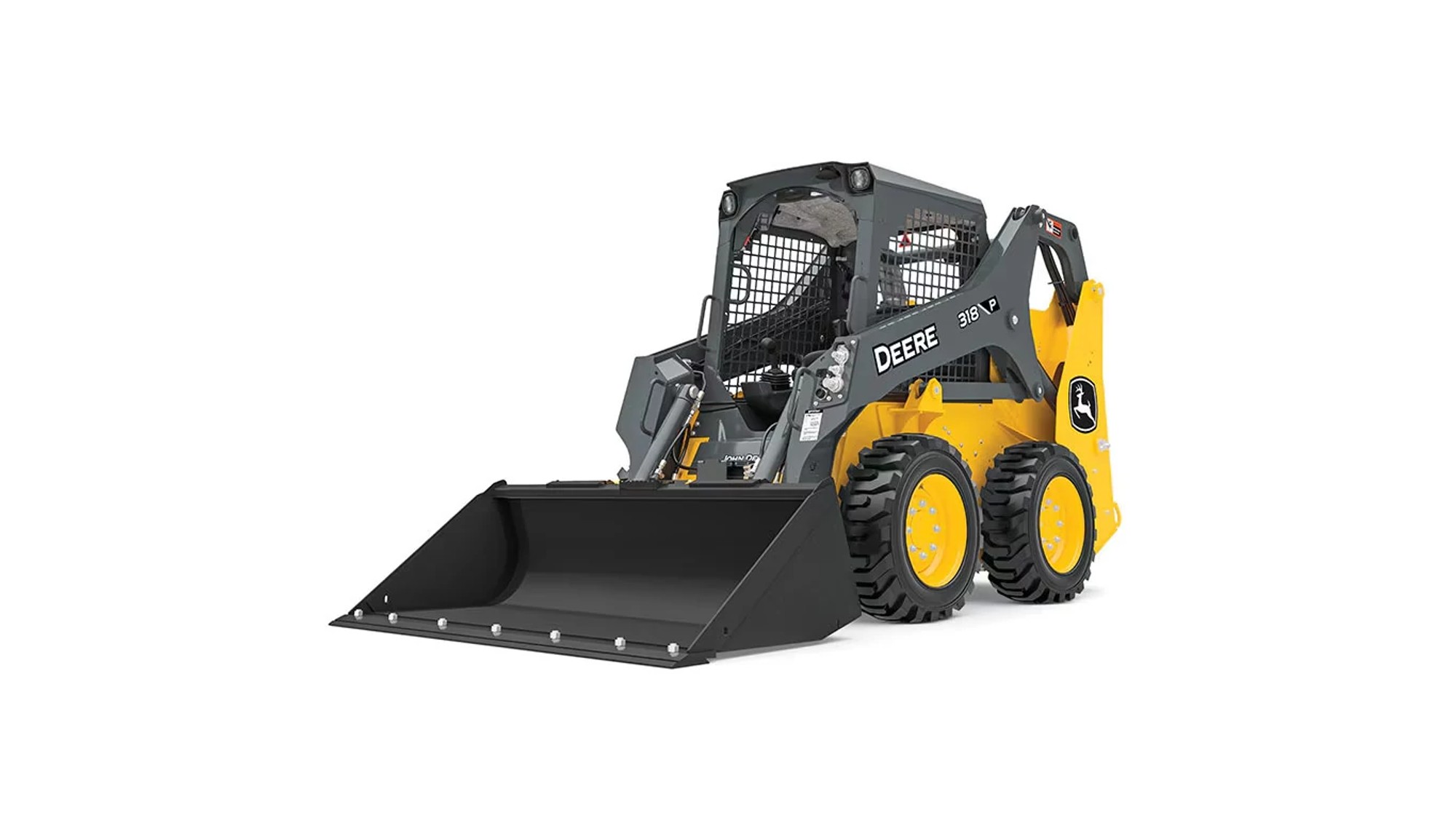
| Spec | John Deere 320 P-Tier | John Deere 318 P-Tier |
|---|---|---|
| Price | $62,900 | $59,342 |
| Rated capacity, as advertised | 2,190 lbs | 1,945 lbs |
| Rated at | 50% of tipping load | 50% of tipping load |
| Tipping load | 4,380 lbs | 3,890 lbs |
| Capacity at its class convention | 2,190 lbs | 1,945 lbs |
| Engine power | 69 hp | 65 hp |
| Engine | Yanmar 4TNV98C | Yanmar 4TNV86CHT |
| Auxiliary flow | 21 GPM | 17 GPM |
| Lift height | 122 in | 120 in |
| Operating weight | 7,150 lbs | 6,542 lbs |
| Lift path | Vertical Lift | Vertical Lift |
| Rubber tracks | No | No |
| High flow available | Yes | No |
| Enclosed cab available | Yes | Yes |
| Two-speed travel available | Yes | Yes |
| Self-levelling available | Yes | Yes |
| A/C and heat available | Yes | Yes |
| Warranty | 2 yr / 2,000 hr | 2 yr / 2,000 hr |
What owners say about each
John Deere 320 P-Tier
- Electrohydraulic ISO joystick controls are standard rather than optional, and each operator can save custom response settings - a genuine step up from the hand-and-foot or optional-EH setup on the old 320G.
- The vertical-lift boom reaches a 122-inch hinge pin height, so it clears tandem-axle dump truck sideboards and stacks pallets two-high without the awkward arc of a radial machine.
- The new optional 30 GPM high-flow package lets a mid-frame wheeled Deere run cold planers and heavier augers that previously forced buyers up to the large-frame 330.
- Standard two-speed transmission tops out at 11.1 mph, so ground-to-ground moves across big sites don't eat the day the way single-speed compacts do.
- The naturally aspirated 3.3L Yanmar with no DPF-regen drama on the base engine is a known quantity from years of 320G service, and parts are stocked at nearly every Deere dealer.
- The 2,190 lb rated capacity is identical to the 2018-era 320G, so owners hoping the new generation would lift more will be disappointed - the gains are in controls and options, not muscle.
- At 69 hp gross the base engine is naturally aspirated, and operators running hungry attachments at altitude will want the optional turbo, which adds cost.
- Pricing moved up meaningfully from the 320G, and a well-optioned unit with high-flow, ride control, and camera pushes toward the mid-$60k range.
- The machine launched in mid-2026, so there is no long-term reliability record and early-production software quirks are still a risk.
- Hydraulic self-leveling remains an option rather than standard, which stings when several competitors include it at this price point.
- The 21 GPM standard flow trails the Bobcat S66's and Cat 250's standard output, so attachment-heavy buyers effectively need the high-flow option.
- Wheeled machines this size still struggle in mud and on slopes where a comparable compact track loader keeps working, and Deere's mid-frame CTL alternative costs thousands more.
John Deere 318 P-Tier
- At around 6,500 lbs it still tows behind a well-equipped half-ton pickup, and factory tie-down points make securing it a two-minute job.
- Under 63 inches wide with the standard tires, it fits through gates and between houses where mid-frame machines simply cannot go.
- The 65 hp turbo Yanmar hits Tier 4 Final without DEF, keeping fluids simple for owners who run the machine intermittently.
- The P-Tier cab is noticeably roomier and better sealed than the old 318G's, and the optional A/C package actually keeps up in summer.
- Optional counterweights raise rated capacity to 2,095 lbs, letting a small-frame machine handle a full pallet of sod or seed.
- No high-flow hydraulic option exists - 17 GPM caps the attachment list and rules out mulchers, cold planers, and big snowblowers.
- The base 1,945 lb rated capacity needs the optional counterweight package to safely handle heavier pallets, an extra cost the spec sheet glosses over.
- A cab machine with A/C, two-speed, and counterweights prices close to mid-frame territory where the 320 P-Tier offers much more machine.
- The vertical-lift linkage adds pivot points and grease zerks that the simpler radial 316 P-Tier does not have to maintain.
- Wheeled small-frames lose traction quickly in mud and on slopes, and buyers in wet climates increasingly cross-shop the 317 P-Tier CTL instead.
- Single-speed travel is the base configuration, so budget builds crawl between work areas on larger properties.