John Deere
John Deere 325 P-Tier

The bright segment is what John Deere 325 P-Tier is rated to carry; the grey run past it is the rest of its tipping load. Bar length is tipping load drawn to the same scale on every machine on the site, so a short bar is a smaller machine and not a conservative rating.
The 325G was Deere's best-selling mid-frame compact track loader, and the 325 P-Tier replaced it while keeping the 74 hp DEF-free Yanmar and 2,590 lb rated capacity, adding a roomier sealed cab, standard EH ISO joysticks, and optional high-flow hydraulics. It stays under the 75 hp Tier 4 threshold that avoids DEF, and the vertical lift path with a 10.5-foot hinge pin height loads tandem dump trucks cleanly - the all-around configuration that made the 325G a landscaper and rental favorite.
Suits: Do-everything mid-size Deere CTL with modern cab comfort and no DEF Its vertical lift path reaches highest at full extension, for loading high-sided trucks and stacking.
Lifting and reach
- Rated operating capacityTrack loader rating convention
- 2,590 lbs
- Tipping load
- 7,400 lbs
- Lift height to hinge pin
- 126 in
- Lift path
- Vertical Lift
- Operating weight
- 9,500 lbs
Power and hydraulics
- Engine power
- 74 hp
- Engine
- Yanmar
- Auxiliary flowStandard circuit
- 21 GPM
- Flow type
- Standard
- Warranty
- 2 yr / 2,000 hr
Fitted or available
What this machine can be ordered with. Some of these are standard and some cost extra, and which is which moves between trim levels, so check them against the quote rather than against this list.
What owners report
Summarised from the sources listed below. Nothing here was tested by us.
Mid-frame is where most track loaders are actually bought, and this is the one Deere sells most of. Rated 2,590 lb on the 35 percent basis tracked machines use, with 74 hp and a 7,400 lb tipping load, it is sized to do commercial landscaping, hardscape, farm and feedlot work, snow contracts and general site prep while still trailering behind a heavy-duty pickup. Owners of the 325G describe it as the machine that is big enough for the work without being big enough to become a logistics problem, and that balance is the whole point of the frame.
The strengths are lift and controls; the weaknesses are ride and flow. It picks up more than anything else with 74 hp on the tag, the joysticks are the class benchmark for smoothness once dialled in, and the cooling package copes with sustained load provided the engine bay actually gets cleaned — on mulching or brush work that is a daily job, not a weekly one. What owners spend money on is the undercarriage, with tracks wearing meaningfully by 1,500 to 2,000 hours in hard use, and past 2,500 hours the hydraulic leaks at couplers and seals become the recurring item. Nothing in the reported failure history is a platform killer; it is a machine that rewards maintenance discipline and punishes neglect through the fuel and air filters first.
Landscape, hardscape, farm and snow work that genuinely lives around 2,500 lb, done by someone who values trailerability, is the right use of it. Cross-shop it honestly: Kubota's SVL75-3 gives up capacity but offers a more refined cab and standard hydraulic coupler integration, Bobcat's T76 lifts more and rides far better, and Cat's 279D3 moves more oil on high flow. One thing worth knowing before you commit is that Deere has no radial-lift alternative to offer you at this size — everything in the mid and large frame is vertical lift, so if you want radial geometry for digging and backdragging below grade you have to leave the brand entirely and look at something like a Takeuchi. Before signing, check track lug height and roller condition, test the auxiliary circuit under load, decide on high flow at order time because it is not a sensible retrofit, and be realistic about whether you need it.
What owners like
- It outlifts every direct rival in the strict 74-horsepower class. The 2,590 lb rated capacity carried over from the 325G stands against 2,300 lb for Kubota's SVL75-3 and Bobcat's T64, and it is enough to pick up a standard pallet of pavers at roughly 2,200 lb without counterweight games.
- Vertical lift to a 126-inch hinge pin is the reason this size sells — it clears high-sided dump trucks, feed mixers and hoppers, which is exactly the job a mid-frame track loader gets bought to do.
- At 9,500 lb it is genuinely lighter than the machines it competes with, against 10,250 lb for a Bobcat T76 and 10,668 lb for a Cat 279D3. That difference is what keeps it behind a 3/4-ton truck instead of forcing a bigger tow vehicle.
- Operators consistently rate the electrohydraulic joysticks the smoothest and most predictable in the class, and the response is adjustable, so a machine shared between a veteran and a green operator can be dialled to suit whoever is in the seat.
- Deere holds this engine at 74 hp, which is where the entire 74-horsepower class deliberately sits — one step below the power band that forces a more elaborate exhaust aftertreatment package. It is a simpler machine to own than the 98-horsepower frames above it.
- The 325G it replaces was the best-selling Deere track loader in North America, which means parts availability, dealer familiarity and a deep used-attachment market. That is worth real money when a machine is down on a Friday.
- Optional differential steering tightens it up noticeably on cramped residential and commercial lots, where a mid-frame machine otherwise has to make three moves to do one.
What owners complain about
- High flow is optional and it is not generous when you get it. The 21 GPM standard circuit runs augers, hammers, trenchers and brooms fine, but the predecessor's high-flow package delivered about 27 GPM against 30.5 on a Cat 279D3 — so on flow-hungry attachments this is the machine that trails, even fully optioned.
- Undercarriage is what this machine actually costs. Owners of the outgoing version reported meaningful track wear by 1,500 to 2,000 hours in heavy use, with replacement sets running roughly CAD $4,500 to $7,000 installed before rollers and idlers.
- There is no torsion suspension. Bobcat's 5-Link machines remain the ride benchmark and Deere's rigid roller frame cannot match them, so loaded travel across rough ground is rougher and the bucket holds less.
- Past roughly 2,500 hours, leaks at couplers, seals and hose connections become the most-reported maintenance item on this family, with ordinary electrical wear — corroded terminals, intermittent starter solenoids, parking brake sensor faults — showing up past 2,000 hours.
- Operators moving from mechanical controls repeatedly describe the electrohydraulic joysticks as touchy until they are calibrated and the performance package is set up. It is a training and setup issue rather than a defect, but it is a real first-week experience and Kubota's cab is widely felt to be the more refined place to spend the day.
Drawn from aglist.ca, blog.machinefinder.com, reynoldsfarmequipment.com.
What buyers ask
Should I get the 325 or step down to the 317 P-Tier?
Do I need the high-flow hydraulics?
How long do the tracks last and what do they cost?
Why does its rated capacity look lower than a Deere wheeled skid steer at a similar price?
Can I tow it with a 3/4-ton pickup?
Is it any good in mulching and brush work?
Put the John Deere 325 P-Tier against
Machines in the same range
The rest of the John Deere line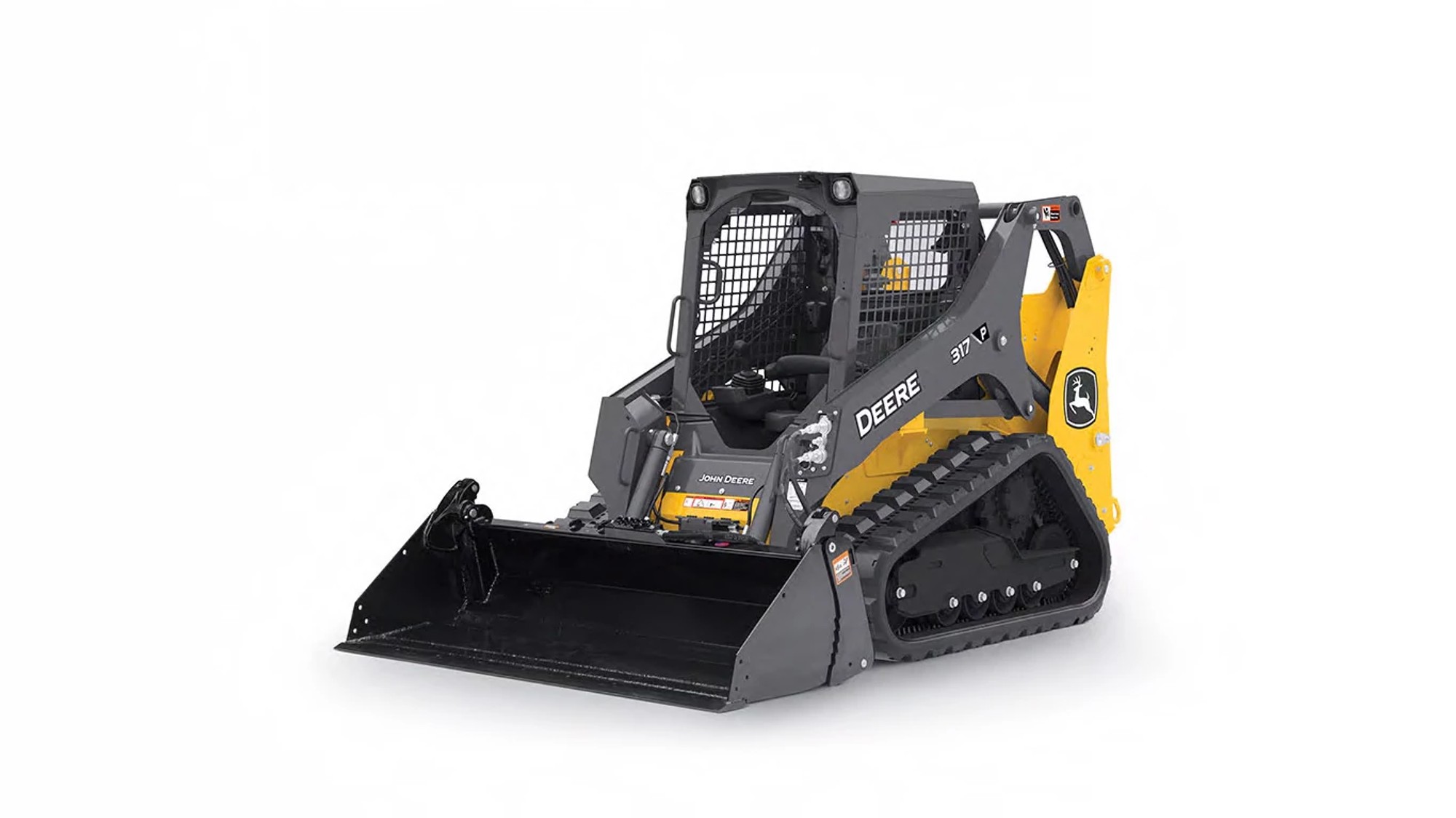
John Deere
John Deere 317 P-Tier
$70,697
- Engine
- 65 hp
- Aux flow
- 17 GPM
- Weight
- 8,423 lbs
No compact track loader in Deere's line is smaller than the 317 P-Tier, which replaced the 317G as the small-frame vertical-lift entry point to the CTL line. At roughly 8,400 lbs it still tows behind a standard pickup, while the P-Tier update brings a roomier sealed cab, standard EH ISO joystick controls, and options like ride control and a rearview camera. The 65 hp turbo Yanmar meets Tier 4 Final without DEF, and the vertical lift path with 2,125 lb rated capacity handles pallets and truck loading that radial small-frames struggle with.
Full sheet & owner reports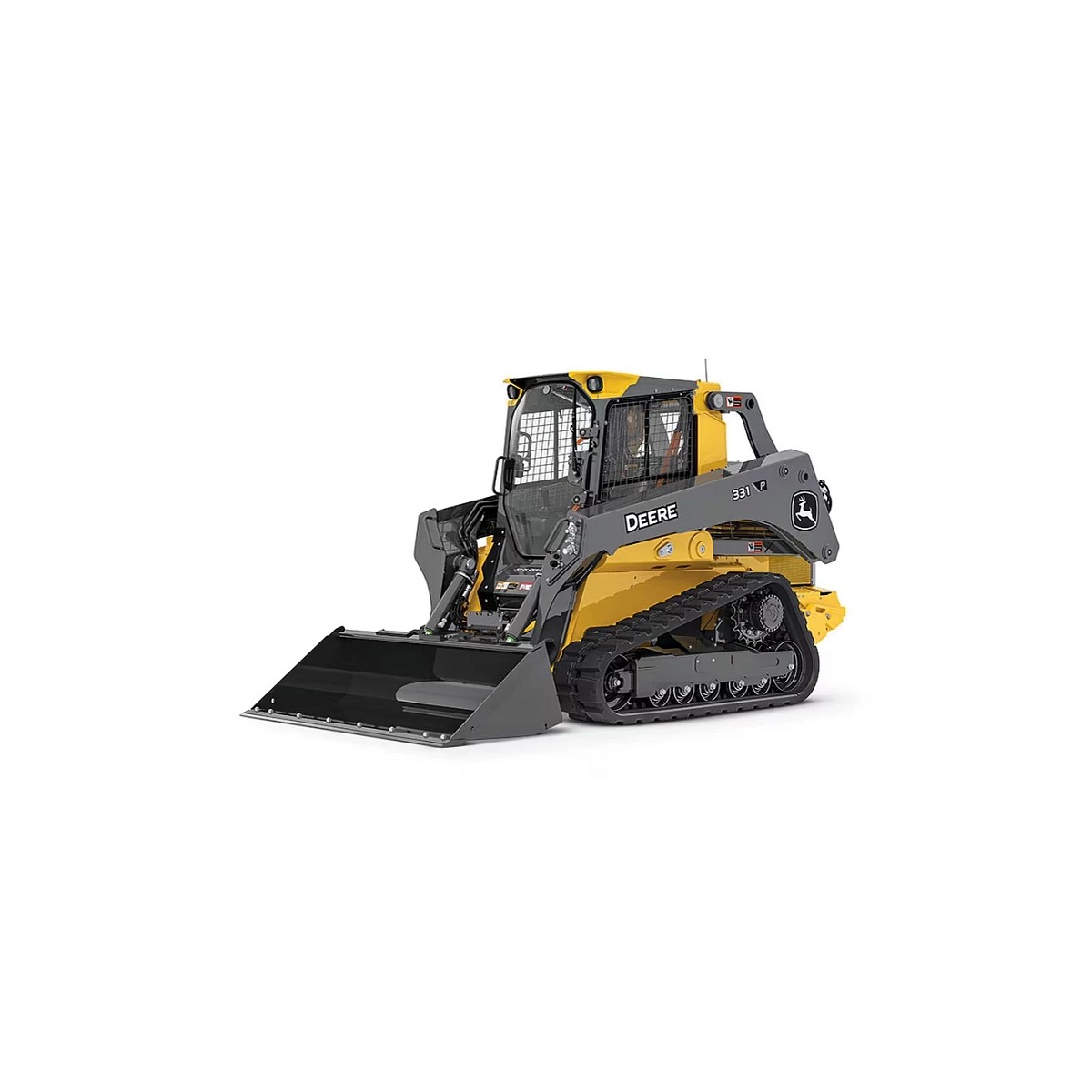
John Deere
John Deere 331 P-Tier
$94,809
- Engine
- 98 hp
- Aux flow
- 25 GPM
- Weight
- 11,914 lbs
Deere's new CTL lineup has its volume workhorse in the 331 P-Tier, the large-frame machine that replaced the 331G in mid-2024. It pairs a 98 hp turbo Yanmar with a 3,150 lb rated operating capacity (35% of a 9,000 lb tipping load) and Deere's patented vertical-lift boom, then adds a one-piece pressurized cab, EH joystick controls, 132-inch hinge pin height, and optional 39 GPM high-flow hydraulics.
Full sheet & owner reports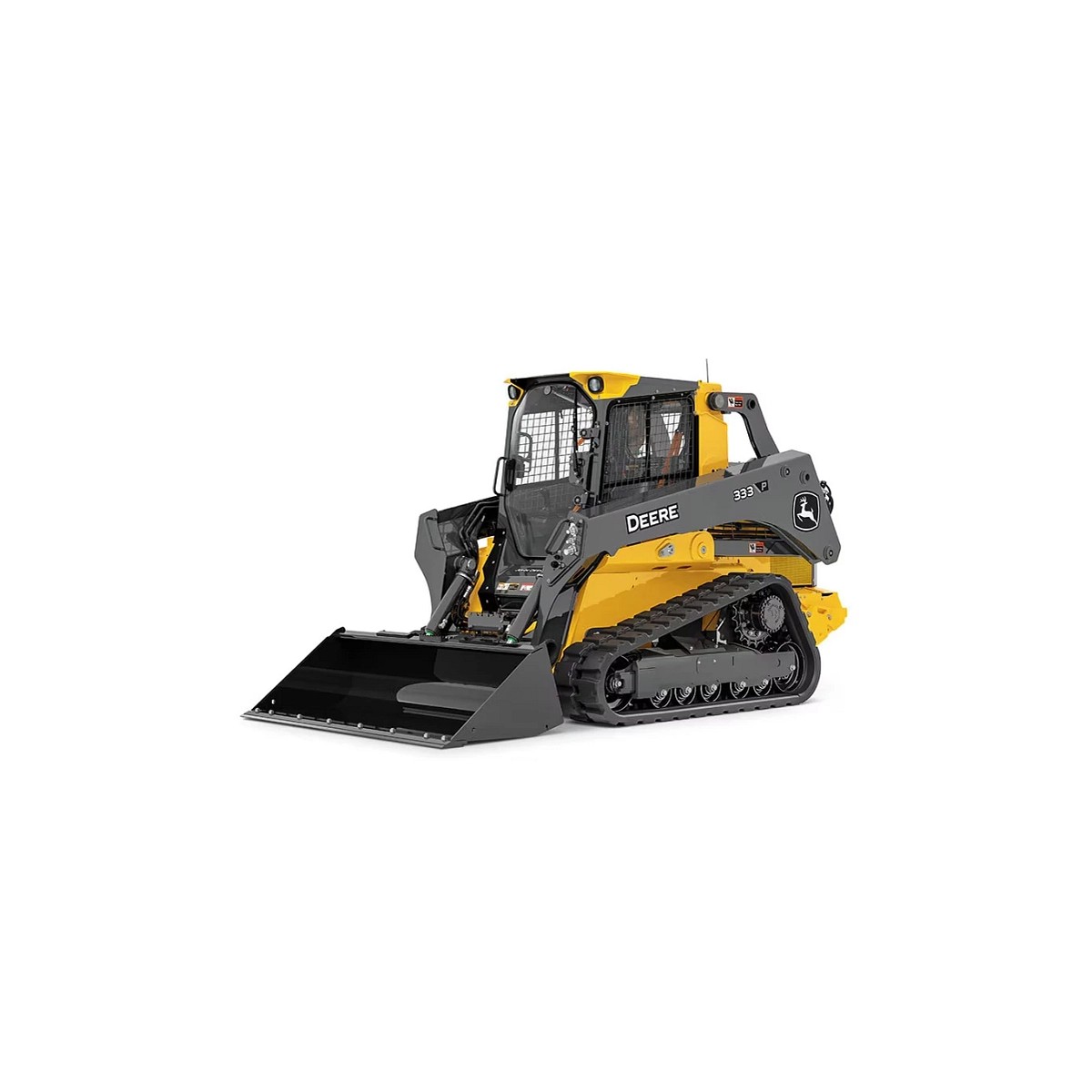
John Deere
John Deere 333 P-Tier
$114,464
- Engine
- 108 hp
- Aux flow
- 25 GPM
- Weight
- 12,183 lbs
An 8% power bump to 108.5 hp, a 3,850 lb rated operating capacity against an 11,000 lb tipping load, and an optional 44 GPM high-flow system separate the 333 P-Tier from the popular 333G it replaced in mid-2024. It's also Deere's grade-control CTL - available SmartGrade Ready with 2D or full 3D SmartGrade with Topcon - wrapped in the new one-piece pressurized P-Tier cab with touchscreen display and EH controls.
Full sheet & owner reports