John Deere
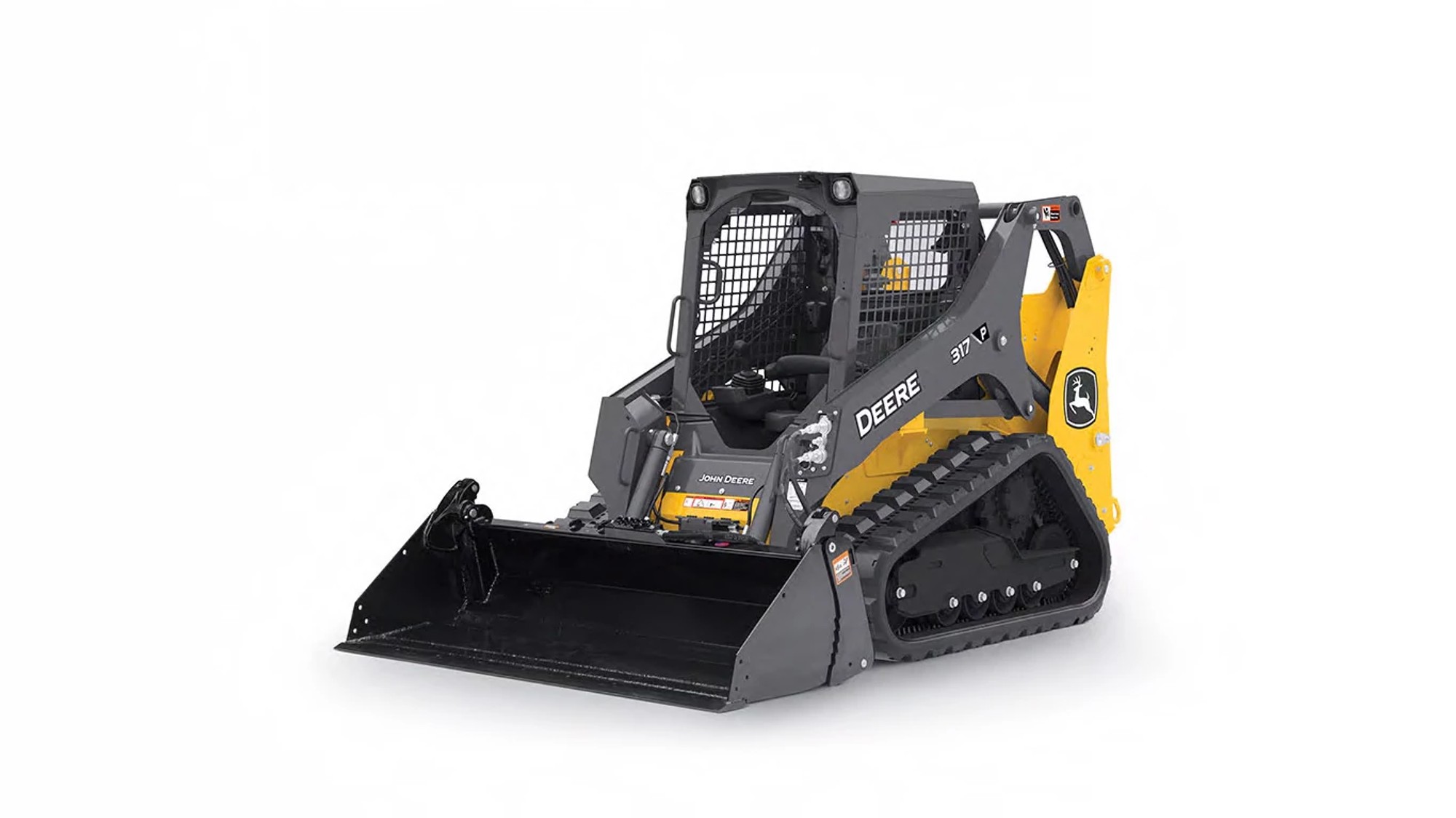
John Deere 317 P-Tier
The bright segment is what John Deere 317 P-Tier is rated to carry; the grey run past it is the rest of its tipping load. Bar length is tipping load drawn to the same scale on every machine on the site, so a short bar is a smaller machine and not a conservative rating.
No compact track loader in Deere's line is smaller than the 317 P-Tier, which replaced the 317G as the small-frame vertical-lift entry point to the CTL line. At roughly 8,400 lbs it still tows behind a standard pickup, while the P-Tier update brings a roomier sealed cab, standard EH ISO joystick controls, and options like ride control and a rearview camera. The 65 hp turbo Yanmar meets Tier 4 Final without DEF, and the vertical lift path with 2,125 lb rated capacity handles pallets and truck loading that radial small-frames struggle with.
Suits: Towable small-frame CTL with vertical lift, modern cab comfort, and Deere dealer support Its vertical lift path reaches highest at full extension, for loading high-sided trucks and stacking.
Lifting and reach
- Rated operating capacityTrack loader rating convention
- 2,125 lbs
- Tipping load
- 6,070 lbs
- Lift height to hinge pin
- 121 in
- Lift path
- Vertical Lift
- Operating weight
- 8,423 lbs
Power and hydraulics
- Engine power
- 65 hp
- Engine
- Yanmar 4TNV86CHT
- Auxiliary flowStandard circuit
- 17 GPM
- Flow type
- Standard
- Warranty
- 2 yr / 2,000 hr
Fitted or available
What this machine can be ordered with. Some of these are standard and some cost extra, and which is which moves between trim levels, so check them against the quote rather than against this list.
What owners report
Summarised from the sources listed below. Nothing here was tested by us.
Small-frame track loaders are bought for access and transport rather than capability, and this is Deere's entry in that argument. Rated 2,125 lb on the 35 percent tracked basis with 65 hp and a 6,070 lb tipping load, it is aimed at acreage owners, property maintenance crews, light landscapers and farms doing bale work, light grading and snow. What distinguishes it from most of the class is that it is a vertical-lift machine at a size where rivals often are not, so it will genuinely load a truck rather than merely reach the tailgate.
In practice it is a comfortable, forgiving machine with a hard ceiling. The joysticks are the best in the small-frame class by operator consensus, the low ground pressure on wide tracks makes it usable on ground that would stop a wheeled machine, and the redesigned cab is a real improvement in sealing and space over the one it replaces. The ceiling is hydraulic and it is absolute: 17 GPM with no high-flow option means a whole category of attachments is permanently off the table. The ride is the other soft spot, because there is no suspended undercarriage and rivals have one. On cost, the undercarriage dominates, and past 2,000 hours the electrical odds and ends start needing attention.
Light work and a priority on moving the machine easily and not tearing up ground — it is well matched to property work, light landscaping and snow. Do not buy it if there is any chance you will want a mulcher, a planer or a big snow blower, because the answer will always be no and the fix is a different machine. Check it against the wheeled 318 P-Tier too: if you are not working soft ground, wheels cost far less per hour than rubber tracks. Before signing, price a loaded example against a base 325 P-Tier, because the gap is often smaller than buyers expect and the capability difference is not. Inspect track lug height, look for the usual corroded terminals and solenoid behaviour on anything past 2,000 hours, and check the belly and engine bay for packed debris, which tells you how the last owner treated it.
What owners like
- At roughly 8,400 lb it is still a machine one truck and one trailer can move without stepping up to commercial-class towing, which is the single reason most buyers choose this frame over the mid-frame above it.
- Vertical lift with a 2,125 lb rated capacity is genuinely uncommon in the small-frame class, and owners specifically credit it for giving more reach and dump height than the radial-lift machines it competes against — it will clear a dump truck side where a radial machine is still arcing.
- Ground pressure on the wide tracks is around 4.5 psi, among the lowest numbers in the class, which is what lets it work on soft ground, finished lawns and soggy spring fields without leaving a repair job behind it.
- Operators rate the electrohydraulic joysticks the smoothest and most predictable in the small-frame class, and adjustable response is standard here where the previous generation made you pay for it or live with mechanical controls.
- Holding the engine at 65 hp keeps it below the power band that forces the more elaborate exhaust aftertreatment used on the big frames, which suits the part-time and seasonal operator this machine is largely sold to.
What owners complain about
- There is no high-flow option at all, and the 17 GPM standard circuit is at the bottom of the small-frame class. That rules out mulchers, cold planers and stump grinders outright — the predecessor was already described as undersized for forestry mulching or large planers, and here it is not even an option you can buy your way out of.
- It has no torsion suspension, and owners report noticeably more bucket bouncing on rough ground at speed than a Bobcat T64 or Cat 259D3 with their suspended undercarriages. On a long push across broken ground you feel it and you spill more.
- The compact frame debris-loads faster than a larger machine, and owners running mulching, brush or hay work describe a daily engine-bay cleanout as non-negotiable rather than good practice.
- Tracks show meaningful wear by 1,500 to 2,000 hours in heavy use on the outgoing version, with replacement sets around CAD $4,000 to $6,000 installed — a real per-hour cost against the wheeled 318 P-Tier doing similar work.
- Past 2,000 hours the electrical wear items start: corroded battery terminals, intermittent starter solenoid behaviour and parking brake sensor faults were the routine complaints on used examples.
- Rivals outlift it — Kubota's SVL75-3 at 2,300 lb and Bobcat's T64 at 2,170 lb — and a well-optioned example of this machine prices close to a 325 P-Tier that offers substantially more capacity and the high-flow option this one cannot have.
Drawn from aglist.ca, blog.machinefinder.com, brokentractor.com.
What buyers ask
Can it run a forestry mulcher or a cold planer?
How does it compare to the 325 P-Tier, and is the step up worth it?
Is it better than the wheeled 318 P-Tier for my property?
What should I look at on a used one?
Does the ride really matter compared to Bobcat and Cat?
Does Deere offer a radial-lift machine in this size instead?
Put the John Deere 317 P-Tier against
Machines in the same range
The rest of the John Deere line
John Deere
John Deere 325 P-Tier
$76,000
- Engine
- 74 hp
- Aux flow
- 21 GPM
- Weight
- 9,500 lbs
The 325G was Deere's best-selling mid-frame compact track loader, and the 325 P-Tier replaced it while keeping the 74 hp DEF-free Yanmar and 2,590 lb rated capacity, adding a roomier sealed cab, standard EH ISO joysticks, and optional high-flow hydraulics. It stays under the 75 hp Tier 4 threshold that avoids DEF, and the vertical lift path with a 10.5-foot hinge pin height loads tandem dump trucks cleanly - the all-around configuration that made the 325G a landscaper and rental favorite.
Full sheet & owner reports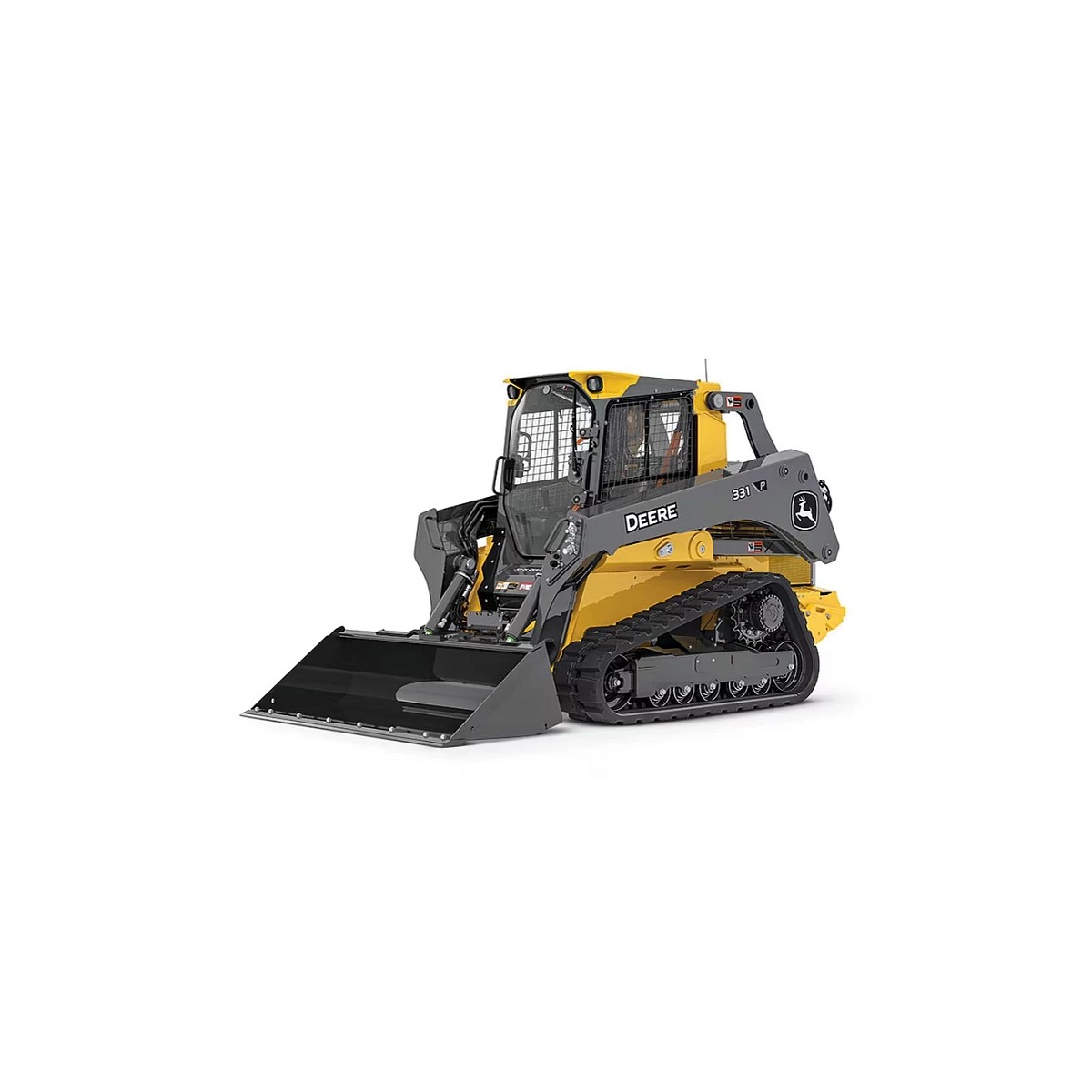
John Deere
John Deere 331 P-Tier
$94,809
- Engine
- 98 hp
- Aux flow
- 25 GPM
- Weight
- 11,914 lbs
Deere's new CTL lineup has its volume workhorse in the 331 P-Tier, the large-frame machine that replaced the 331G in mid-2024. It pairs a 98 hp turbo Yanmar with a 3,150 lb rated operating capacity (35% of a 9,000 lb tipping load) and Deere's patented vertical-lift boom, then adds a one-piece pressurized cab, EH joystick controls, 132-inch hinge pin height, and optional 39 GPM high-flow hydraulics.
Full sheet & owner reports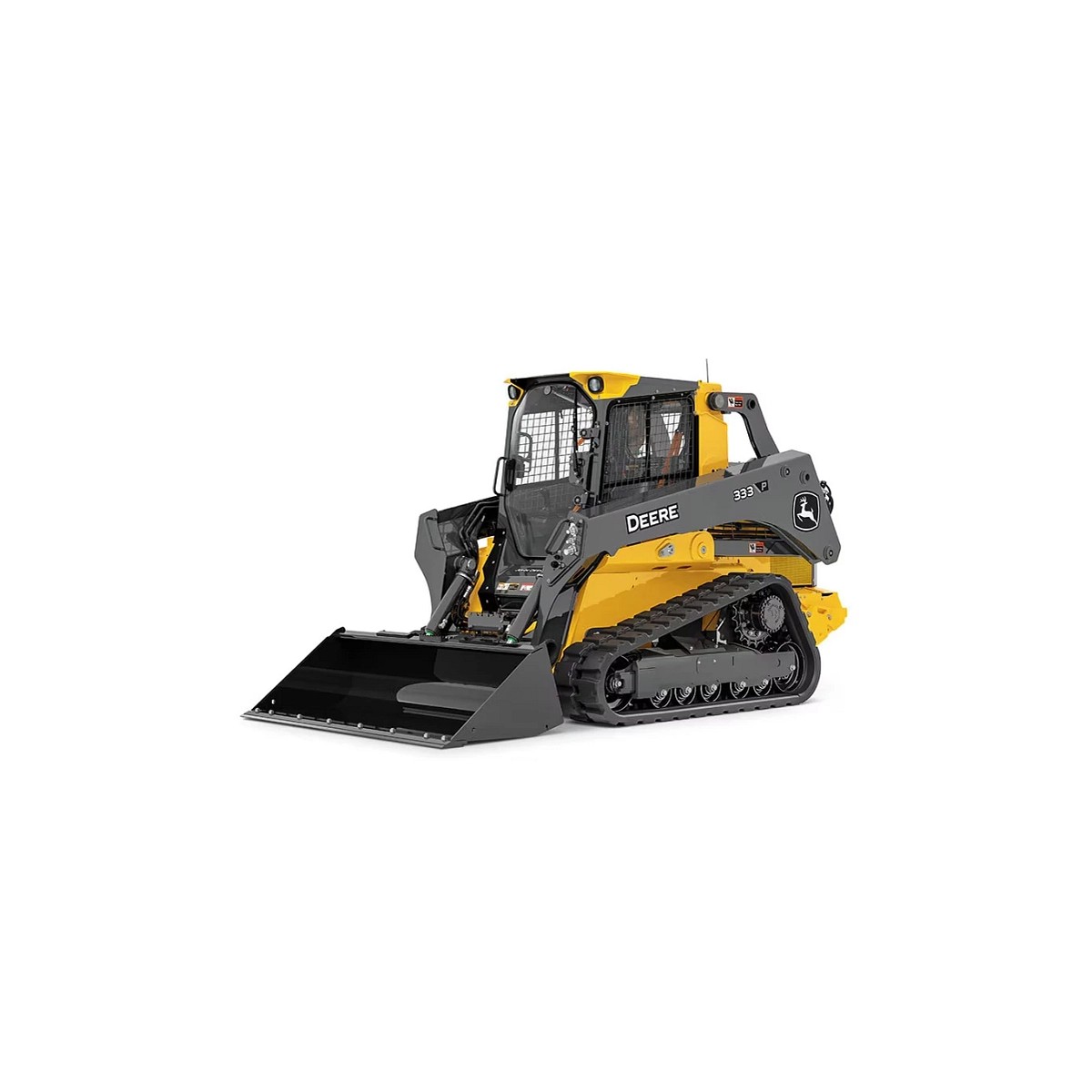
John Deere
John Deere 333 P-Tier
$114,464
- Engine
- 108 hp
- Aux flow
- 25 GPM
- Weight
- 12,183 lbs
An 8% power bump to 108.5 hp, a 3,850 lb rated operating capacity against an 11,000 lb tipping load, and an optional 44 GPM high-flow system separate the 333 P-Tier from the popular 333G it replaced in mid-2024. It's also Deere's grade-control CTL - available SmartGrade Ready with 2D or full 3D SmartGrade with Topcon - wrapped in the new one-piece pressurized P-Tier cab with touchscreen display and EH controls.
Full sheet & owner reports