Caterpillar
Cat 226D3
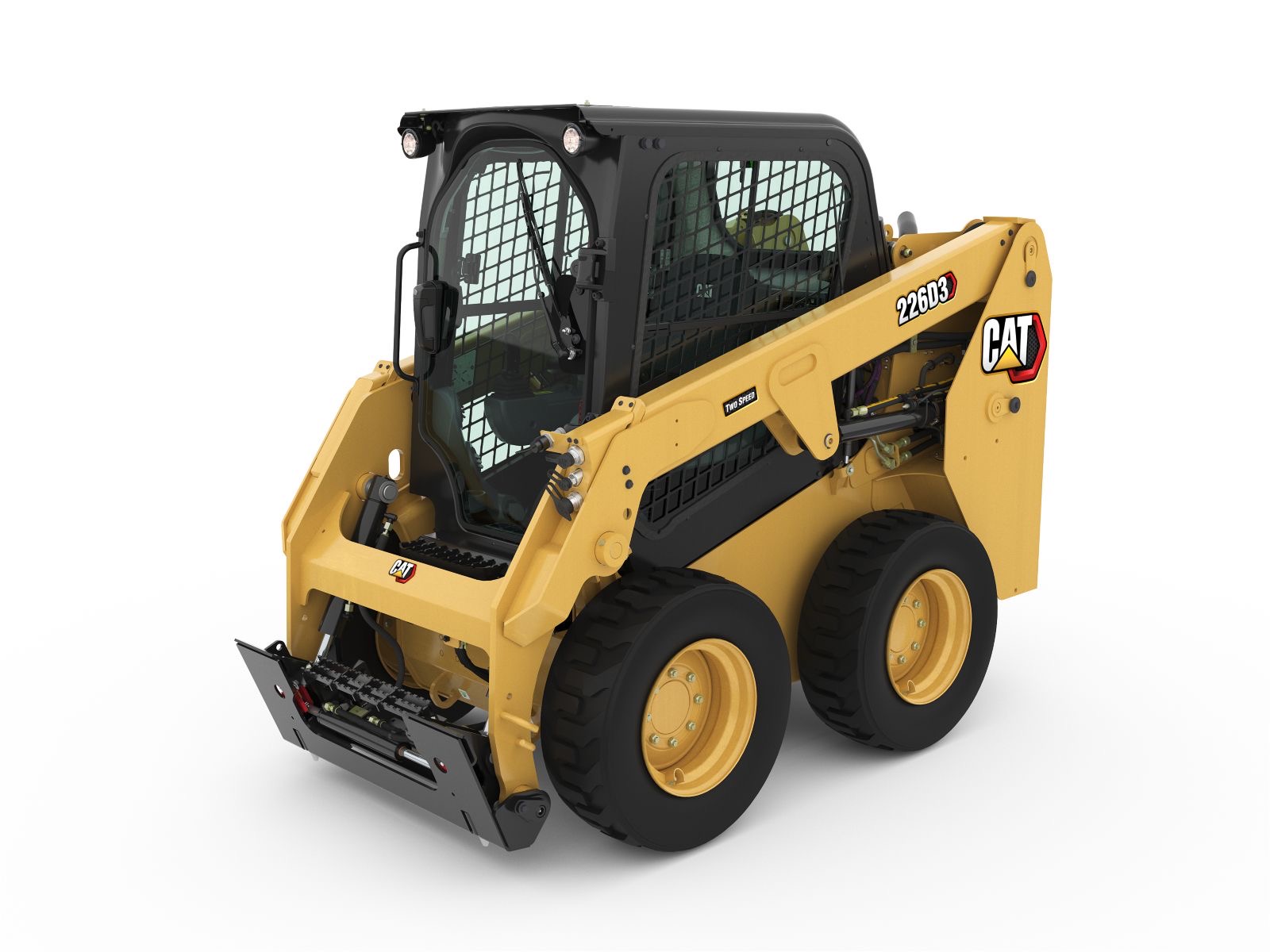
The bright segment is what Cat 226D3 is rated to carry; the grey run past it is the rest of its tipping load. Bar length is tipping load drawn to the same scale on every machine on the site, so a short bar is a smaller machine and not a conservative rating.
Caterpillar's entry-level small-frame radial-lift wheeled skid steer, the 226D3 is a lightweight, agile machine popular with rental fleets, homeowners, and light-duty contractors who value the Cat dealer network.
Suits: Light-duty digging and general property work, and rental-fleet duty Its radial lift path reaches furthest at mid-height, for digging, grading and backfilling.
Lifting and reach
- Rated operating capacityWheeled rating convention
- 1,550 lbs
- Tipping load
- 3,100 lbs
- Lift height to hinge pin
- 116 in
- Lift path
- Radial Lift
- Operating weight
- 5,849 lbs
Power and hydraulics
- Engine power
- 67 hp
- Engine
- Cat C2.2 CRDI
- Auxiliary flowStandard circuit
- 18 GPM
- Flow type
- Standard
- Warranty
- 2 yr / 2,000 hr
Fitted or available
What this machine can be ordered with. Some of these are standard and some cost extra, and which is which moves between trim levels, so check them against the quote rather than against this list.
What owners report
Summarised from the sources listed below. Nothing here was tested by us.
Lightest, cheapest and smallest is an unglamorous specification, and it is exactly why this machine exists. Getting under the weight where a half-ton truck and an ordinary trailer can move it changes what a one-machine operator can take on, and at a dealer MSRP near $47,500 it is the least expensive way into a new Cat loader. It is also worth correcting a common misreading: the next-generation Cat skid steers start at the 250 and replaced machines further up the range, so nothing superseded this one. Cat still sells it new alongside them.
The honest caveat is that independent owner reporting on the D3 version is close to nonexistent — it sells to homeowners, small farms and rental fleets rather than to people who write up their machines — so most long-term evidence comes from the older 226 and 226B3 that share the frame, engine and drive layout. From that generation the useful signals are consistent: usable lift around 1,800 lb and short for big bales, drive motors as the expensive wear item at roughly 4,000 to 6,000 hours, and a used market where buyers get cautious past 2,000 hours. On the current machine, check the option list carefully — two-speed and the sealed pressurized cab are both options, and the 26 GPM high-flow package is extra over the standard 18 GPM.
Where the constraint is transport and access rather than production, this is the right buy: light enough to move behind a normal truck, cheap enough to justify on part-time use, small enough for interior work. It is the wrong buy for anyone handling heavy pallets, working soft ground regularly, or hoping to run demanding attachments. If ground conditions are the issue rather than lift, look at the tracked 239D3 instead and accept that you are trading cheap tires for an undercarriage bill. Before signing, price two-speed, the cab and high flow as a package, because a base machine and a well-specified one are different propositions at meaningfully different money.
What owners like
- At 5,849 lb it is the lightest skid steer Cat sells and one of the lightest on the market, so it genuinely tows behind a half-ton truck on a 10,000 lb trailer — for homeowners, small farms and one-machine operators that single fact is often the whole decision.
- Nothing next-generation sits below it, so it is still a current new model rather than a run-out, and at a dealer MSRP around $47,500 it is the cheapest way into a new Cat loader.
- Radial geometry gives strong force low in the arc, and the rule experienced buyers apply holds up at this size: radial when most of the work happens below eye level — digging, grading, backdragging — vertical when it happens above.
- The C2.2 sits under the 75 hp threshold so there is no DEF and no SCR, and a small engine on a light machine is genuinely frugal — the compact footprint and tight turning also put it into interior demolition and tight residential lots where nothing bigger fits.
What owners complain about
- 1,550 lb rated off a 3,100 lb tipping load is genuinely small — 1,650 lb with the optional counterweight — and owners of the mechanically similar older 226 put usable lift around 1,800 lb and found it short for large hay bales. If you handle pallets of block or big bales, this is the machine you will outgrow.
- Two-speed travel is not standard, it is an option, and the gap is real: 7.6 mph in single speed against 11.1 mph with two-speed. A base machine is slow between working areas on any site bigger than a yard.
- Standard auxiliary flow is 18 GPM, and the 26 GPM high-flow package is extra — so the attachment list you have in mind needs pricing before you sign rather than after.
- Radial lift costs you reach and dump height at the top of the arc, which makes loading over high sides awkward — the standard complaint about radial machines, and it applies here.
- The sealed, pressurized cab that gets quoted as a Cat strength is an option on the D3 series, not standard equipment, so it can be quietly absent from a keenly-priced quote.
- Drive motors are the known big-ticket wear item on the wheeled machines, rebuilt somewhere around 4,000 to 6,000 hours in commercial service, and experienced buyers say they would not take a used one much past 2,000 hours without factoring that in.
- Wheels cannot follow a track loader onto soft or wet ground, and given the choice operators take the tracked machine — one fleet reports its single wheeled unit mostly sits in the yard because nobody wants it. The counterweight is running cost: a 10,000-hour wheeled machine on its seventh set of tires has still spent less than an undercarriage.
Drawn from hawthornecat.com, wagnerequipment.com, cattletoday.com, arboristsite.com, compact.miltoncat.com, conequip.com, constructionequipmentguide.com.
What buyers ask
Is the Cat 226D3 still made, or did the next-generation loaders replace it?
Does the 226D3 have two-speed travel?
How much can it really lift?
Can I compare its 1,550 lb rating to a compact track loader's number?
What wears out on it, and what should I avoid on the used market?
Should I buy the wheeled 226D3 or a small tracked machine?
Put the Cat 226D3 against
Machines in the same range
The rest of the Caterpillar line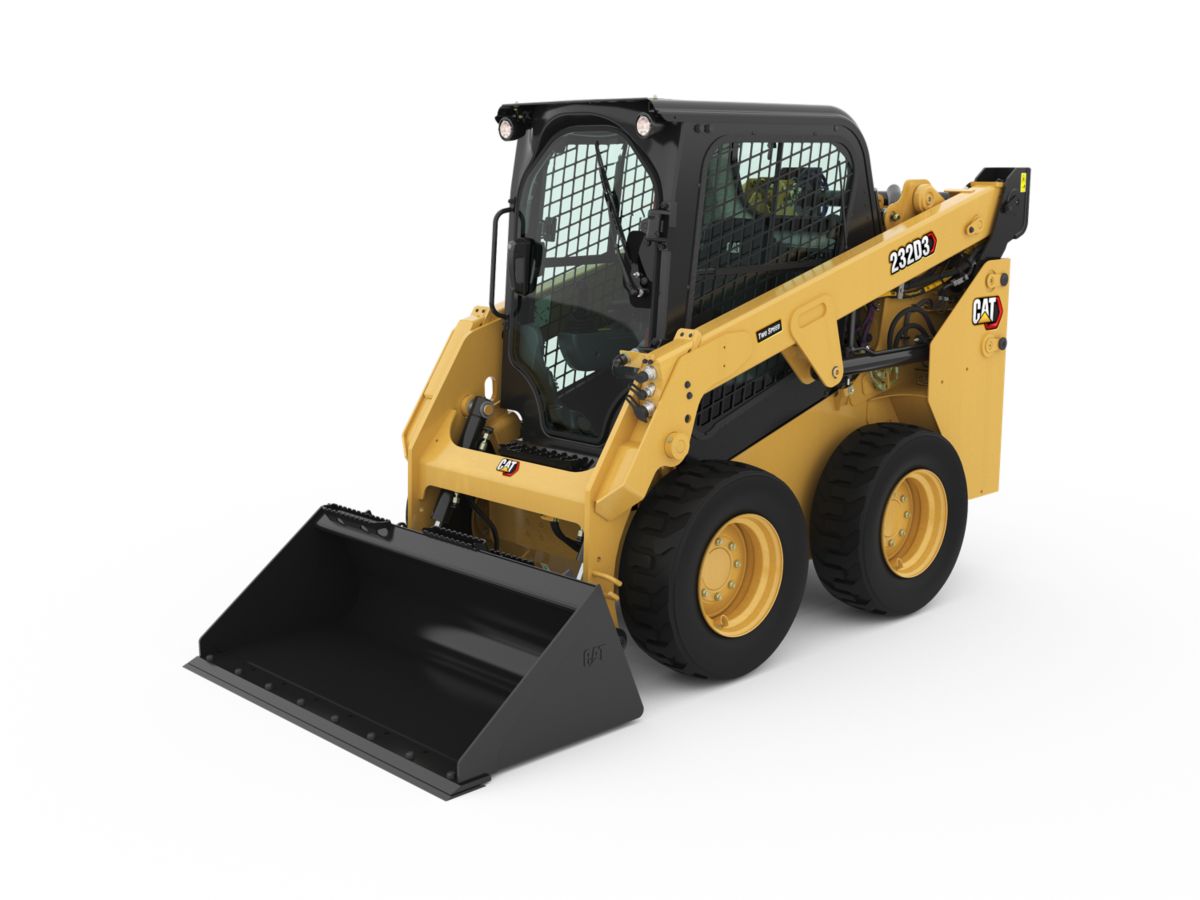
Caterpillar
Cat 232D3
$49,910
- Engine
- 67 hp
- Aux flow
- 18 GPM
- Weight
- 6,514 lbs
Caterpillar's 232D3 sits one frame step above the 226D3, trading that machine's radial boom for a vertical lift path and 350 lb more rated capacity on the same 67 hp engine. It suits owner-operators who load pallets and trailers more often than they dig, and who want the Cat cab at the bottom of the price list.
Full sheet & owner reports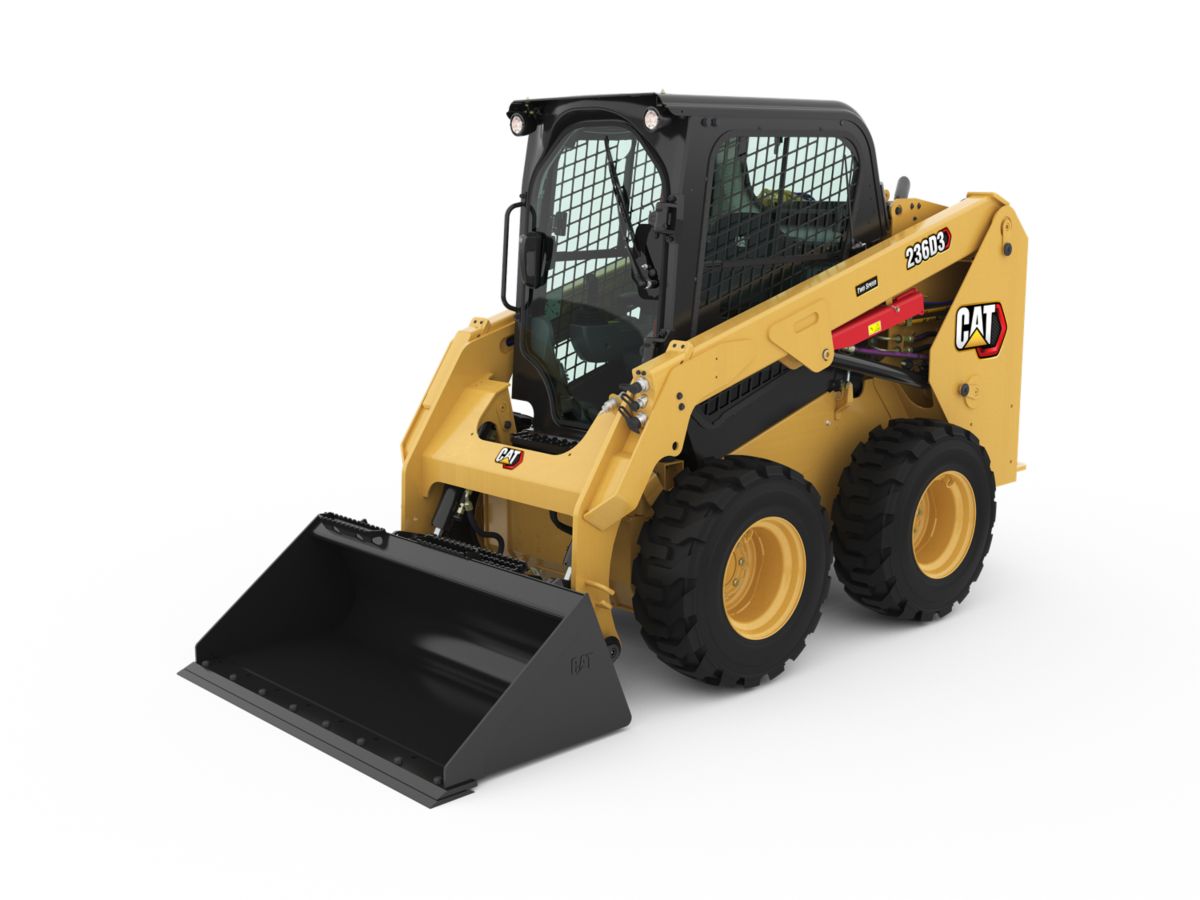
Caterpillar
Cat 236D3
$55,225
- Engine
- 67 hp
- Aux flow
- 20 GPM
- Weight
- 6,567 lbs
Radial lift and a 20 GPM standard circuit make the 236D3 the digging-oriented member of Cat's small-frame D3 trio, with a 122.9-inch pin height that is unusually tall for a radial boom. It fits contractors whose day is trenching, backfilling and grading rather than loading trucks.
Full sheet & owner reports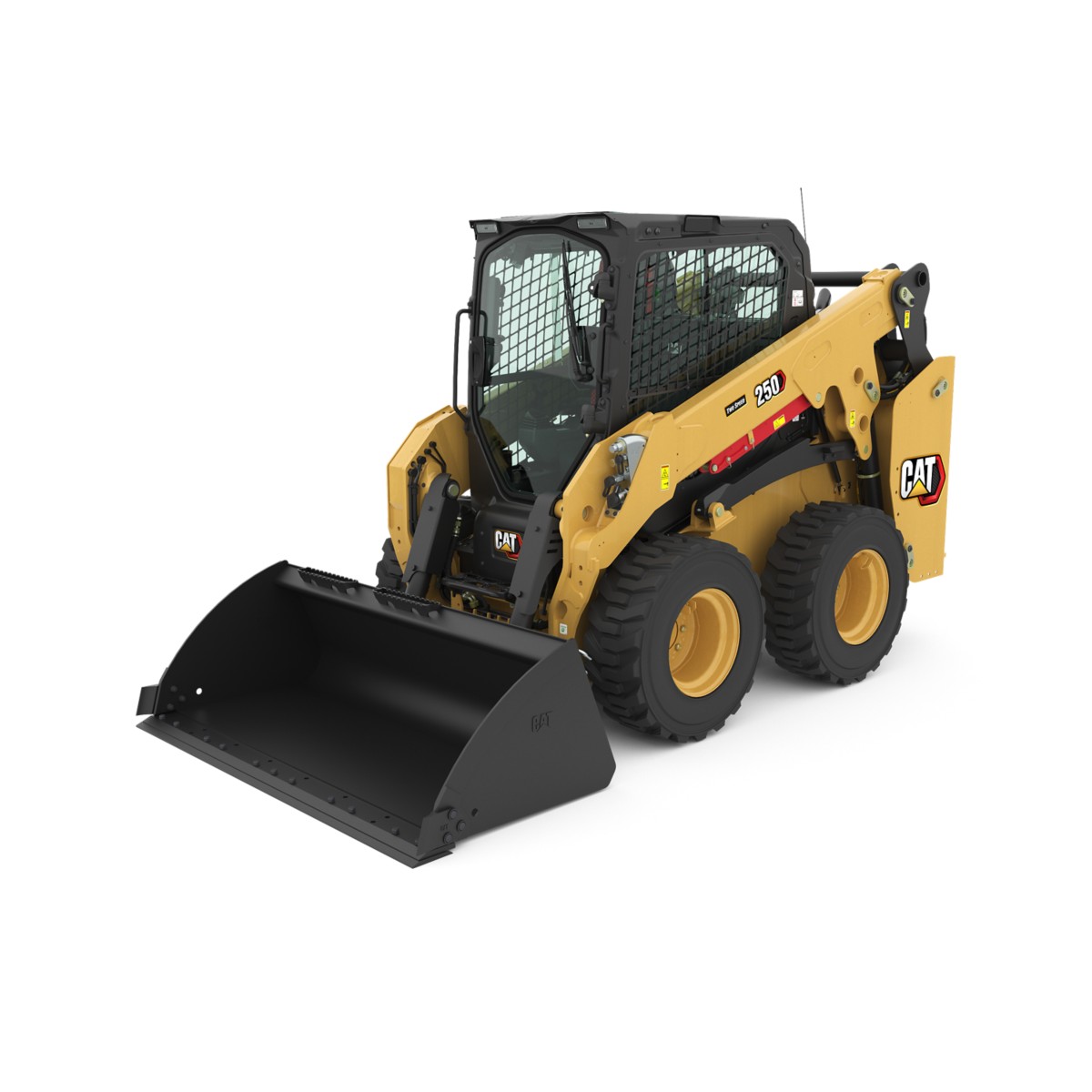
Caterpillar
Cat 250
$60,493
- Engine
- 74 hp
- Aux flow
- 20 GPM
- Weight
- 7,829 lbs
Launched in late 2024 alongside the 260 and 270, the Cat 250 is the entry point to Caterpillar's next-generation wheeled skid steer line. The C2.8T engine delivers 74 hp with peak power held across a wide RPM range, and its 124-inch lift height is 3 inches taller than the outgoing D3 machines it supersedes.
Full sheet & owner reports