John Deere
John Deere 335 P-Tier
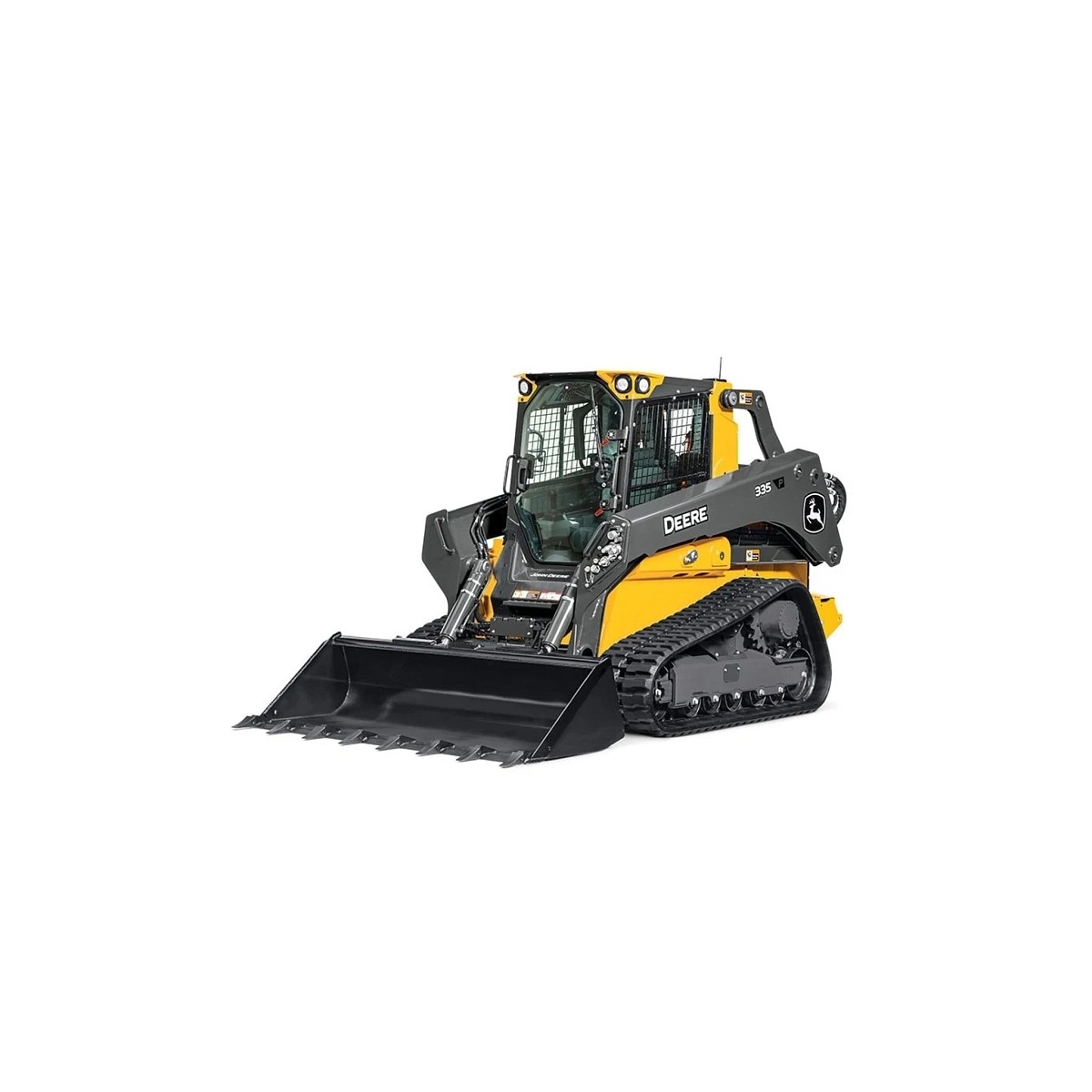
The bright segment is what John Deere 335 P-Tier is rated to carry; the grey run past it is the rest of its tipping load. Bar length is tipping load drawn to the same scale on every machine on the site, so a short bar is a smaller machine and not a conservative rating.
With no G-Series predecessor behind it, the 335 P-Tier arrives as the new flagship of Deere's compact track loader line, built around a 118 hp turbo Yanmar, a 4,025 lb rated operating capacity against an 11,500 lb tipping load, and an optional 44 GPM high-flow system delivering over 100 hydraulic horsepower. Standard Attachment Manager, available SmartGrade with Topcon, and an optional SG96 dozer blade position it as a do-everything production machine at the top of the class.
Suits: Mulching, grading, and heavy attachment work on Deere's biggest, most powerful CTL Its vertical lift path reaches highest at full extension, for loading high-sided trucks and stacking.
Lifting and reach
- Rated operating capacityTrack loader rating convention
- 4,025 lbs
- Tipping load
- 11,500 lbs
- Lift height to hinge pin
- 132 in
- Lift path
- Vertical Lift
- Operating weight
- 12,300 lbs
Power and hydraulics
- Engine power
- 118 hp
- Engine
- Yanmar 4TNV94FHT
- Auxiliary flowStandard circuit
- 25 GPM
- Flow type
- High-Flow
- Warranty
- 2 yr / 2,000 hr
Fitted or available
What this machine can be ordered with. Some of these are standard and some cost extra, and which is which moves between trim levels, so check them against the quote rather than against this list.
What owners report
Summarised from the sources listed below. Nothing here was tested by us.
Sitting at the top of Deere's compact track loader range, this is a machine bought for hydraulic capability rather than for lifting, and the figure that matters is 44 GPM through pressure-compensated load-sensing hydraulics. That is more flow than anything Cat sells in the class, and it is what lets a mulching head, a rotary cutter or a cold planer work at something close to its rated output instead of being starved. The 4,025 lb rated capacity and 118 gross horsepower are the headlines, but the hydraulics are the reason.
In practice it behaves like the large-frame machine it is. The long undercarriage and 12,300 lb bare weight keep it composed craning at height, the base specification is genuinely complete with a heated and ventilated seat, touchscreen and electrohydraulic dual levelling included, and grade control is available either as SmartGrade Ready with 2D slope control or as full SmartGrade. The costs follow the size honestly: undercarriage on the large frame is among the most expensive consumables in the compact category, and at 13,542 lb with a dozer blade fitted, transport stops being casual. Deere's two-year, 2,000-hour warranty matches Cat's and Case's.
Who should buy it is a narrower group than the spec sheet suggests, and there are two serious alternatives to settle first. The 333 P-Tier has the same 44 GPM PCLS hydraulics and the same SmartGrade capability for 175 lb less capacity, which is a hard case to argue past unless you genuinely need the last of the capacity. And at roughly $143,639 list — with optioned units advertised well above that — a compact excavator is a fair question rather than a deflection: if most of the work is trenching, utilities or final-grade accuracy, the excavator digs deeper, rotates fully, disturbs less ground and wears less undercarriage doing it. Buy this machine when the work is high-flow attachments, grading and bulk material handling in volume, and when it will run enough hours to absorb both the price and the depreciation.
What owners like
- Maximum auxiliary flow reaches 44 GPM through pressure-compensated load-sensing hydraulics, which is more hydraulic capability than anything Cat offers in the class — the 265's top High Flow XPS package stops at 34 GPM. For mulching heads, rotary cutters and cold planers that difference is the whole point of the machine.
- 4,025 lb of rated capacity off an 11,500 lb tipping load puts it at the top of the compact class, and because that figure is quoted at the conservative 35 percent basis it stands up in a cross-brand comparison rather than flattering itself.
- It is the largest and most powerful machine in Deere's compact track loader line at 118 hp gross, so buyers are not being sold a mid-frame with a big sticker — there is nothing above it to step to.
- Grade control is a real option rather than a brochure line: it can be bought SmartGrade Ready with 2D Slope Control or fully equipped with SmartGrade, which lets one machine cut pads in the morning and run forks or a mulcher in the afternoon.
- The base package is unusually complete for a machine at this level — heated and ventilated seat, touchscreen display, hands-free Bluetooth calling, adjustable controls and electrohydraulic dual levelling are included rather than charged for.
- At 12,300 lb bare on a long undercarriage it stays settled craning loads out at full height, and operators moving up from mid-frames consistently remark on how much less the machine moves underneath them.
- Deere's standard compact warranty sits at two years or 2,000 hours, the same as Cat and Case, so the most expensive machine in the comparison is not the one with the thinnest coverage.
What owners complain about
- List price is about $143,639, and well-optioned 2026 units are advertised by dealers from roughly $174,500 to $194,900 — this is the most expensive machine in its comparison set by a wide margin, and the options are where the damage is done.
- The 333 P-Tier is the argument against it, and it is a strong one: the same 25 GPM standard and 44 GPM maximum PCLS hydraulics, the same SmartGrade capability, and 3,850 lb of capacity against 4,025 lb. That is 175 lb and about 9 hp for a substantial price step, and most buyers who run the numbers honestly land on the 333.
- At 12,300 lb bare and 13,542 lb with the dozer blade fitted, moving it is a serious logistical proposition rather than a trailer-and-go affair, which limits how freely it can be shuffled between jobs.
- Undercarriage on a machine this heavy is among the priciest consumables in the compact category, and it is the cost that scales worst as the machine gets bigger — tracks, rollers and idlers on the large frame are not comparable with a mid-frame's.
- At this money a compact excavator is a genuinely fair alternative, and for dig-led work it is the better tool: 360-degree rotation and precise boom control cut repositioning, trench walls come out cleaner with less over-excavation and less backfill, and an excavator pivots without skidding so it does far less damage to turf and soft ground. A track loader also burns more fuel and more undercarriage doing the same trenching work.
- Used examples average around $113,859 against a $143,639 list, so the early depreciation on a machine at this price is steep — it wants to be bought for steady production work rather than occasional use, or the hourly cost of ownership becomes hard to defend.
Drawn from compactequip.com, tractorhouse.com, lubyequipment.com, blog.koenigequipment.com, deere.com, constructionequipment.com.
What buyers ask
Should I buy the 335 P-Tier or a compact excavator for the same money?
What is the difference between the 333 P-Tier and the 335 P-Tier?
What does the 335 P-Tier actually cost?
Is it strong enough for full-time mulching?
What do I need to move it?
What warranty does it come with?
Put the John Deere 335 P-Tier against
Machines in the same range
The rest of the John Deere line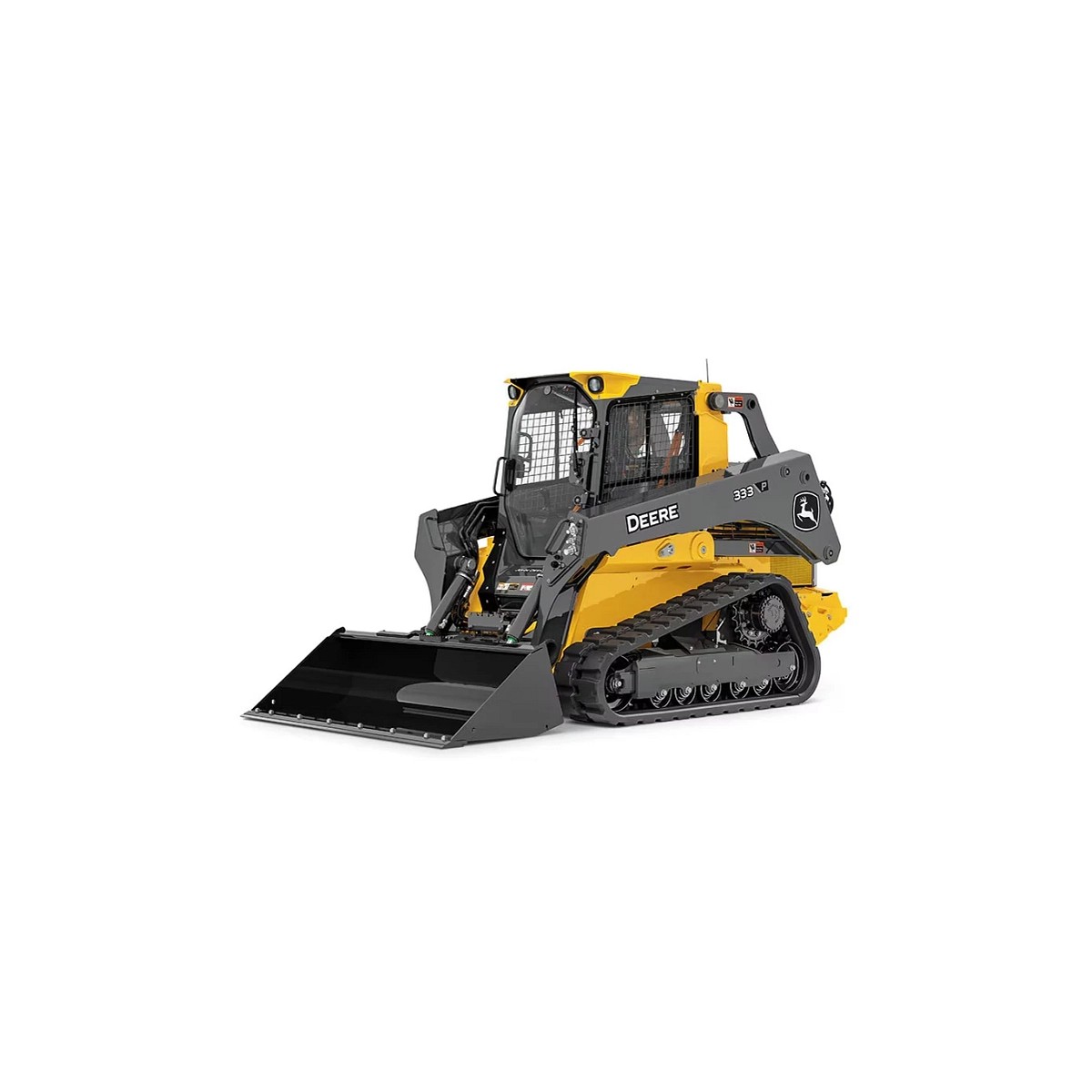
John Deere
John Deere 333 P-Tier
$114,464
- Engine
- 108 hp
- Aux flow
- 25 GPM
- Weight
- 12,183 lbs
An 8% power bump to 108.5 hp, a 3,850 lb rated operating capacity against an 11,000 lb tipping load, and an optional 44 GPM high-flow system separate the 333 P-Tier from the popular 333G it replaced in mid-2024. It's also Deere's grade-control CTL - available SmartGrade Ready with 2D or full 3D SmartGrade with Topcon - wrapped in the new one-piece pressurized P-Tier cab with touchscreen display and EH controls.
Full sheet & owner reports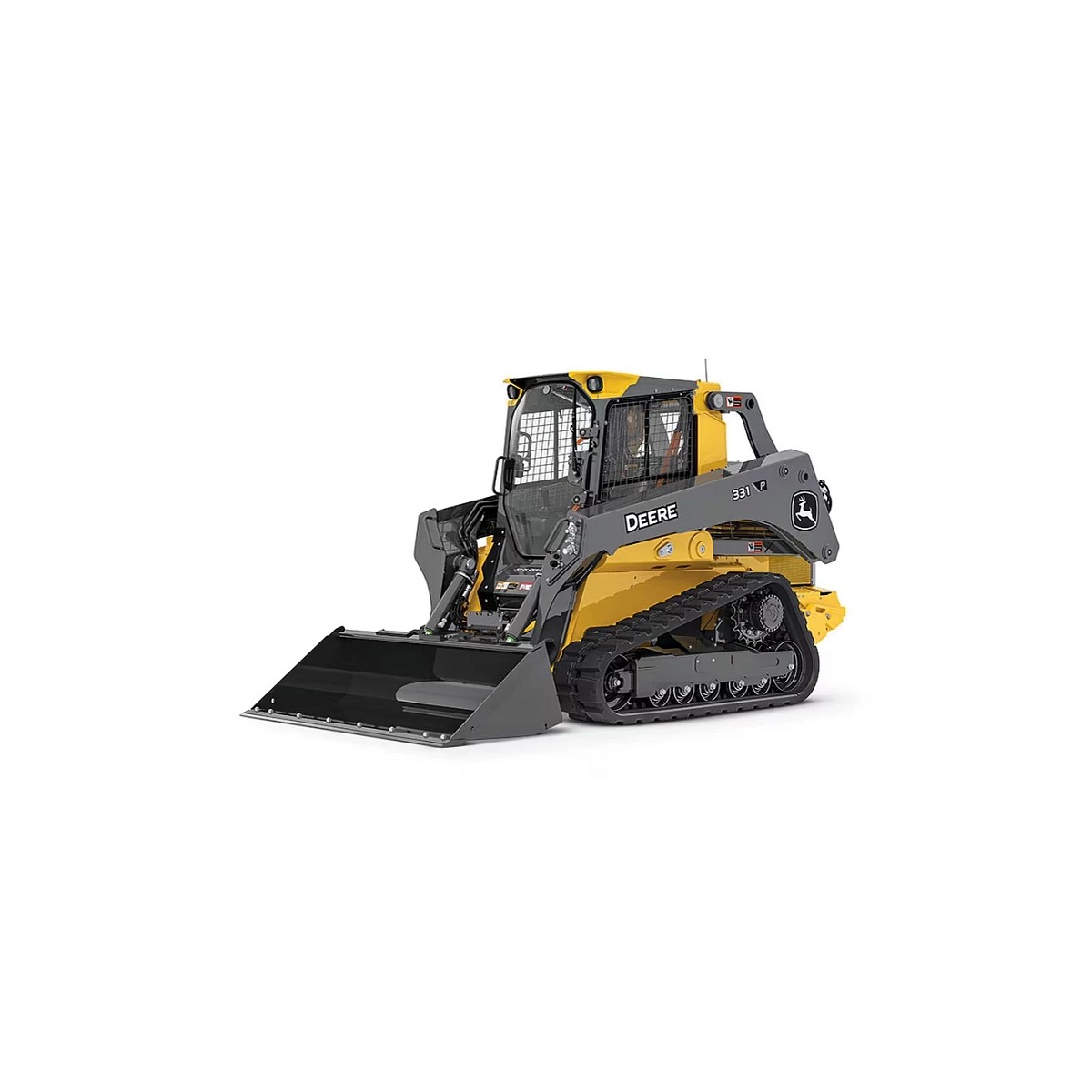
John Deere
John Deere 331 P-Tier
$94,809
- Engine
- 98 hp
- Aux flow
- 25 GPM
- Weight
- 11,914 lbs
Deere's new CTL lineup has its volume workhorse in the 331 P-Tier, the large-frame machine that replaced the 331G in mid-2024. It pairs a 98 hp turbo Yanmar with a 3,150 lb rated operating capacity (35% of a 9,000 lb tipping load) and Deere's patented vertical-lift boom, then adds a one-piece pressurized cab, EH joystick controls, 132-inch hinge pin height, and optional 39 GPM high-flow hydraulics.
Full sheet & owner reports
John Deere
John Deere 325 P-Tier
$76,000
- Engine
- 74 hp
- Aux flow
- 21 GPM
- Weight
- 9,500 lbs
The 325G was Deere's best-selling mid-frame compact track loader, and the 325 P-Tier replaced it while keeping the 74 hp DEF-free Yanmar and 2,590 lb rated capacity, adding a roomier sealed cab, standard EH ISO joysticks, and optional high-flow hydraulics. It stays under the 75 hp Tier 4 threshold that avoids DEF, and the vertical lift path with a 10.5-foot hinge pin height loads tandem dump trucks cleanly - the all-around configuration that made the 325G a landscaper and rental favorite.
Full sheet & owner reports